
What's that Flower—Buzzard Rock to Veach Gap in Late Spring
Article and Photos by Richard Stromberg



This article shows you some of the flowers to look for in late spring (mid-April through May) on the Buzzard Rock to Veach Gap hike described in the February 2026 issue of the Potomac Appalachian.
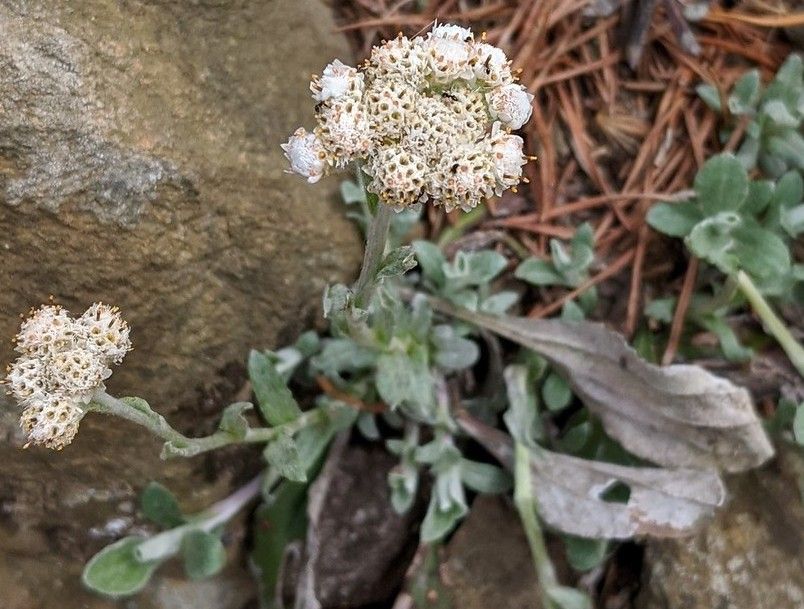
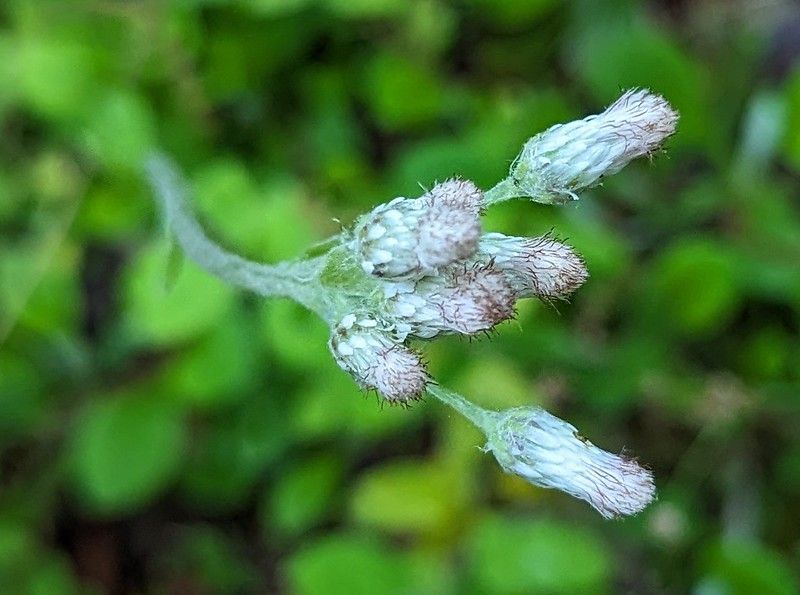
Plantain-leaved Pussytoes (Antennaria plantaginifolia) have fluffy, white flower heads atop straight stems up to a foot tall. It is dioecious, which means each plant has unisexual flowers with staminate (male) and pistillate (female) flowers on separate plants. The sexes tend to grow in separate clumps. The male flower head can be up to an inch across and consists of many, tiny, tubular, white flowers with yellow/brown, clumped stamens protruding from the middle of each flower. The female flower head is much narrower and most of what you see are hairs that will eventually help the seeds disperse in the wind. Plantain-leaved Pussytoes has wide basal leaves (greater than 1.5 centimeters) with multiple veins. These big leaves often lie on the ground. The whole plant is wooly, making the green of the leaves look very pale.
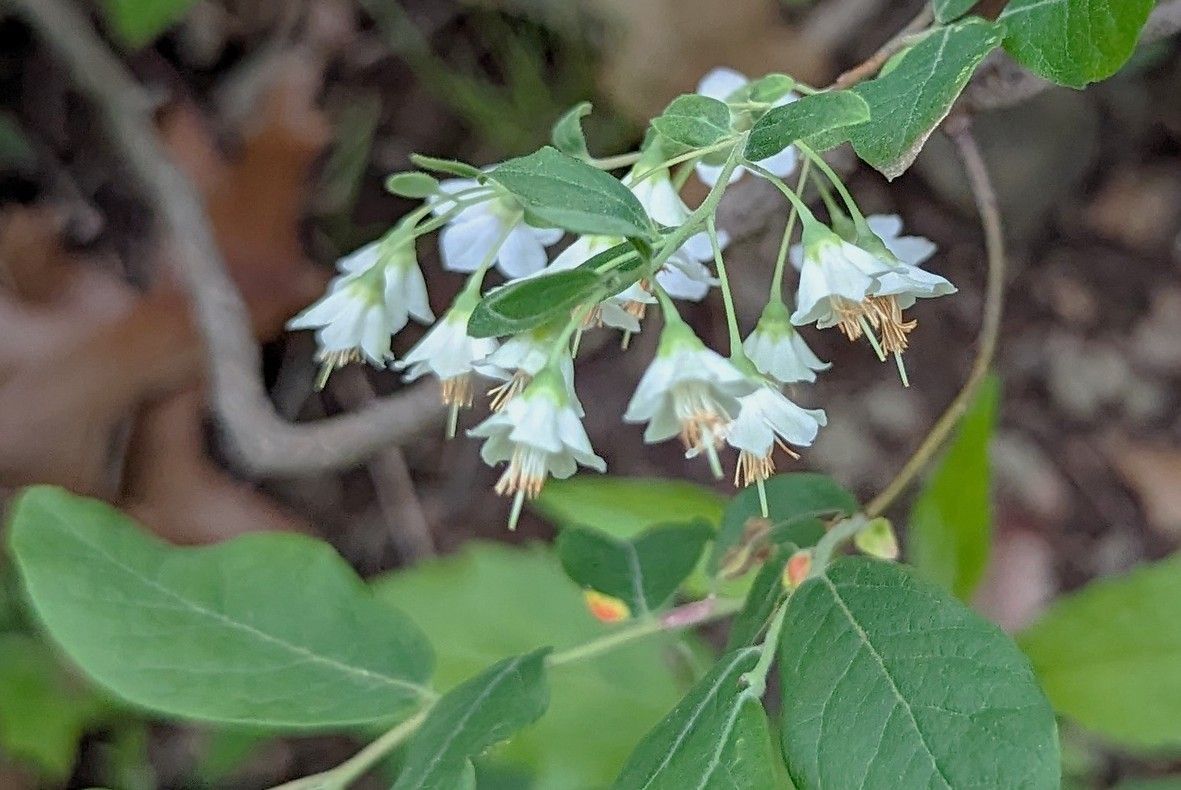
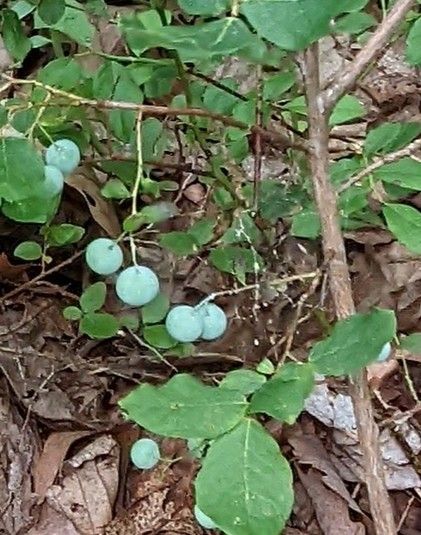
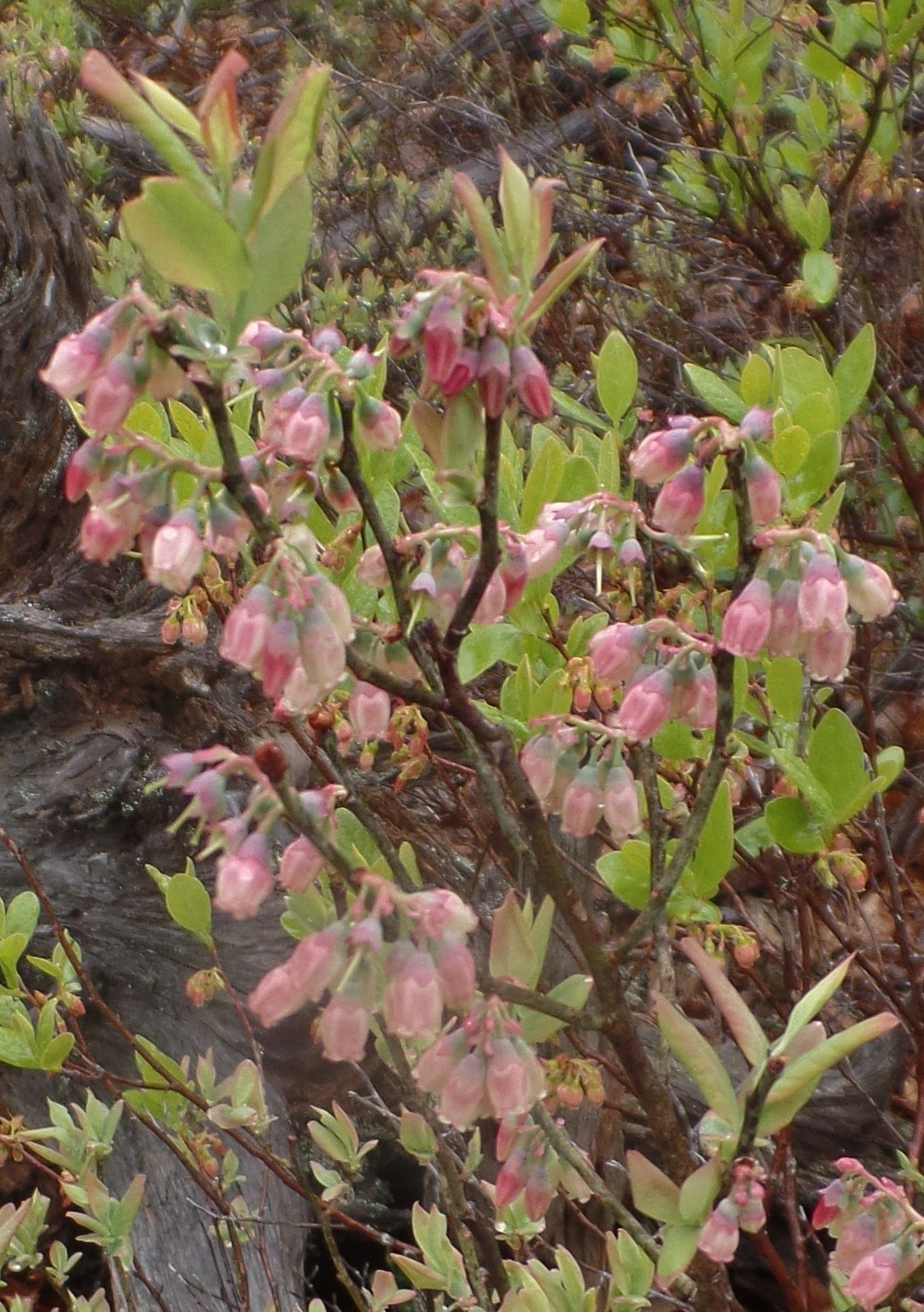
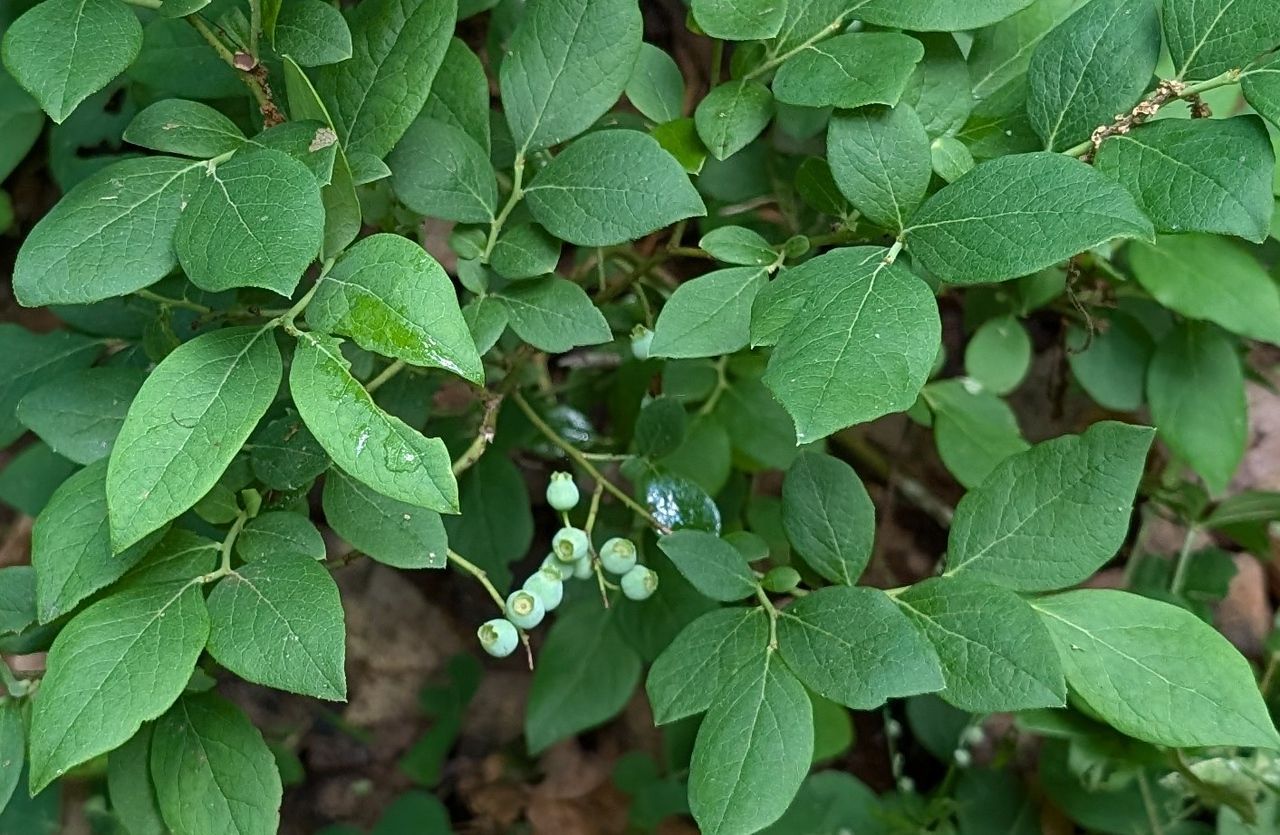
Huckleberries are the genus Gaylussacia and Blueberries are Vaccinium. Huckleberry twigs are generally brown, while Blueberries twigs are green. Huckleberry seeds have a hard covering, so, when you eat a Huckleberry, you detect the seeds like little bits of grit. You do not notice the seeds in a Blueberry. Both genera are shrubs. The petals of most of the species are joined and contracted near the mouth where five points flare out. The flowers vary from red to pink to white. Deerberry (Vaccinium stamineum) is an exception. Its white flowers dangle like other species but are wide open with protruding stamens. Deerberries fruits are larger than the non-cultivated Blueberries and stay green and are not edible. Black Huckleberry (Gaylussacia baccata) is the only common Huckleberry in our area.
Northern Lowbush Blueberry (V. angustifolium) and Early Lowbush Blueberry (V. pallidum) are the common Blueberry species.
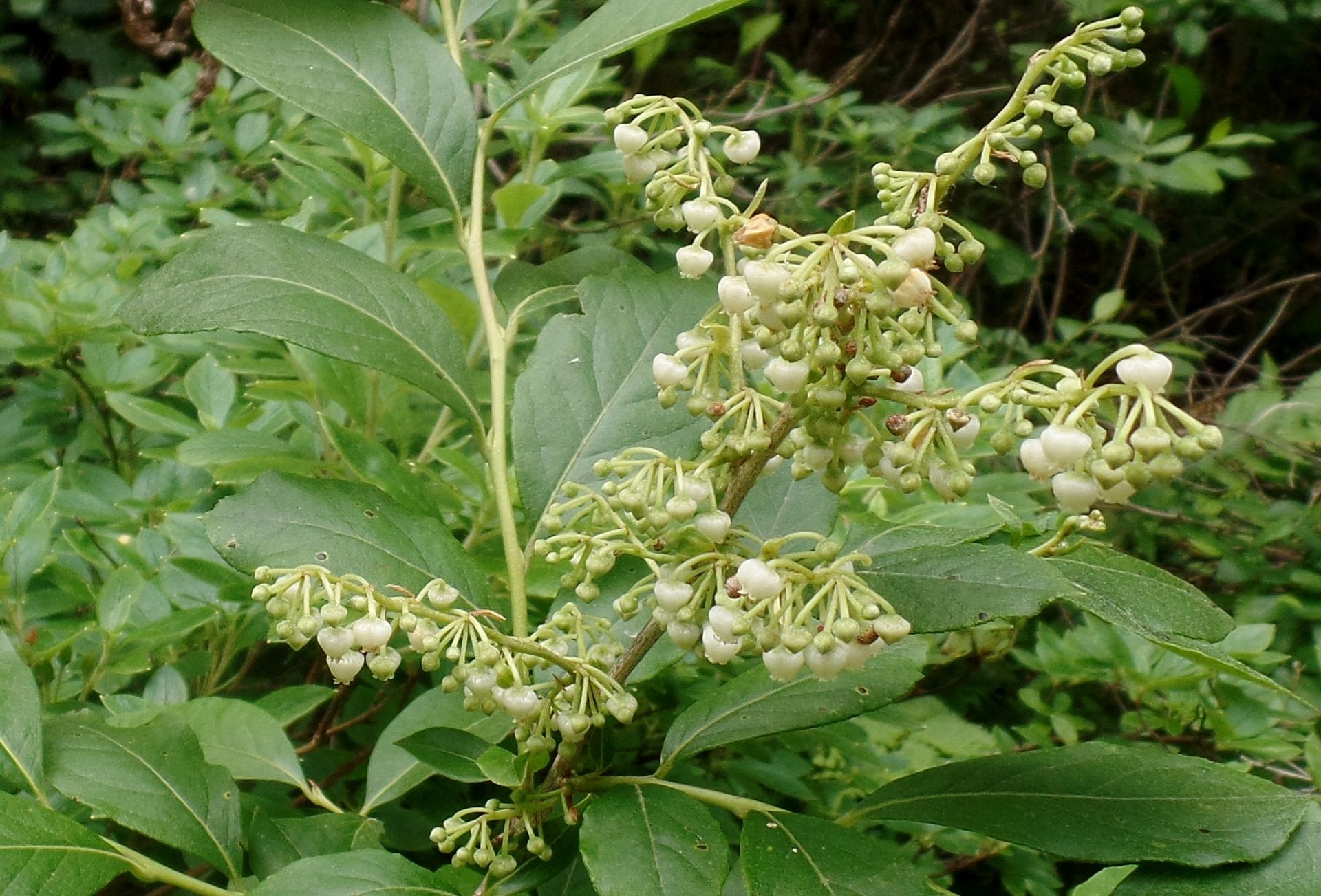
Maleberry (Lyonia ligustrina) bushes also look like Blueberry bushes. The white flowers are similar too, though they are more globe-like. The fruit is hard and brown.
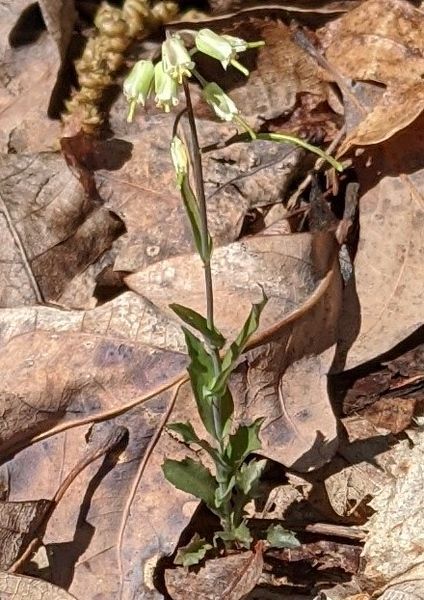
Rock Cresses (Boechera genus) have small, four-petal, white flowers (less than quarter inch). They are tubular, flaring at the tips. Smooth Rock Cress (Boechera laevigata) has a smooth stem with entire or slightly toothed leaves that clasp the stem. The long, narrow fruits are flattened and tend to point upward. Sicklepod (B. canadensis) may be smooth or hairy at the base. The stem leaves narrow at both ends and may be slightly toothed. The long, flattened fruits curve down like a sickle.
Rattlesnake Weed (Hieracium venosum) has green leaves with a pattern of large, dark red veins that you will notice even when there are no flowers. The flower head looks like a small Dandelion hoisted up in the air by a stem up to a meter tall.
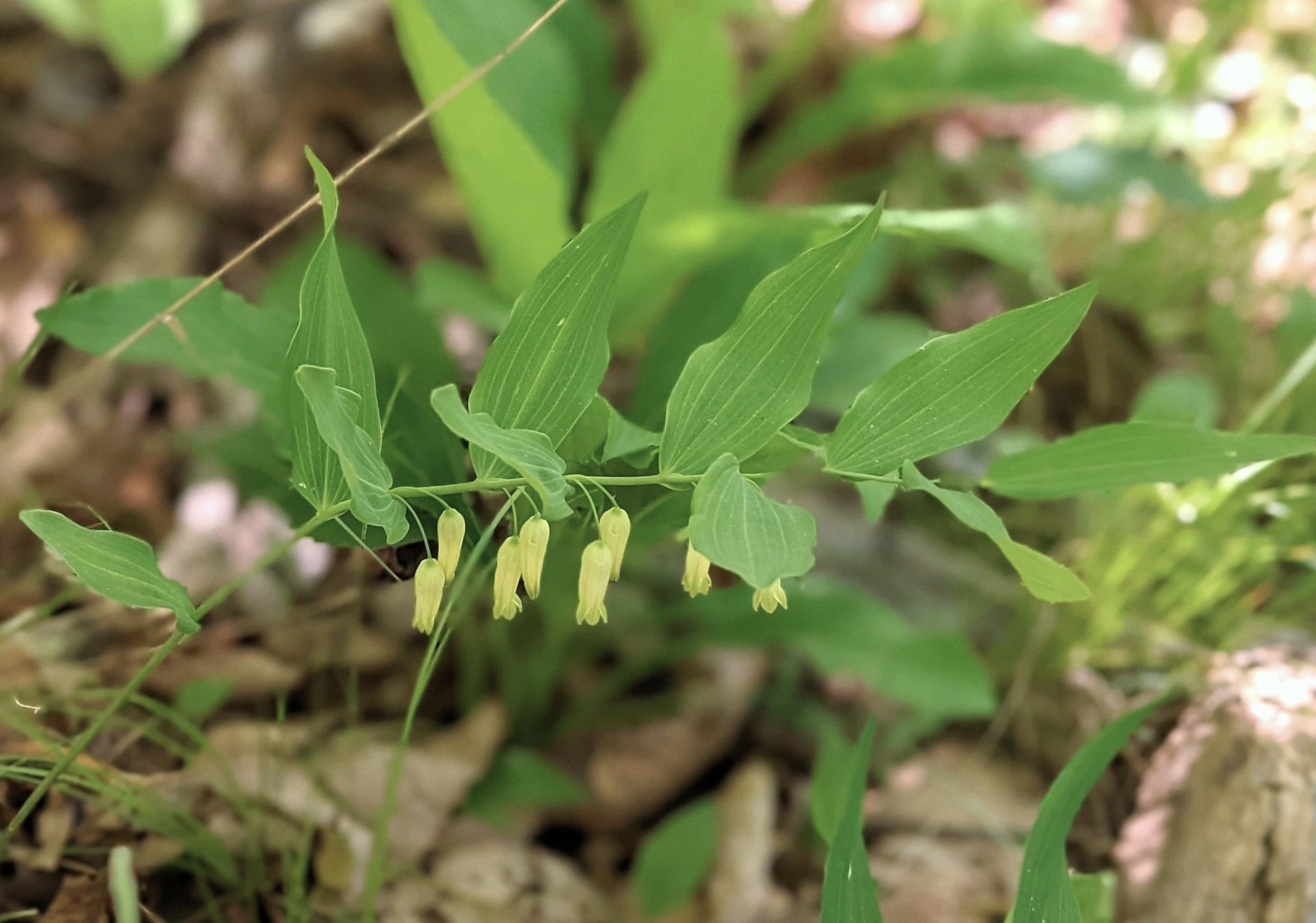
Solomon’s Seal (Polygonatum biflorum) plants have a single erect or arching stem with several ovate leaves alternating along the stem. The leaves have no stem and have distinct, parallel veins. Flower clusters hang down from the leaf axils, so you must look under the plant to see them. They are shaped like elongated bells with six pointed lobes at the tip. They are greenish white or tinged yellow.
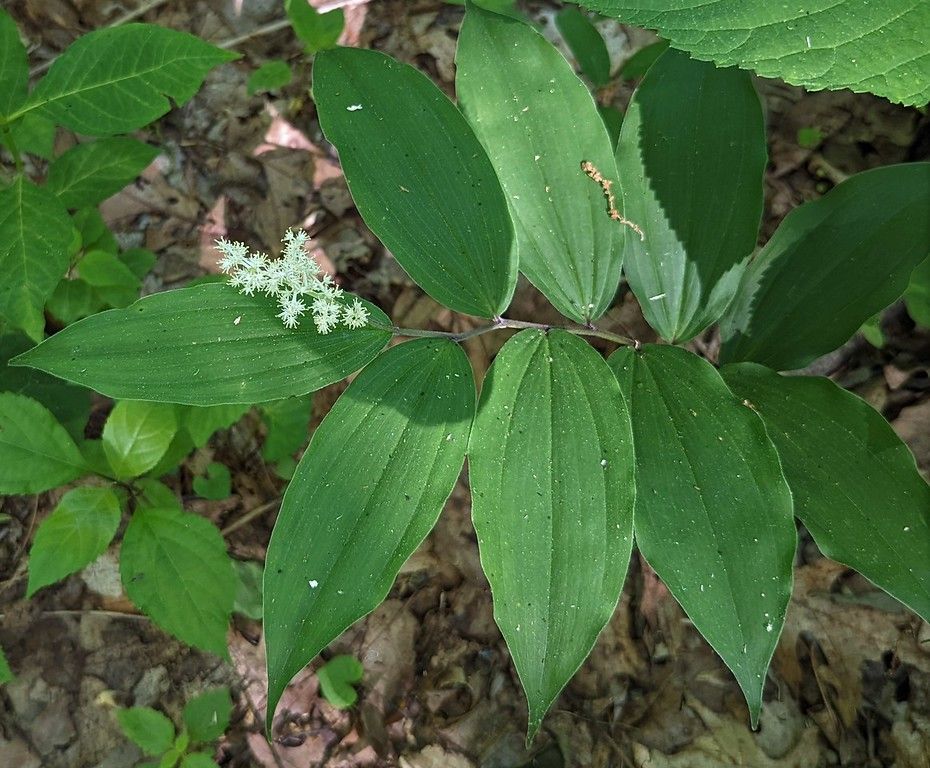
False Solomon’s Seal aka Solomon’s Plume (Maianthemum racemosum) plants are like Solomon;s Seal, but the flower clusters grow at the end of the stem. The flower cluster is branched and pyramidal. The individual flowers have six tepals but are only about an eighth of an inch across. (When petals and sepals look alike, they are called tepals.)
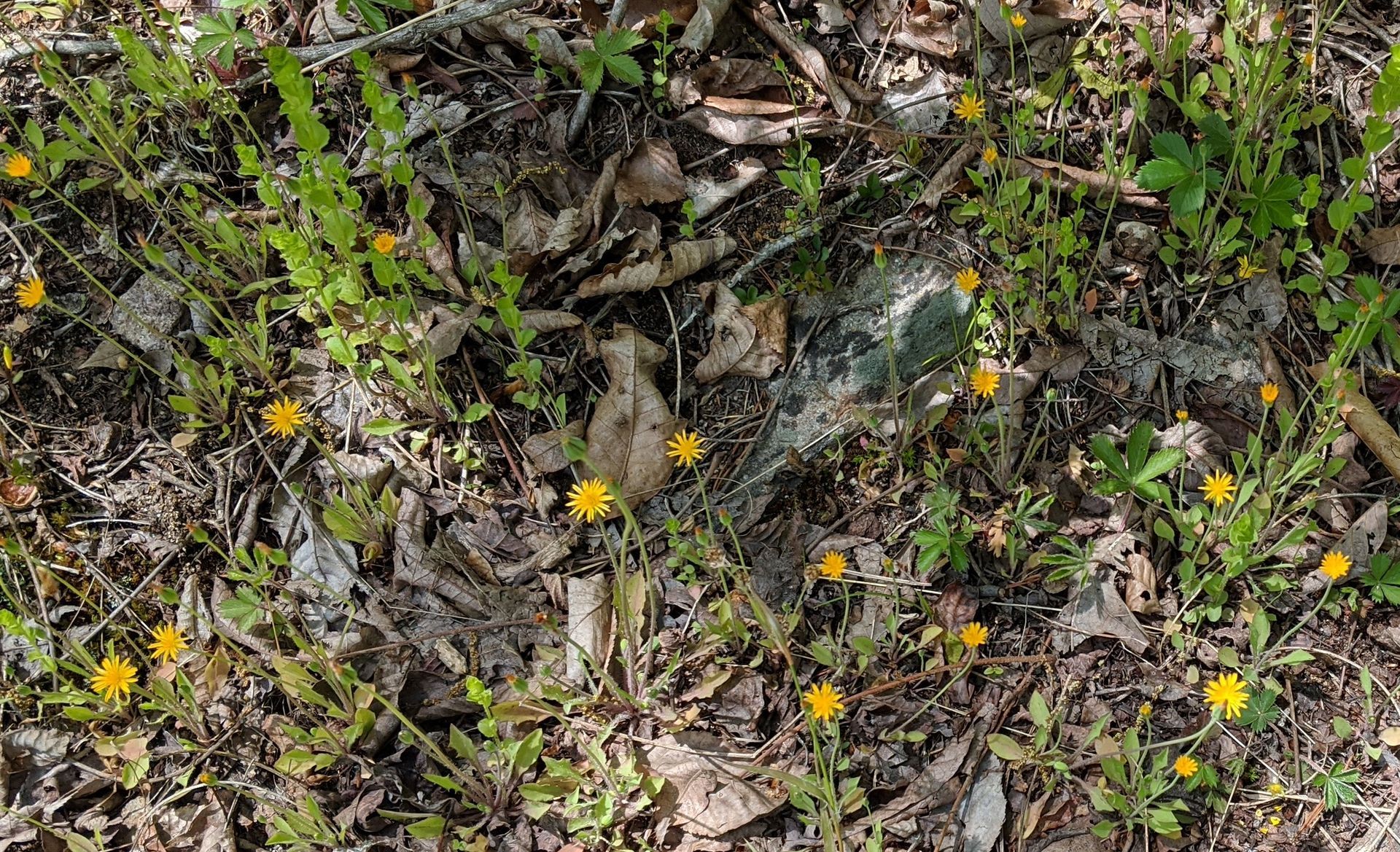
A Dwarf Dandelion (Krigia virginica) may be taller than a Dandelion, but the flower heads and leaves are smaller and the stems are spindly. Each Dwarf Dandelion plant has many stems, so it looks like a forest compared to the separate or single stems of Dandelion. Each leafless stem has only one flower head. Like a dandelion the flower head has only ray flowers and is yellow.
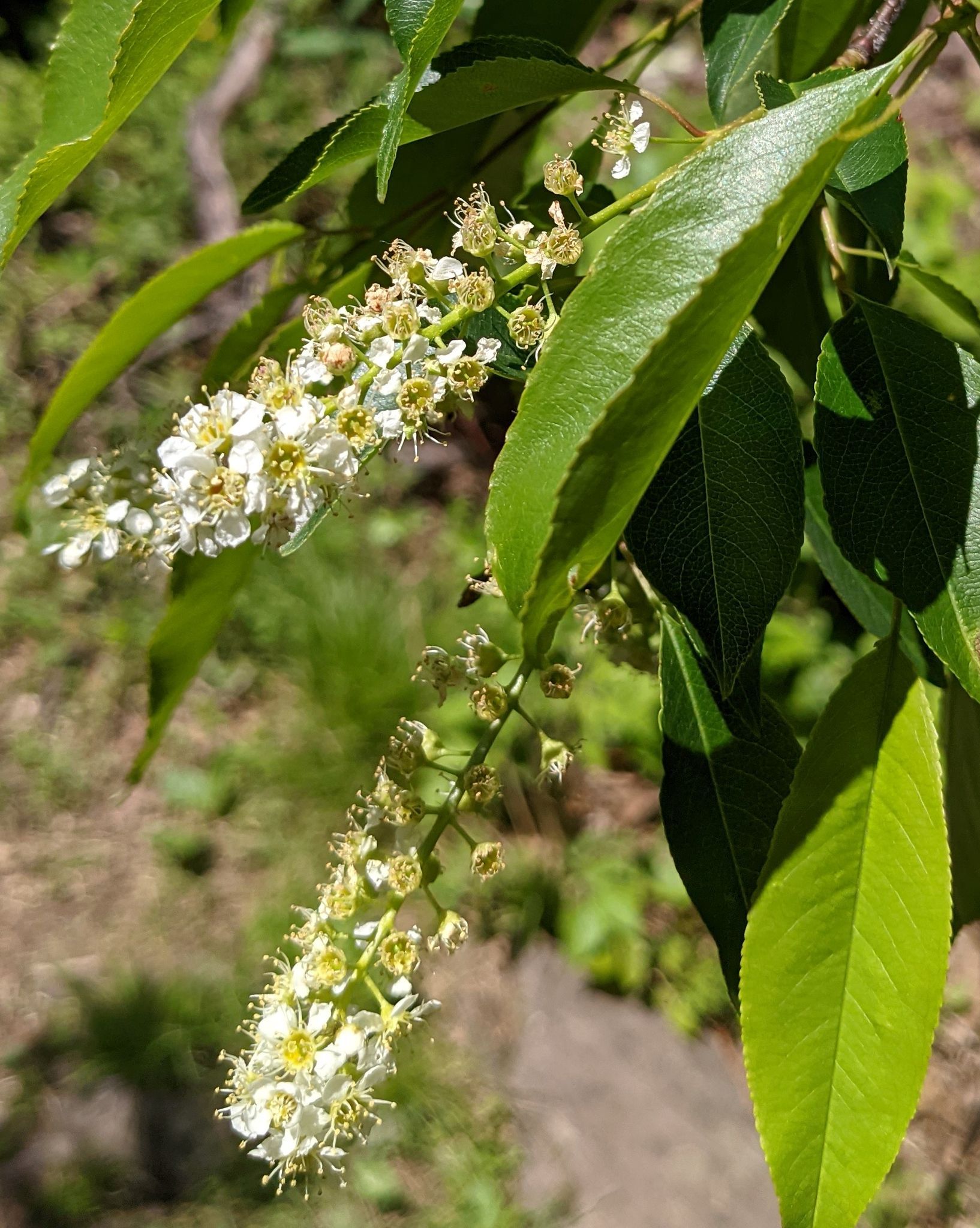
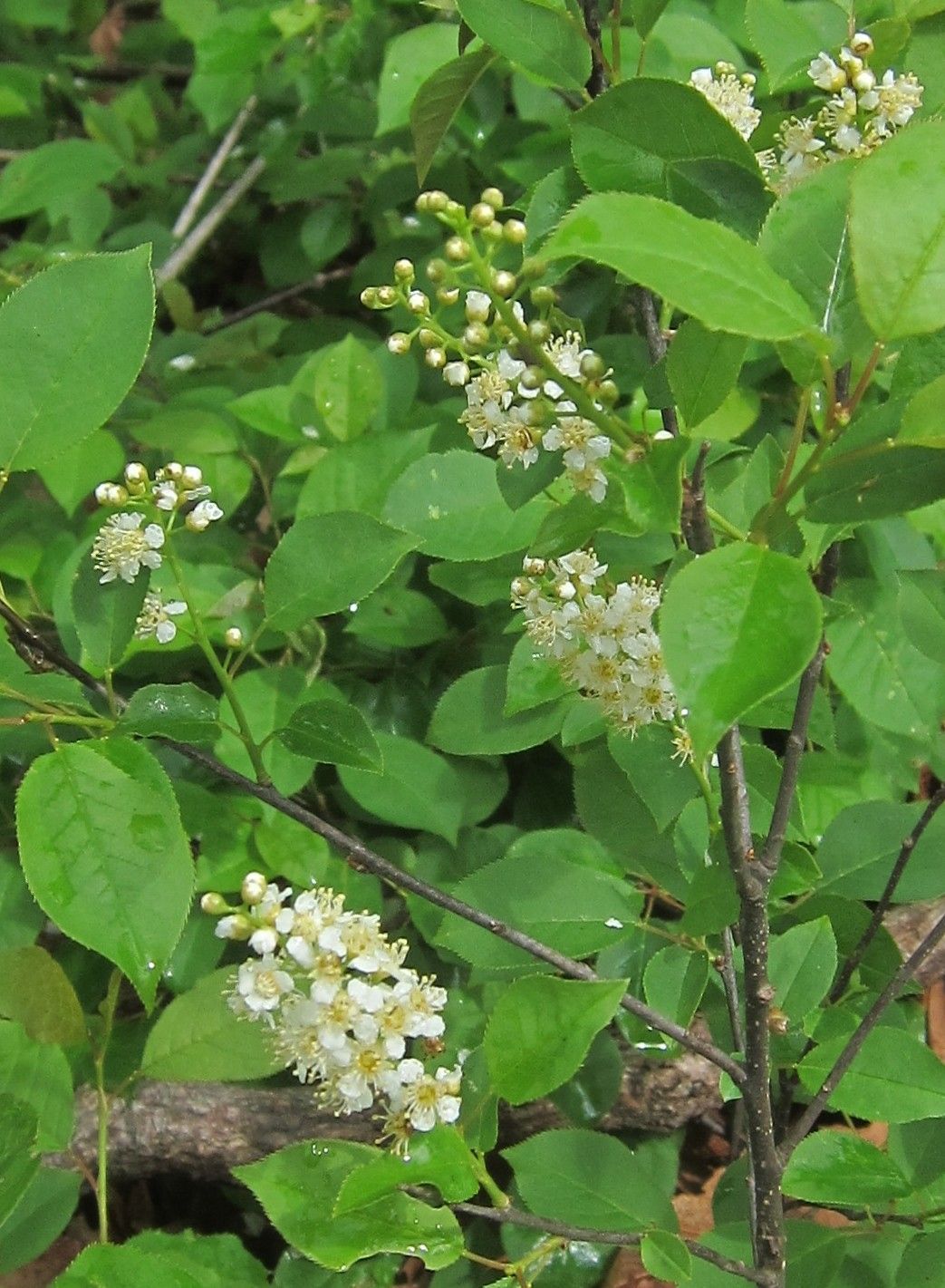
Black Cherry (Prunus. serotina) and Choke Cherry (P. virginiana) have long racemes of 20 flowers or more. Each flower is ½-inch or less with numerous stamens filling the center of the flower and five round petals completely separated from each other and narrowing to a claw that attaches to the center of the flower underneath the stamens. Black Cherry is a tree up to 100 feet tall. Its leaves are shiny and the teeth on the edges of the leaves are curved. The bark on larger trunks is broken up into scaly platelets. Choke Cherry is a shrub up to twenty feet tall. Its leaves are dull and wider than black cherry and the teeth point straight out from the leaf.
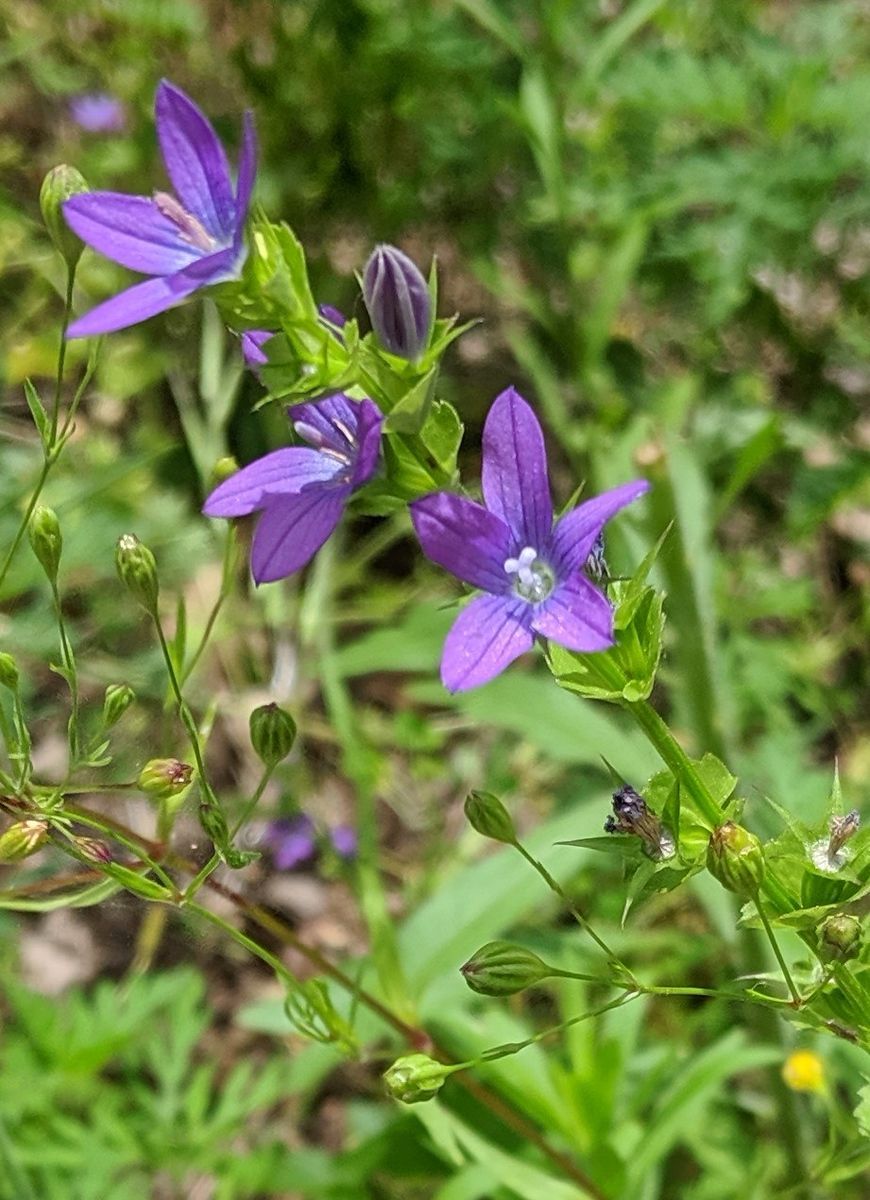
Venus’ Looking-glass (Triodanis perfoliata), has starry purple/blue flowers. Its leaves are small and round and clasp the stem, forming a little cup, and the flowers sprout out of axils of these leaves. The plant is usually about 12 inches tall.
New Jersey Tea (Ceanothus americanus) is a small (up to 42 inches) shrub. It has alternate, simple, toothed leaves. Cylindrical clusters of tiny white flowers grow from axils at the top of the shrub. Pollinated flowers develop into small black fruits.
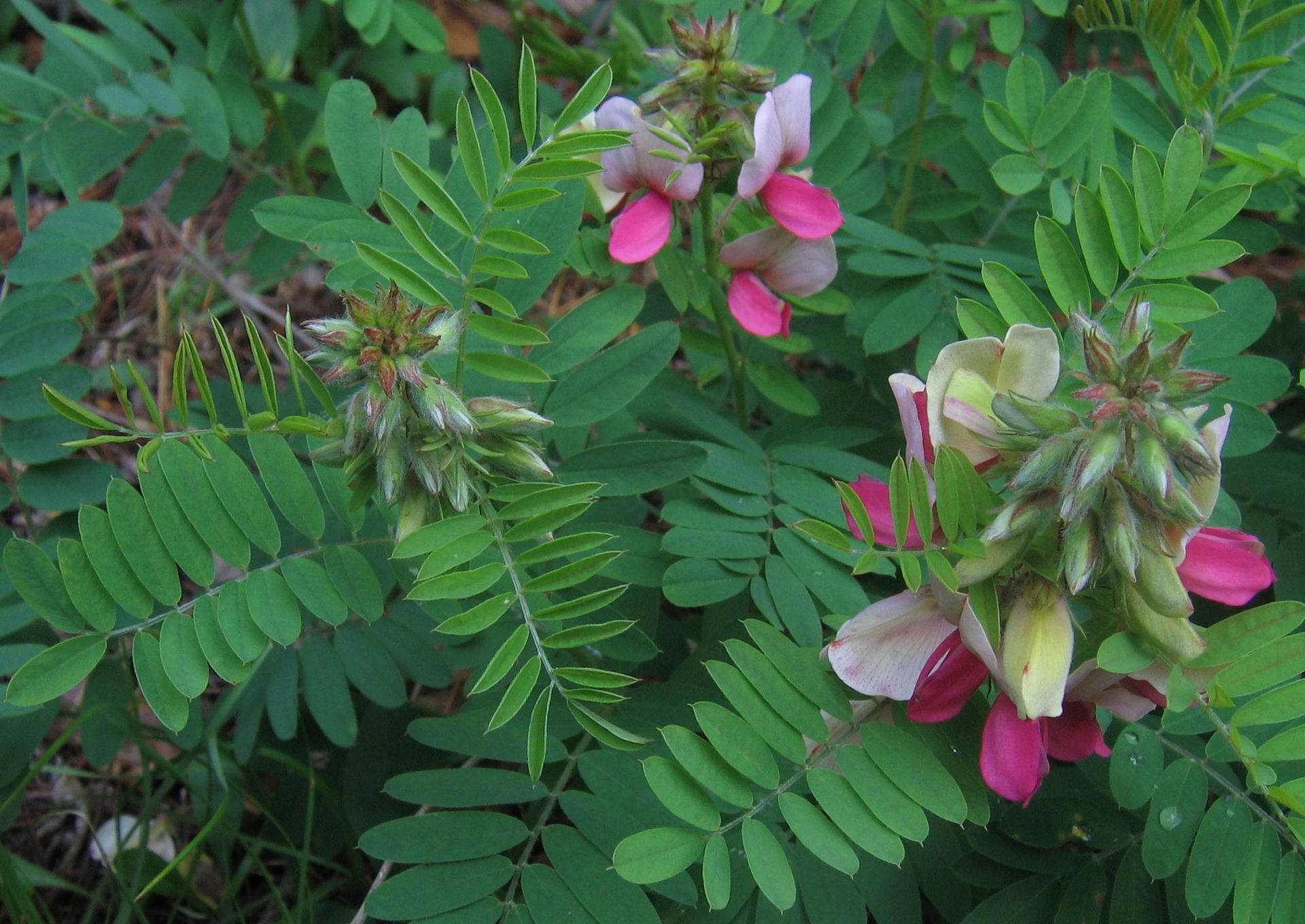
Goat’s Rue (Tephrosia virginiana) have typical pea flowers. The upright banner of the one-half to three-quarter-inch flower is white to light yellow, forming a background to the bright pink joined petals called a keel. One or more flowers appear among the leaves at the end of branches. The leaves are pinnate (resembling a feather with leaflets on opposite sides of an elongated axis).