
This article shows you some of the flowers to look for in Autumn on the Buzzard Rock to Veach Gap hike described in the February 2026 issue of the Potomac Appalachian.
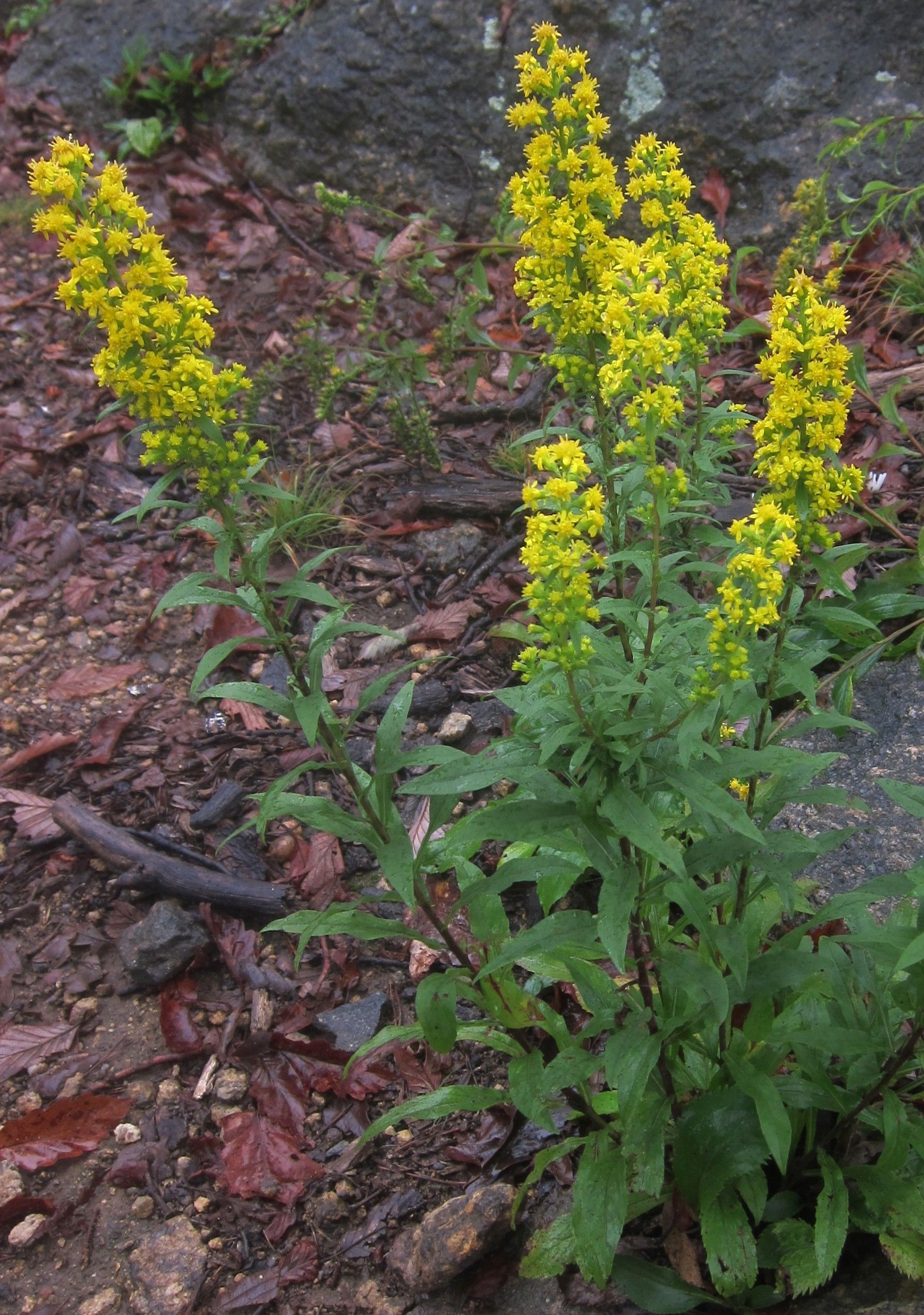
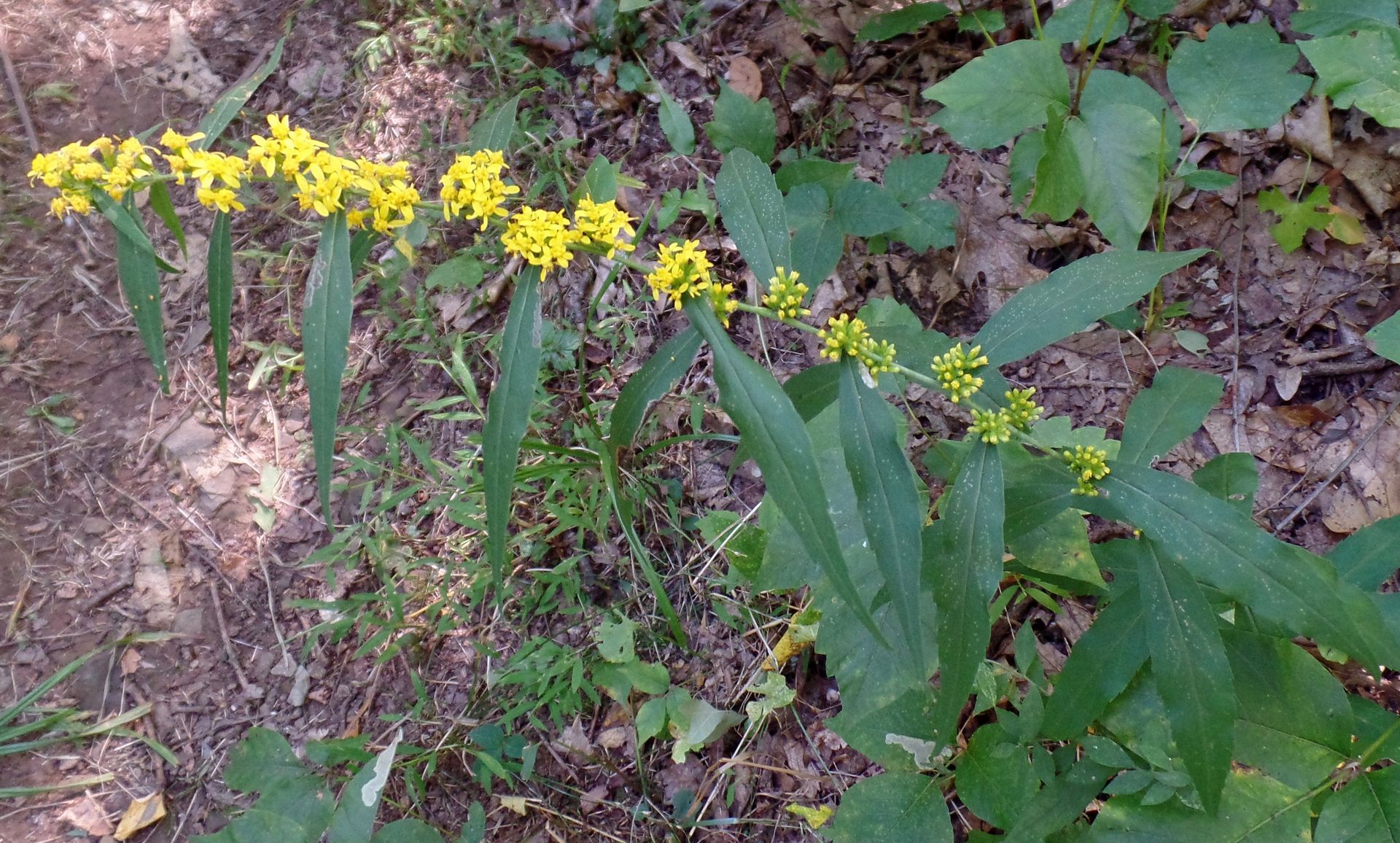
Goldenrods (Solidago) are known for their sprays of many small flowers. Erect Goldenrod (Solidago erecta) has straight clusters of flowers at the top of the plant with flowers all around the stem. Its leaves are sessile (attach directly to the stem without a supporting stalk). Wreath Goldenrod (S. caesia) has long, narrow leaves that separate the flower clusters growing from the axils. Instead of standing upright, it often leans over forming an arch.
Asters have daisy-like flowers, with strap-like rays surrounding a center disk of small flowers.
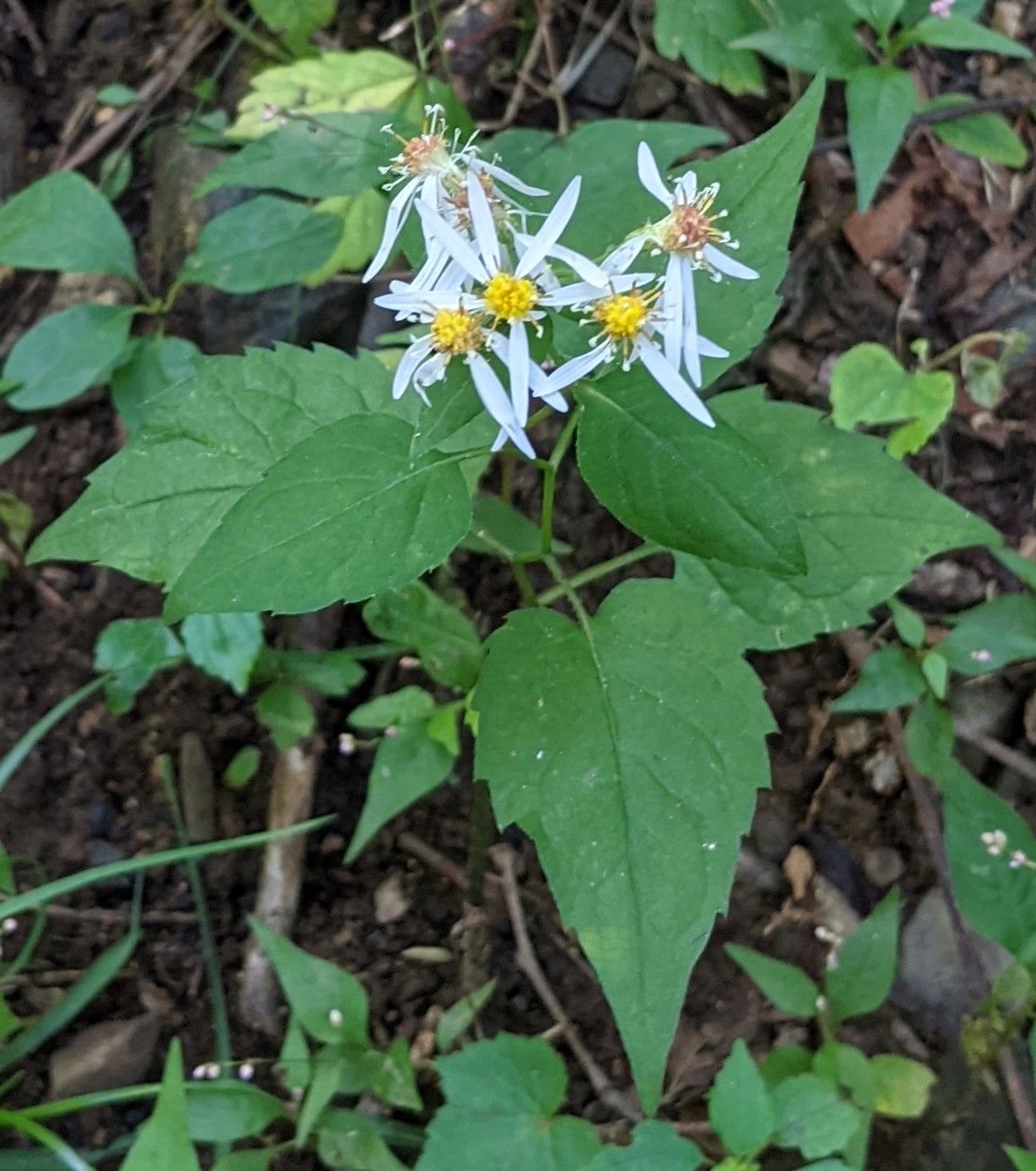
White Wood Aster (Eurybia divaricatus) is topped by a flattish cluster of white flowers about one inch in diameter. The lower leaves are elongated heart shaped with coarse teeth. Up the stem, the leaves are smaller and the heart-shaped indentation at the petiole may not be there.
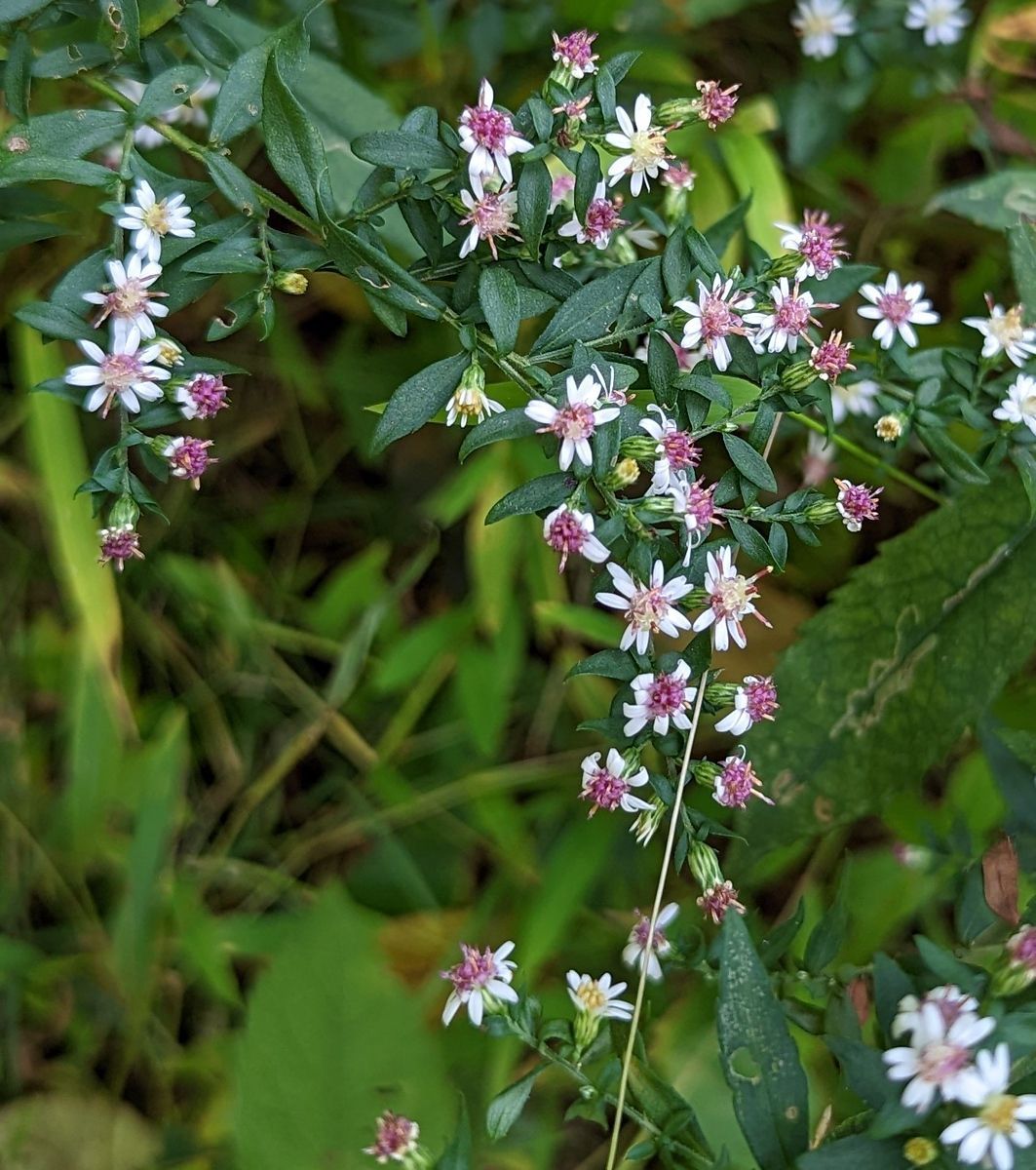
Calico Aster (Symphyotrichum lateriflorum) has lots of small (less than ½ inch) flowers and small, narrow leaves. The bracts under the flowers are narrow and neither stiff nor spreading differentiating it from other Asters with small flowers. The ray flowers are white or purple-tinged, and disk flowers are yellow and/or purple.
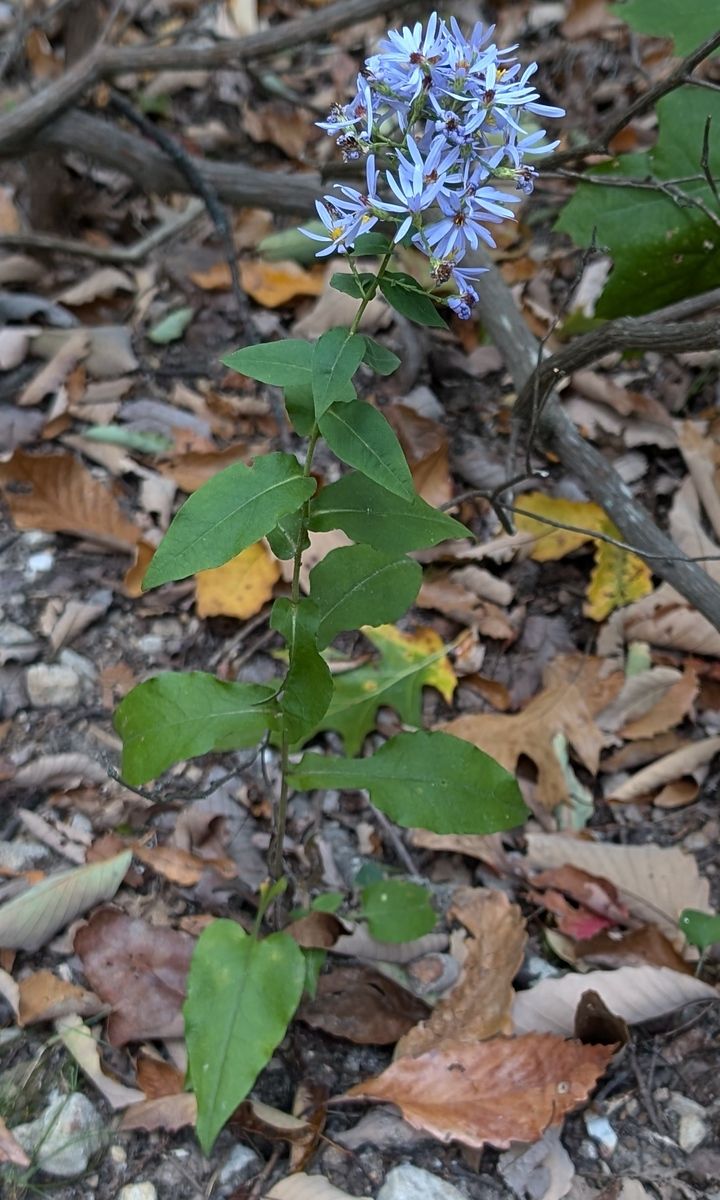
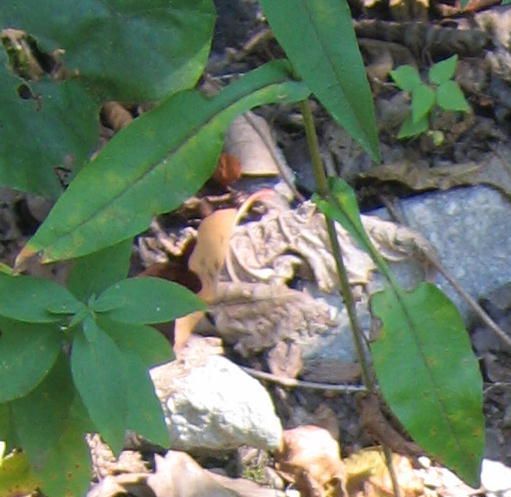
Wavy-leaved Aster (S. undulatum) leaves have wavy margins. From the widest point of the leaf, the two sides of the leaf pinch in and then widen toward the stem. They may narrow partway or all the way to the center rib of the leaf but then widen again to clasp the plant stem. The leaves have few or no teeth. It has light blue-violet rays.
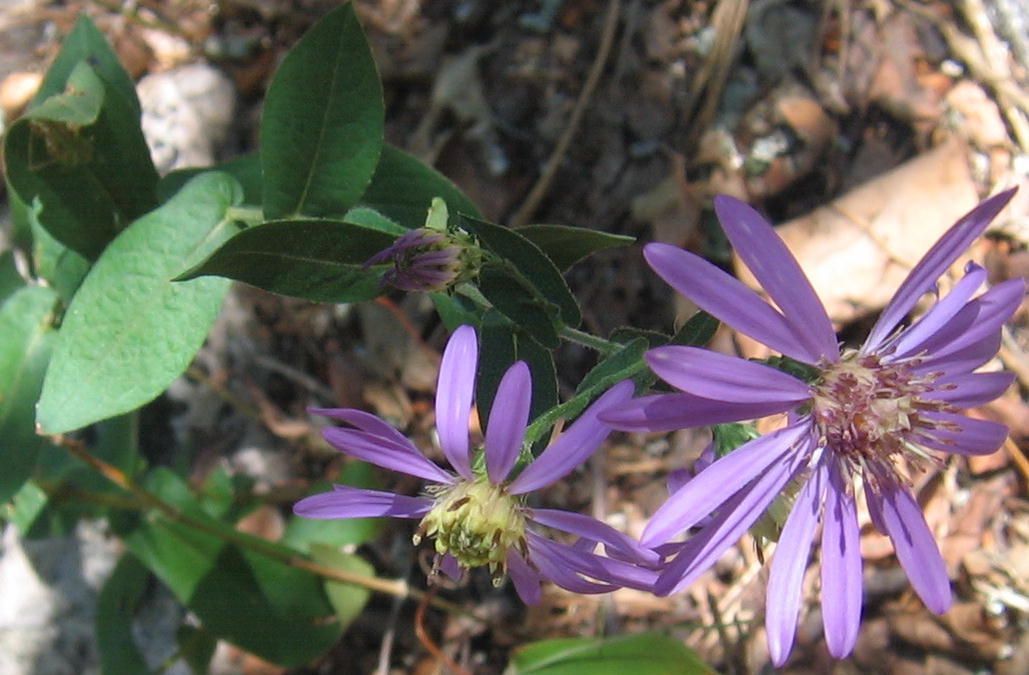
Late Purple Aster (S. patens) has 10-30 violet rays on a one-inch-wide head. The stem is rough and slender and up to three feet tall. The leaves seem like long triangles or are pinched in slightly below the middle and go beyond the stem.
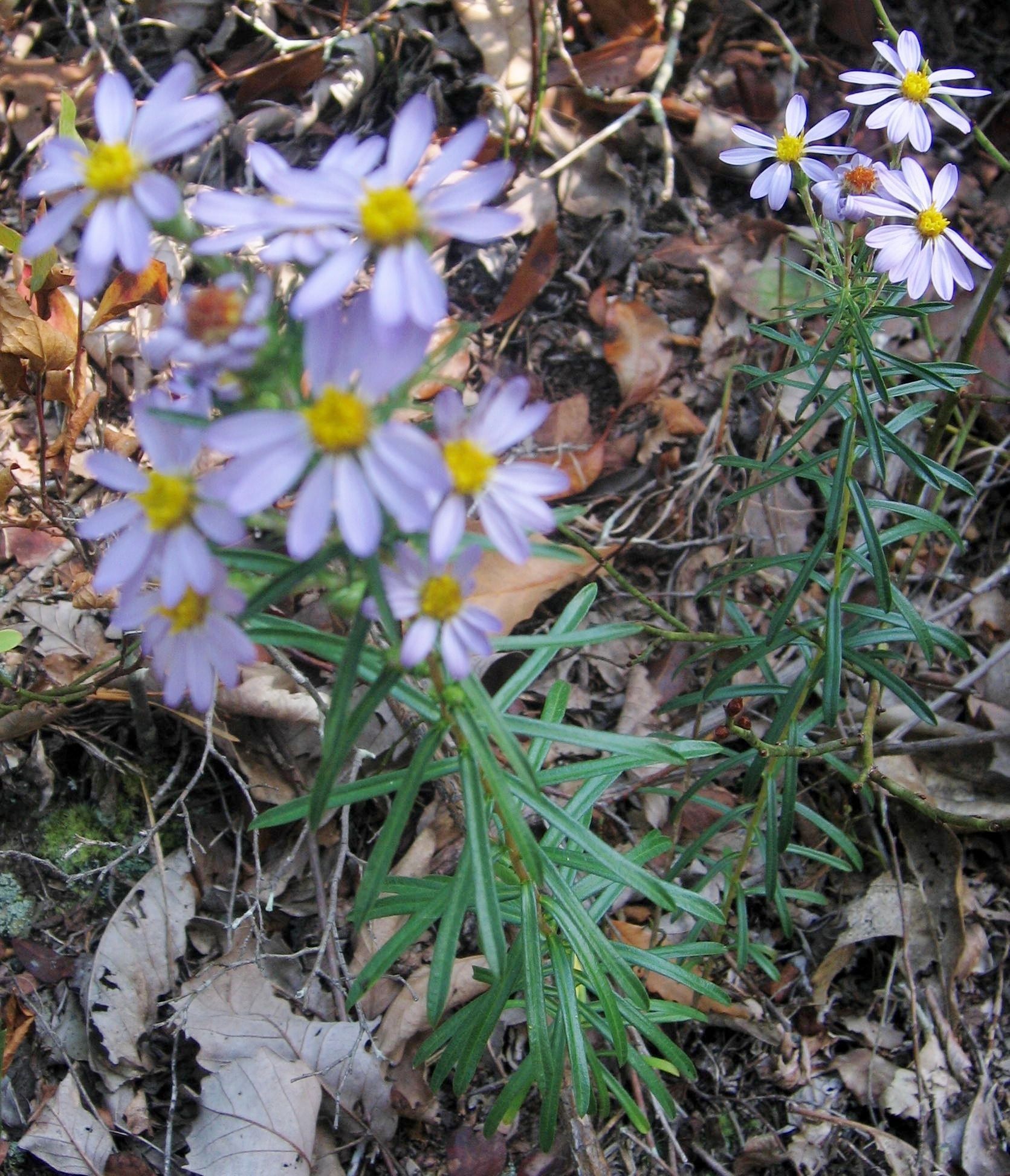
Stiff Aster (Ionactis linariifolia), has numerous, narrow, short, stiff leaves. When small, it looks like a Spruce twig coming out of the ground. Flowers are violet.
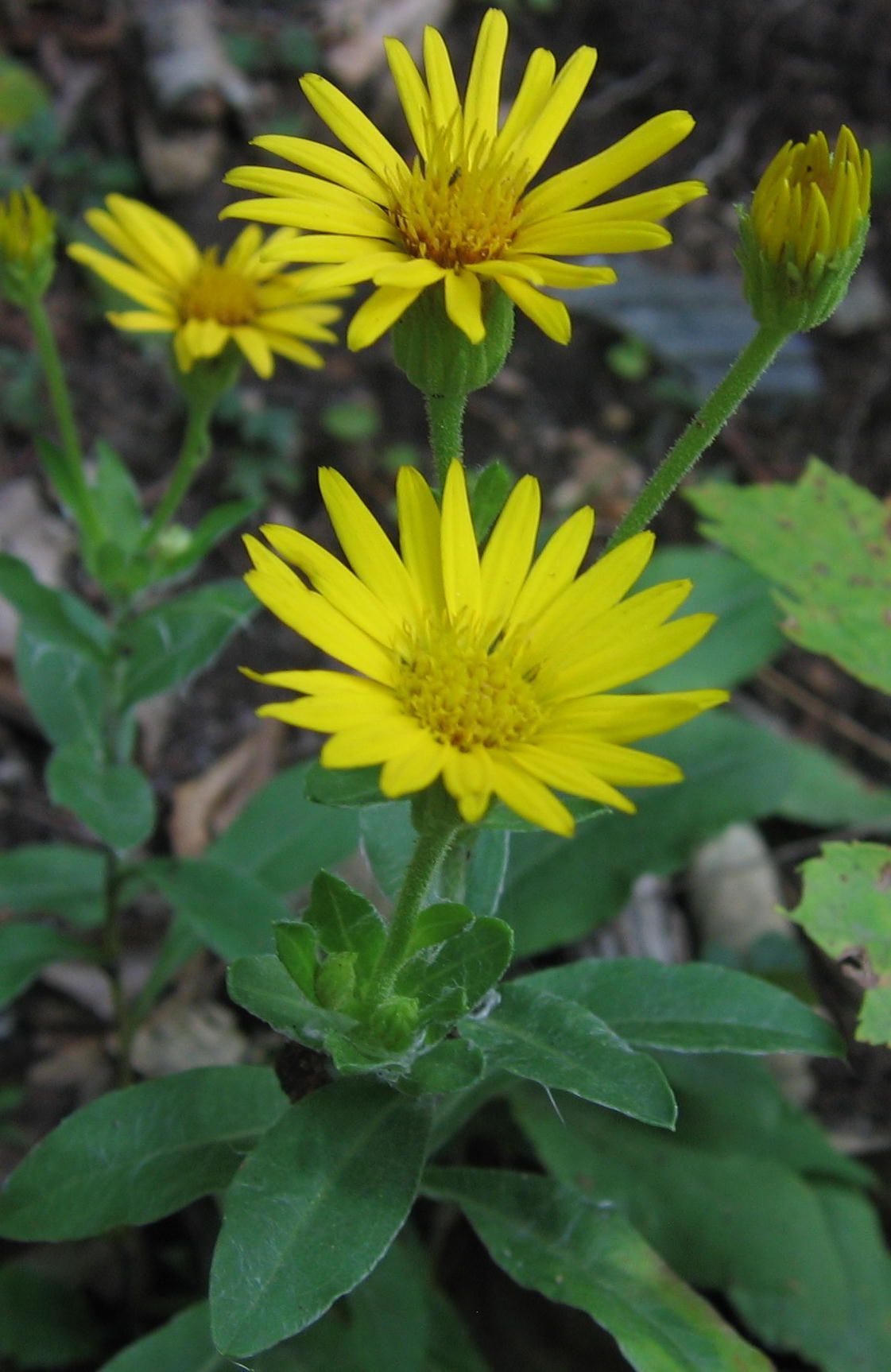
Maryland Golden Aster (Chrysopsis mariana) has yellow daisy-type flowers, up to three inches in diameter. The flower head’s flat central disk is surrounded by 12 to 25 rays that are thickest in the middle.
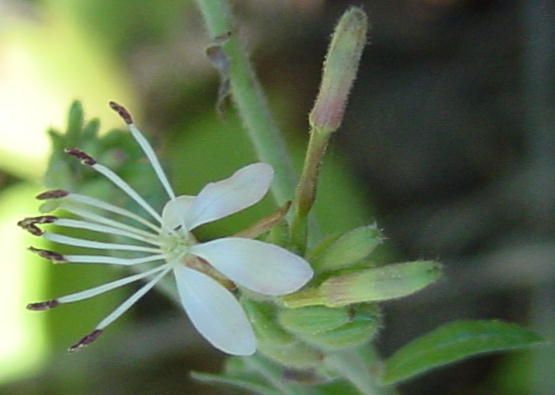
Gaura (Oenothera Gaura) is also known as Bee-blossom because of its attractiveness to bees. One-inch petals are narrow, with space in between, and they are white, turning pink/red with age. Also the four petals tend to group on one side of the flower with stamens and the pistil pointing the other way.
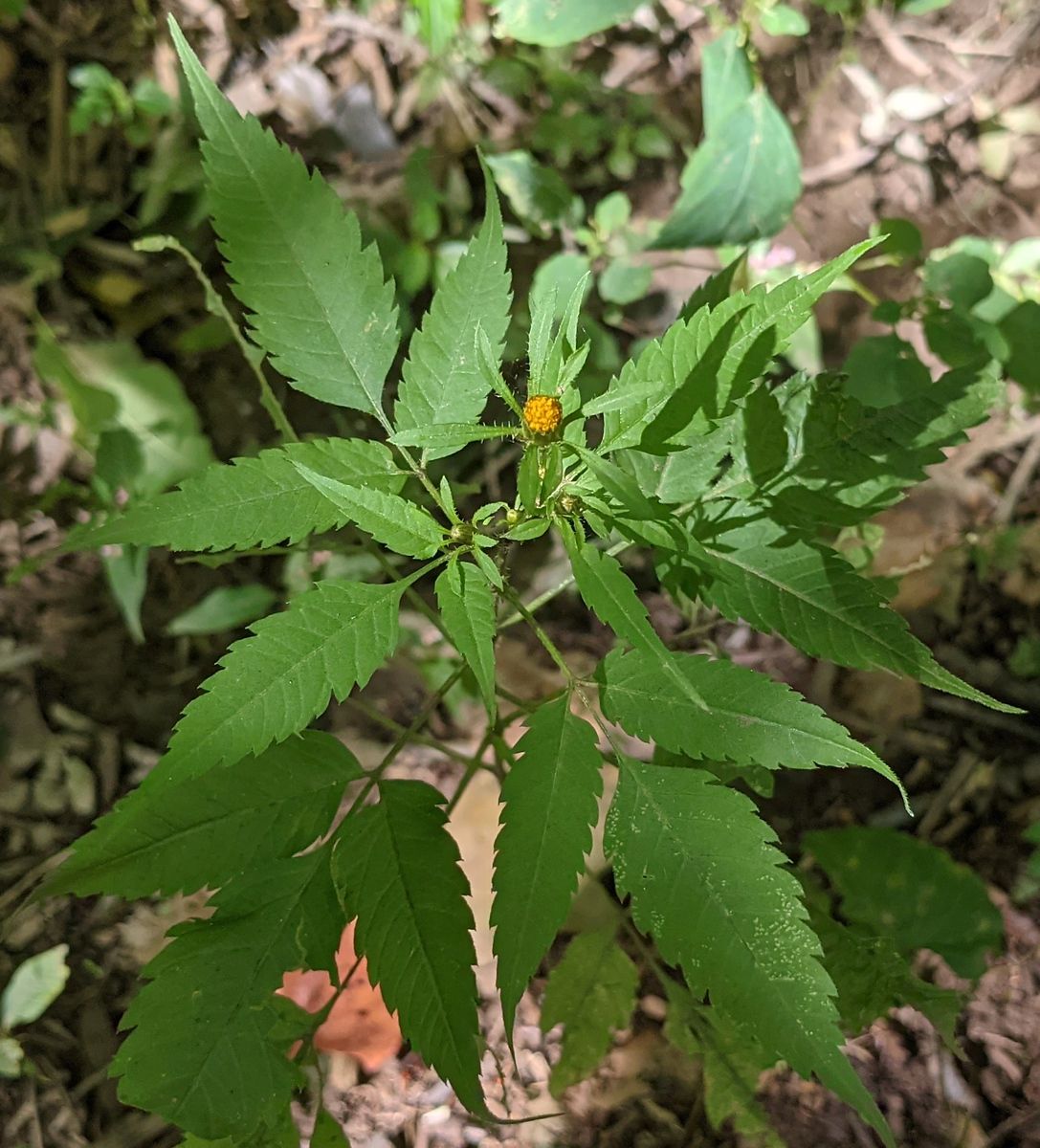
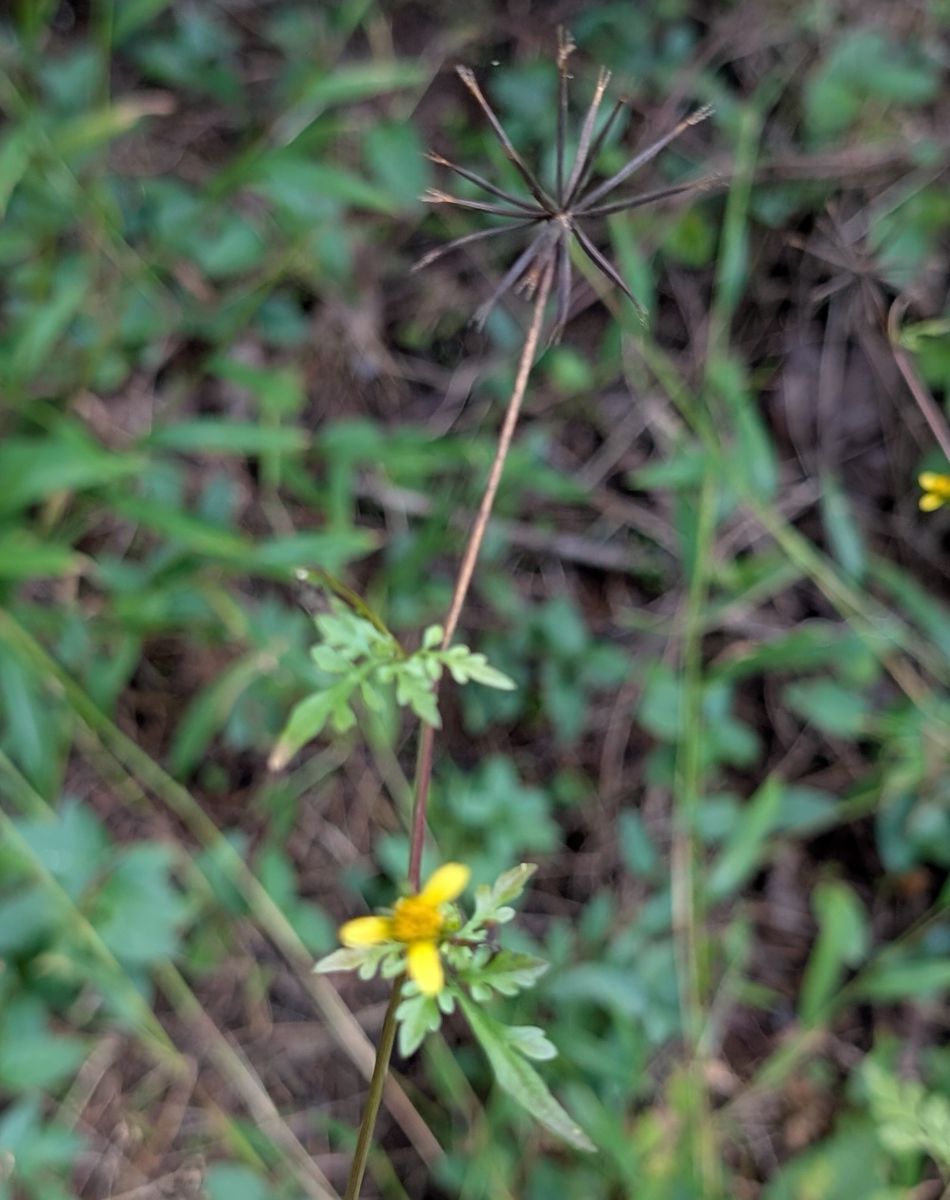
The genus Bidens is called Bur-marigold because their seeds stick to you. Devil’s Beggar-ticks (Bidens frondosa) usually has no rays, though it may have a few floppy yellow ones. Most noticeable about it is the whorl of green bracts underneath the flower head. Spanish Needles (B. bipinnata) has twice-divided, fern-like leaves. It sometimes shows a few short, yellow rays. The long seeds have two to four barbed awns at the tip ready to grab your clothes. They seem to be clustered like arrows in a quiver at first, then spread out into a globe to have better reach.
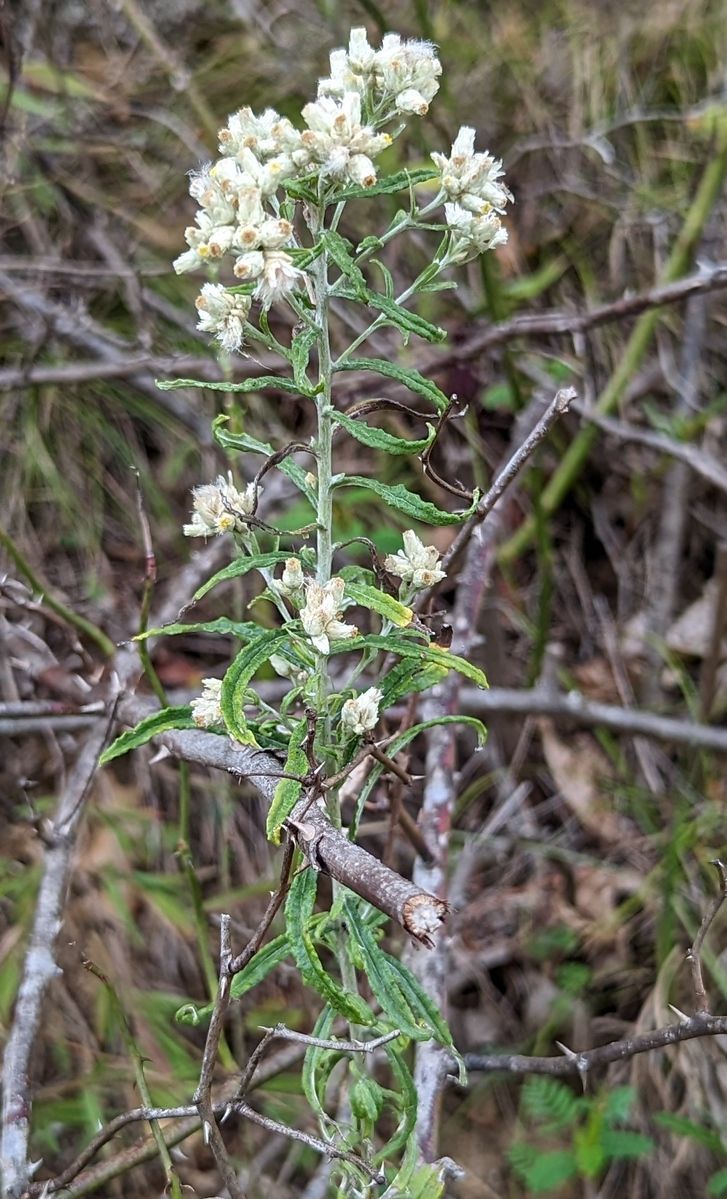
Sweet Everlasting is also known as Rabbit Tobacco (Pseudognaphalium obtusifolium). The whole plant is fuzzy-white on green with small, dense clusters of flowers atop one-meter stems. The individual flowers start out pointy, then show yellow on the flattened top, turning brown, and then opening to release the ripe seeds. The narrow leaves alternating up the stem have no stems.
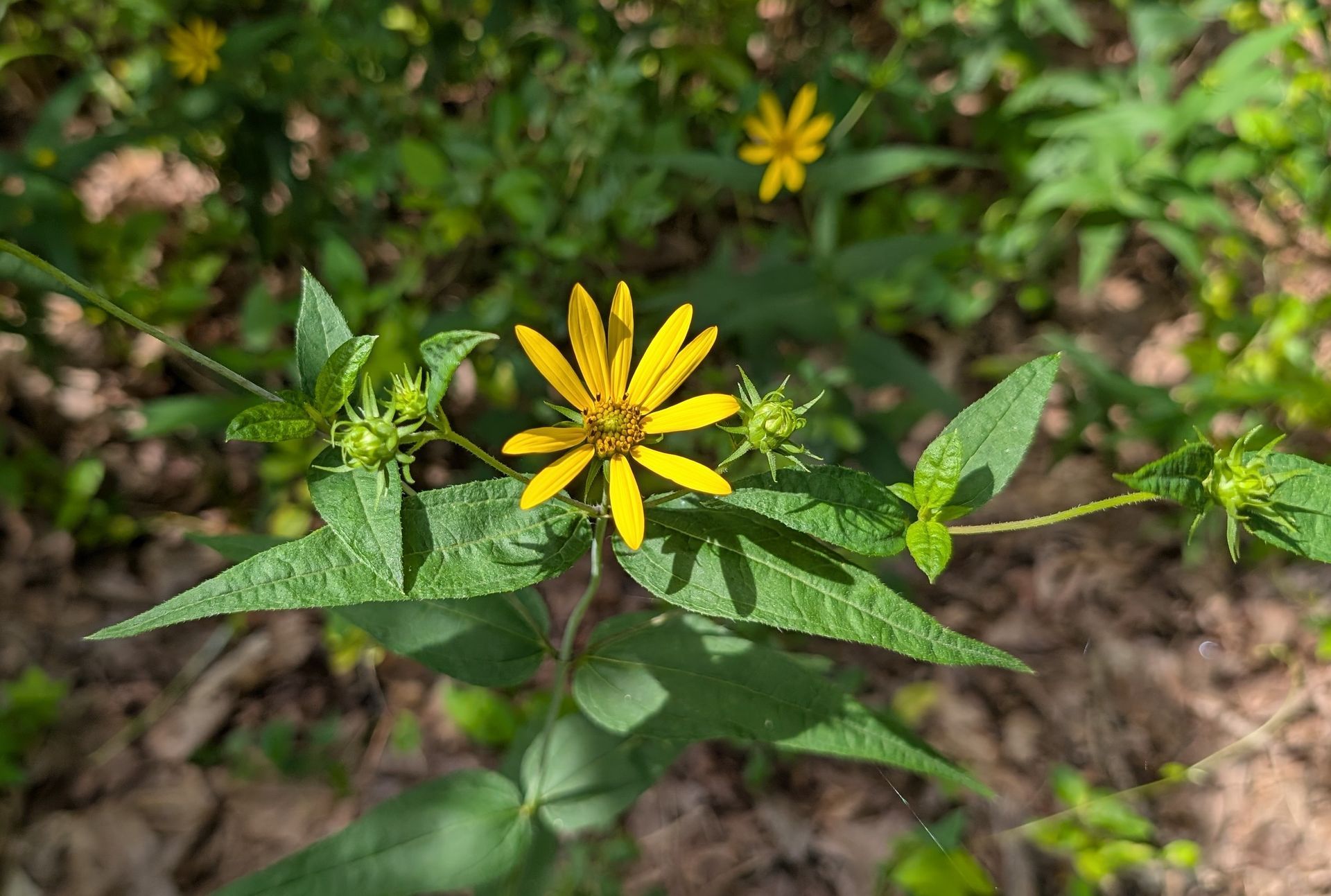
Woodland Sunflower (Helianthus divaricatus) has yellow daisy-type flowers up to four inches in diameter. It has 8 to 20 rays. The leaves are opposite and lance-shaped, tapering to the tip. They have very short or no stalks.
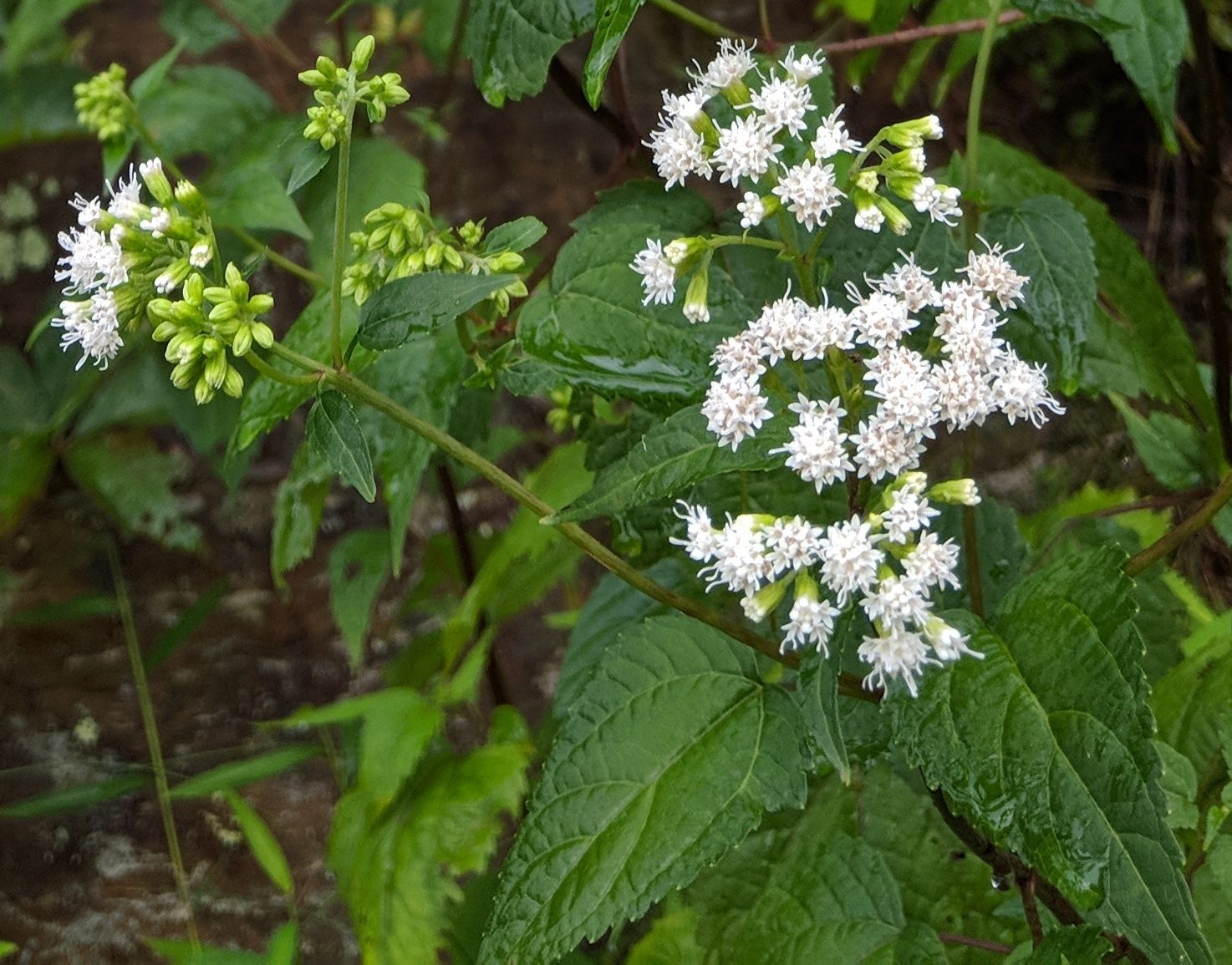
White Snakeroot (Ageratina altissima) can grow to five feet tall. It has branching clusters of up to 30 small flowers at the top. Individual quarter-inch flowers have five, pointed petals and protruding white stamens. Leaves are long-pointed, egg-shaped with ¾ inch stems.
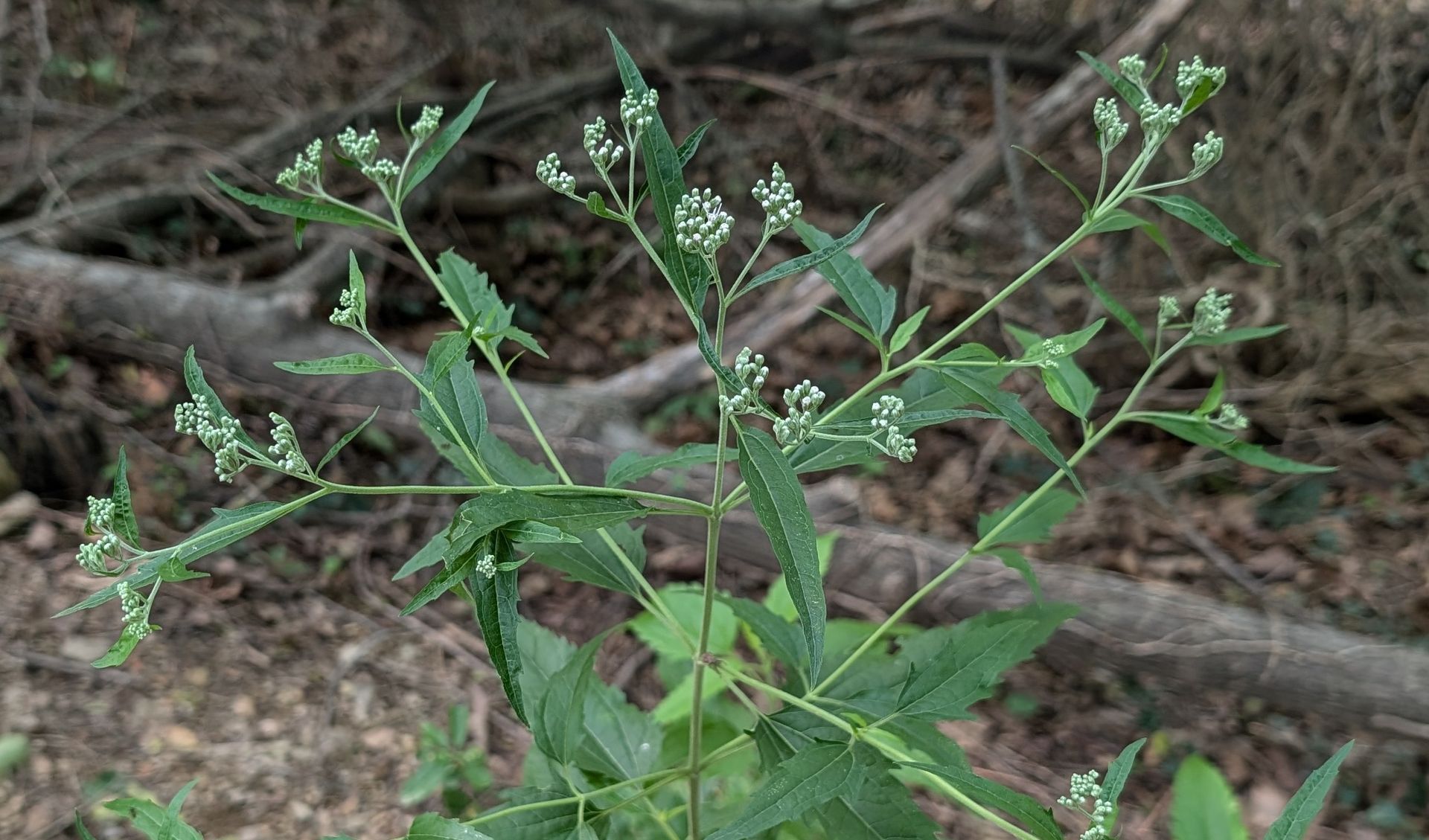
Late-flowering Boneset or Thoroughwort (Eupatorium serotinum) can be over six feet tall with branching clusters white flowers at the top. Individual flowers are small but are impressive because there are a lot of them. Leaves are long and narrow with inch-long stems.
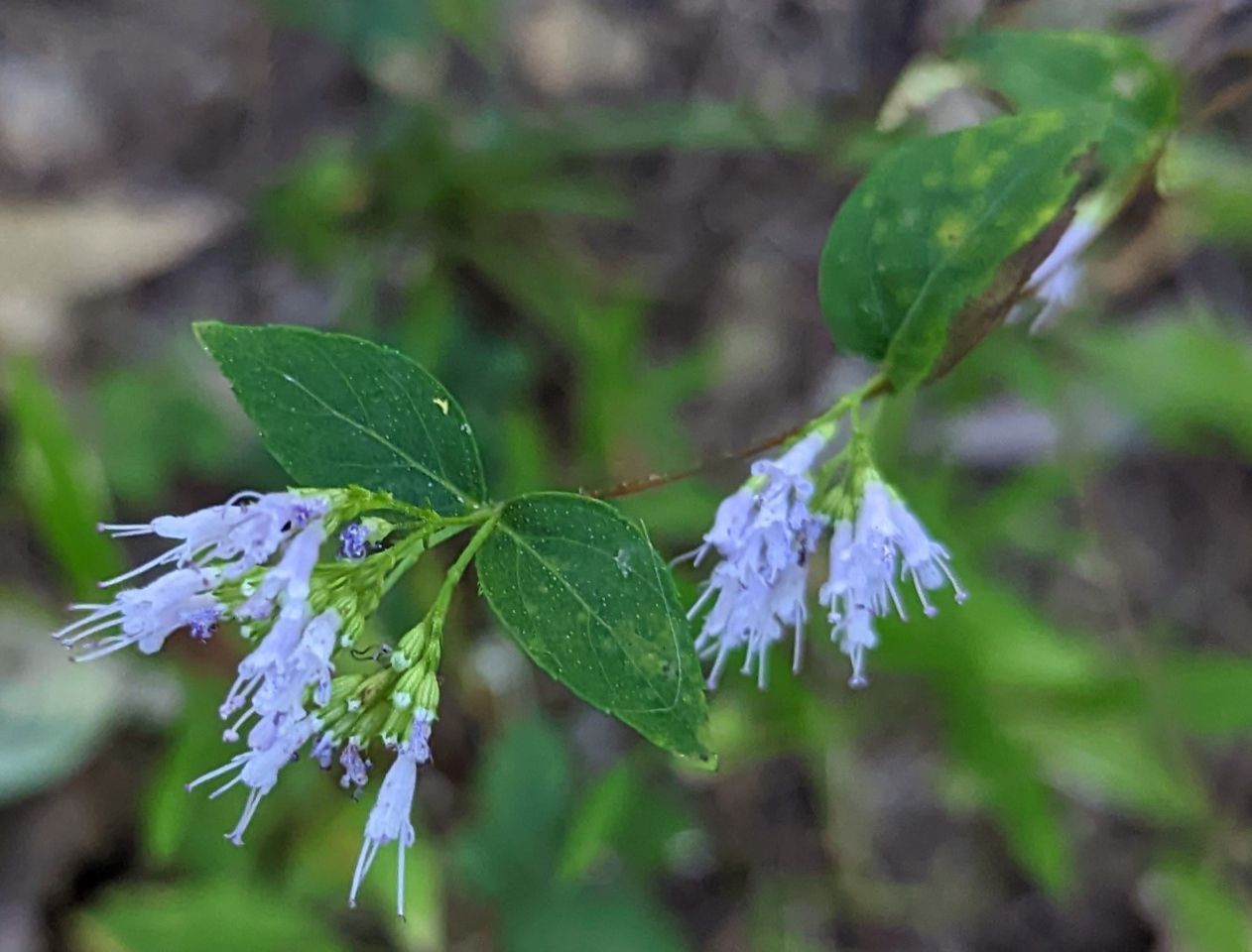
Dittany (Cunila origanoides) has slender, stiff, one-foot-high stems with stemless, paired, one-inch, triangular leaves. Clusters of several purple flowers grow in the leaf axils. The tubular, purple petals emerge from the green sepal tube and similarly colored stamens stick further out.
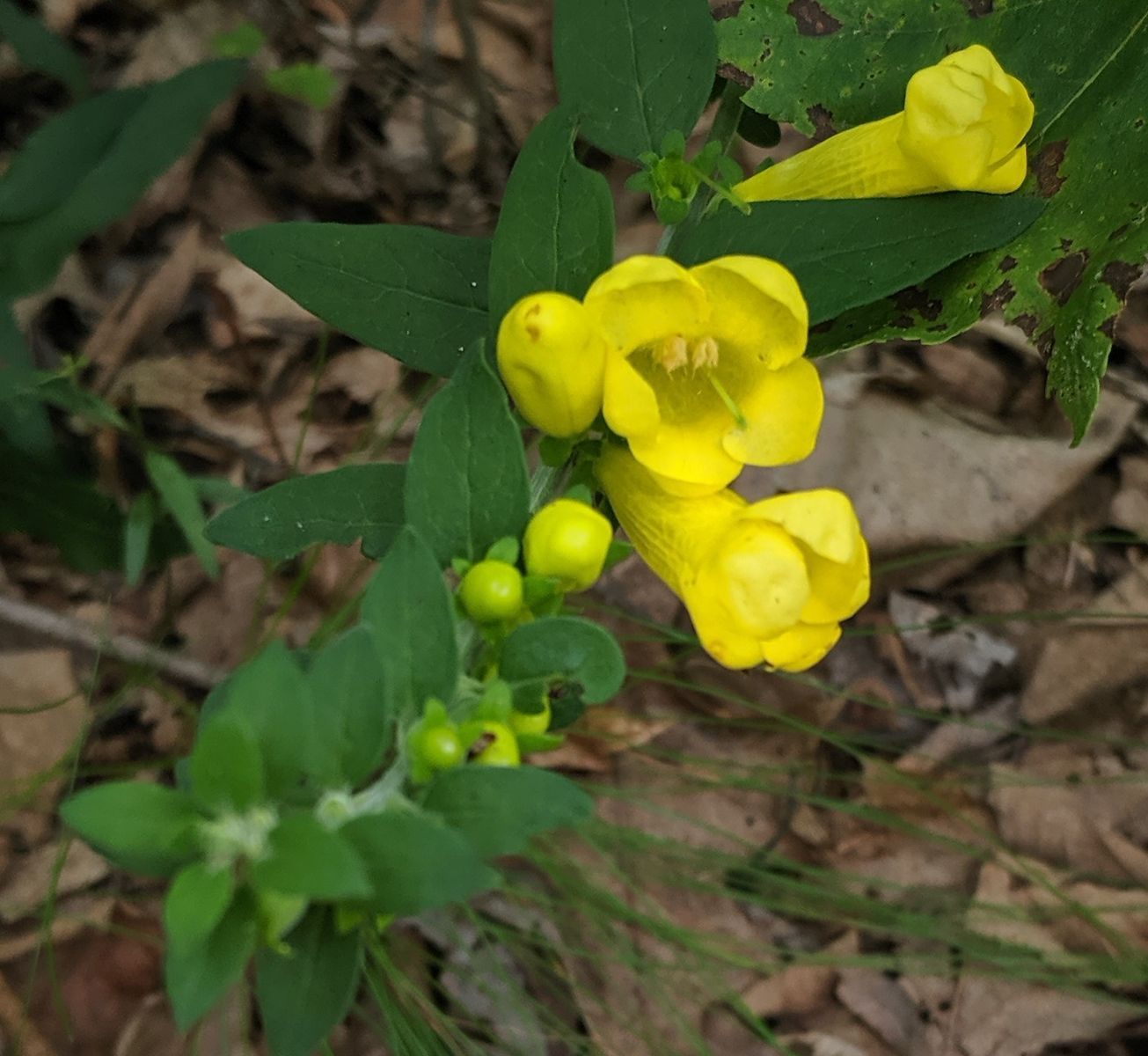
Entire-leaved False Foxglove (Aureolaria laevigata) flowers are eye-catching: leafy racemes of 1-2 inch yellow tubes with five, flaring lobes at the end. It has a smooth, green stem and most leaves are entire, though lower leaves may be toothed.
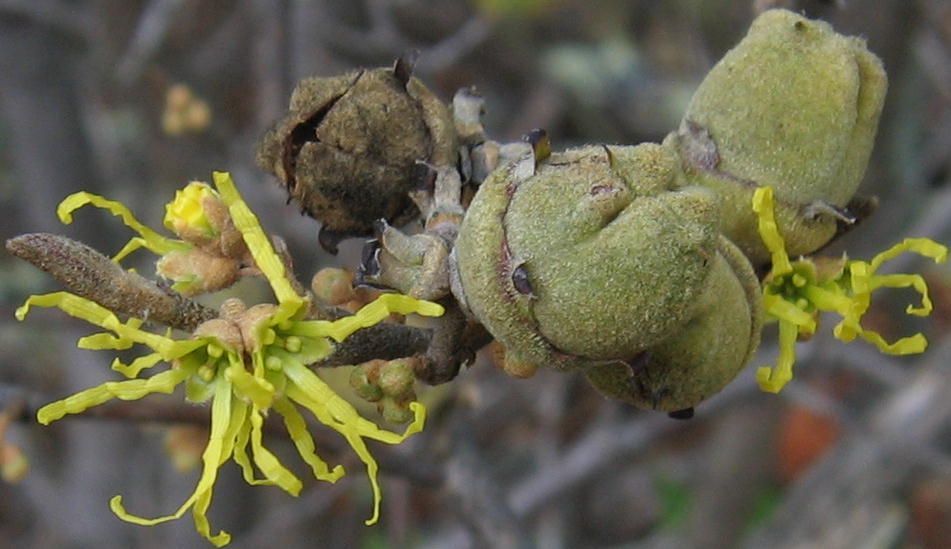
The last flower to bloom in our area is Witch Hazel (Hamamelis virginiana). Witch Hazel often grows as a thick, shrubby clump, though sometimes as a small tree. Witch Hazel’s oval leaves have wavy, rounded teeth. The flowers appear as the leaves turn yellow and fall, so the flowers stand out on leafless branches. The flowers have four long, thin, yellow petals and often grow in bunches, so you see yellow streamers in the wind. The fruit is a fuzzy, one-centimeter capsule with remnants of the four sepals remaining. It takes over a year to mature, so it remains on the bush with the new flowers.