
What's that Flower?
By Richard Stromberg





The AT section east of Harpers Ferry (heading north on the AT) has unique vegetation for the AT because of its low elevation (220 feet above sea level) and because it is close to the Potomac River on one side and closer to the Chesapeake and Ohio Canal on the other. To see some of the plants better, go into some of the openings towards the river. Here are some of the plants to look for.
Before you climb the stairs to get to take the AT on the bridge beside the railroad tracks, look at the cracks in the stone wall when you walk under the railroad tracks. One plant growing there is a small, native fern, Purple Cliffbrake (Pellaea atropurpurea). The main stem is purple. The pinnae (leaflets) are widespread and are not divided and do not have any lobes or teeth. Also growing in the cracks is Kenilworth Ivy (Cymbalaria muralis). It is not native, but is rare, so no danger of invasion. The light green leaves have three or five points. The flowers are about a quarter inch. They have five irregularly arranged blue or lilac petals with yellow in the middle.
Leaving the metal stairs down from the bridge over the Potomac, turn right to follow the AT along the Canal towpath. The towpath runs close to the canal. The river is several yards on the other side of the towpath, mostly obscured by vegetation, but several openings let you see the river and flowers close to the river. Look for the flowers listed below. All are native unless otherwise noted.
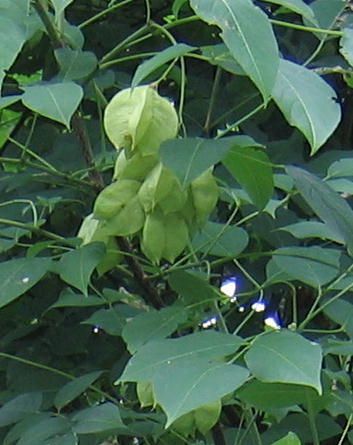
Bladdernut (Staphylea trifolia) is a small tree with three-part leaves, the stems of the two side leaflets are much shorter than the stem of the end leaflet. Panicles of one to two-inch, globose, papery capsules with three pointed lobes at the end hang at the end of brances. They contain bony seeds that rattle in the capsule.
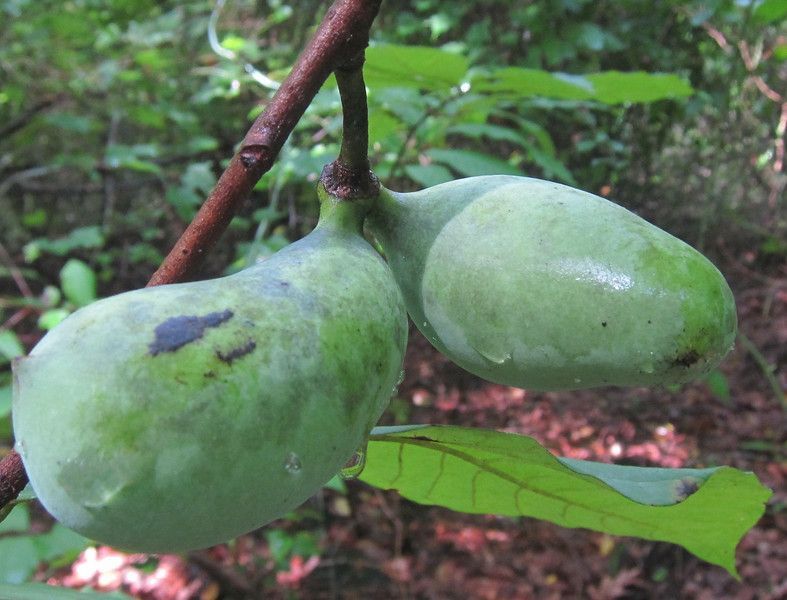
Pawpaw (Asimina triloba) is small tree with large leaves, some over a foot long. They are entire (no teeth or lobes) tapering to the stem. They alternate along the stem but tend to cluster at the end of branches. Pawpaw fruits are green and cylindrical, up to six inches long and two inches diameter. They have sweet, custardy flesh surrounding several, black, half-to-one-inch seeds.
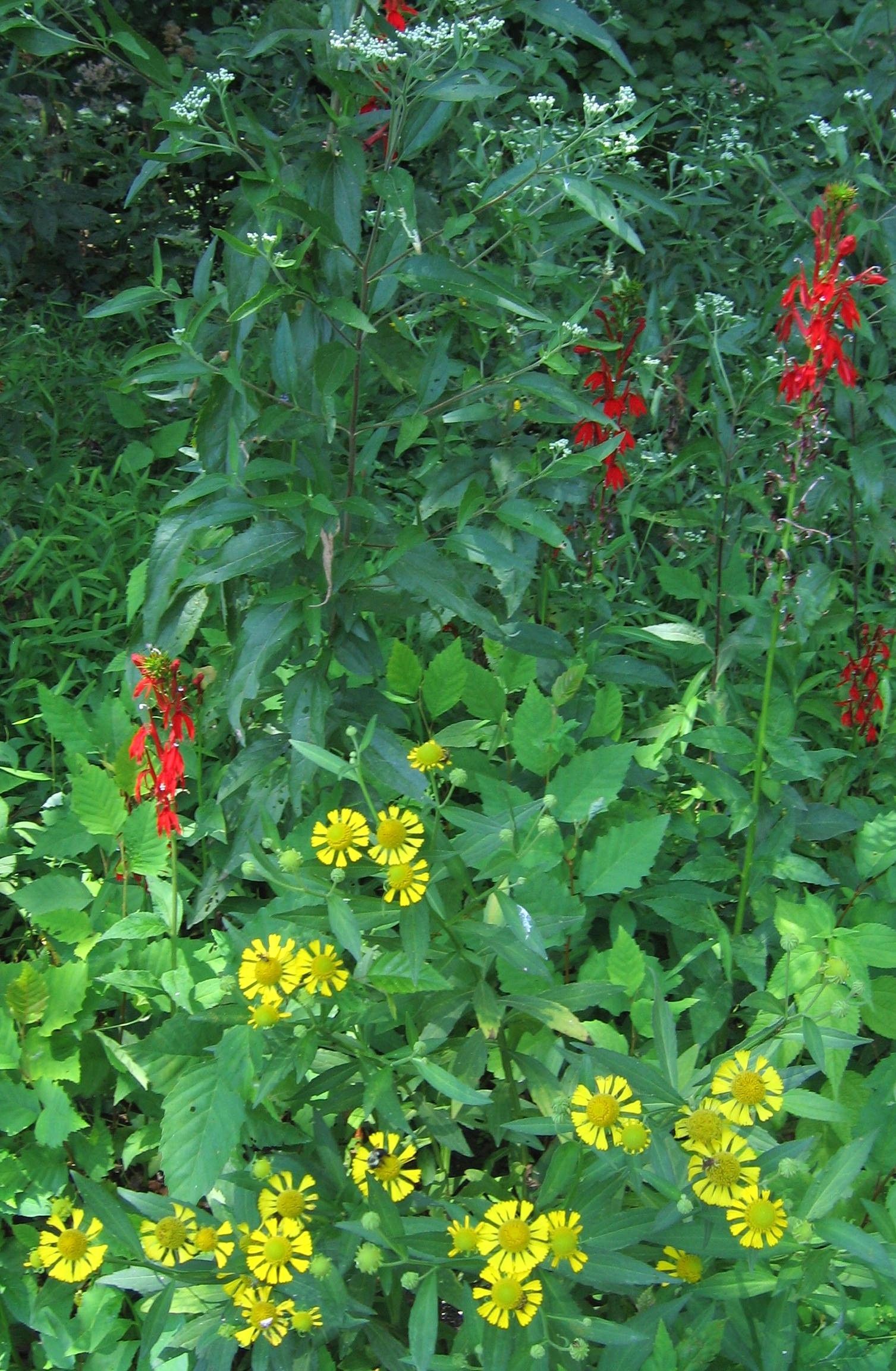
Late Thoroughwort or Boneset (Eupatorium serotinum) can be over six feet tall with branching clusters white flowers at the top. Individual flowers are small but are impressive because there are a lot of them.
Cardinal Flower (Lobelia cardinalis) flowers are bright red. The flowers have two lips spreading from a tube. The upper lip has two, erect lobes. The lower lip has three, spreading lobes.
Sneezeweed (Helenium autumnale) is an all-yellow daisy-type flower. Don’t worry. It won’t make you sneeze. The name derives from its dried leaves being used as snuff. Its flowers can be three inches in diameter. The flower head’s knob-shaped central disk is surrounded by drooping, wedge-shaped, three-toothed rays, broadest at the tip.
The Small-flowered Leafcup (Polymnia canadensis) few short, white, ray petals often are missing. The leaves are a foot long and deeply indented into three or five pointed lobes.
Large-flowered Leafcup (Smallanthus uvedalius) leaves are as large as Small-flowered Leafcup’s but are shaped like maple leaves. The flowers have yellow ray florets, so it is also known as Yellow-flowered Leafcup.
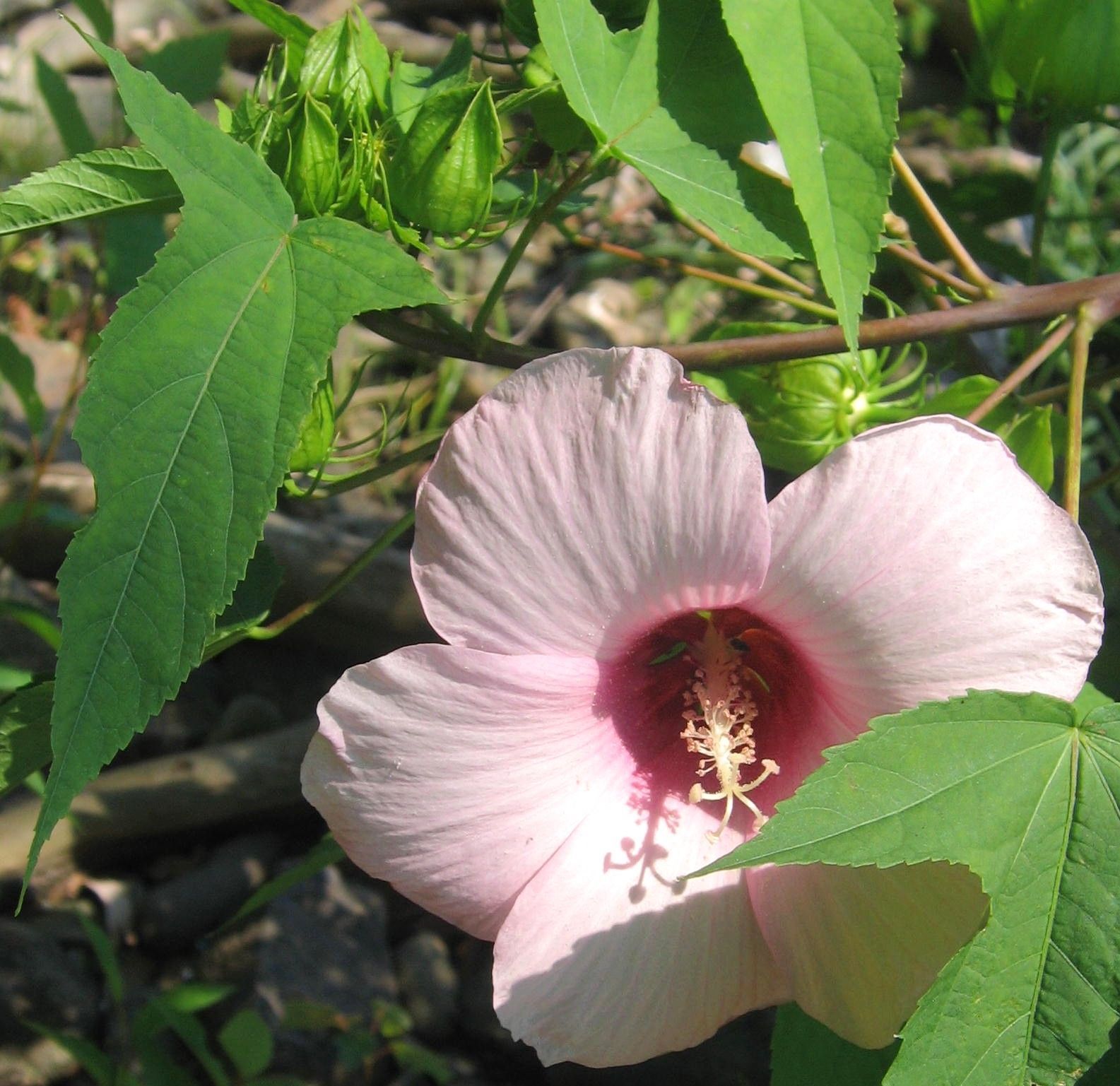
Halberd-leaf Rose Mallow (Hibiscus laevis) can grow over six feet tall. Single flowers grow from leaf axils near the top of the plant. The flowers are up to seven inches wide with pink petals that grow darker toward the center, surrounding a long column of pistils and stamens. The leaves are up to six inches long. They are arrow-shaped, but the lobes on either side of the base of the plant turn outward rather than down—halberd-shaped.
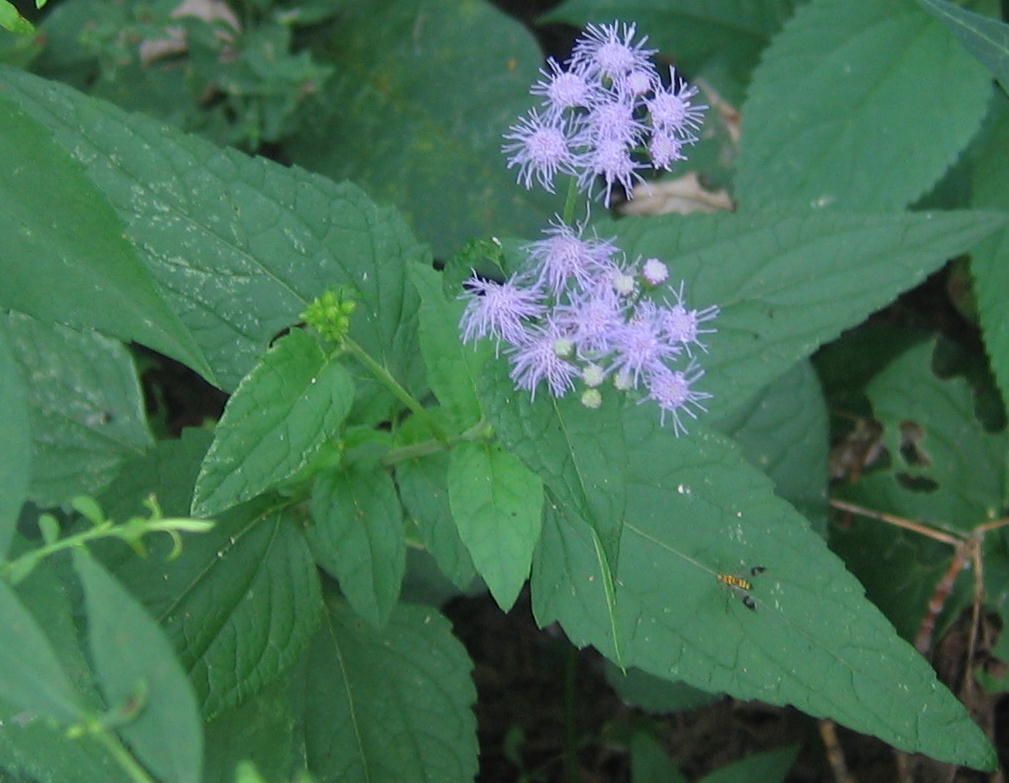
Mistflower (Conoclinum coelestinum) has branching clusters of fuzzy purple flowers growing at the top. It grows three feet tall.
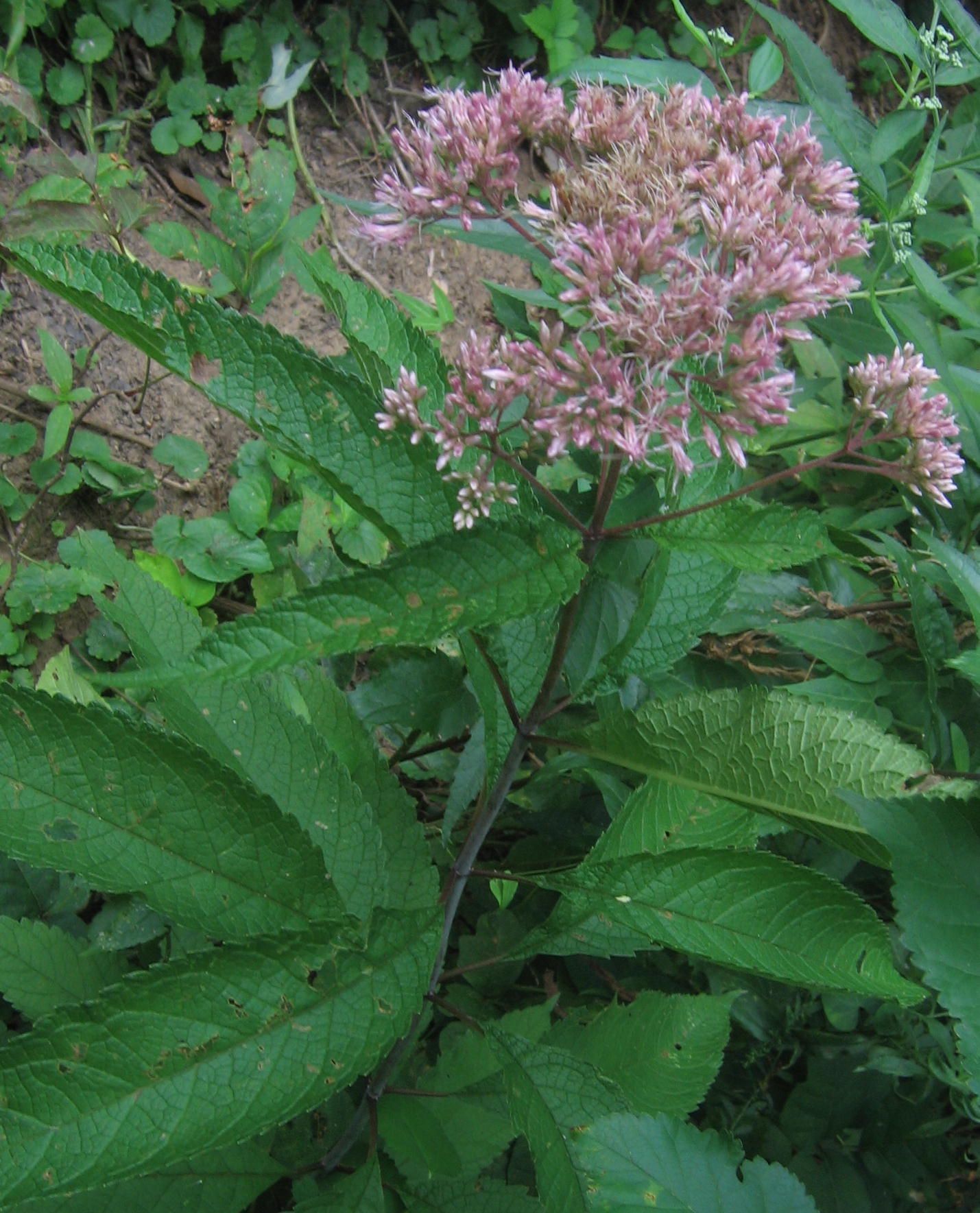
Hollow Joe-Pye Weed also called Trumpetweed (Eutrochium Fistulosum) can grow ten feet tall. Its purple stem is hollow. Its many, small, purple/pink flowers form a dome at the top of the plant.
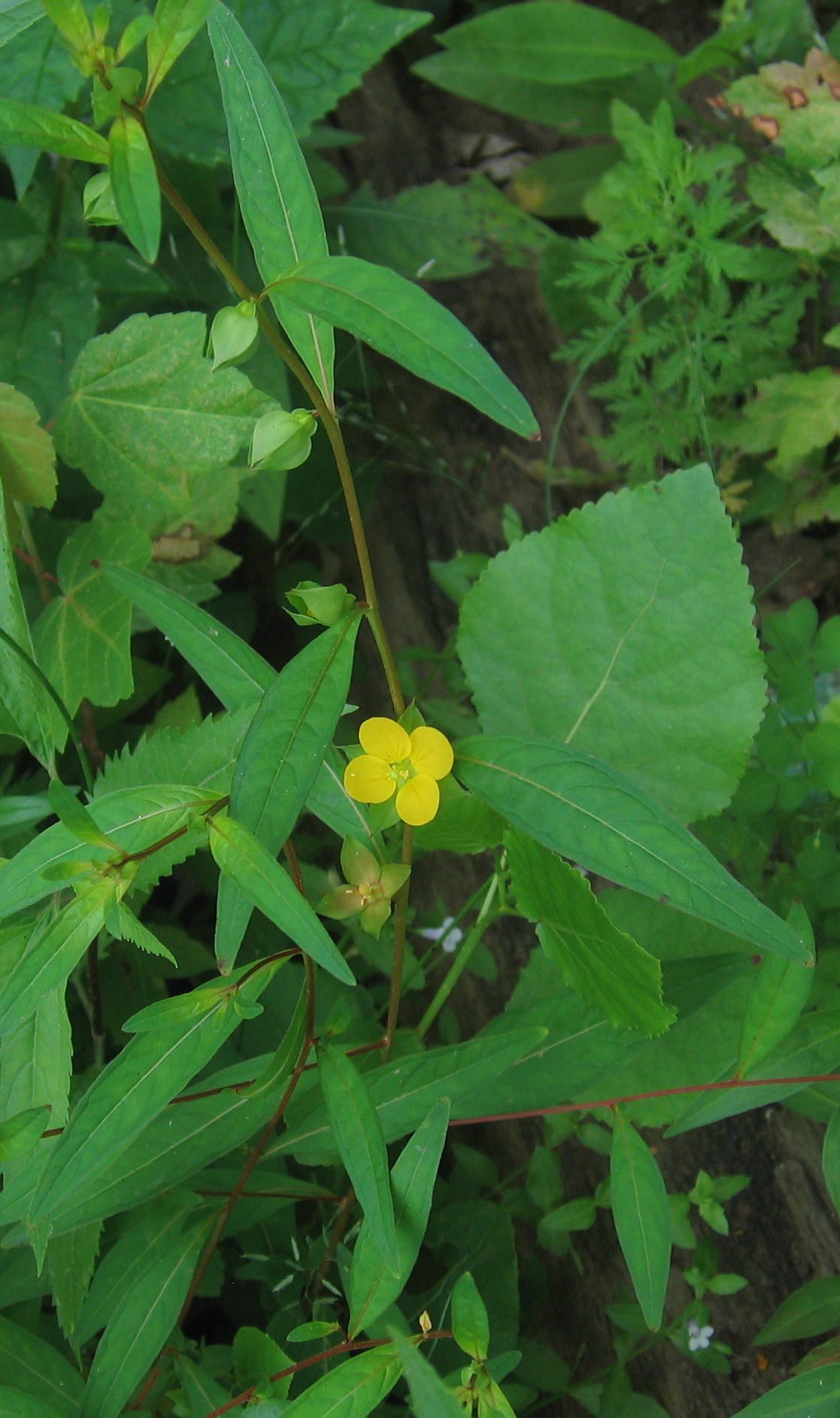
Seedbox (Ludwigia alternifolia) gets its name from its cube-shaped fruits that can last through winter. Its half-inch, yellow, four-petaled flowers grow in leaf axils.
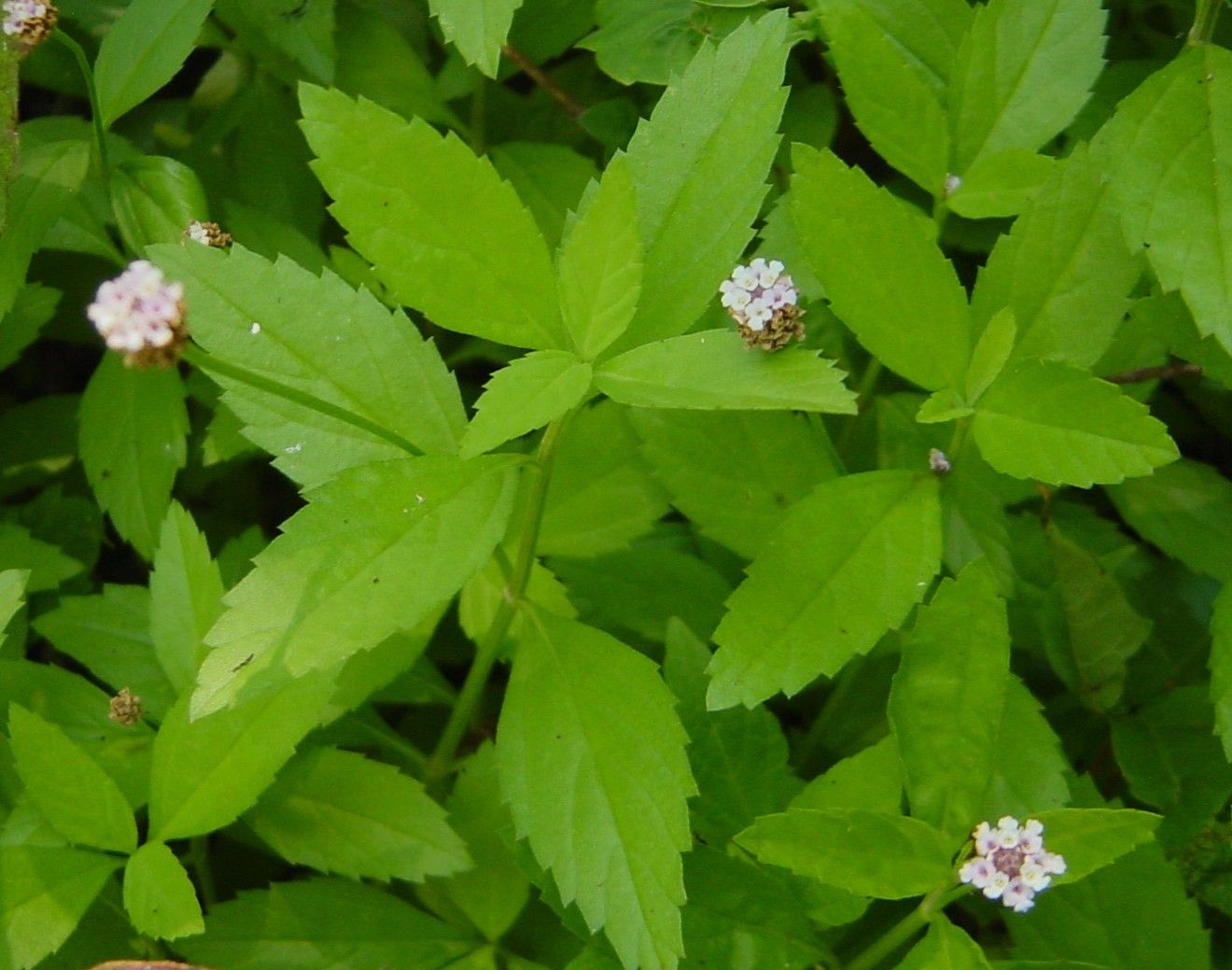
Lance-leaf Frogfruit (Phyla lanceolata—lance-shaped) is eight to thirty inches tall. The leaves are up to two-and-a-half inches long. The edge of the leaf has five to eleven teeth on each side from the tip of the leaf to below the middle and is smooth the rest of the way. Flower spikes grow from alternate leaf axils, rarely two from the same node. The inflorescences at the end of the spike stem are at first globose, then lengthen into a cylinder. The flowers are arranged in whorls around the spike. Each flower is about one-fifth inch across. The flower is white, light pink, or light purple, with a small patch of yellow or rosy-pink near the throat of the flower.