
Keep Calm and Read On: Love Letters
By Wayne Limberg
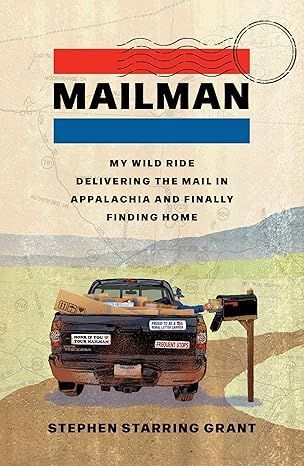
We take some services for granted, never giving them much thought until we need them. Mail carriers are one of them. In "Mailman," Stephen Grant aims to change that. During the covid pandemic Grant spent a year as a rural mail carrier in the Appalachian mountains surrounding Blacksburg, VA. "Mailman" is the at times inspiring, at time humorous, and always a thoughtful story of how that year changed his life and the important role the postal service continues to play in today’s America.
In March, 2020, Grant lost his consulting job with a New York based start-up. He had some savings but his home and way of life in Blackburg were suddenly threatened. On top of that he had just been diagnosed with early-stage prostrate cancer. No job, no insurance. Consultancy gigs were few and far between. One day he saw an ad for a job as a rural mail carrier in Blacksburg. Pay was a fraction of what he earned as a consultant but it offered medical insurance. More importantly, it seemed an adventure and a chance to reconnect with his youth. Grant's family dated back generations to southwestern Virginia. His father taught at Virginia Tech, and Grant had fond memories of camping, hiking, fishing and hunting in the surrounding mountains. So, despite his wife's misgivings, he applied.
Grant immediately had some awakenings, some rude, some not. At the end of his two-week training session, he took the oath of office every federal employee takes. It was a strange and unexpected experience for him. He realized he was part of something big. The USPS and US Army are the oldest services in the federal government. The first US postmaster was Ben Franklin who saw the creation of national postal service and post roads as guaranteeing the exchange of information and ideas and forging a sense of one united nation. While the USPS changed over the years, Grant argues that one thing stayed the same: all Americans will receive their mail regardless of who they are or where they live, and all are invited to be part of the nation's commercial, legal, scientific and artistic conversation.
On reporting to the central mail facility in Blacksburg, Grant found that many of his preconceived notions were wrong. While the postal service has made great technological strides toward sorting and handling mail, the last two steps in the process are still done mainly by hand. Each carrier has to hand sort the hundreds of items in their daily take, organize it in bins for efficient delivery, load it in their vehicle and hit the road. Once on the road, the mail carrier becomes a mix of athlete and contortionist. Some carriers use the familiar white USPS right hand drive jeeps but most use their own left hand drive vehicles. This means they sit on the passenger side and drive with their left hand on the wheel, one foot on gas and brake, while they stuff mailboxes with their right hand.
Grant came to realize he would never be a great mail carrier. This was humbling for someone used to being at the top of his game. Over time, however, he found it liberating. More than once Grant’s fellow carriers saved him from disaster and taught him that persistence trumped perfection. As long as you showed up every day, someone would have your back. This led Grant to do some serious soul-searching. In his former life, he had a reputation for being a demanding, even difficult boss and colleague.
These lessons informed his wider view of the world. Most of the people he delivered mail to hailed from families that had lived in the Appalachian Mountains for generations. They were an independent even contrary lot, suspicious of outsiders and change. However, Grant came to see their independence as a result of their need to be self-reliant. And while they could be a bit distant with strangers, they could also be generous and caring, offering coffee in the winter or a cold lemonade in the summer. They could also be a bit quirky, even eccentric. He never did find out why one farmer was carrying a skinned pig on the back of his tractor, and he still shakes his head over his USPS colleagues’ take on covid vaccinations. None of Grant’s Appalachian folk see themselves as victims. As such, "Mailman" is a good counterbalance to J. D. Vance's "Hillbilly Elegy."
Grant does not shy away from stating his opinions, and his language can be colorful, even blue. He has choice words for Amazon and UPS when the two failed to reach a new shipping deal and the USPS had to pick up the slack. He takes pride in how the USPS made sure mail-in ballots reached their proper destinations during the 2020 elections. His position on guns may raise some eyebrows, but it partly flows from his father being wounded in the 2007 shooting incident at Virginia Tech. Food for thought is revelation that an experienced mail carrier can provide a fairly detailed profile of someone on their route from the mail they receive.
Grant ultimately gets a new consultancy job but knows he will always carry a map of Rural Route 10 in his head and fond memories and deep regard for all those carriers who show up and deliver. Some may see mail delivery as dumb and anachronistic, but for Grant it is a vital act of normalcy and an essential glue that holds this nation together.
Thanks to all who have recommended good reads. If you have one, send it along to wplimberg@aol.com. Meanwhile, keep reading. See you on the trail.
<<Previous Article Back Home Next Article>>