
What's that Flower? Bear Church Rock—Summer
Article and Photos by Richard Stromberg
This article shows you some of the flowers to look for in Summer on the way to Bear Church Rock in the Central Section of SNP. Bear Church Rock offers a fantastic view of SNP mountains with no signs of human habitation. It is just off Jones Mountain Trail. It can be accessed by going down from Skyline Drive, but I am describing the flora you may see going up from the parking lot at the end of State Route 662 on Staunton River Trail (described on pages 269-72 of PATC’s “Appalachian Train Guide to Shenandoah National Park”).
All species below are native unless otherwise noted.
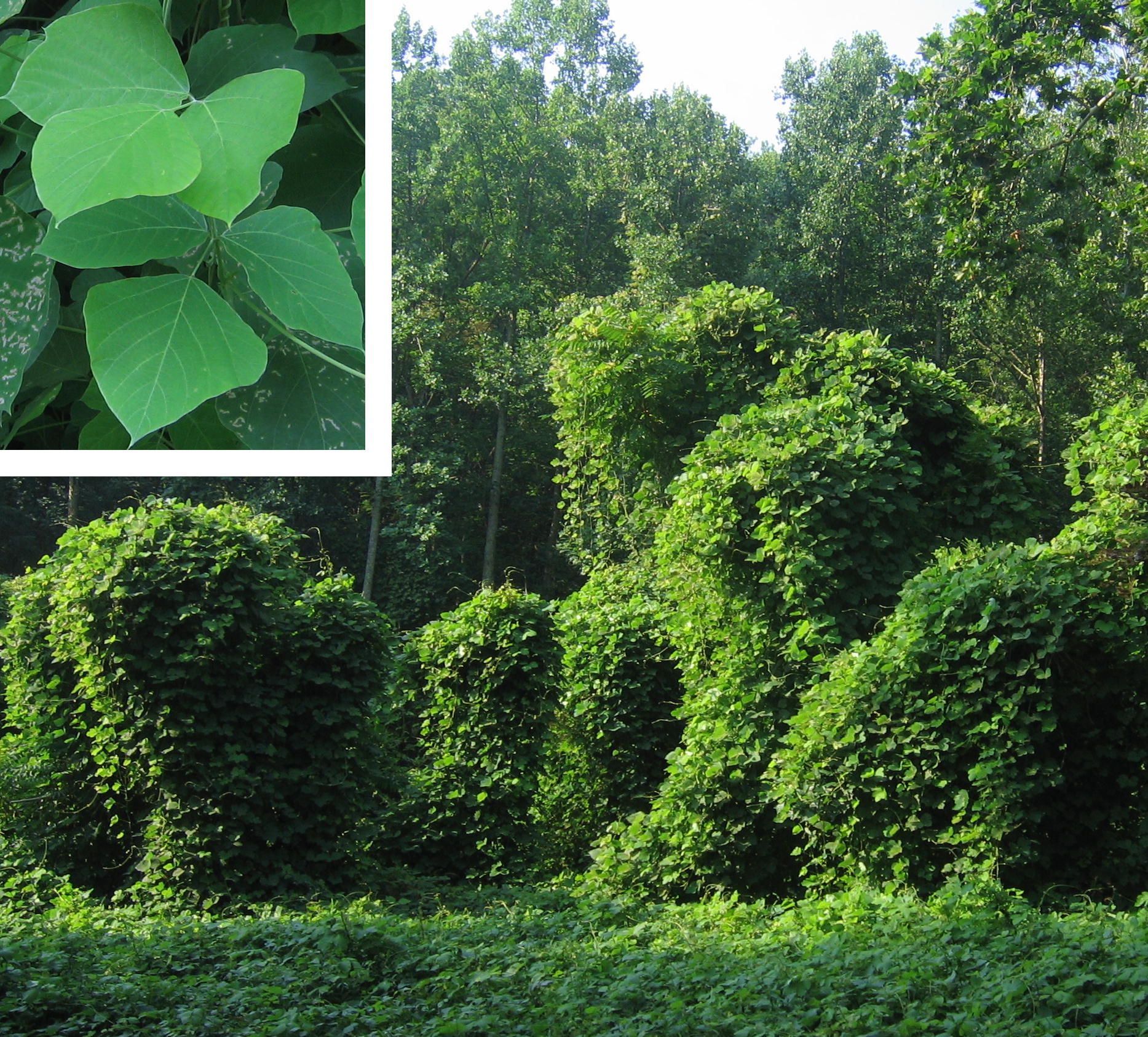
Next to the parking lot you will see a huge infestation of Kudzu (Pueria montana), an invasive non-native vine overwhelming everything in its path.
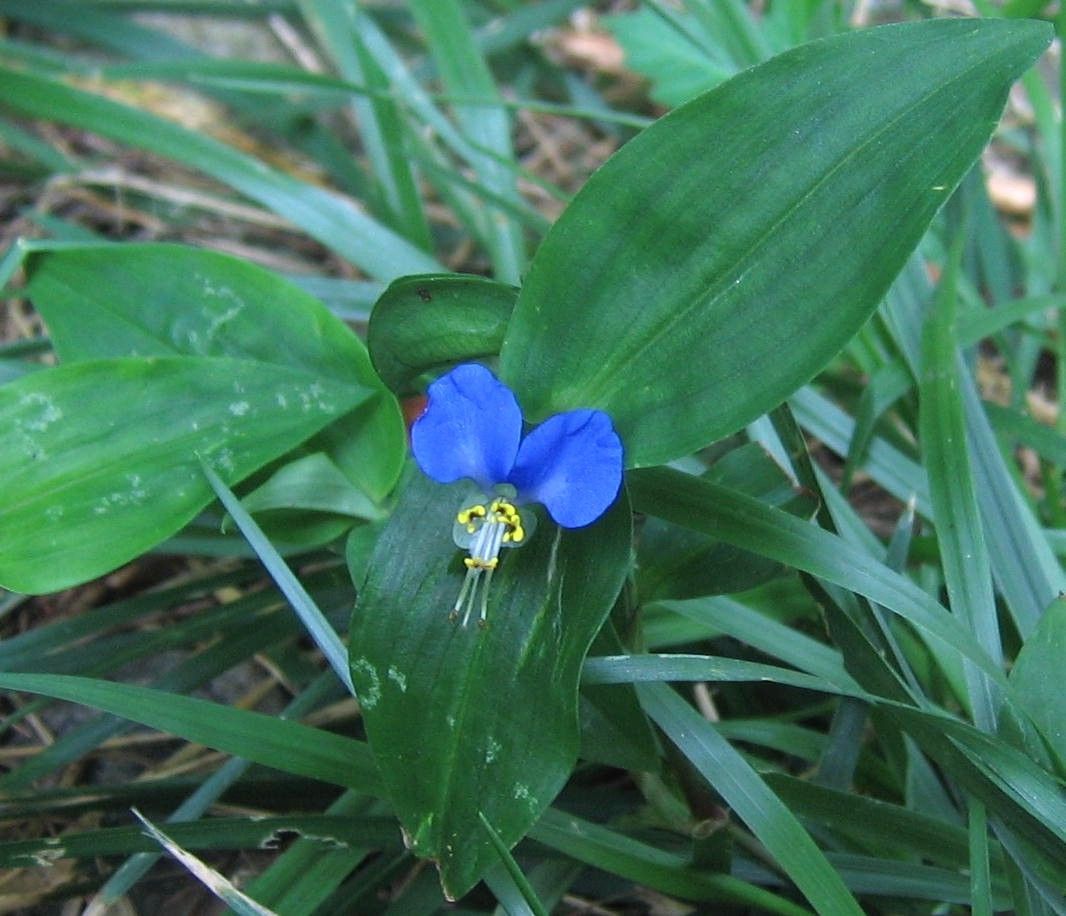
Asiatic Dayflower (Commelina communis) is only a few inches tall but draws attention because of the flower’s two bright blue upper petals. Sterile yellow anthers protrude and contrast against the blue. Sticking out further and below are relatively colorless fertile stamens and the curving style between them. Behind them hangs the small, white, almost colorless third petal. Stems have alternate leaves and usually creep along the ground and turn up at the end. It is an invasive alien.
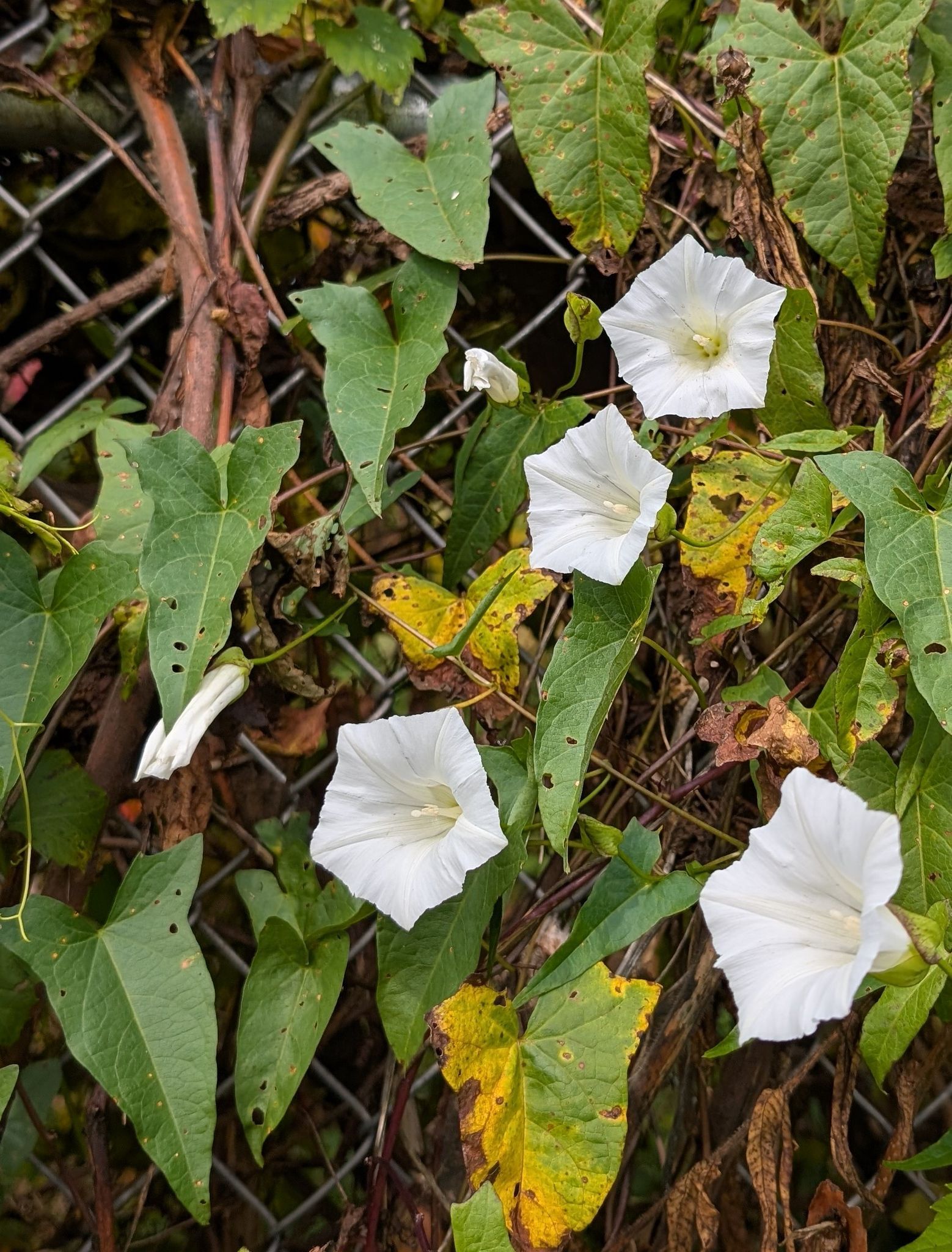
Hedge Bindweed (Calystegia sepium) has morning-glory-like flowers that range from white to pink and are up to two and half inches. The lobes at the stem end of the leaves are squared off.
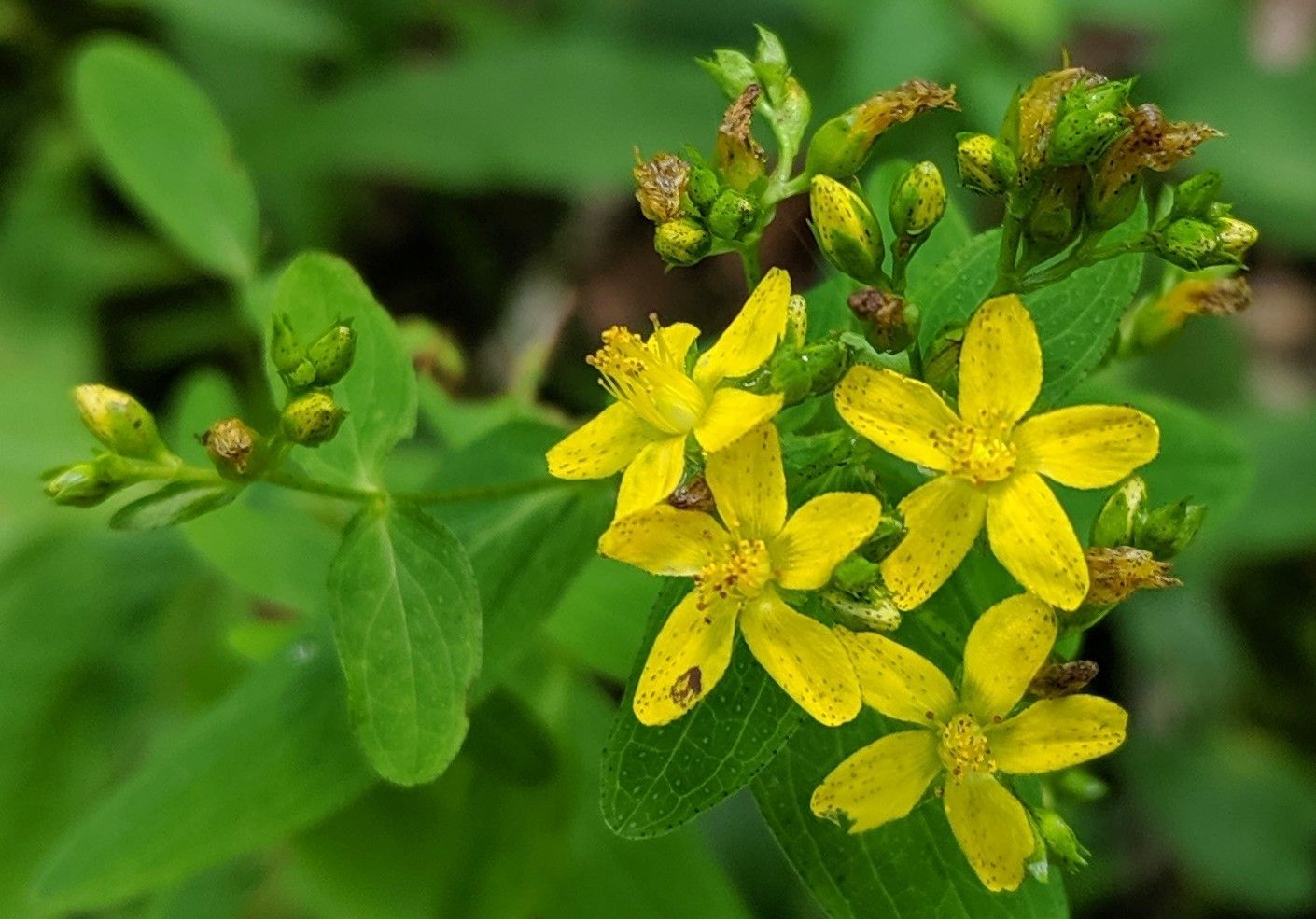
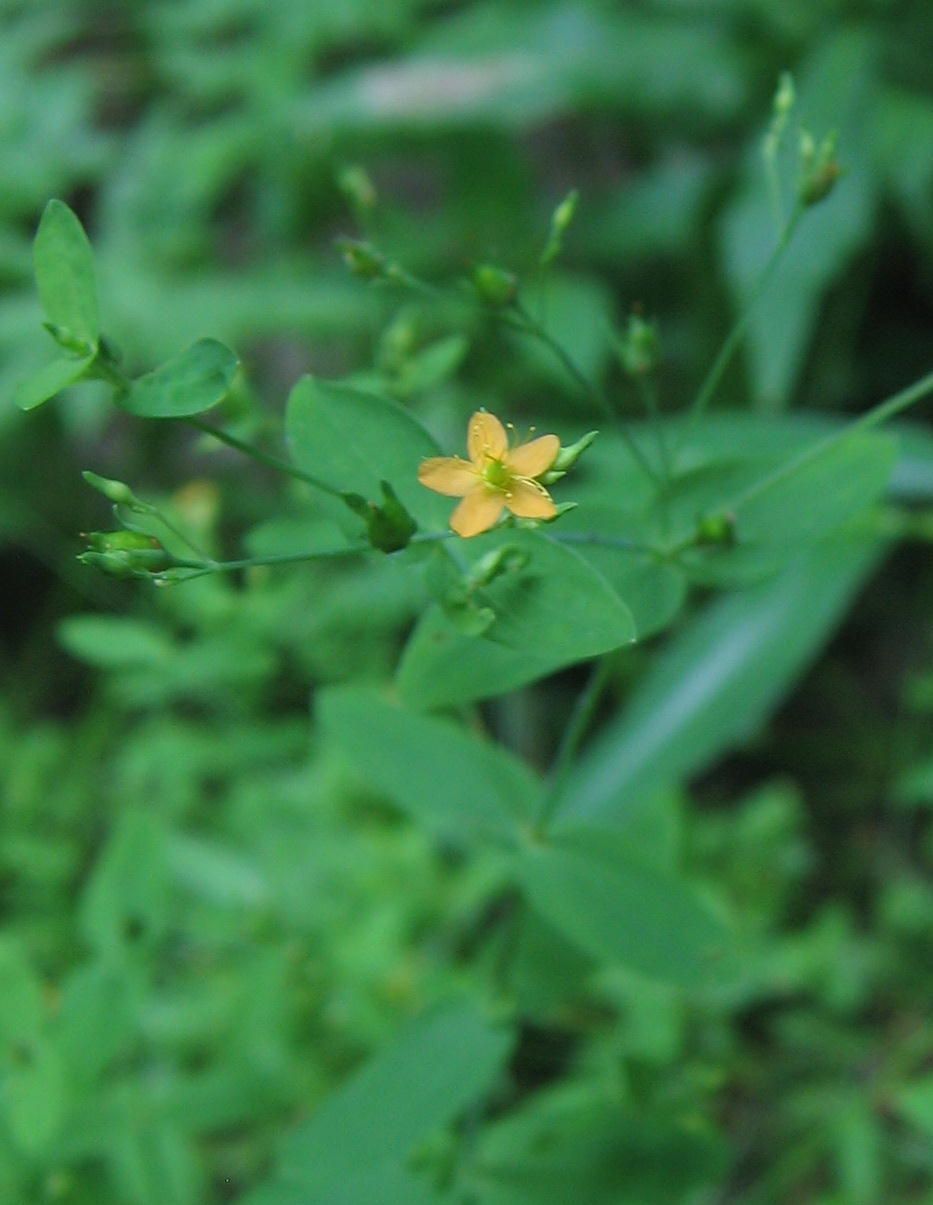
St. John’s-wort (Hypericum genus) flowers have five yellow petals with many stamens protruding from the middle. Spotted St. John’s-wort (H. punctatum) leaves are bigger than the flowers. Leaves and petals have spots all over, especially at the edges. Dwarf St. John’s-wort (H. mutilum) flowers have fewer stamens and are less than a quarter inch, dwarfed by the one-inch leaves. Flowers and leaves have no spots. It likes wet places.
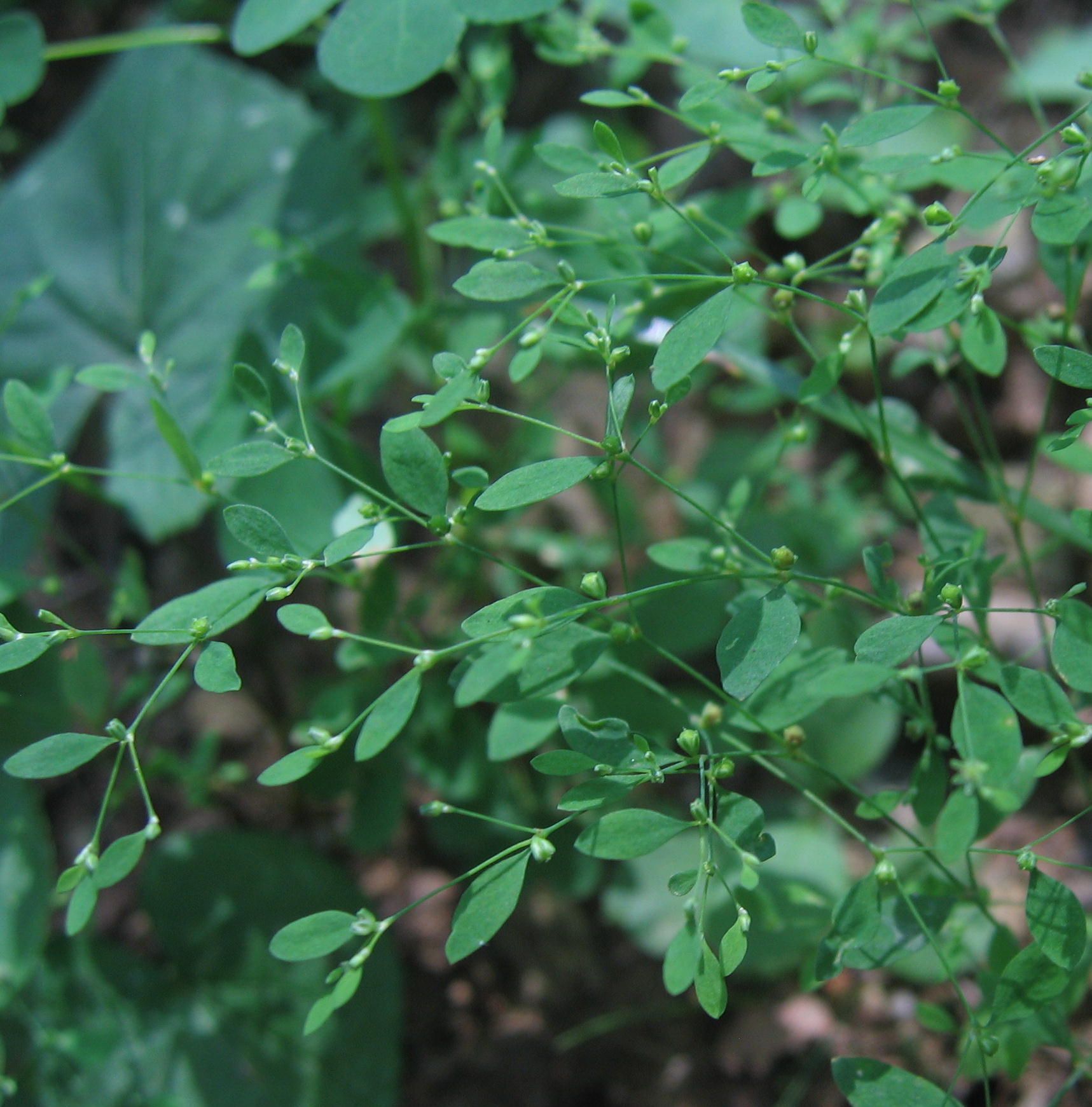
Smooth Forked Nailwort, (Paronychia canadensis is a small plant with pairs of entire leaves (no lobes or teeth). Its display of paired, elliptical, one-inch leaves widely spread along spindly, forking stems up to one foot high, is eye-catching for a hiker looking at the ground to see where to make their next step. The flowers and fruits in the leaf axils are tiny, less than two millimeters.
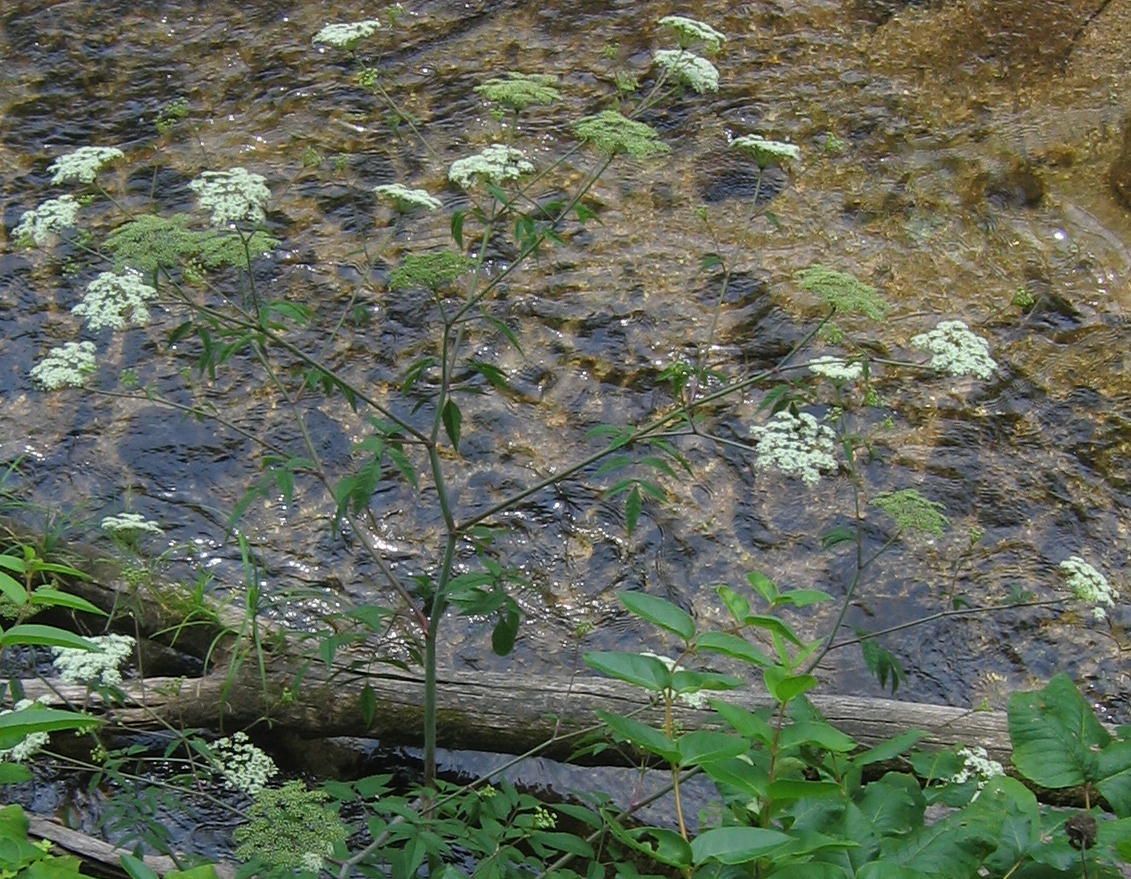
Water Hemlock (Cicuta maculata--spotted) flowers are similar to Queen Anne’s Lace but is widely branched. It has compound leaves with toothed leaflets. It grows in wet laces. It is poisonous if ingested.
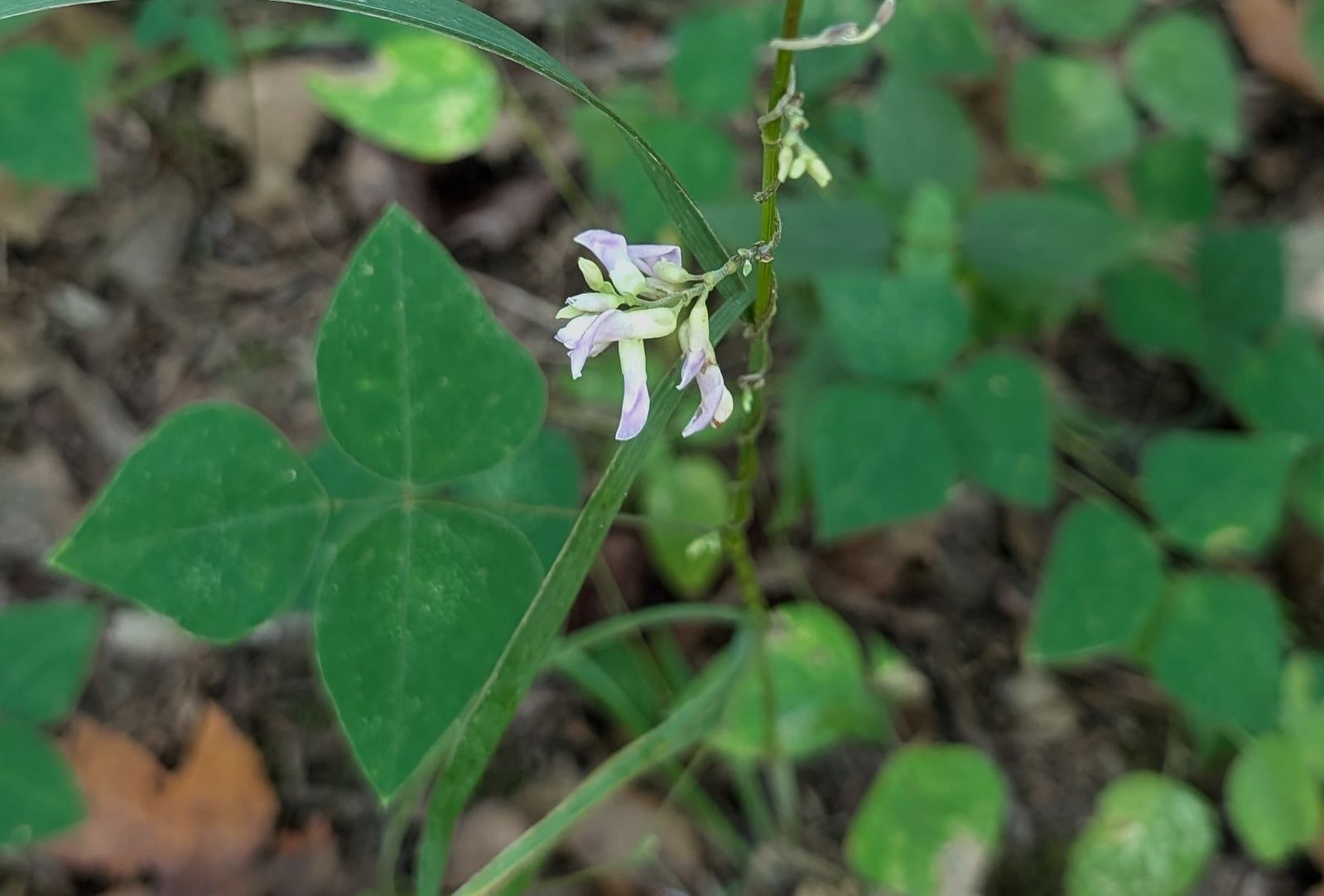
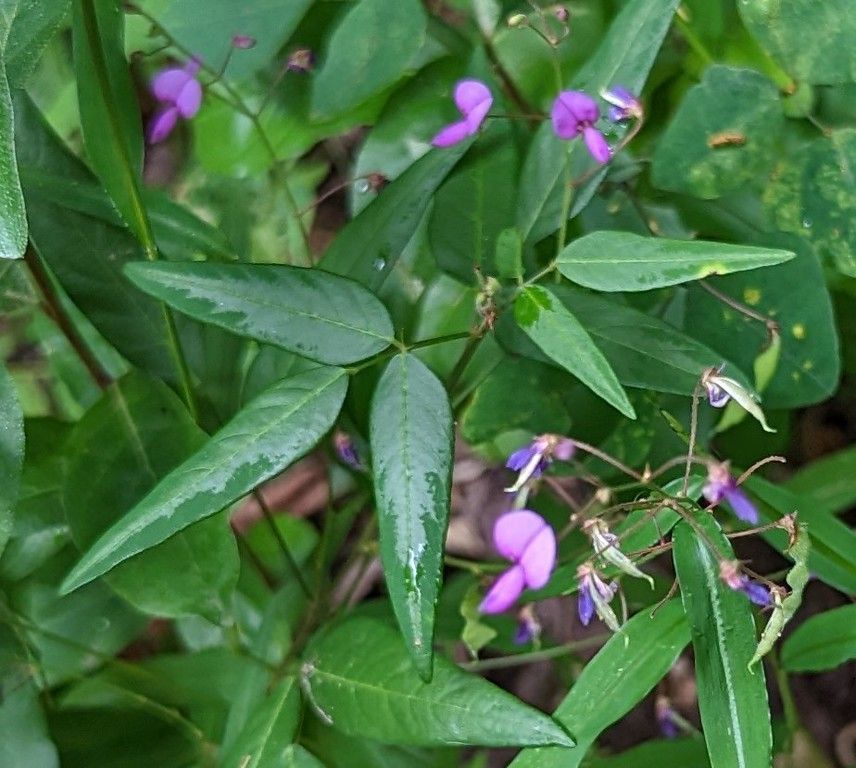
Hog Peanut (Amphiocarpaea bracteata) is a twining vine. It stays low and often just lays across other plants rather than wrapping around them. The leaves alternate along the stem and have three leaflets. The leaflets can be almost three inches. They have a round base from which each side extends straight for two-thirds of the leaflet to a point. The half-inch purple-pink flowers are arranged in a raceme. They hardly seem to open, the banner petal peeling back from the other four petals, and the wing petals barely unwrapping from the two petals that are fused into a keel.
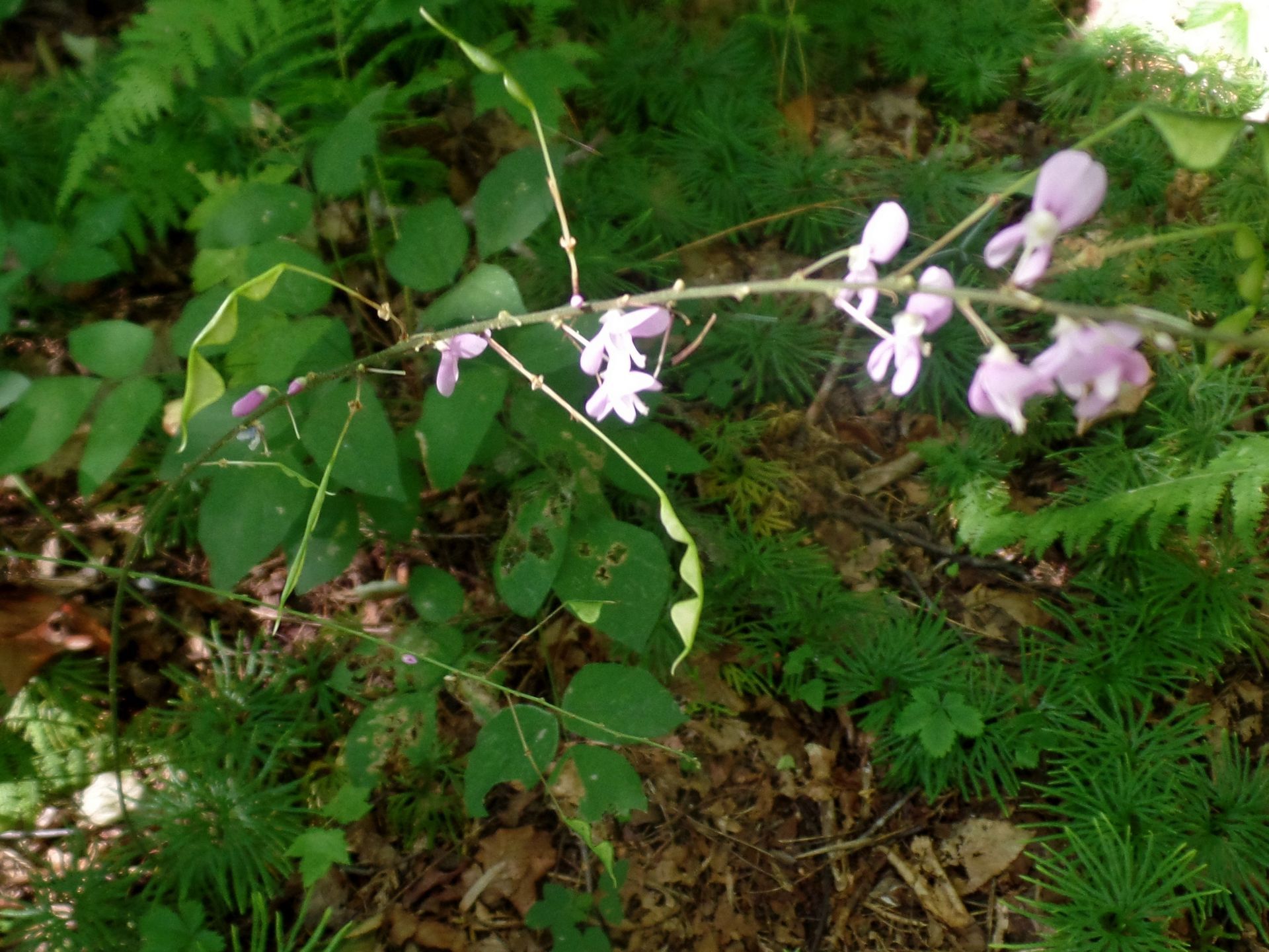
Three species of Tick-trefoil may be seen. Individual flowers are less than a half inch, but each inflorescence has several of them. The flowers have the typical pea structure: the upright banner is pink-violet with dark splotches at the bottom middle of the base and white spaces underneath the splotches; two wing petals are the same pink-violet; the keel is elongated the wing petals may hide it. Naked-Flowered Tick-trefoil (Hylodesmum nudiflorum) flower stems have no leaves. The stem may reach over three feet, often leaning into the trail, with a panicle of flowers at the end. The stem comes straight out of the ground. The leaves arise from ground completely divorced from the flower stem above ground.
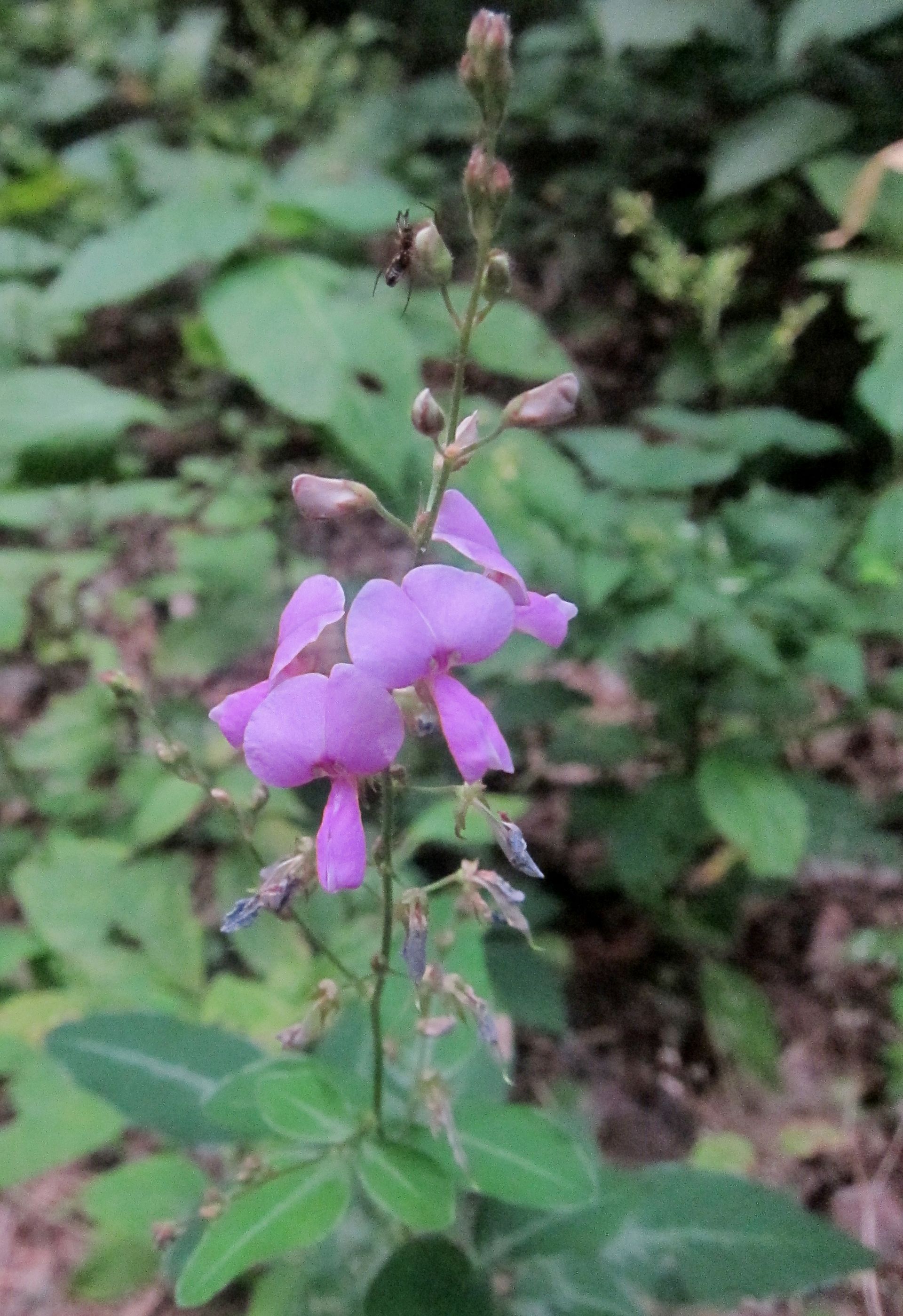
Dillens Tick Trefoil (Desmodium glabellum) flower stems have leaves on them. The leaves have three leaflets that are one to two inches and one-and-a-half to three times longer than wide. Panicled Tick Trefoil (D. paniculatum) is similar but has narrow leaflets, four times longer than wide. The flowers develop into pods with triangular segments that break apart. The segments are covered with hairy hooks, ready to grab you and leave triangular segments on your socks.
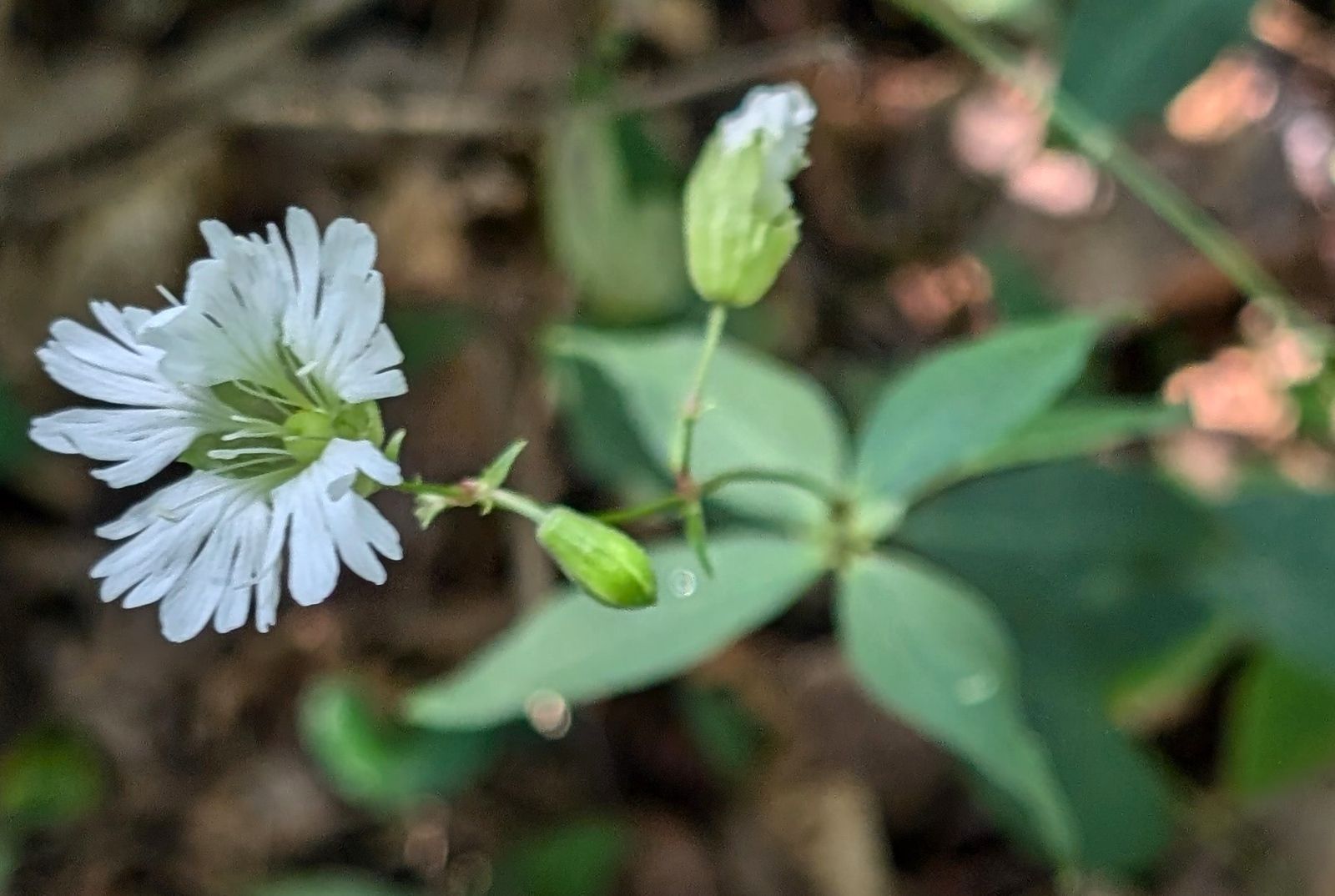
Starry campion (Silene stellata) has white flowers. The flowers have five petals that are fringed with eight to 12 lobes. It is also called widow frills. Its leaves are in whorls of four except, possibly, for a top pair.
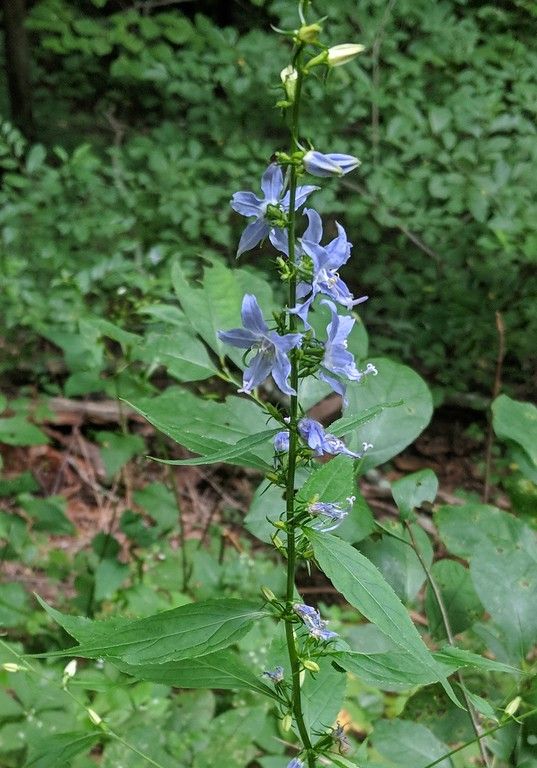
Tall Bellflower (Campanula americana) has light blue, star-shaped flowers with a three-lobed stigma protruding from the center of the flower. The flowers grow on a leafy spike.
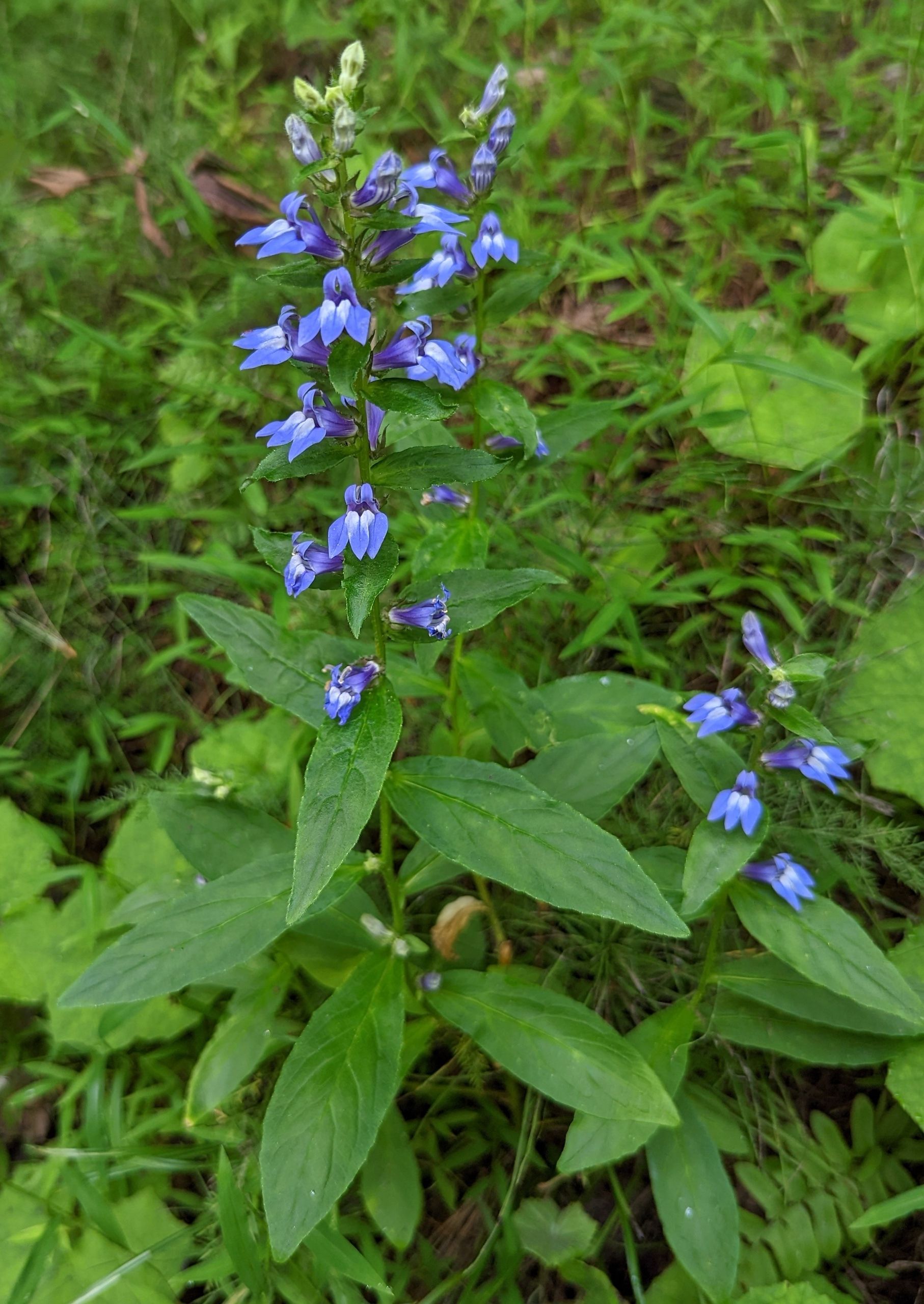
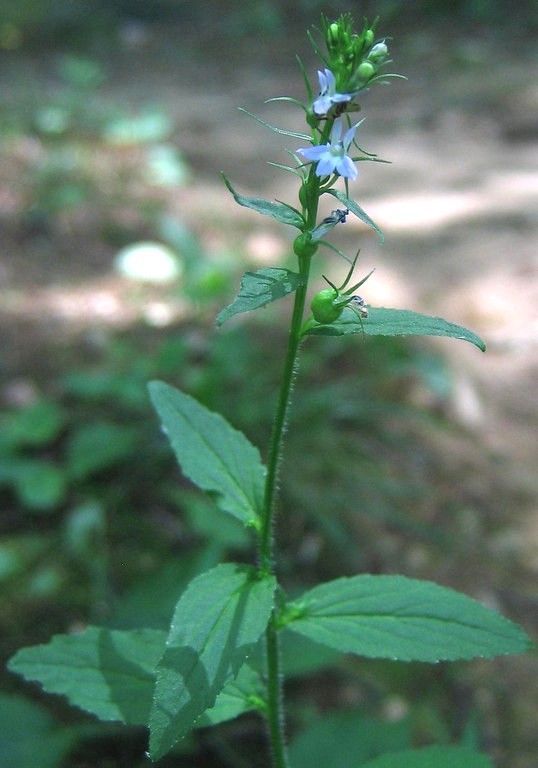
Lobelia flowers grow in long spikes. The flowers have two lips spreading from a tube. The upper lip has two, erect lobes. The lower lip has three, spreading lobes. Great Blue Lobelia (L. siphilitica) one-inch flowers are blue. Indian Tobacco (Lobelia inflata) flowers are only about a quarter inch and are light blue to white. The structure behind the petals is strongly inflated.
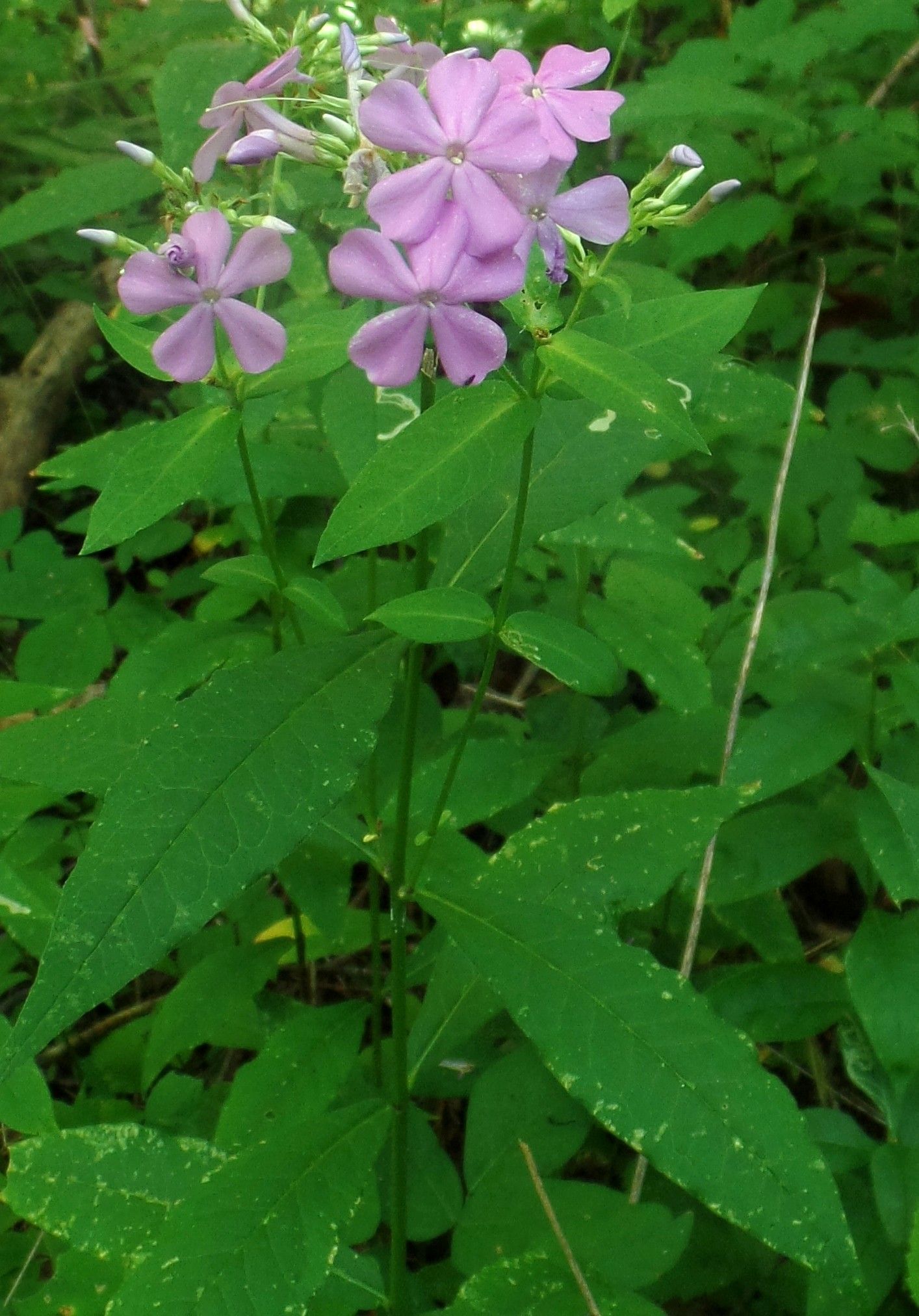
Garden Phlox (Phlox paniculata) can grow five feet tall. It blooms in July-August. The petals flare out from narrow tubes. The leaves are entire (no lobes or teeth) and are paired, opposite each other on the stem.
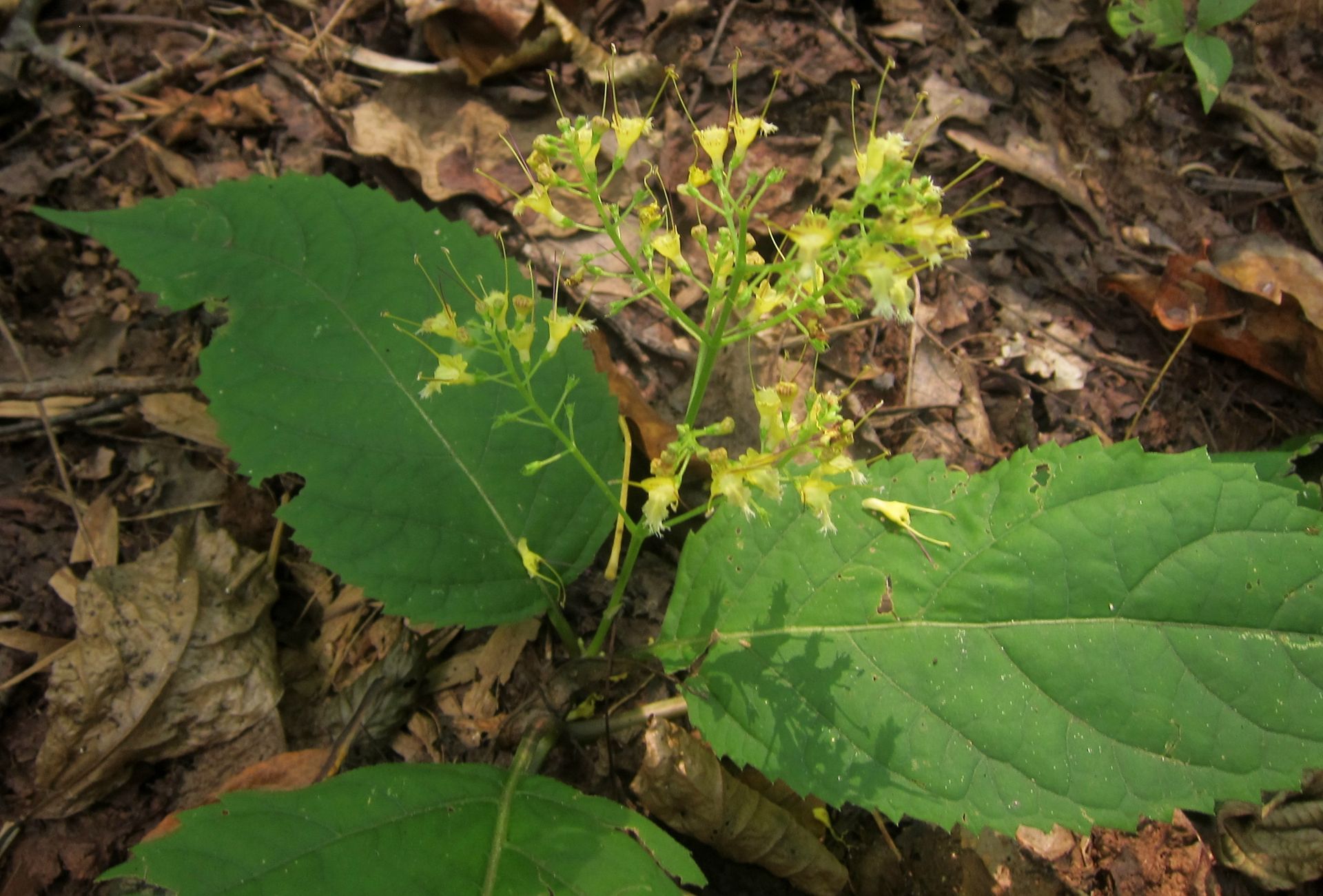
Horsebalm (Collinsonia canadensis) plants are three to four feet tall with large (up to 9 inches), toothed leaves. The inflorescence at the top may have many branches. The flowers grow in pairs opposite each other up the branches. Only a few flowers are open at a time. The half-inch, yellow flowers have four insignificant lobes on top and a large, fringed lobe on the bottom. Two stamens and a forked stigma stick out beyond the petals.
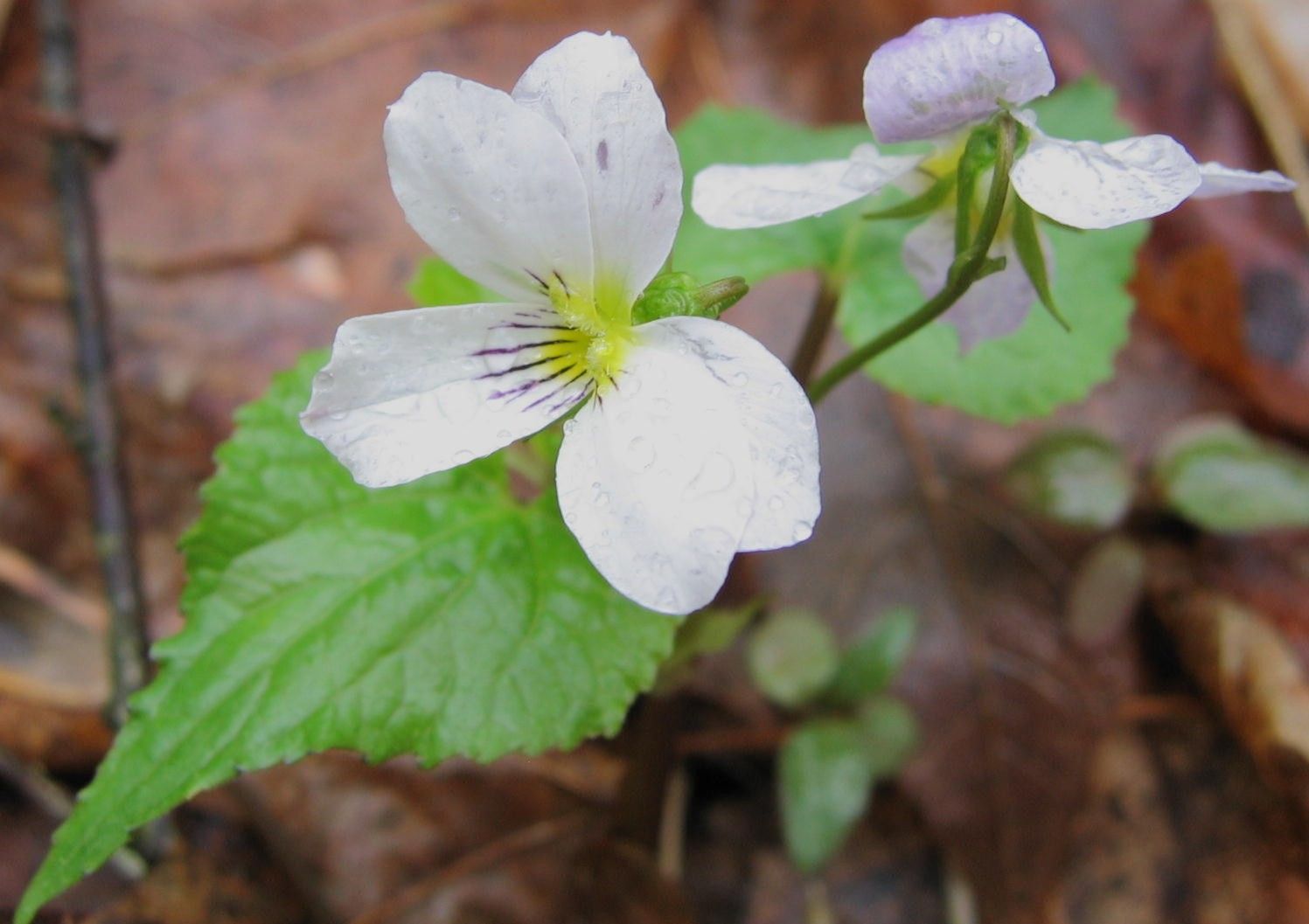
Canada Violet (Viola canadensis) flowers have the violet typical form: five petals with the lower petal larger than the side and upper pairs of petals. The petals are white with purple stripes leading to a yellow throat, but the best key is the violet tinge on the back of the flower. The leaves are heart shaped. Canada Violets are an exception as they bloom beyond May.
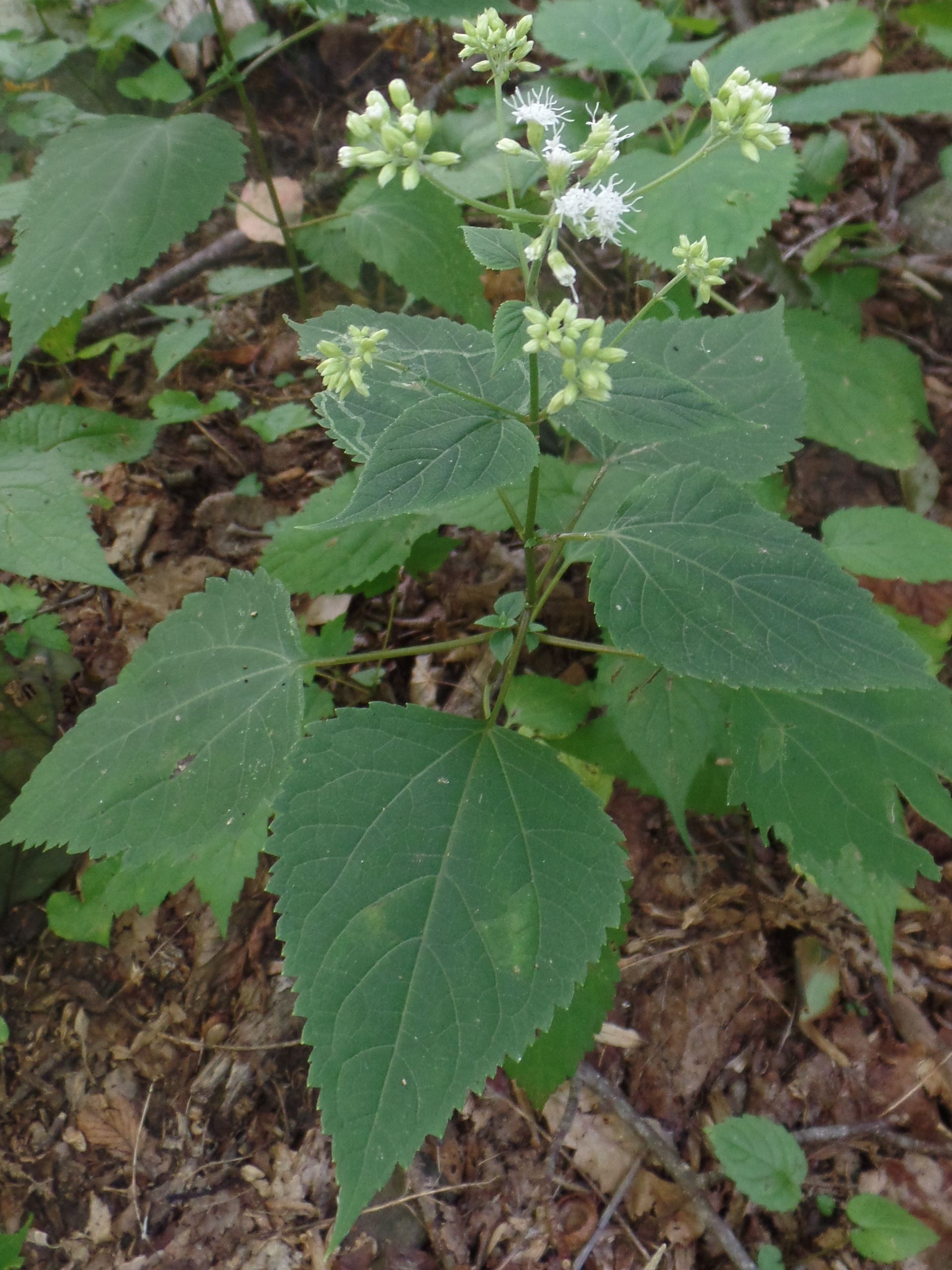
White Snakeroot (Ageratina altissima) can grow to five feet tall. It has branching clusters of up to 30 small flowers at the top. Individual quarter-inch flowers have five, pointed petals and protruding white stamens. Leaves are long-pointed, egg-shaped with ¾ inch stems.
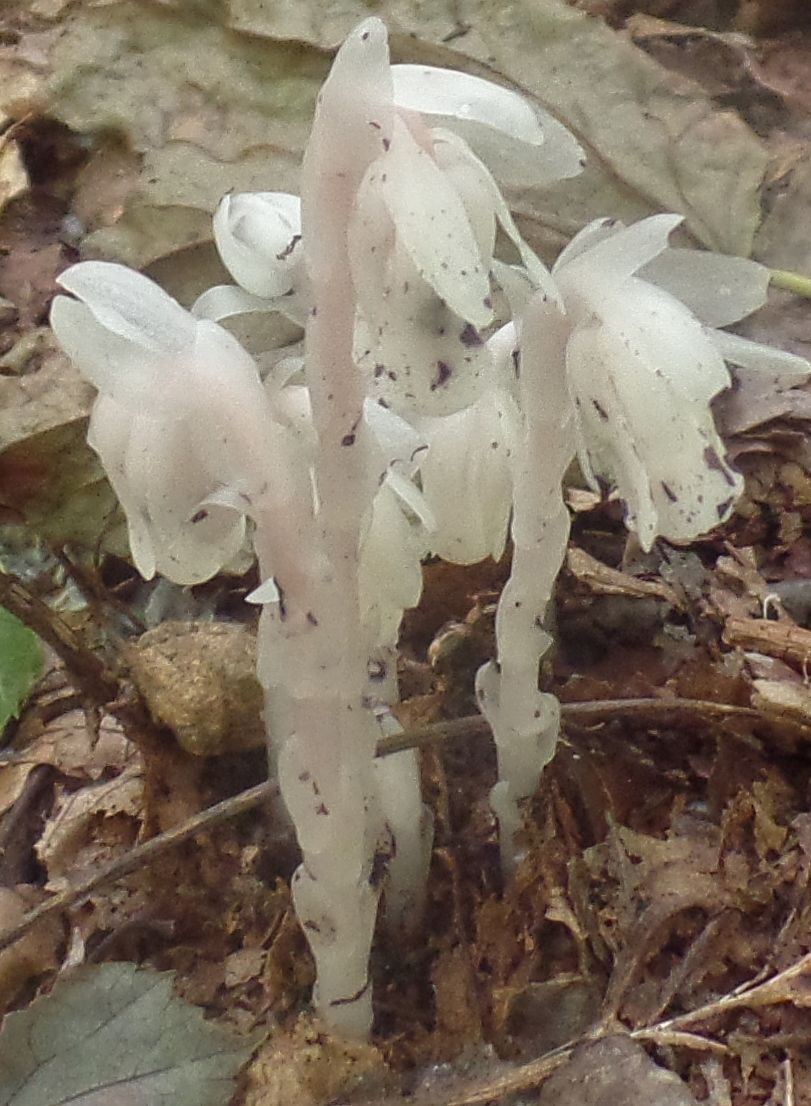
Ghost Pipe (Monotropa uniflora) is a parasite. It produces no food of its own and shows no green. It is white with one flower though they may grow in bunches. It looks like a tobacco pipe standing on its stem. Vestigial, white, scale-like leaves alternate along the stalk. The flowers at first point downwards but then turn upwards to ripen the fruit.
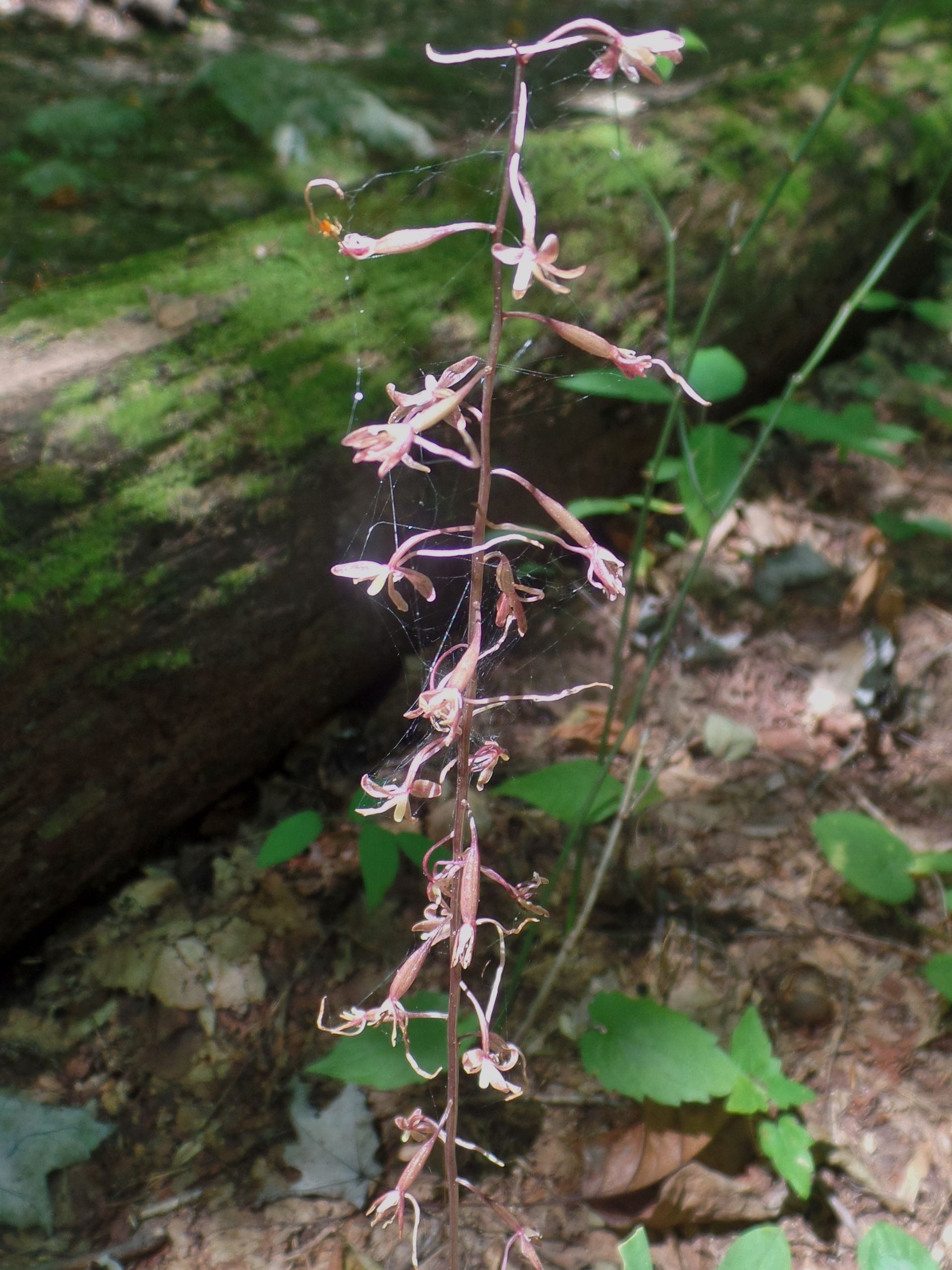
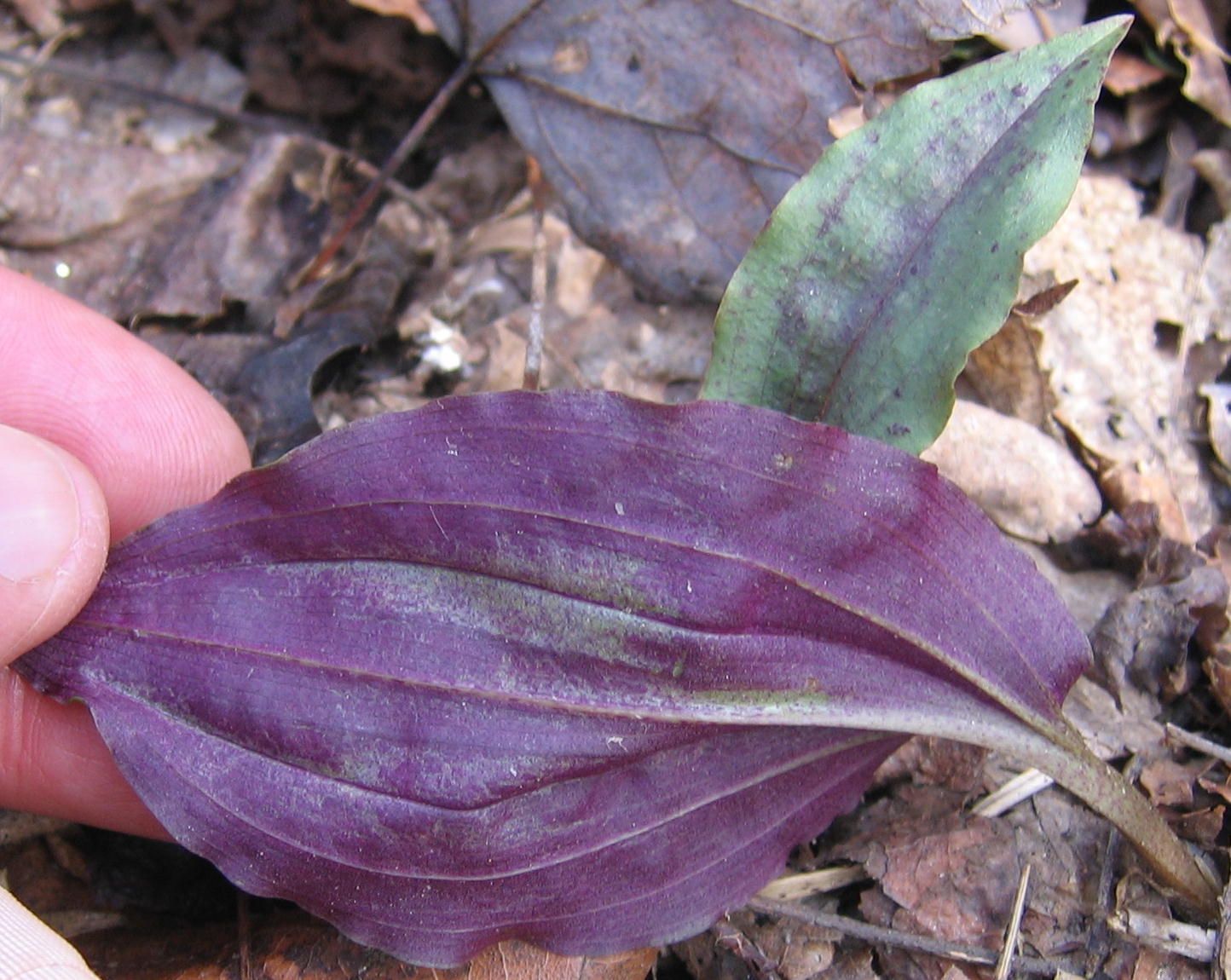
Cranefly Orchid (Tipularia discolor) has up to 40 one-centimeter flowers on a ten-to-eighteen-inch stem. The flower resembles a cranefly. The flower is asymmetrical; the column of the flower above the long lip tilts either to the right or left. The single leaf is easy to see on the bare forest floor in the winter but disappears in spring. The leaf is green on top and purple underneath.
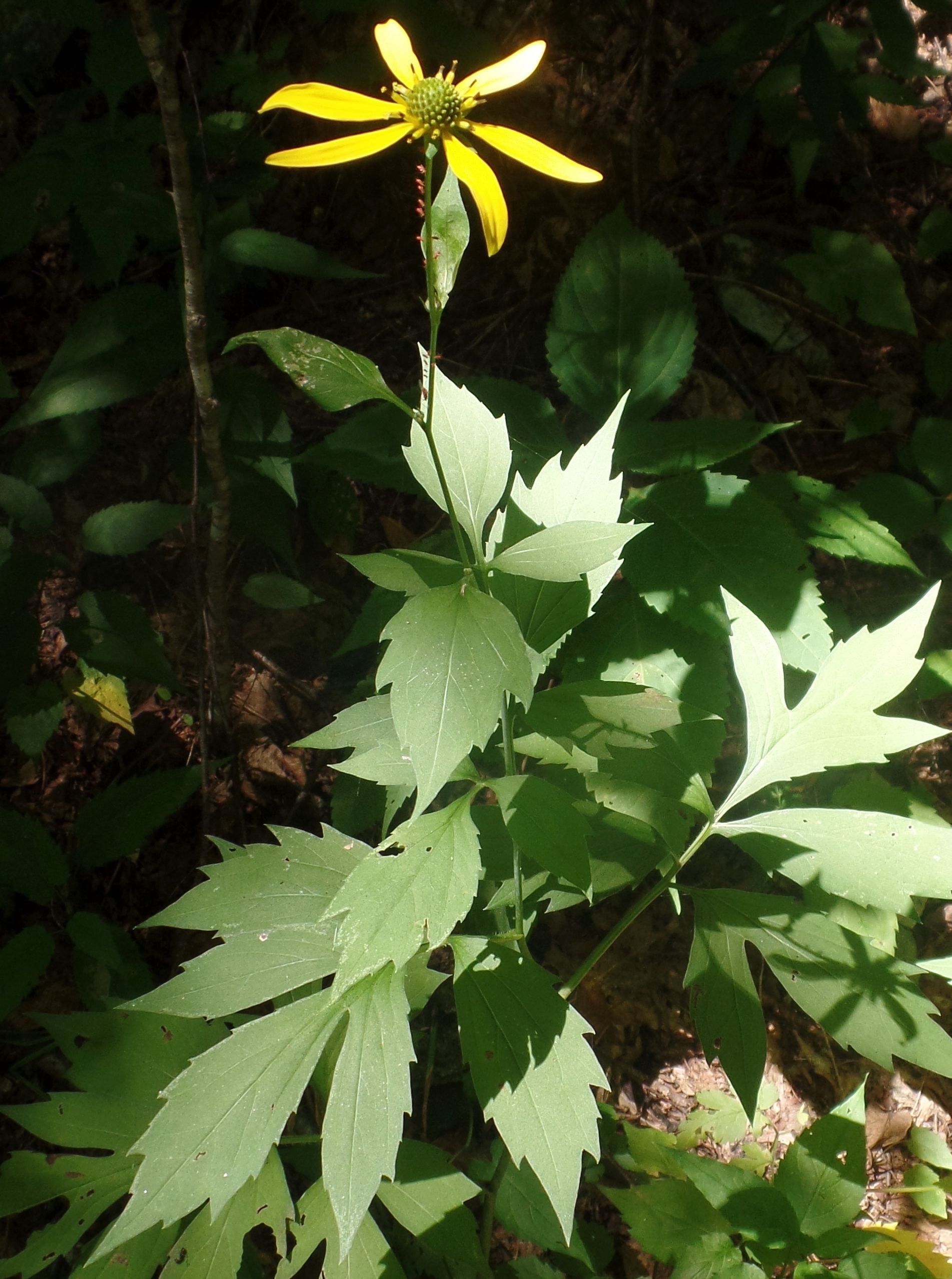
The central disk of Green-headed Coneflower (Rudbeckia laciniata) is green and bulges like a round-topped cone. The ray flowers are yellow and droop, emphasizing the cone. It is also called Tall Coneflower because it grows seven feet tall. The leaves are deeply lobed.
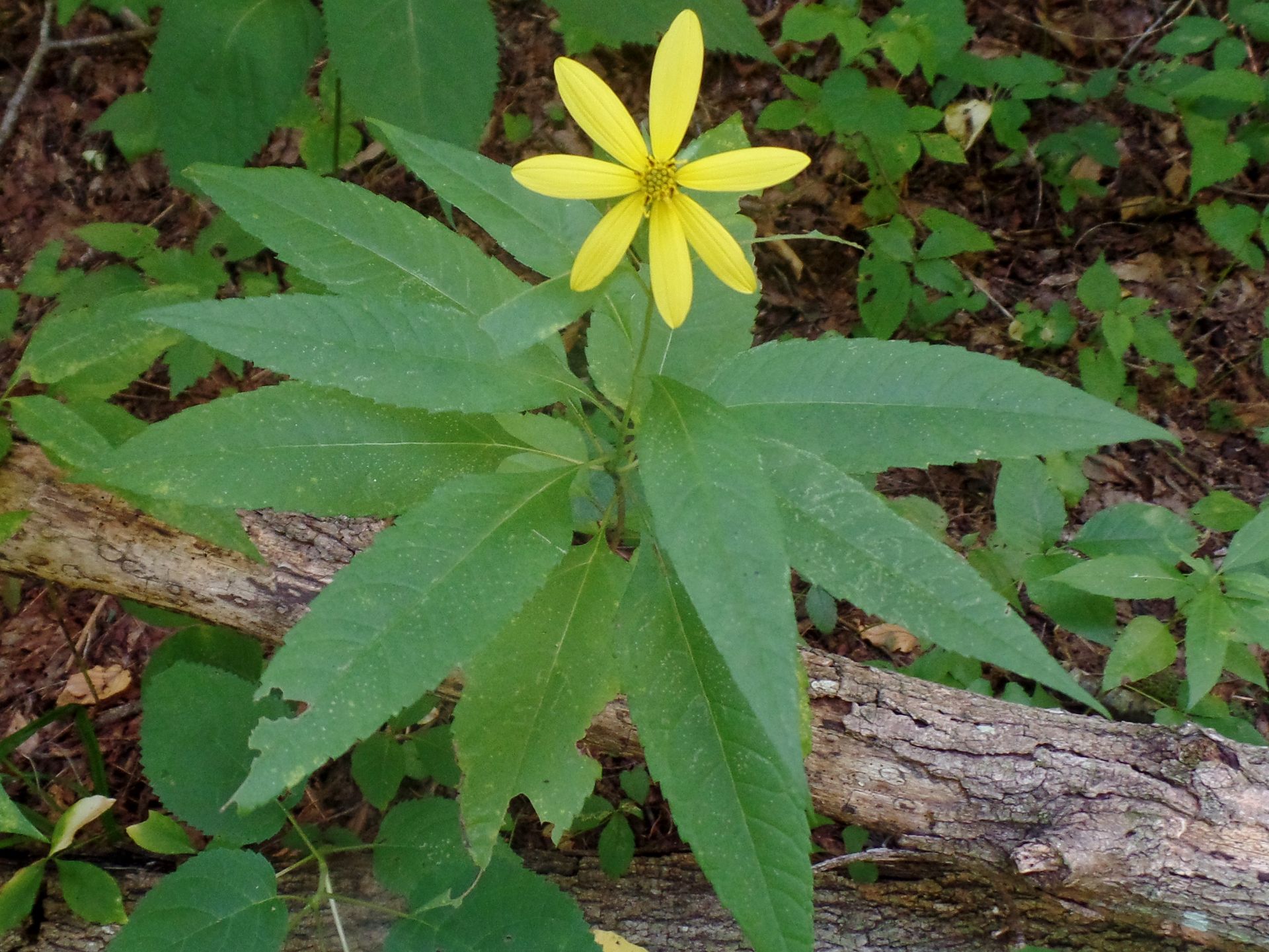
Pale-leaved Sunflower (Helianthus strumosus) has yellow daisy-type flowers. The leaf stems are at least a quarter of an inch long. The leaves are rough, pale underneath and shallowly toothed.
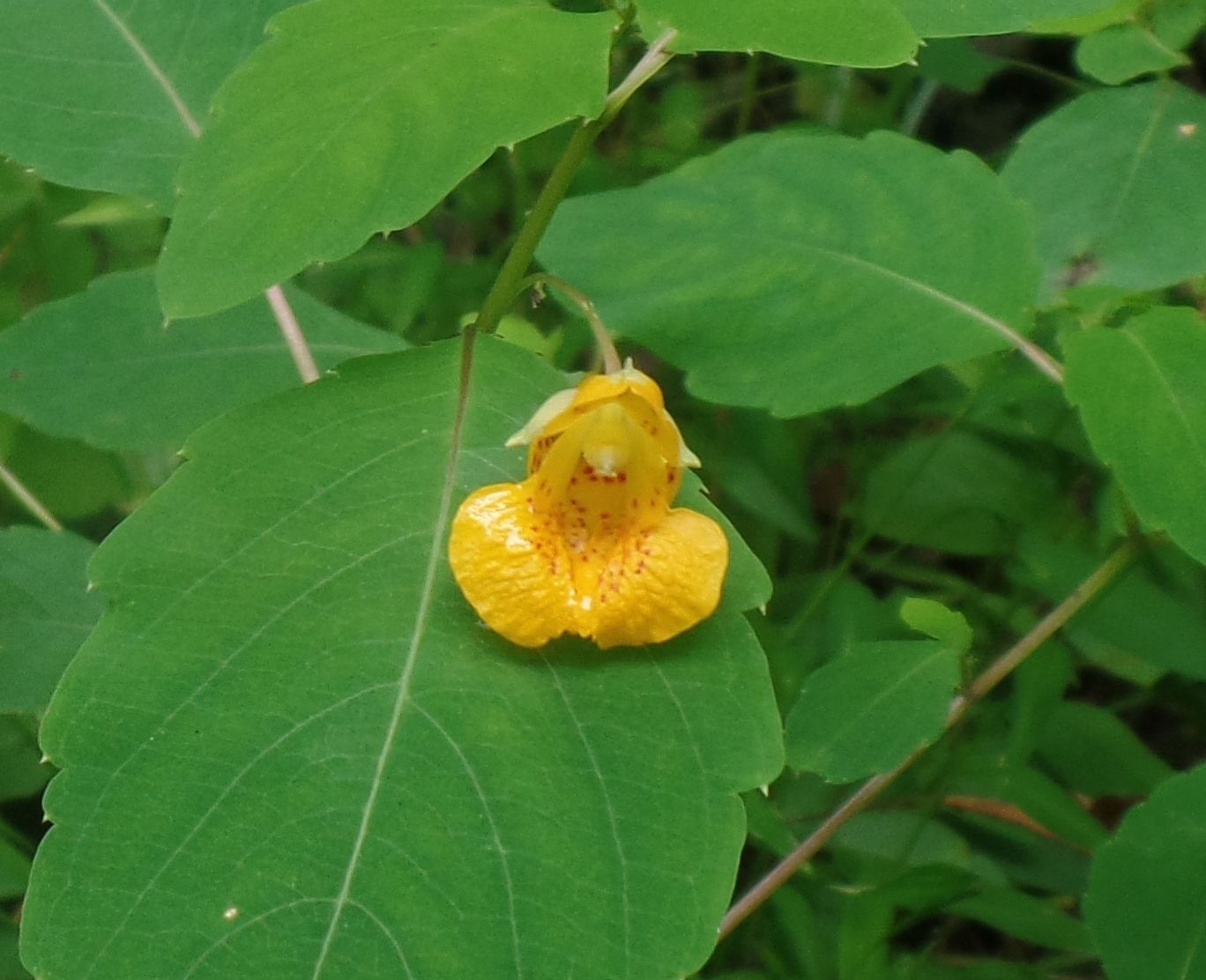
Spotted Jewelweed (Impatiens capensis) flowers dangle like earrings. The flowers are a tube with a curled spur at the back and two wings, in front flaring at the bottom, and a hood over the top. They are orange, the open, front part covered in red spots.
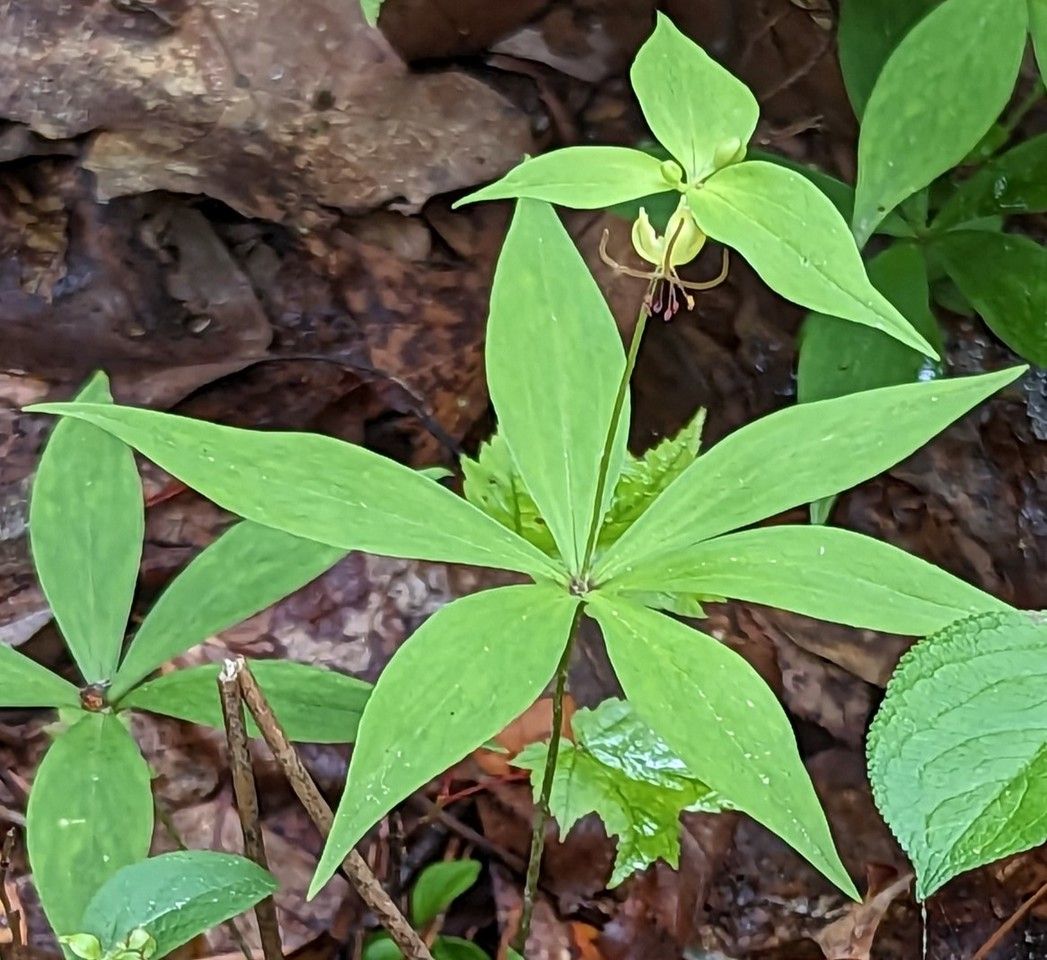
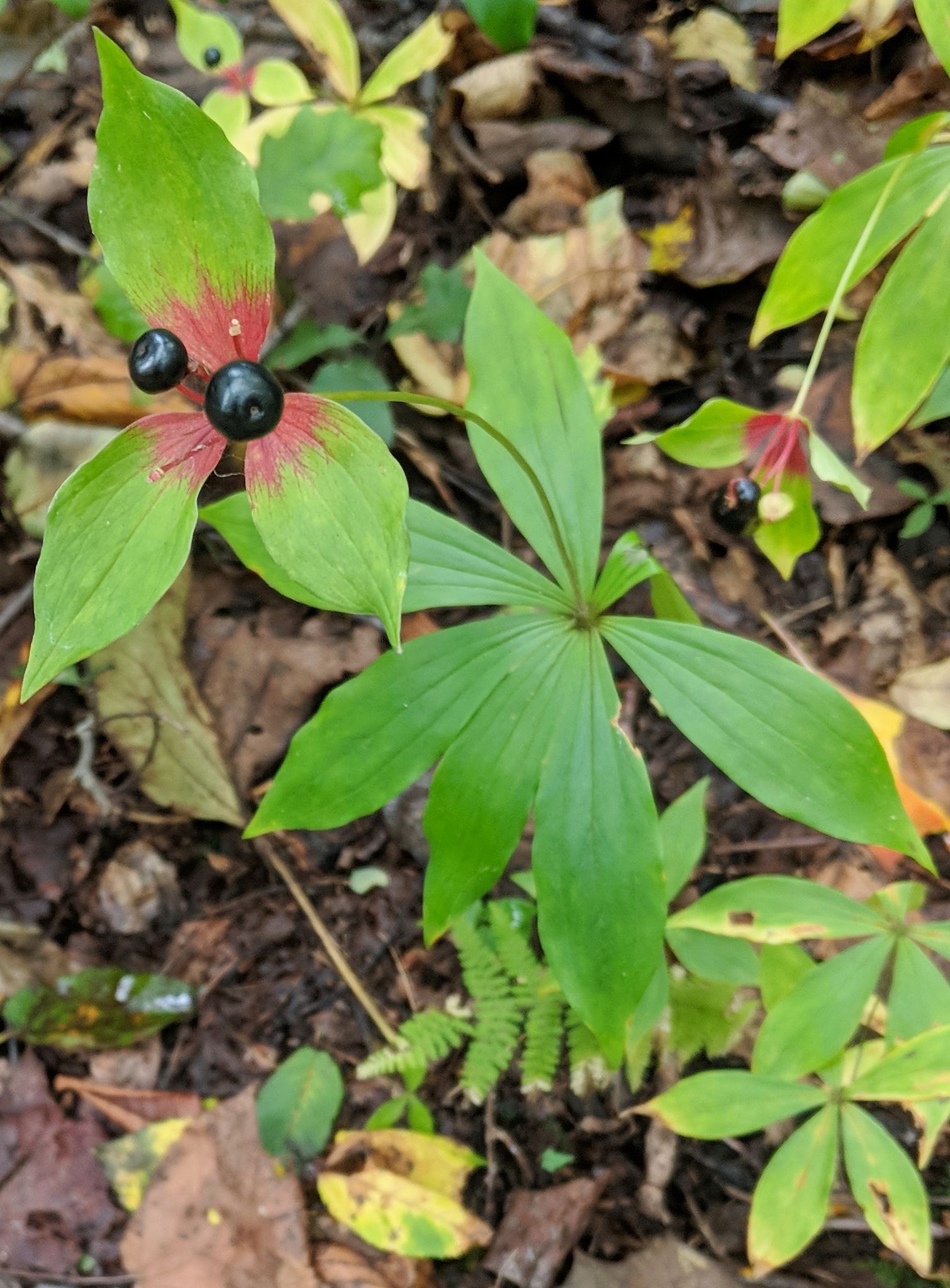
The stem of young Indian Cucumber-root (Medeola virginiana) plants is topped by whorl of five to eleven four-to-five-inch egg-shaped leaves about a foot above the ground. When the plant has built up enough energy in its rootstock, it grows the stem another foot above the whorl of leaves and develops another whorl of two or three smaller leaves from which an umbel of three to ten flowers grows. The flowers hang downward beneath the top whorl of leaves. Each flower has six greenish-yellow tepals about a quarter inch long and curving back, but they are dominated by three threadlike styles that are longer than the tepals and hover beyond them. After pollination, berries form and their stems straighten up so they are positioned on top of the plant. In late summer the berries turn black and the center of the upper whorl of leaves turns red.
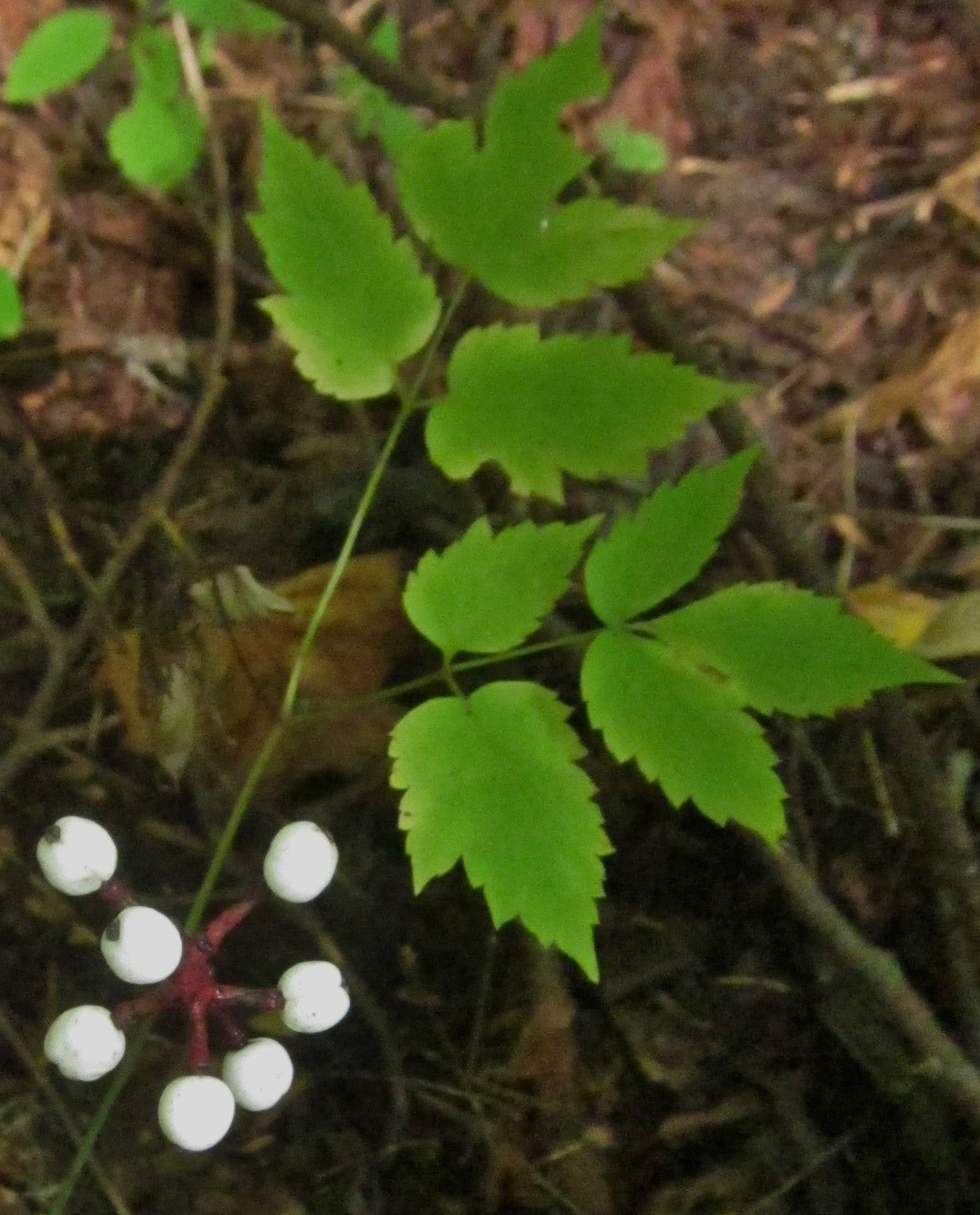
White Baneberry (Actaea pachypoda) plants are up to five feet tall. In late summer the berries turn shiny white with a black dot at the tip, so the plant is also known as “Doll’s Eyes.” The berries are attached to a thick, red stem.
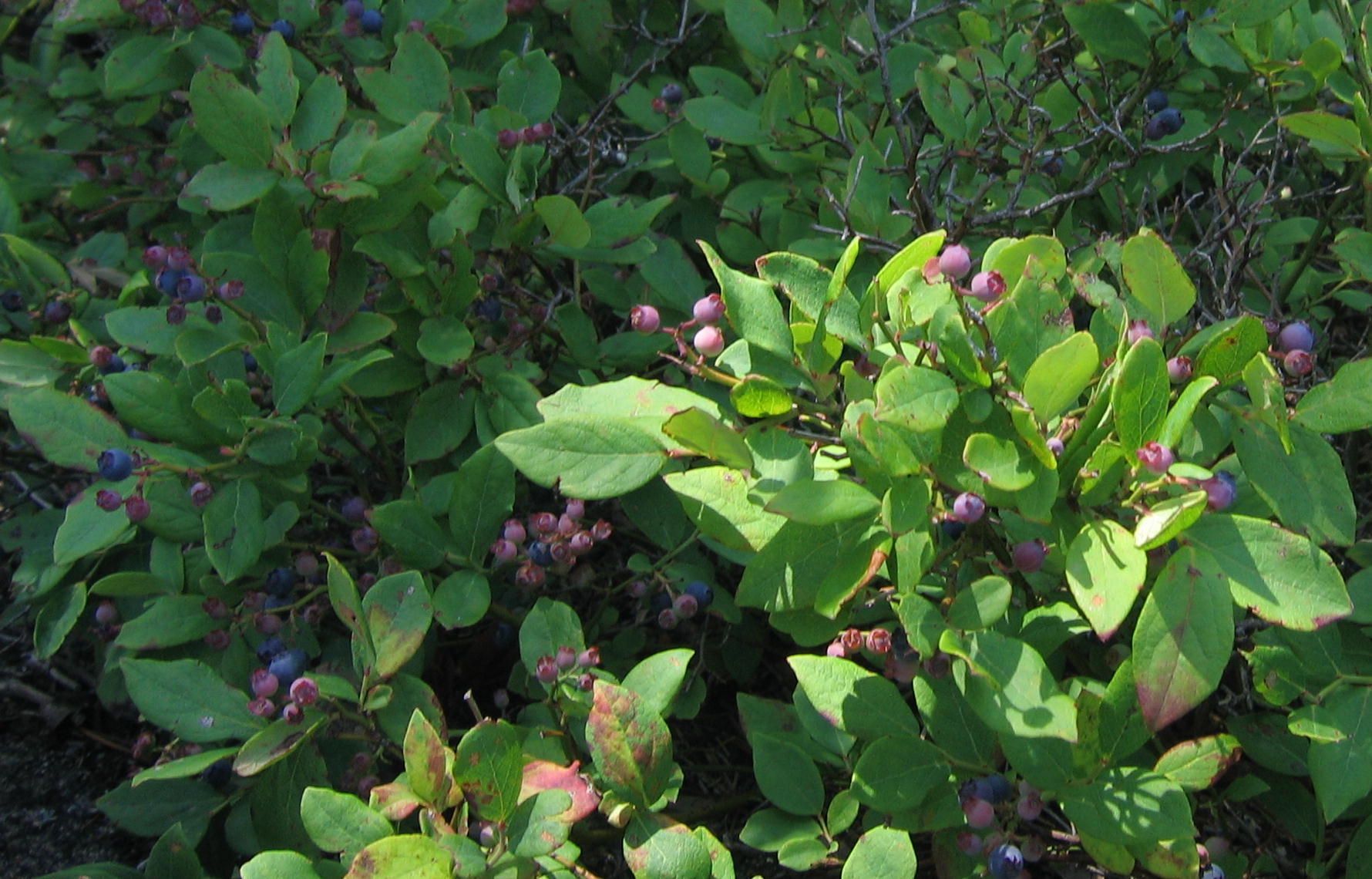
If you are lucky, you may find Blueberries (Vaccinium species) ripening.