
What's that Flower?
Article and photos by Richard Stromberg
This article shows you some of the flowers to look for in June on the Tuscarora Trail north of Dry Gap. The trail is described in Section 16 of the PATC publication “The Tuscarora Trail a Guide to the South Half.” This is a popular trail section because of the spectacular view from Eagle Rock, one mile north of the Dry Gap parking.
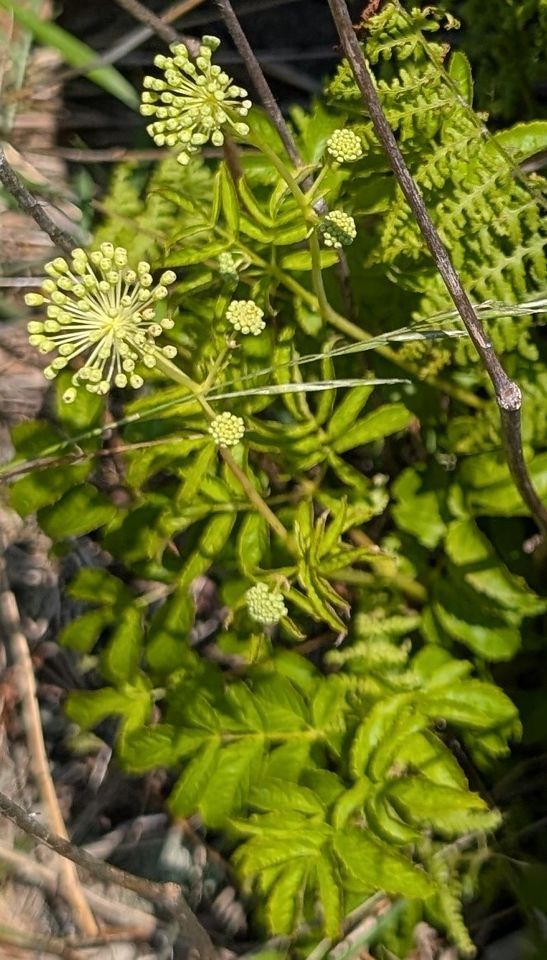
As you approach the Eagle Rock viewpoint, you will see evidence of the November 1, 2024, fire: blackened earth, logs, and bark at the bottom of trees. Bristly Sarsaparilla (Aralia hispida) is known for sprouting in burn areas, and you will see it here. The upper stems can be smooth and only the lower stems, bristly. It is a northern plant categorized as rare in the PATC area. Its tiny white flowers are in a rounded umbel. A large population existed under the power lines three and a half miles from the parking but has been dwindling without fire there.
Other species to look for along this trail section are described below. All are native unless otherwise noted.
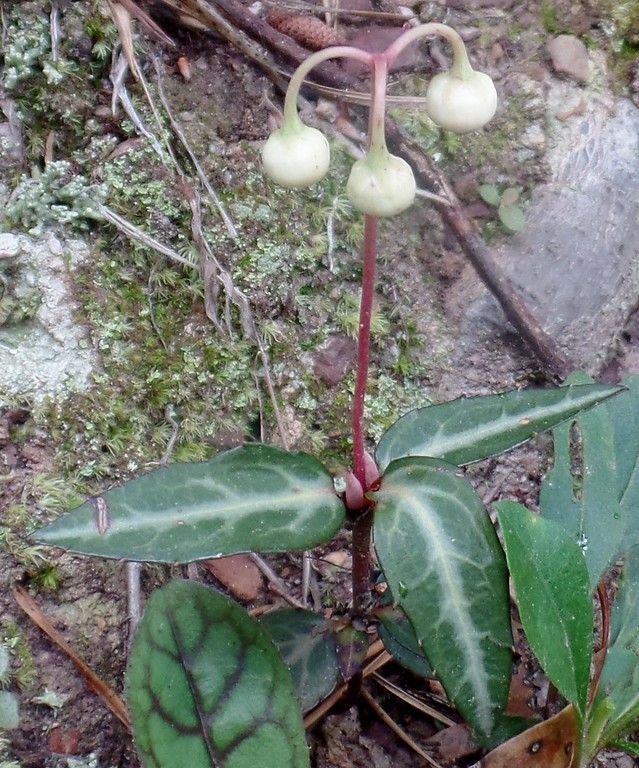
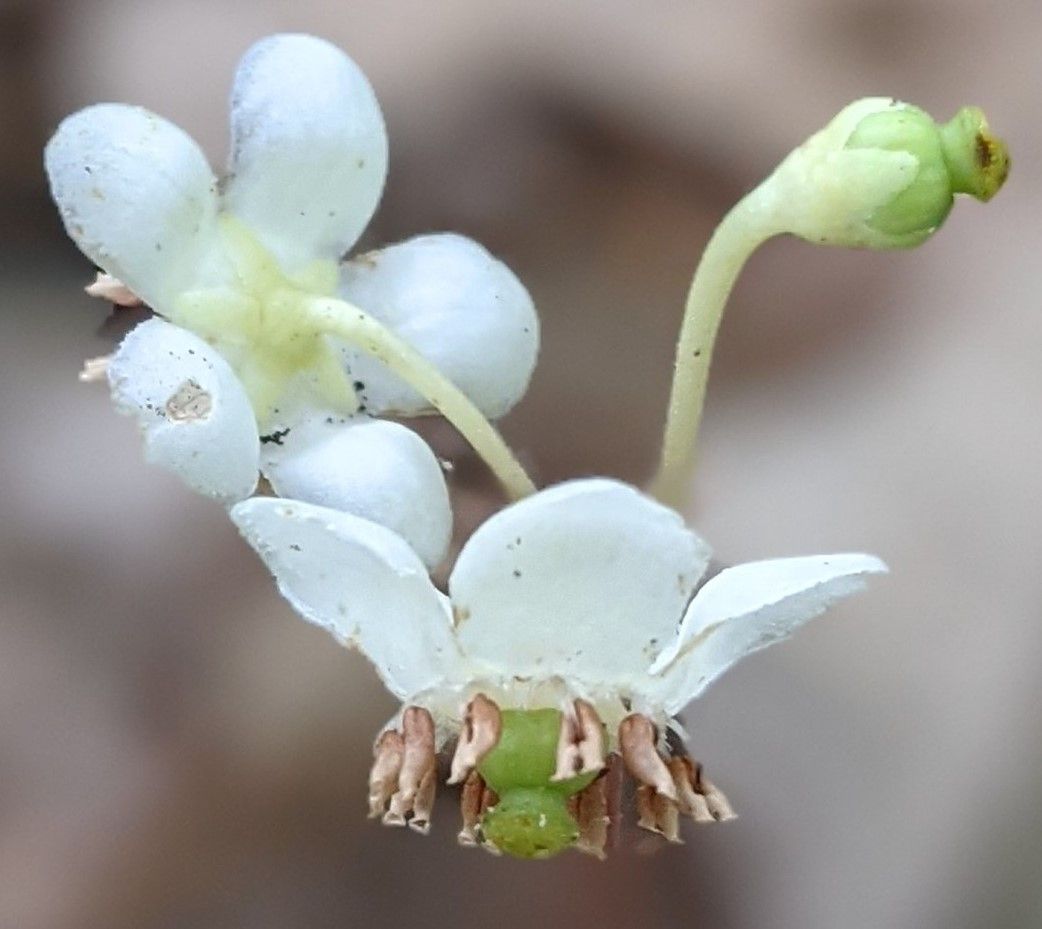
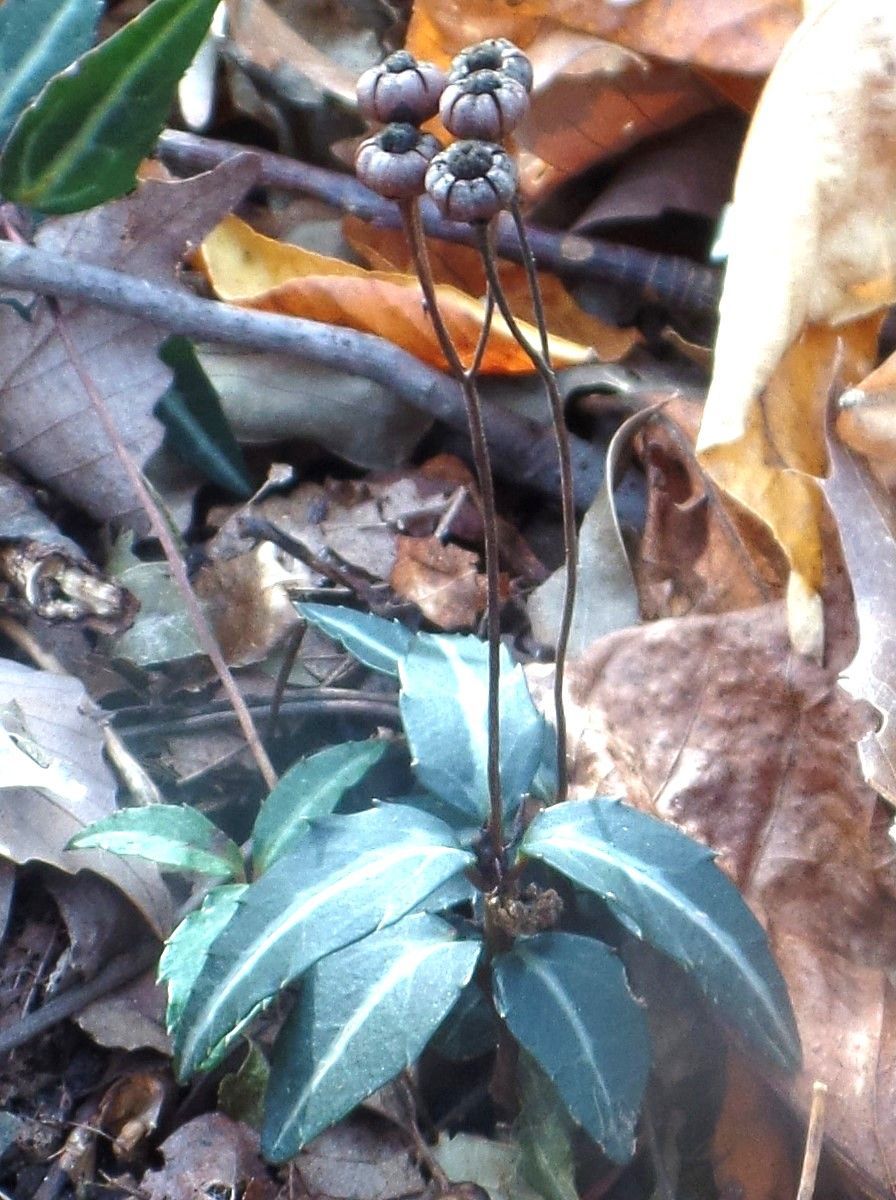
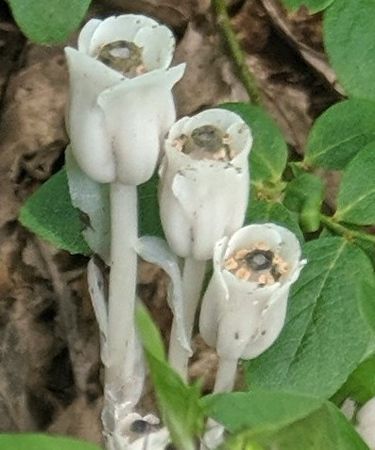
Striped Wintergreen (Chimaphila maculata) is only a few inches tall. The leaves are long and toothed with pale yellow along the veins. The flower stalk above the leaves has a few white flowers on top. The flowers hang down from their individual stalks and start out as round balls. Five petals open to about a half inch across and face downward. If you lift one up, you will see a large round stigma in the middle surrounded by ten, two-part stamens. A brown fruit develops and turns upward.
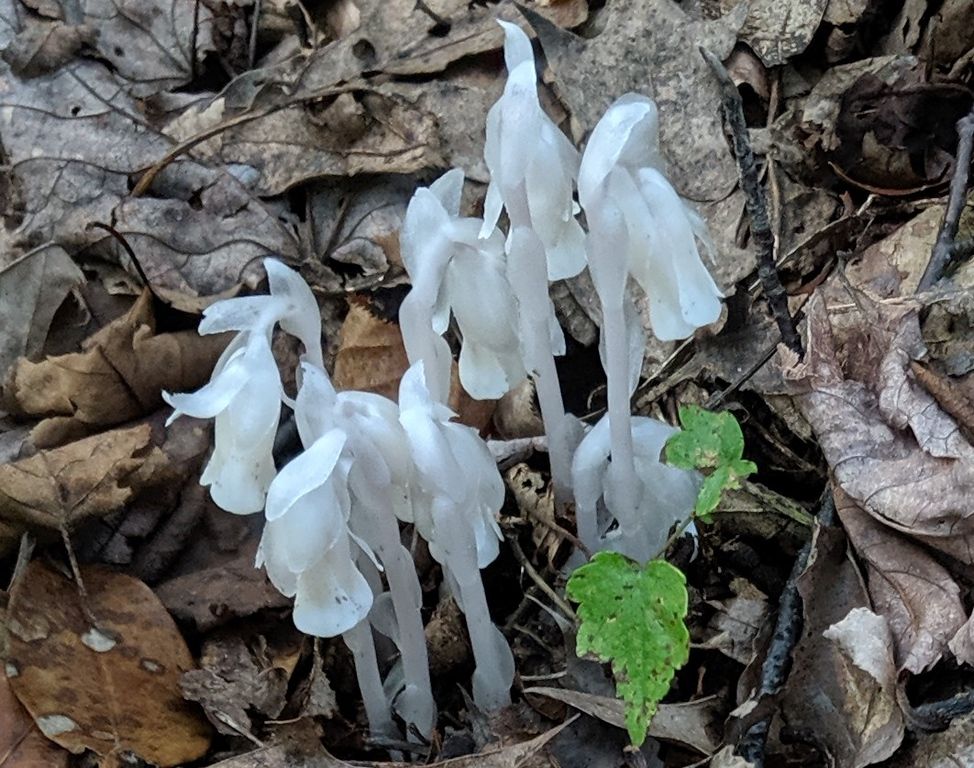
Ghost Pipe (Monotropa uniflora) is a parasite. It produces no food of its own and shows no green .It gets food from fungi as explained in William Needham’s Hiker’s Notebook (http://hikersnotebook. net/The+Mushroom+Chronicles+- +Mycorrhizas). It is white with one flower and looks like a tobacco pipe standing on its stem. Vestigial, white, scale-like leaves alternate along the stalk. The flowers at first point downwards but then turn upwards to ripen the fruit.
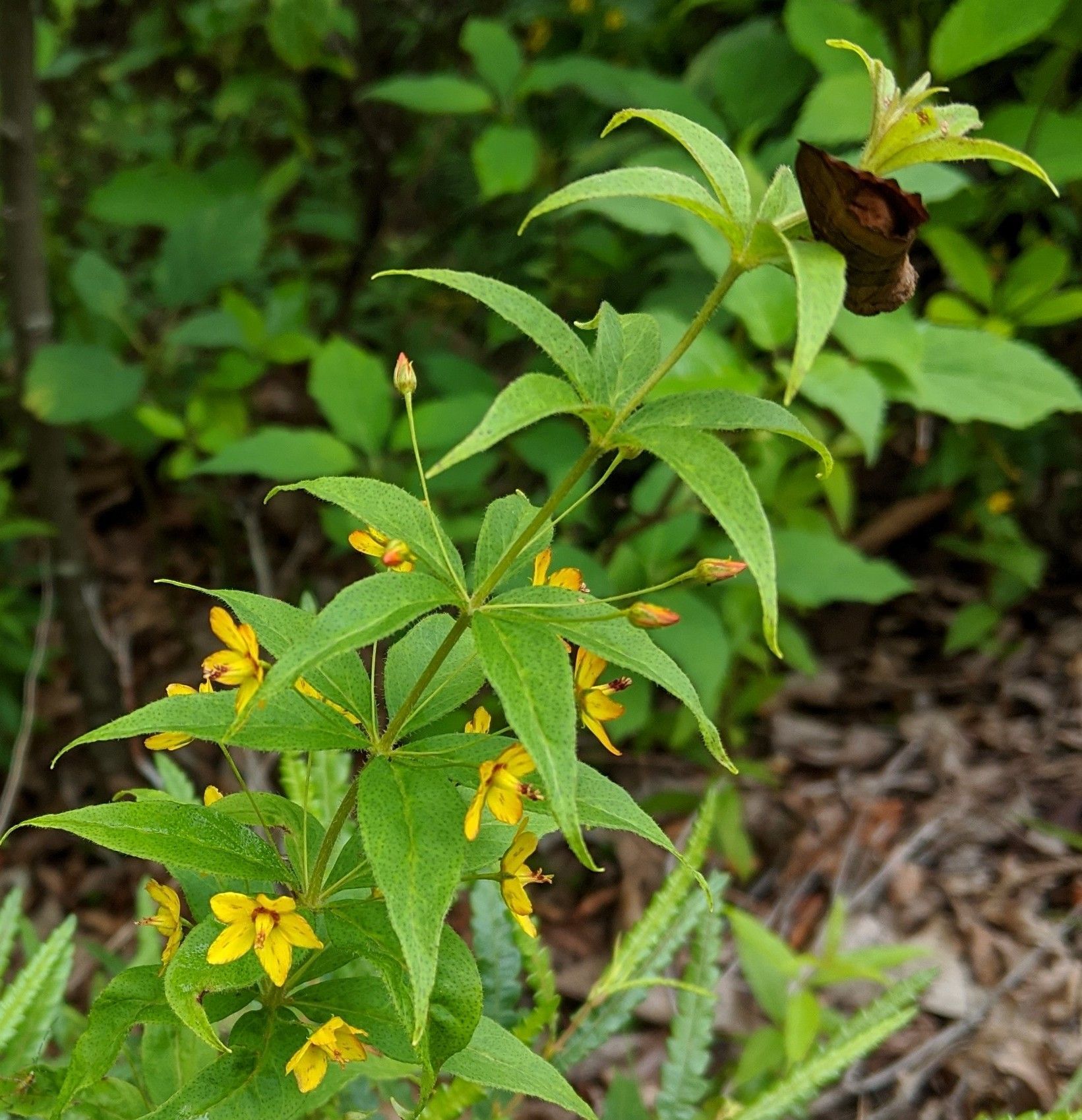
Whorled Loosestrife (Lysimachia quadrifolia) grows up to three feet tall with a series of whorled leaves spaced up the stem. The whorls usually contain four leaves. The leaves have no stem or a very short one. The solitary, star-shaped flowers grow on one-to-two-inch stems from the axils of the upper leaf whorls. The petals are yellow with red at the base.
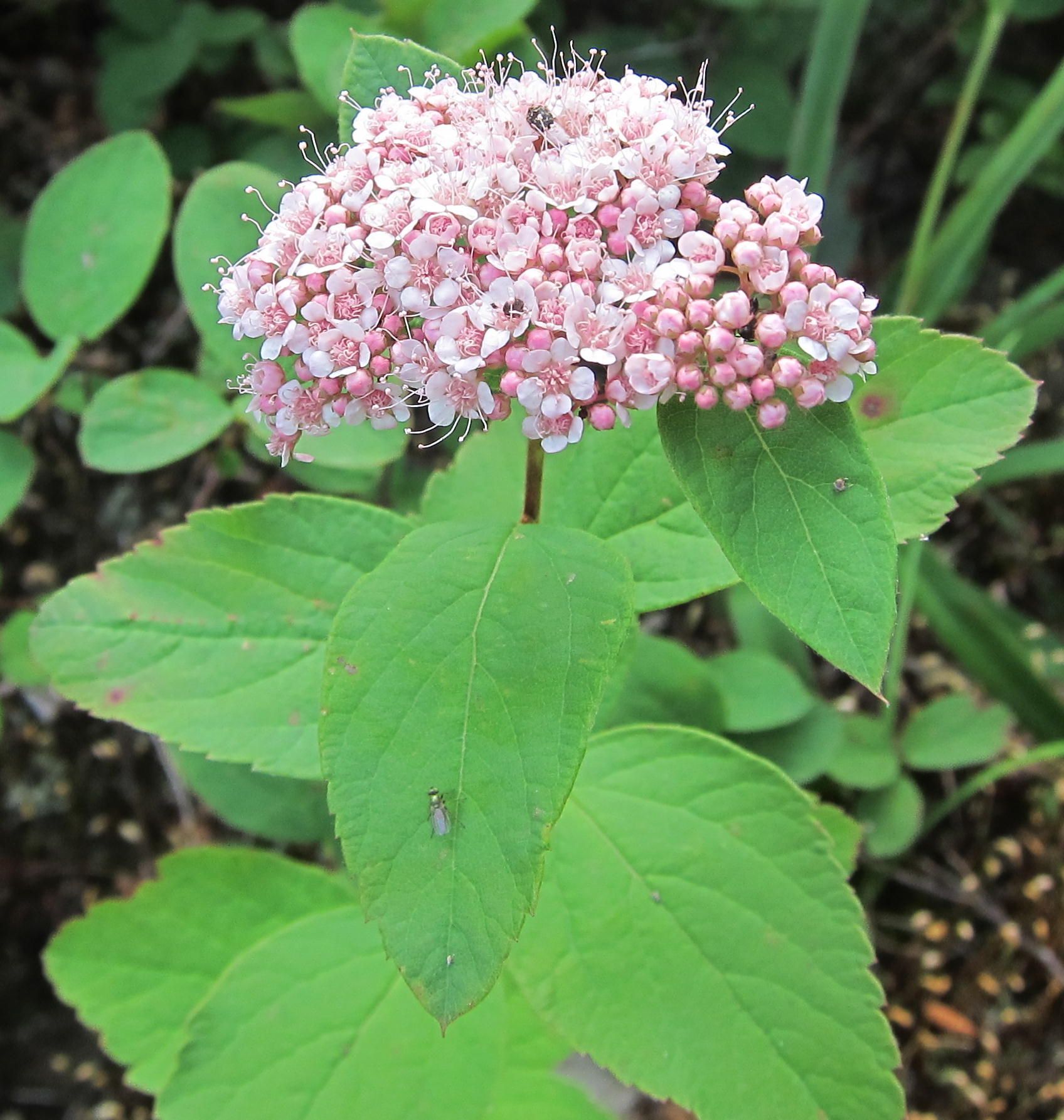
Dwarf Spiraea (Spiraea corymbosa) is a shrub up to one meter tall. Leaves are ovate with toothed edges. The white or pinkish, tightly packed, quarter inch, five-petal flowers grow in a flat or slightly rounded form called a corymb.
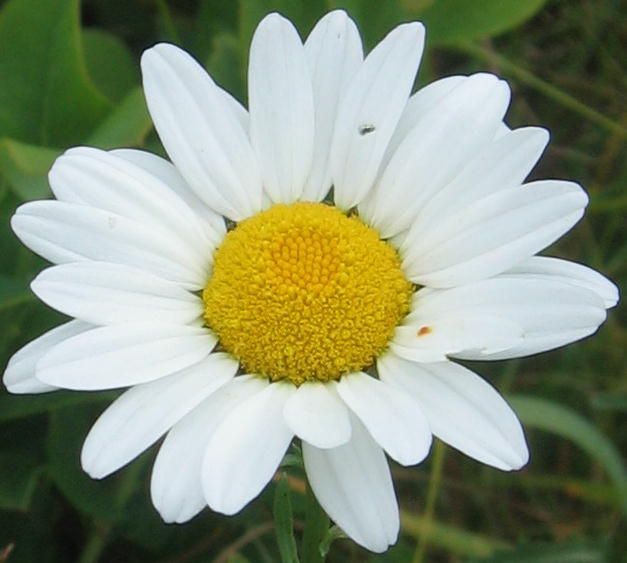
Oxeye Daisy (Leucanthemum vulgare) is the typical daisy: a single flower on a long stem with a yellow central disk surrounded by many white rays. The flower head is bigger, and the rays are fewer and wider than the Fleabanes. The leaves, particularly on the stem, are long and narrow with irregular, pointy lobes. It is not native.
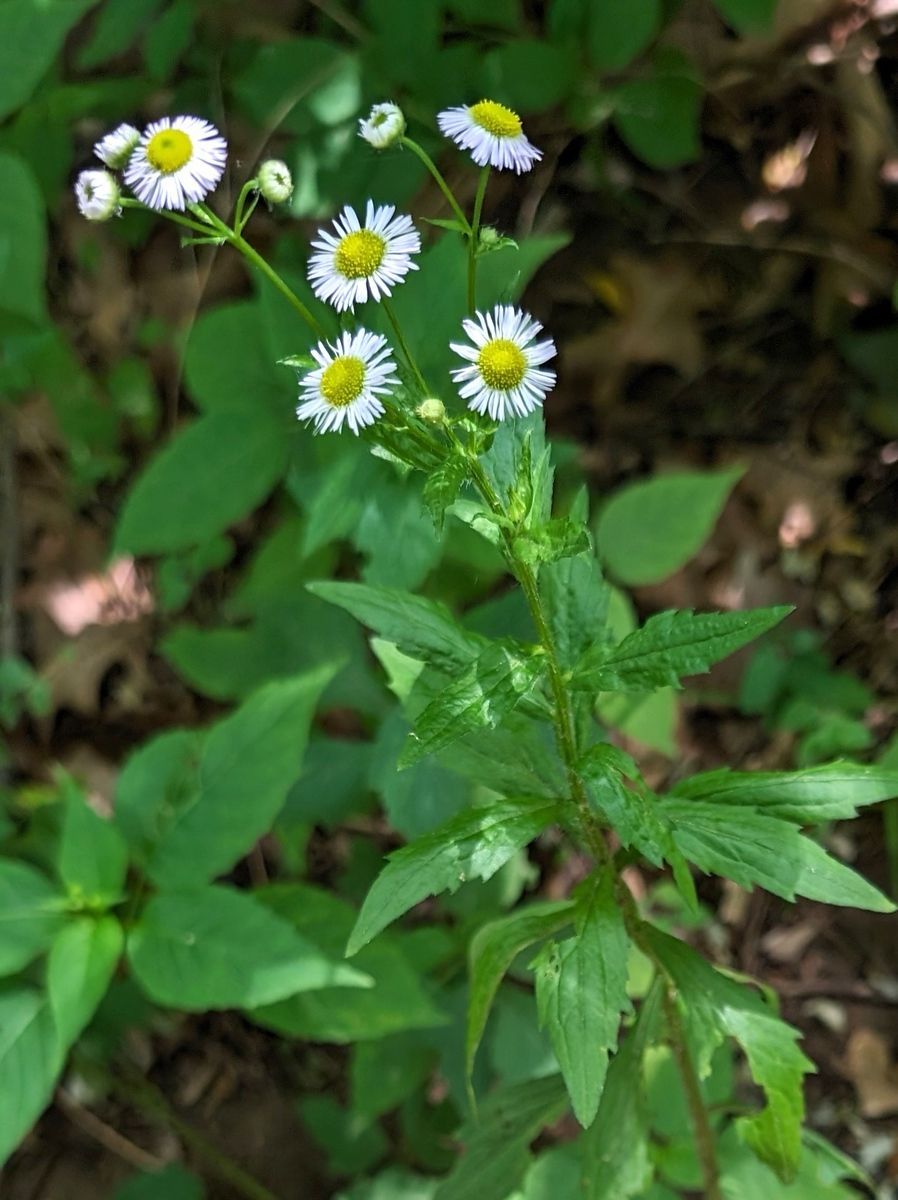
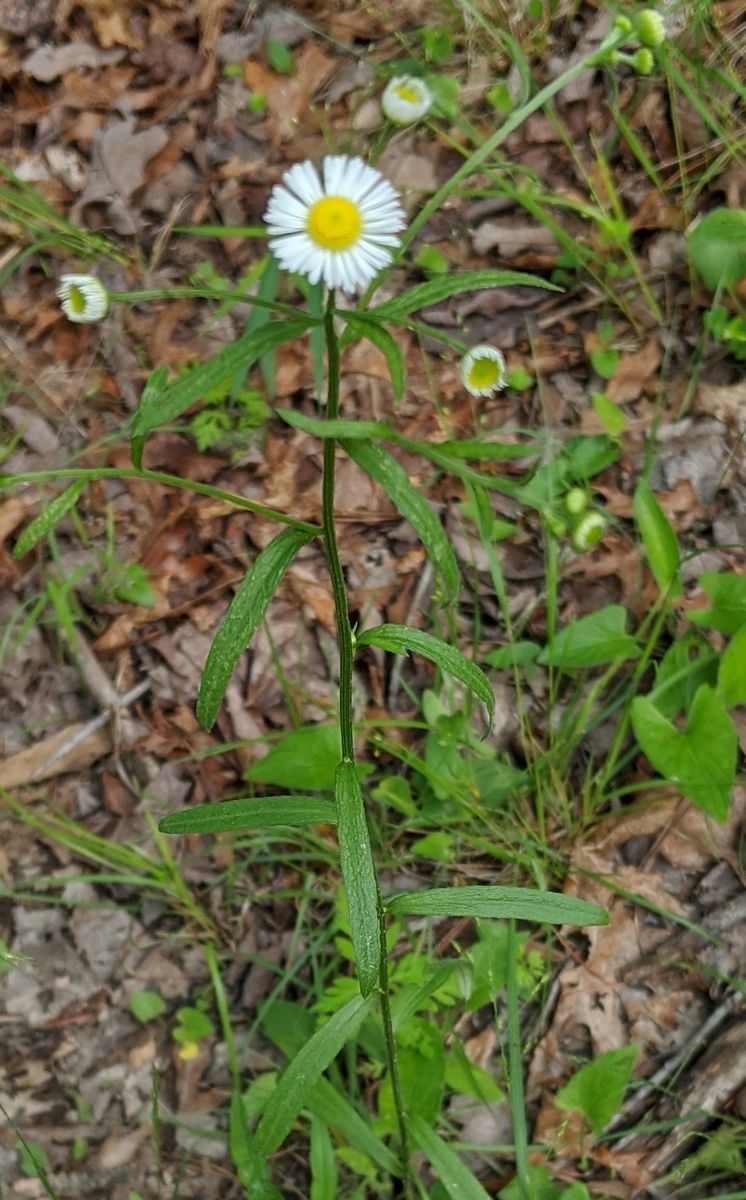
Fleabane (genus Erigeron) flowers look like daisies, but the rays are very thin, and there may be up to 400 of them. The central disk is yellow, and the rays are white or tinged pink. Annual Fleabane (Erigeron annuus) has many stem leaves, and they are toothed. Daisy Fleabane (Erigeron strigosus) stem leaves are sparse and have smooth edges.
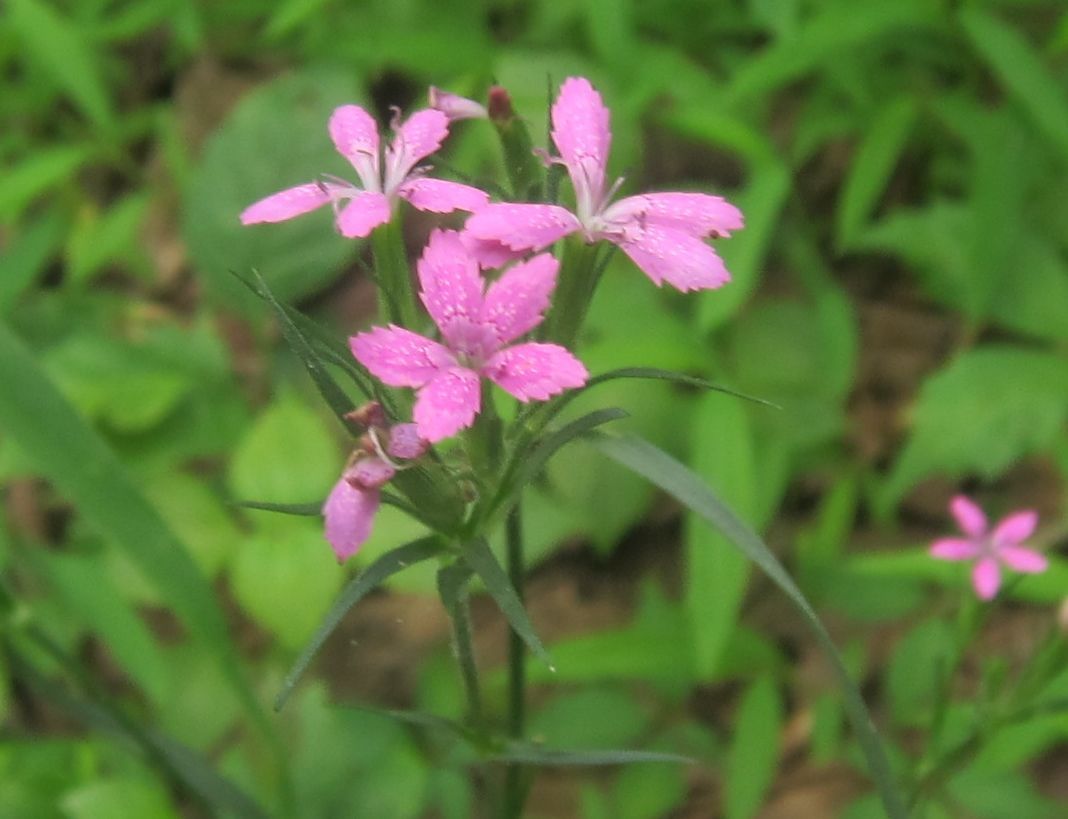
Deptford pink (Dianthus armeria). Several Deptford pink flowers sit on top of spindly stems. They have narrow, paired leaves, and the half-inch flowers have five bright pink petals. It is not native.
Bird's-foot Trefoil (Lotus corniculatus) flowers have the typical pea flower form with the upper banner petal, lower two petals forming a keel, and two wing petals, all bright yellow. A group of flowers circle at the end of the stem like a crown. The plant stems tend to trail along the ground. The leaves have five leaflets: two flush against the main stem and three further out. It is not native.
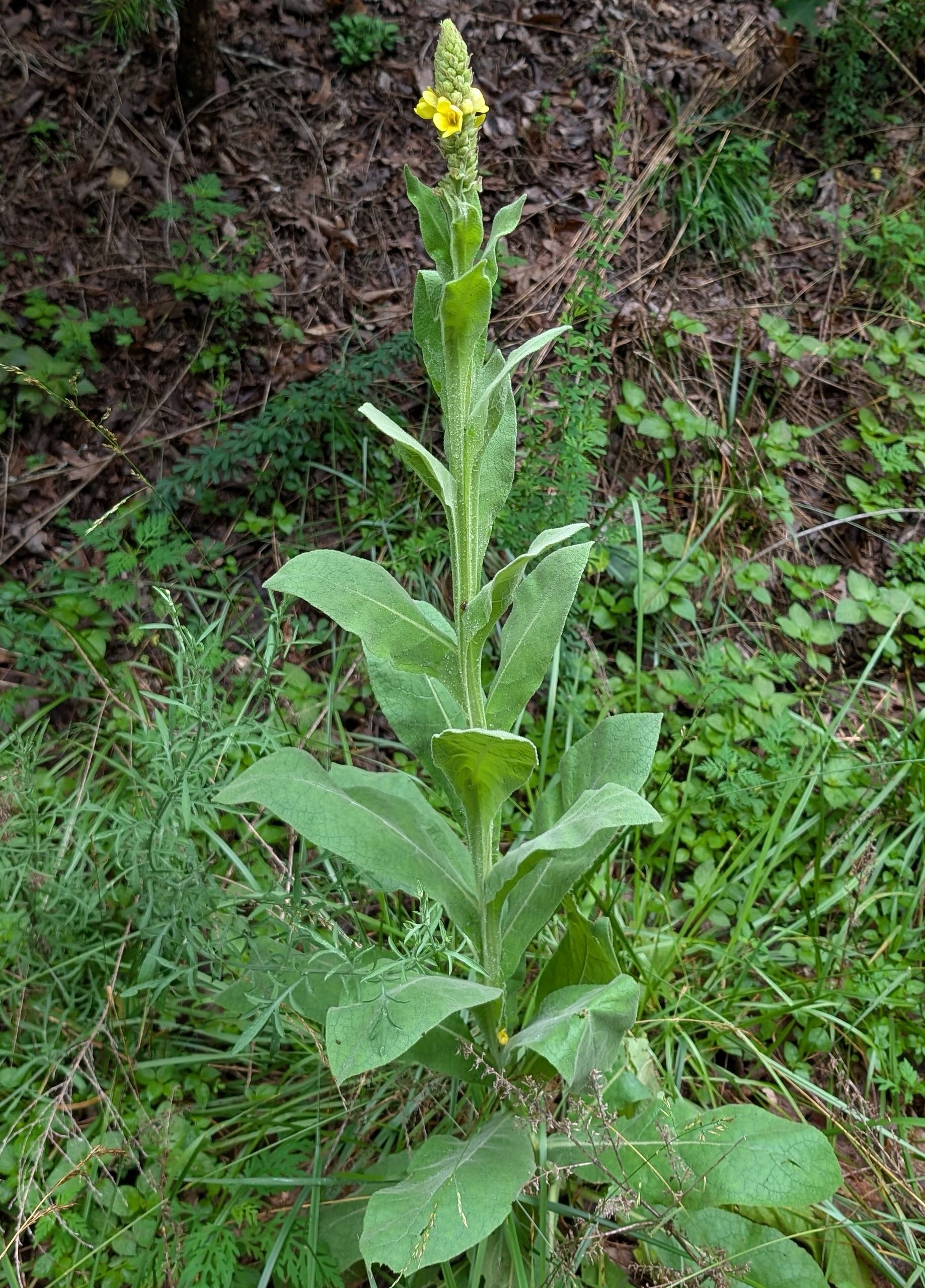
Common Mullein (Verbascum thapsus) is up to 8 feet tall with fuzzy-leaved stalks topped by dense spikes of yellow flowers. They are biennials, and the first year you see rosettes of large, soft, fuzzy leaves on the ground.