
Beech Leaf Disease – A New Invader to our Forest
Article and photos by Rob Lamar
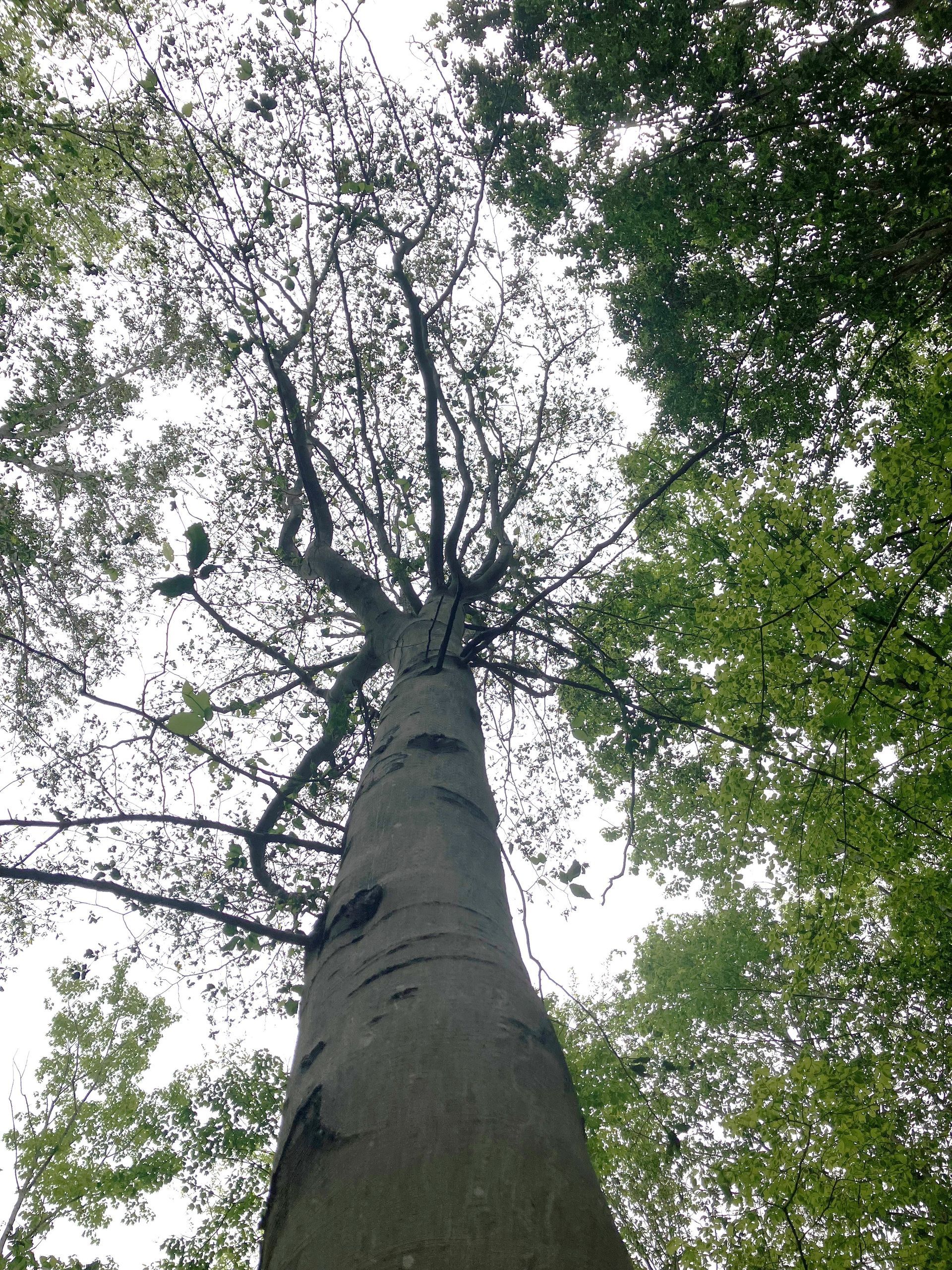
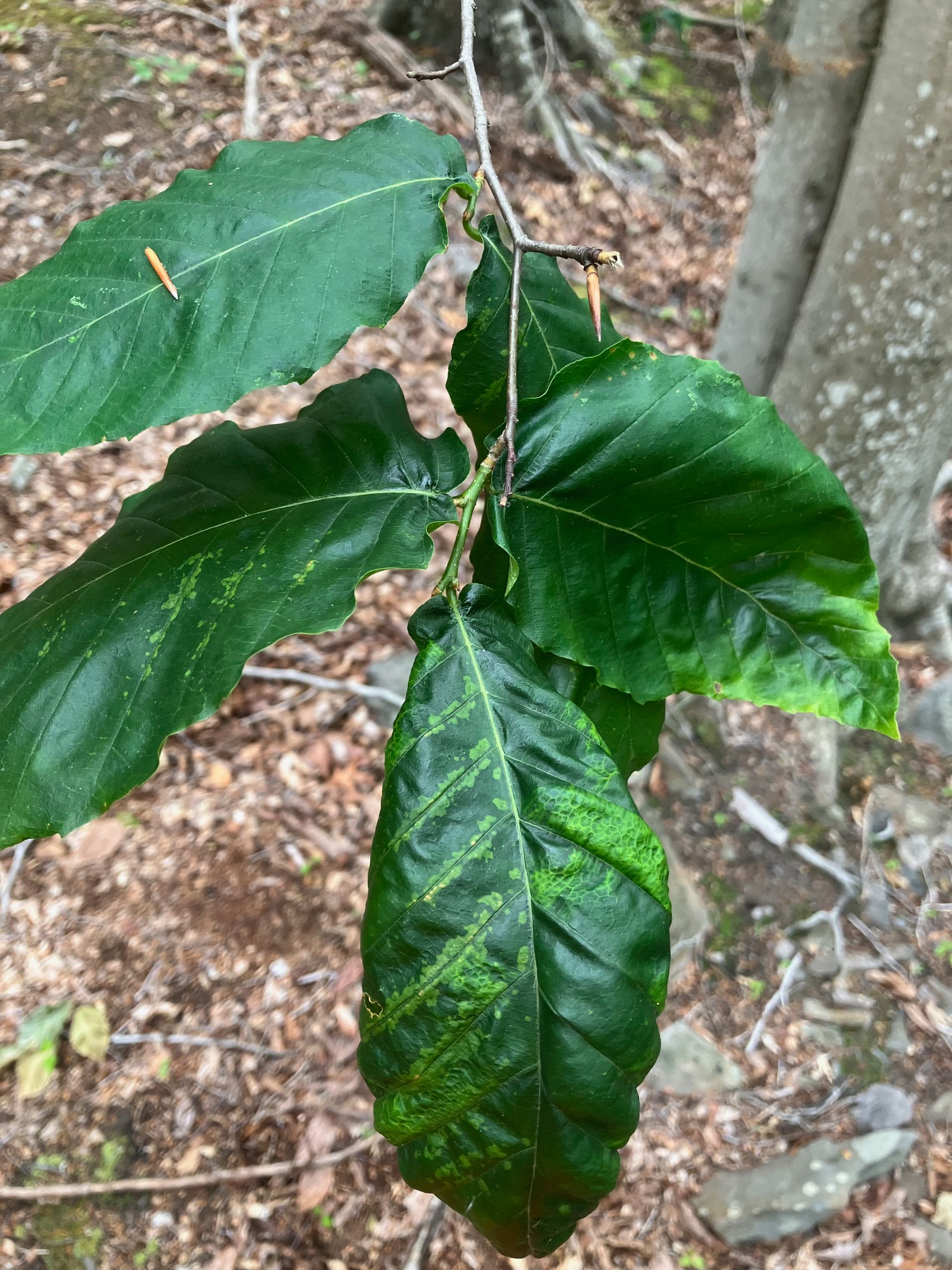
Over the last century, eastern forests have undergone dramatic change due to the impacts of numerous invasive forest pests and diseases, including Chestnut Blight, Hemlock Woolly Adelgid, Emerald Ash Borer, and Spongy Moth.
Beech Leaf Disease (BLD), caused by the microscopic nematode Litylenchus crenatae—believed to have originated in Asia—is the latest major threat to our forests. The nematode feeds on and damages the American Beech (Fagus grandifolia). First identified in the United States in Ohio in 2012, the disease spread eastward, reaching Pennsylvania in 2016 and Virginia in 2021. In 2024, PATC volunteers were the first to document the disease in Clarke County on AT lands. Since then, it has continued to spread rapidly and the disease is expected to spread throughout the PATC region within the next few years. Researchers believe the microscopic nematodes are dispersed primarily by wind and rain.
The nematodes overwinter in Beech buds, where their feeding alters the development of emerging leaves. Symptoms of infestation include thickened and distorted leaves, dark banding between leaf veins, thinning canopy, and eventual tree mortality. Beech decline and mortality are already being observed along sections of the AT in northern Virginia.
At present, biological control is unknown for Beech Leaf Disease, although several chemical treatment methods are being investigated. Trunk injections of Arbortect 20-S, while expensive, have proven effective in protecting individual trees for up to two years before retreatment is required. Potassium phosphite treatments have also shown promising early results and offer a more cost-effective alternative to Arbortect, enabling land managers to treat a larger—though still limited—number of forest trees.
Beginning in May, the PATC, under the leadership of PATC volunteer and retired entomologist Dr. Ray Barbehenn, is partnering with the National Park Service and Dr. Richard Cowles of the Connecticut Agricultural Experiment Station to evaluate the effectiveness of two phosphite treatment methods—basal bark applications and trunk injections—in preserving beech tree health on private and federal lands in northern Virginia. It is hoped that phosphite treatments may help preserve ecologically significant beech trees on National Park Service lands until a long-term biological control can be developed.
A fact sheet from The Connecticut Agricultural Experiment Station is at https://portal.ct.gov/-/media/caes/documents/publications/fact_sheets/valley_laboratory/beech-leaf-disease-management-options.pdf).
*Ray Barbehenn has been preparing this column for many months. He is taking a break from writing for a couple months to work on the Beach Leaf Disease problem.