

This article shows you some of the flowers to look for in early spring (March to mid-April) on the Buzzard Rock to Veach Gap hike described in this issue of The Potomac Appalachian.
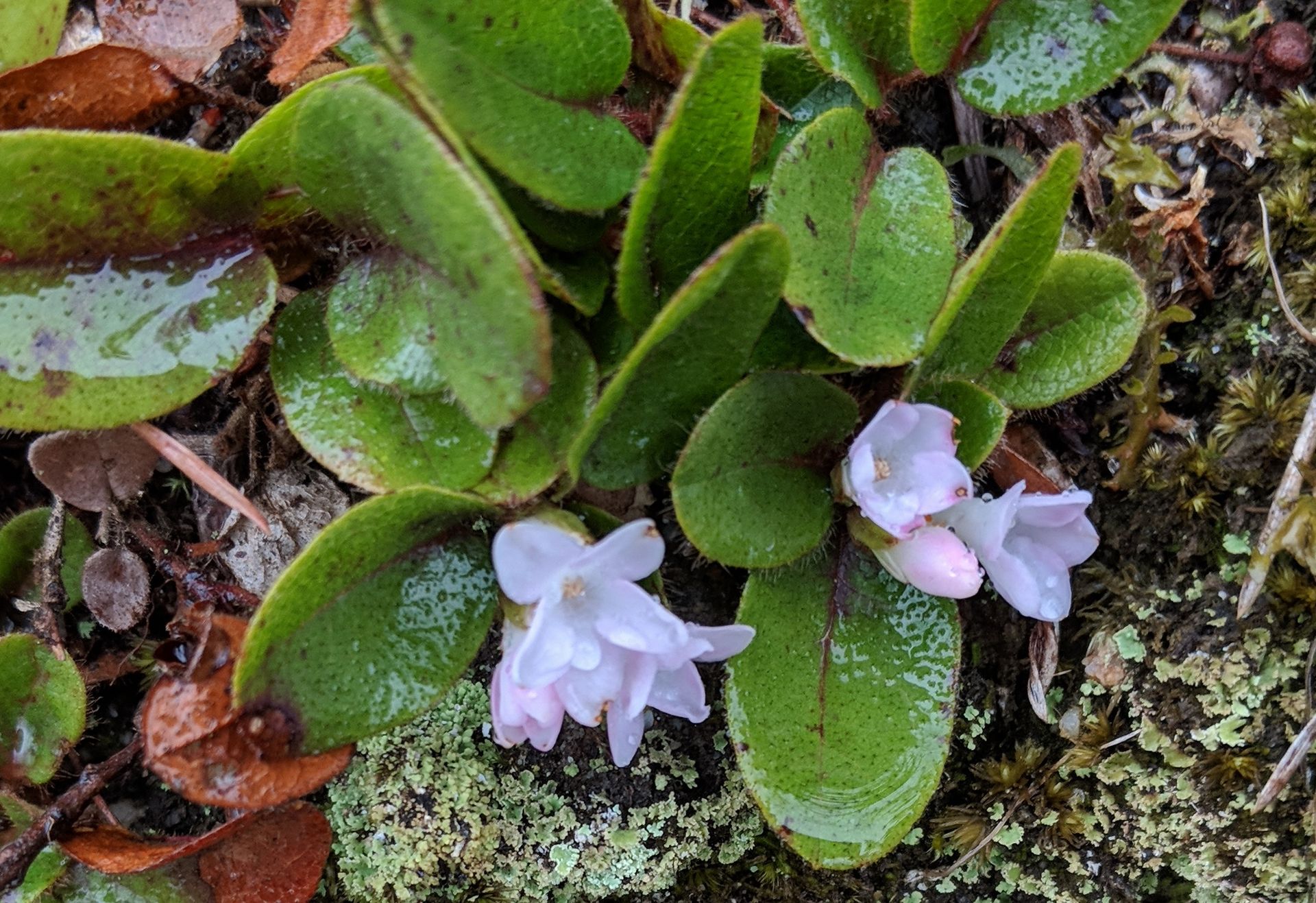
Trailing arbutus (Epigaea repens) plants run along the ground, never more than an inch or two high. It produces clusters of pink to white flowers as early as February. It has shiny, evergreen leaves.
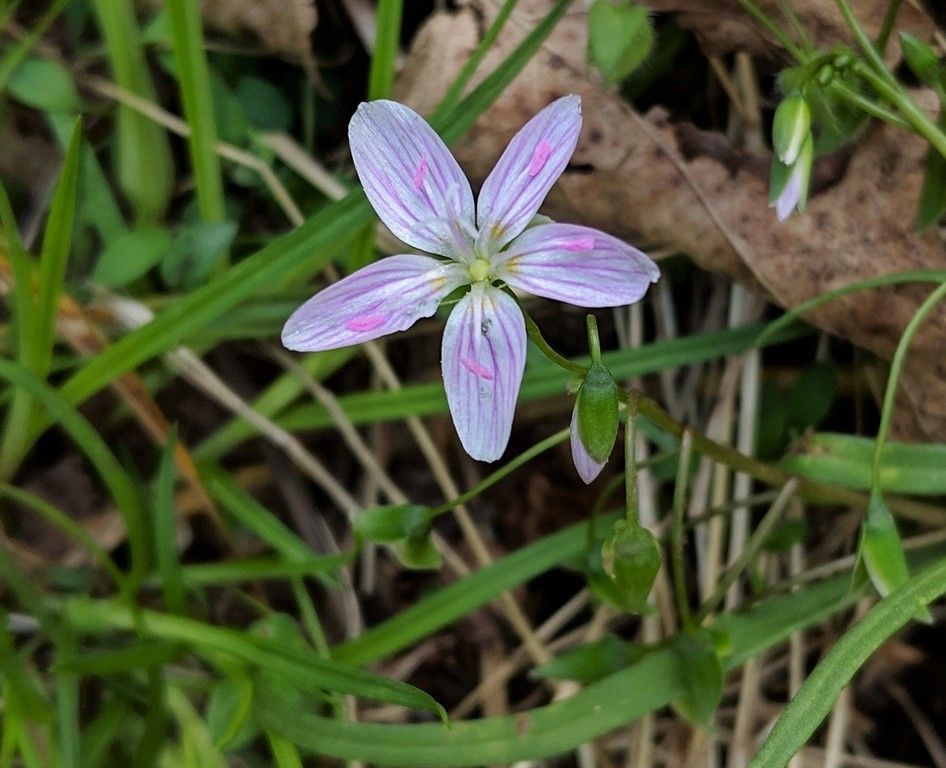
The Spring Beauty (Claytonia virginica) plant is only a few inches high. The flower has five white petals with pink-purple veins and pink anthers. It has strap-like leaves.
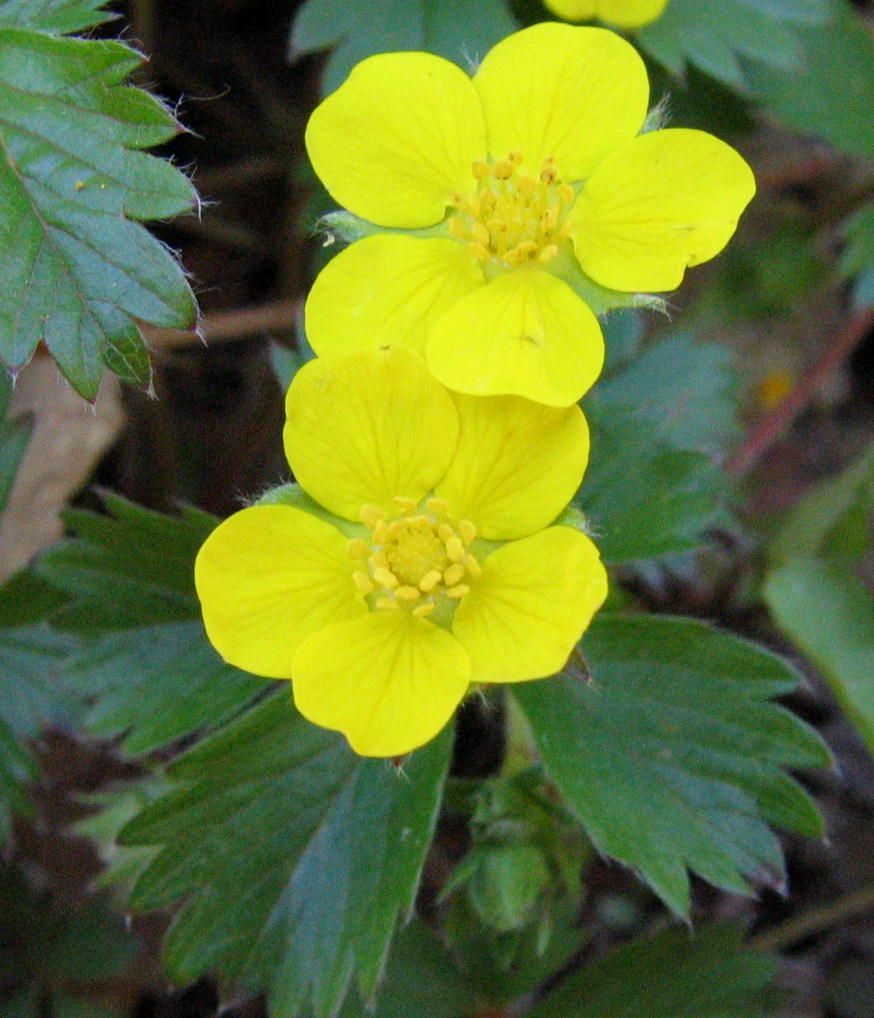
Dwarf Cinquefoil (Potentilla canadensis) half-inch, yellow flowers with five petals. Its leaves have five leaflets with teeth on the edges but not all the way to the stem of the leaflet.
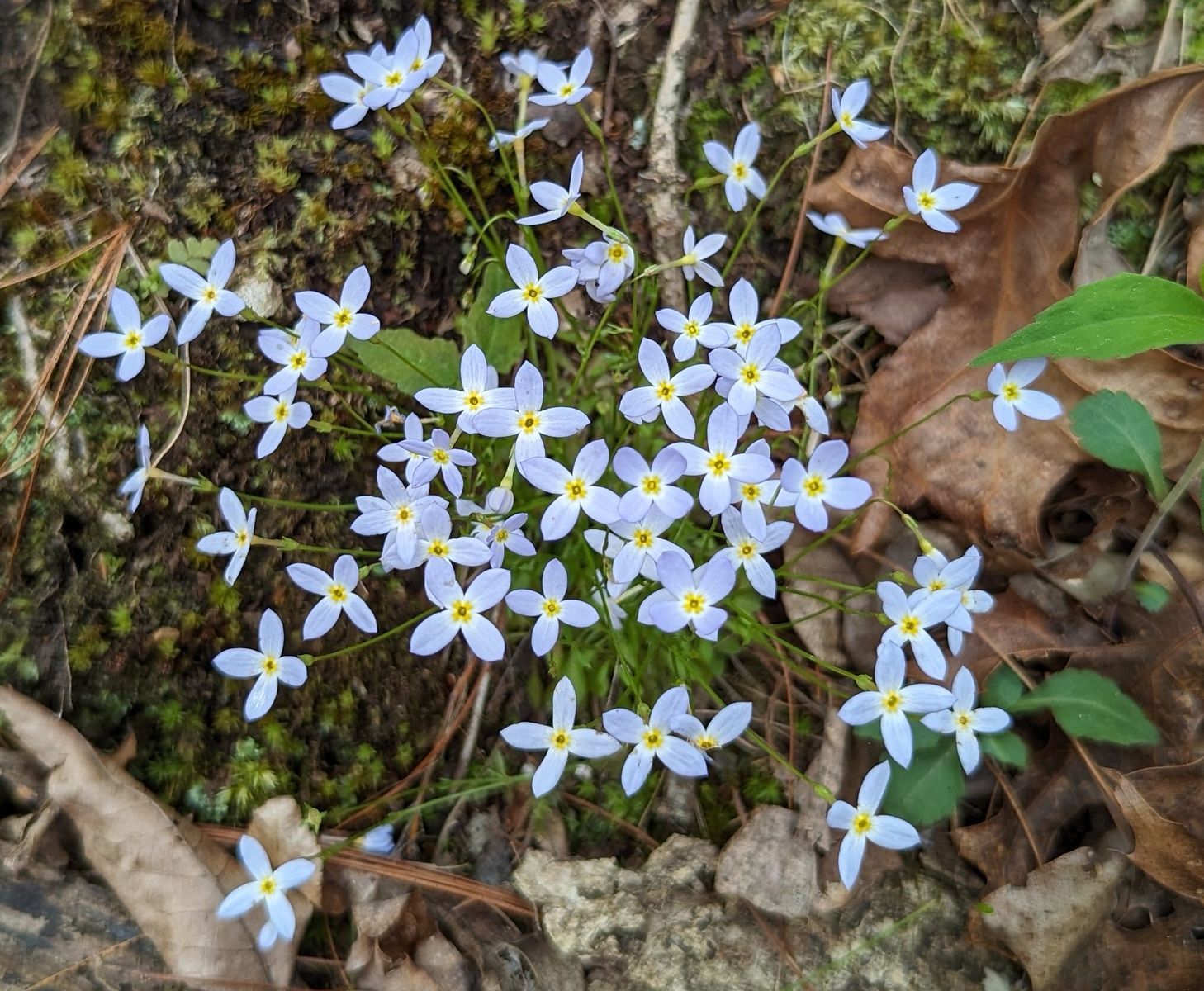
Common Bluets (Houstonia caerulea) are half-inch blue flowers with a yellow center, less than eight inches tall. Each flower is on a single stem. Four petals flare out from a narrow tube presenting a flat top to the eye. The rosette of tiny leaves at the base and even smaller leaves on the stems are hardly noticeable. The blue varies from dark to almost white.
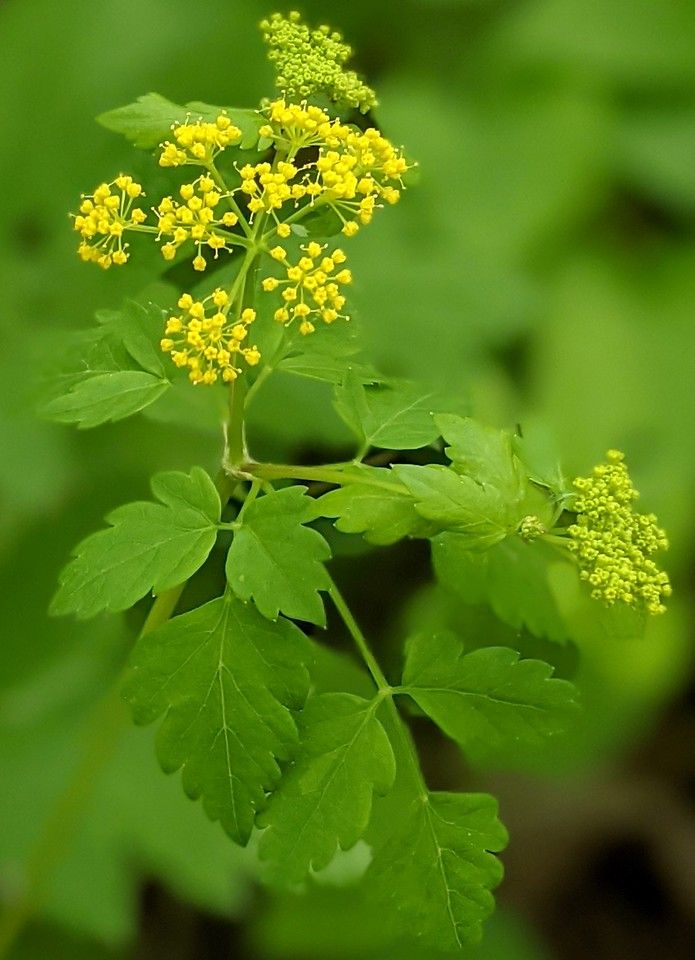
Golden-alexanders (Zizia aurea) have a flat-topped inflorescence with the flower stems arising from a common point like the struts of an umbrella. The tiny flowers are yellow. The leaves are two or three times divided. The leaflets are toothed.
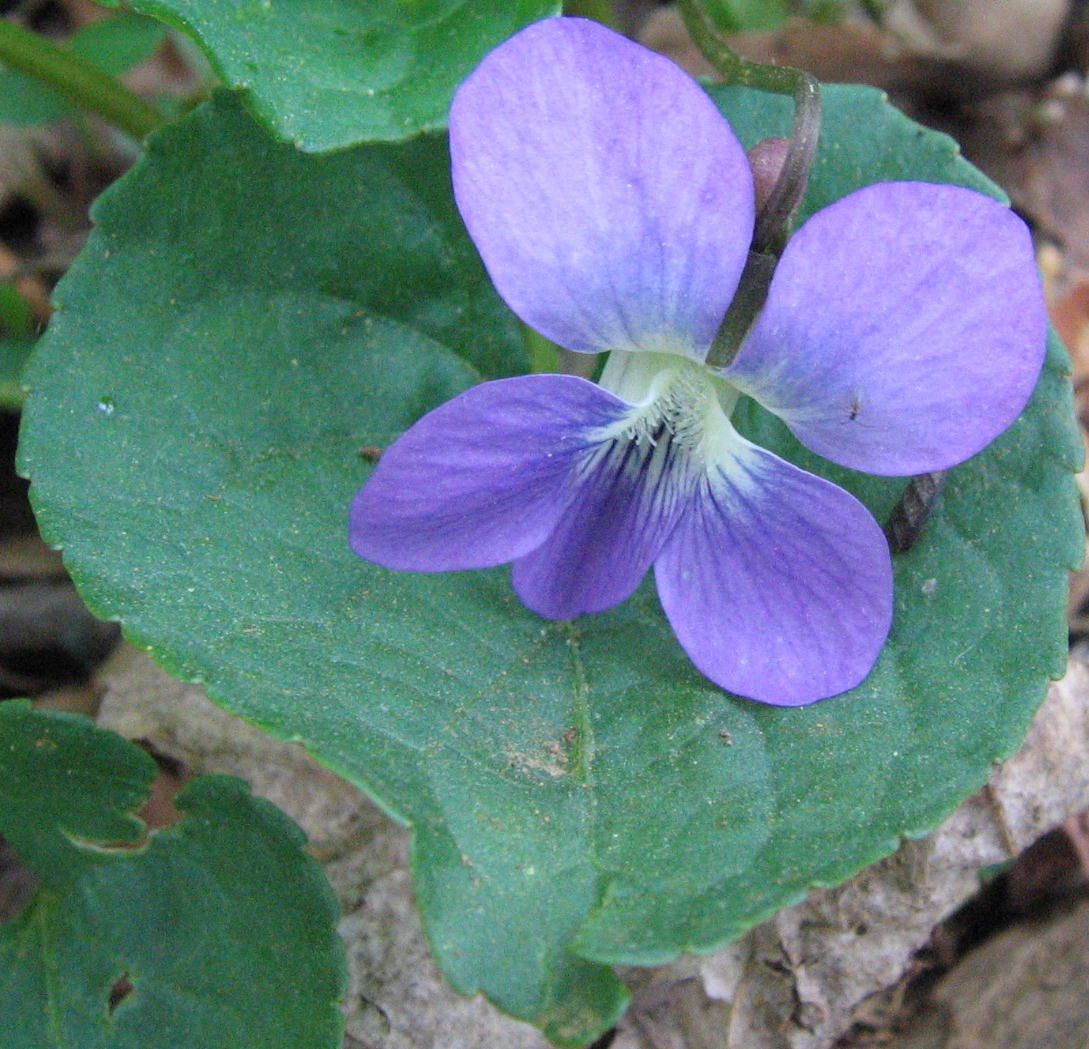
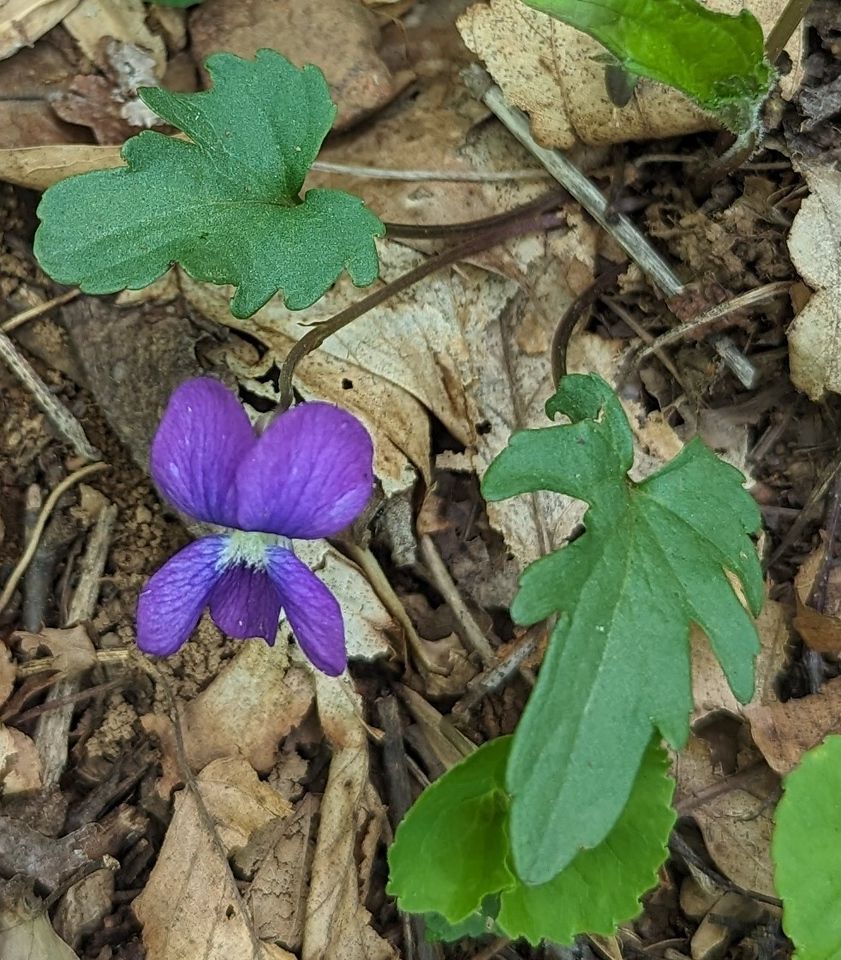
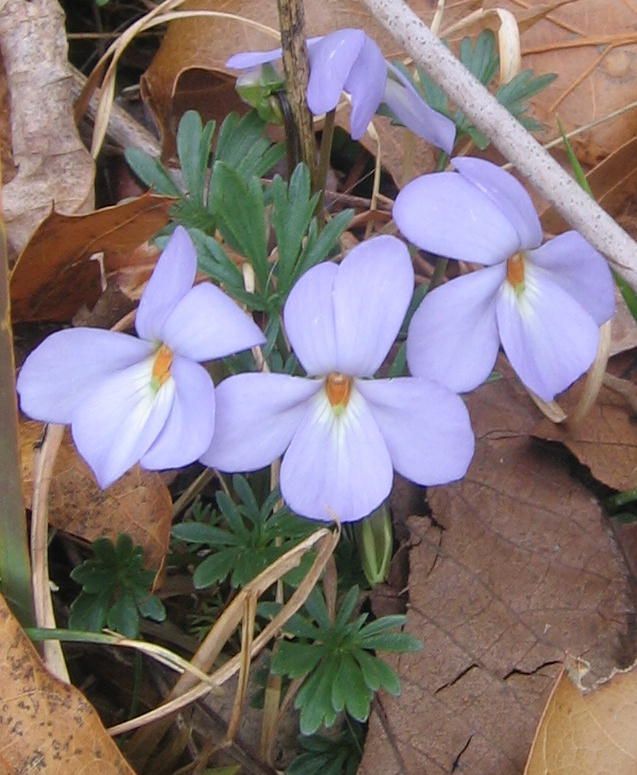
Three Violet species may be seen on this hike. Violet flowers have five petals with the lower petal larger or different-shaped than the side and upper pairs of petals. The plants are usually only a few inches tall with basal leaves. Common Blue Violet (Viola sororia) has 1-inch, blue/violet flowers and heart-shaped, pointed leaves. Wood Violet (Viola palmata) has 1-inch, blue/violet flowers and leaves with many small lobes. Birdfoot Violet (Viola palmata) has flowers that are larger than one inch and have pale purple petals, sometimes with dark violet upper petals, with orange stamens in the middle. The leaves are deeply divided into narrow lobes, like a bird’s foot.
Moss Phlox (Phlox subulata) is low-growing, forming mats. Purple flowers are up to an inch across. Petals flare out from narrow tubes and are notched at the tip. The leaves are entire (no lobes or teeth) and are in pairs, opposite each other.
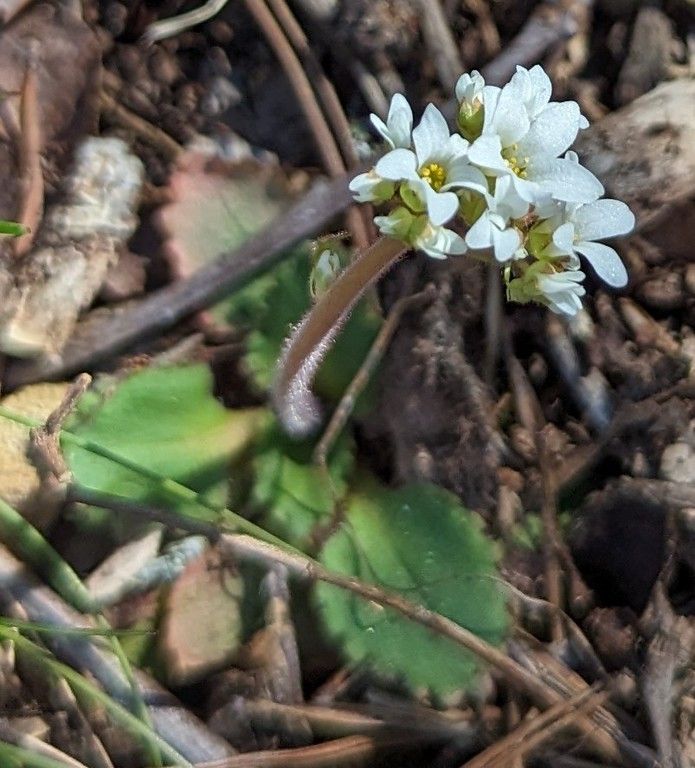
Early Saxifrage (Micranthes virginiensis) erect, branched stems rise above basal leaves. The up-to-three-inch long leaves are egg-shaped, tapering to the stem and toothed at the tips. The 1/4-inch flowers are white spreading from a stem about a foot tall.
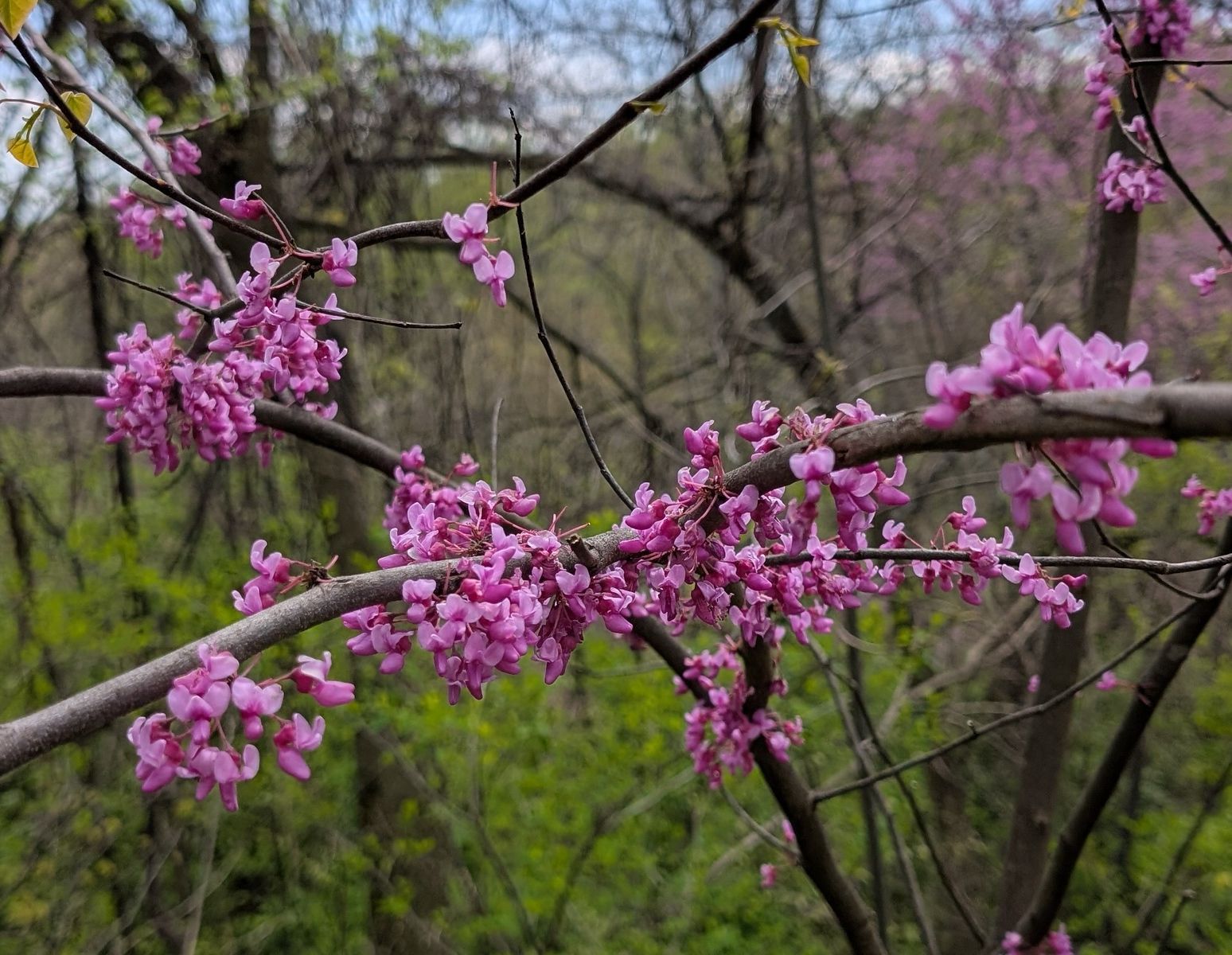
Eastern Redbud (Cercis Canadensis) is small tree or shrub with bright magenta flowers that fill the branches before the leaves appear. The flowers have the typical pea-family form: the large upper, notched petal called the banner; two smaller, wing petals; and two petals at the bottom that are fused and look like the bottom of a boat or canoe and are called the keel. The flowers grow in tightly bunched clusters of three to nine flowers on old growth even on the main trunk.
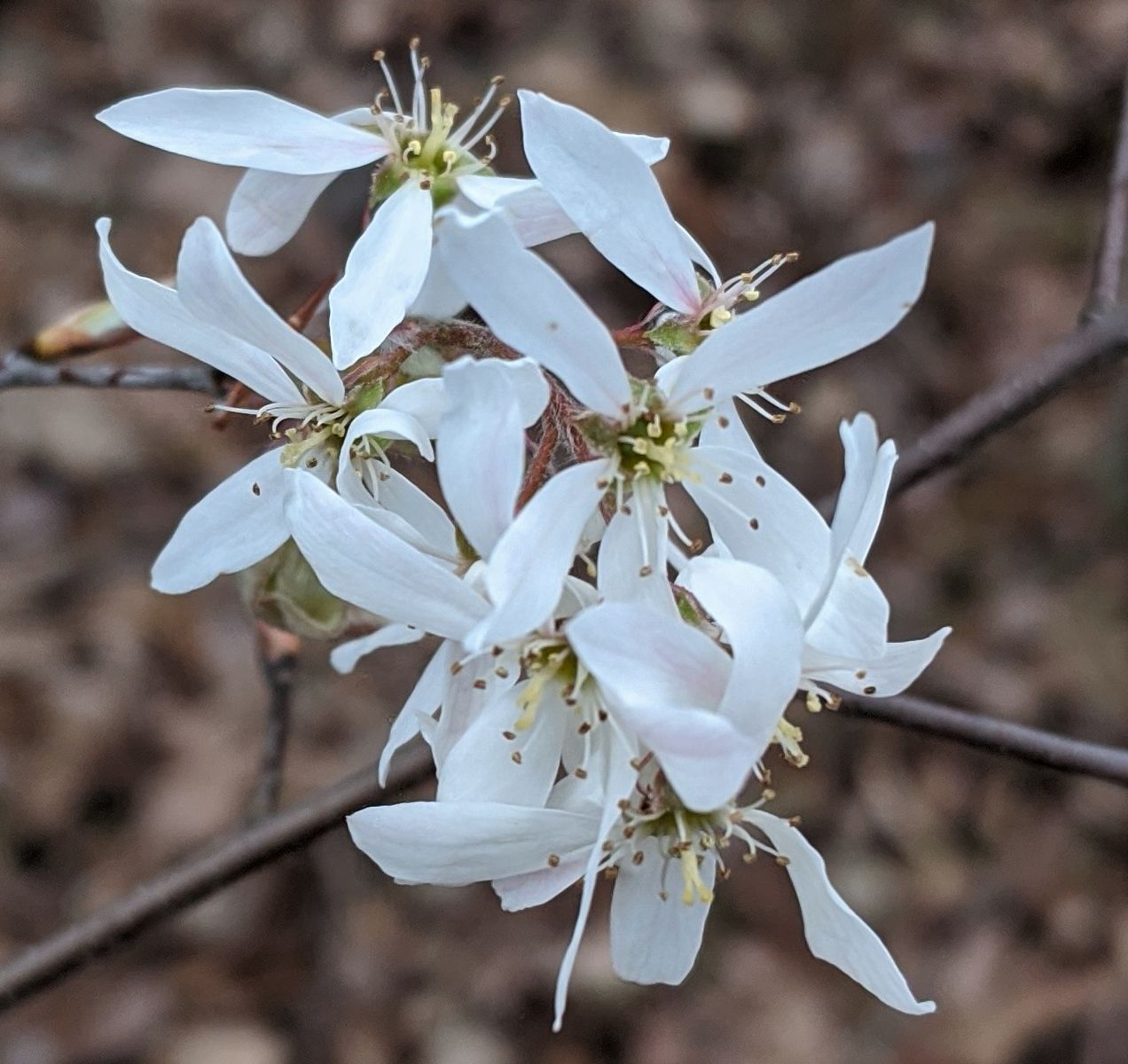
Two species of Serviceberry are commonly seen along PATC area trails. They both grow as shrubs or trees up to 20 meters tall. Downy Serviceberry (Amelanchier arborea) leaves are small and folded when the flowers open and are wooly underneath. Smooth Serviceberry (A. laevis) leaves are half grown when the flowers open and are smooth underneath. Serviceberry flowers have many stamens in the middle and five petals. The petals are white and longer and narrower than other spring flowering Rose family fruit trees and are often irregularly arranged.
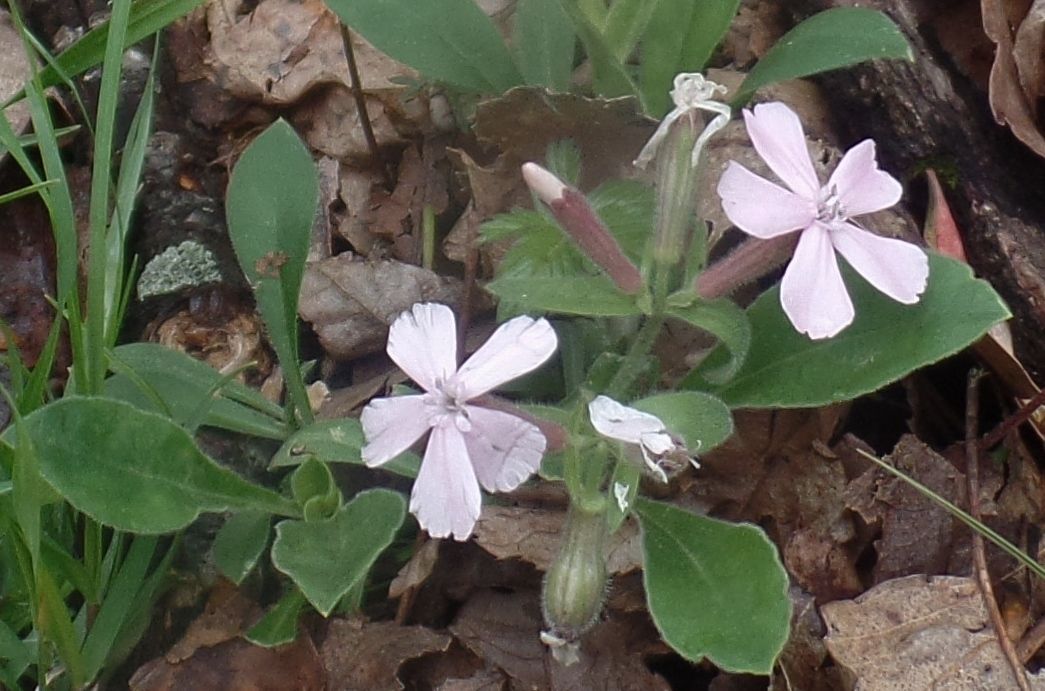
Wild Pink (Silene carolinana) is only a few inches tall. It has inch-wide, pink or white flowers with well-separated petals that are pinked (scalloped) at the tip.
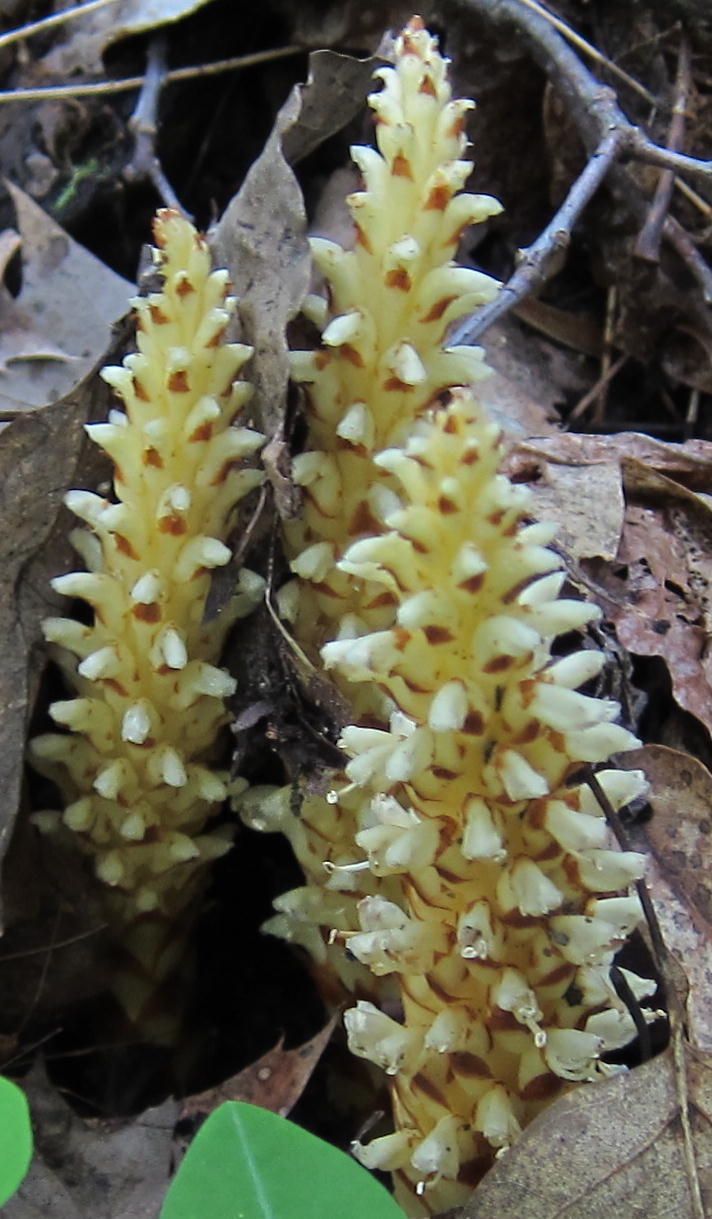
Squawroot aka Bear Corn (Conopholis americana) is parasitic on Oaks. It has no stem or leaves. A fat flower stalk that looks like a pinecone arises from the ground with many cream-colored flowers, each protected by a brown scale.