
What is that flower—Bear Church Rock—Spring
By Richard Stromberg

This article shows you some of the flowers to look for in spring on the way to Bear Church Rock in the Central Section of SNP. Bear Church Rock offers a fantastic view of the SNP mountains with no signs of human habitation. It is just off Jones Mountain Trail. It can be accessed by going down from Skyline Drive, but I am describing the flora you may see going up from the parking lot at the end of State Route 662 on Staunton River Trail (described on pages 269-272 of PATC’s “Appalachian Train Guide to Shenandoah National Park”).
All species below are native unless otherwise noted.
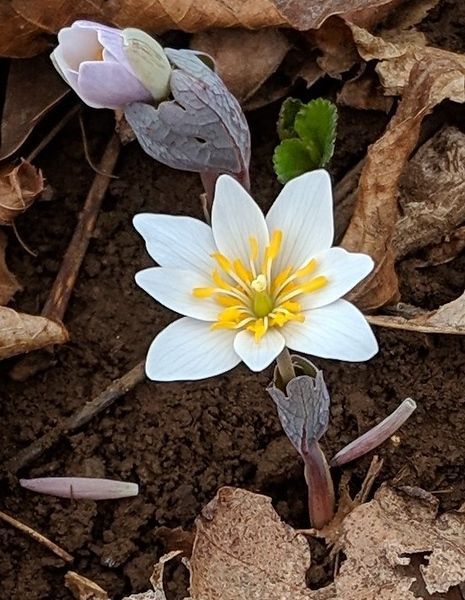
Bloodroot (Sanguinaria canadensis) plants have one leaf and one flower. The flower and leaf arise separately from the ground. The flower bud appears wrapped in the leaf and opens above the leaf as both unfold. It has up to 16 one-inch-long white petals surrounding yellow stamens—twice as many stamens as petals.
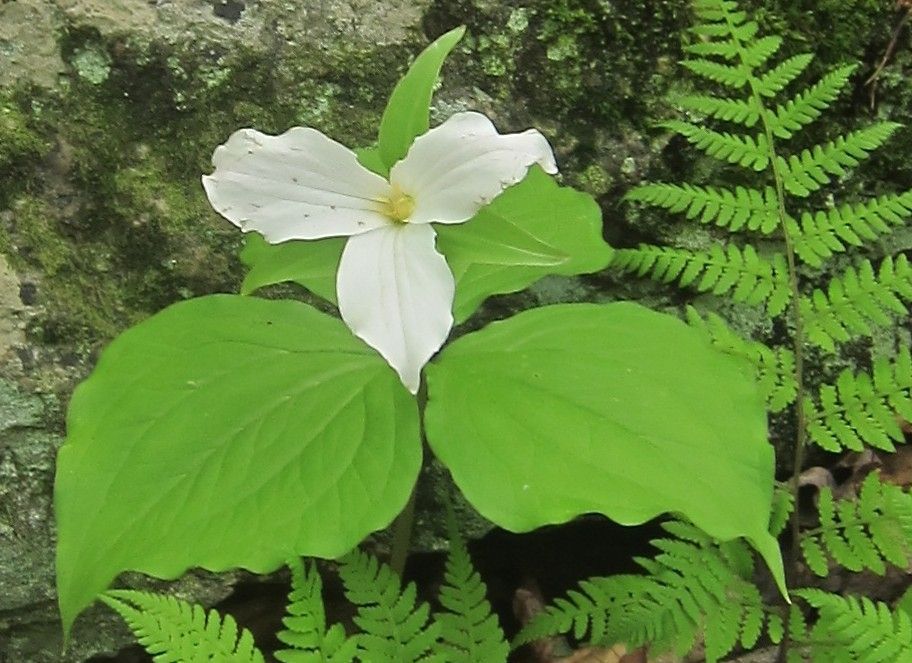
Large-flowered Trillium (Trillium grandiflorum) has three showy petals, three green sepals seen between the petals, and a whorl of three leaves. It is also called white trillium, but it also shows up in various shades of pink or turns pink as the flower ages. The flowers are held erect above the leaves on a stalk up to five inches long. Each petal may be three inches long.
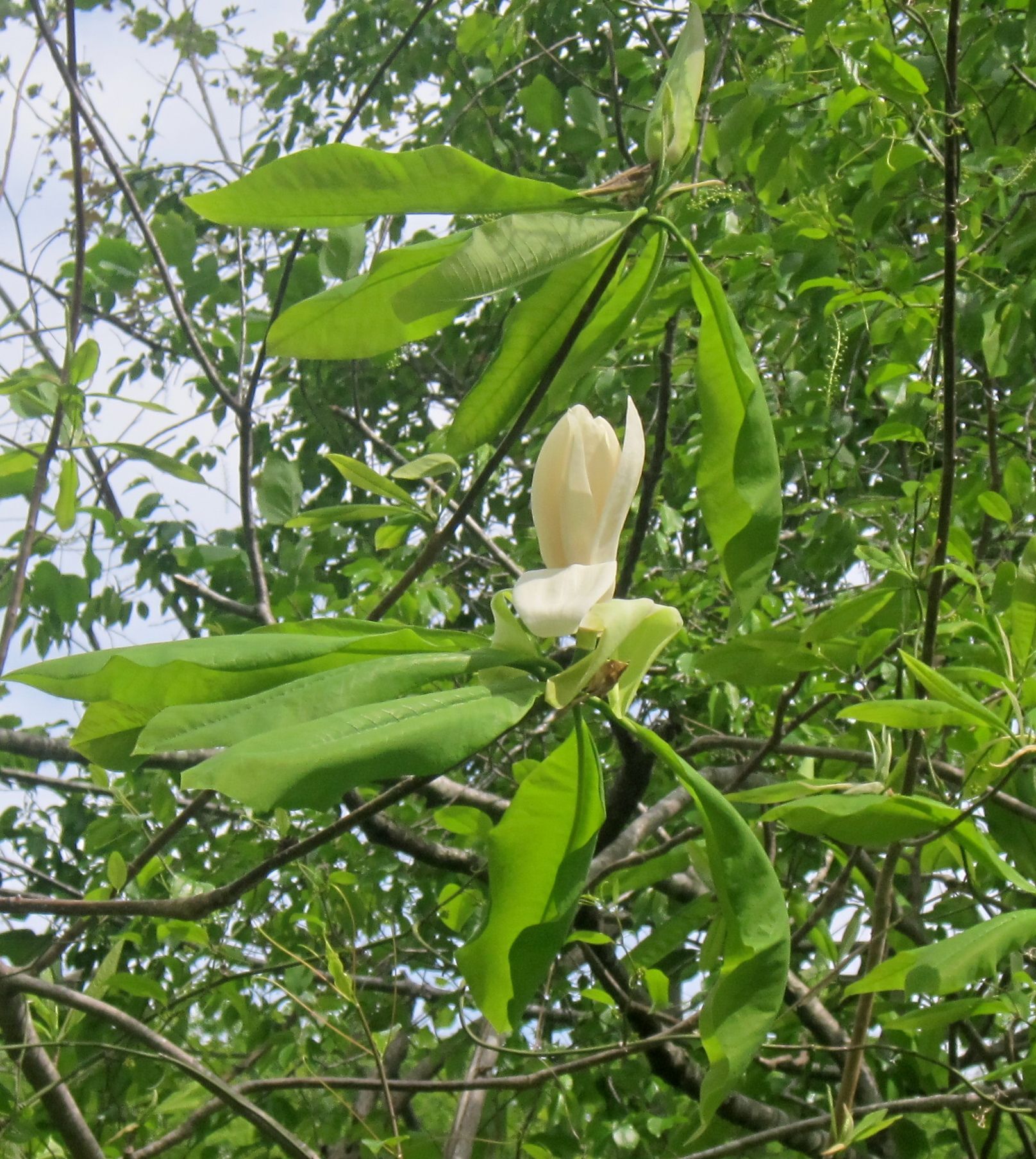
Umbrella Magnolia (Magnolia tripetala) is a small tree. Its leaves are clustered in umbrella-like circles at the end of flowering branches. The long-oval leaves can be up to two feet long. One flower emerges from the leaf cluster. The flowers have three sepals that look like petals and six to nine petals up to six inches long. Inside the petals is a cone-like aggregate fruit.
Mountain Laurel (Kalmia latifolia) bushes are up to ten feet tall with evergreen leaves up to four inches long. The petals are fused and open like a saucer, usually white but sometimes pink inside. From inside a red ring in the middle of the saucer, the pistil points straight out while ten white stamens bend their anthers into red-spotted pockets inside the petals. When a pollinator lands in the mountain laurel flower, the anthers spring from their pockets to shower it with pollen. The pointed flower buds have ridges radiating from the tip back to each anther pocket.
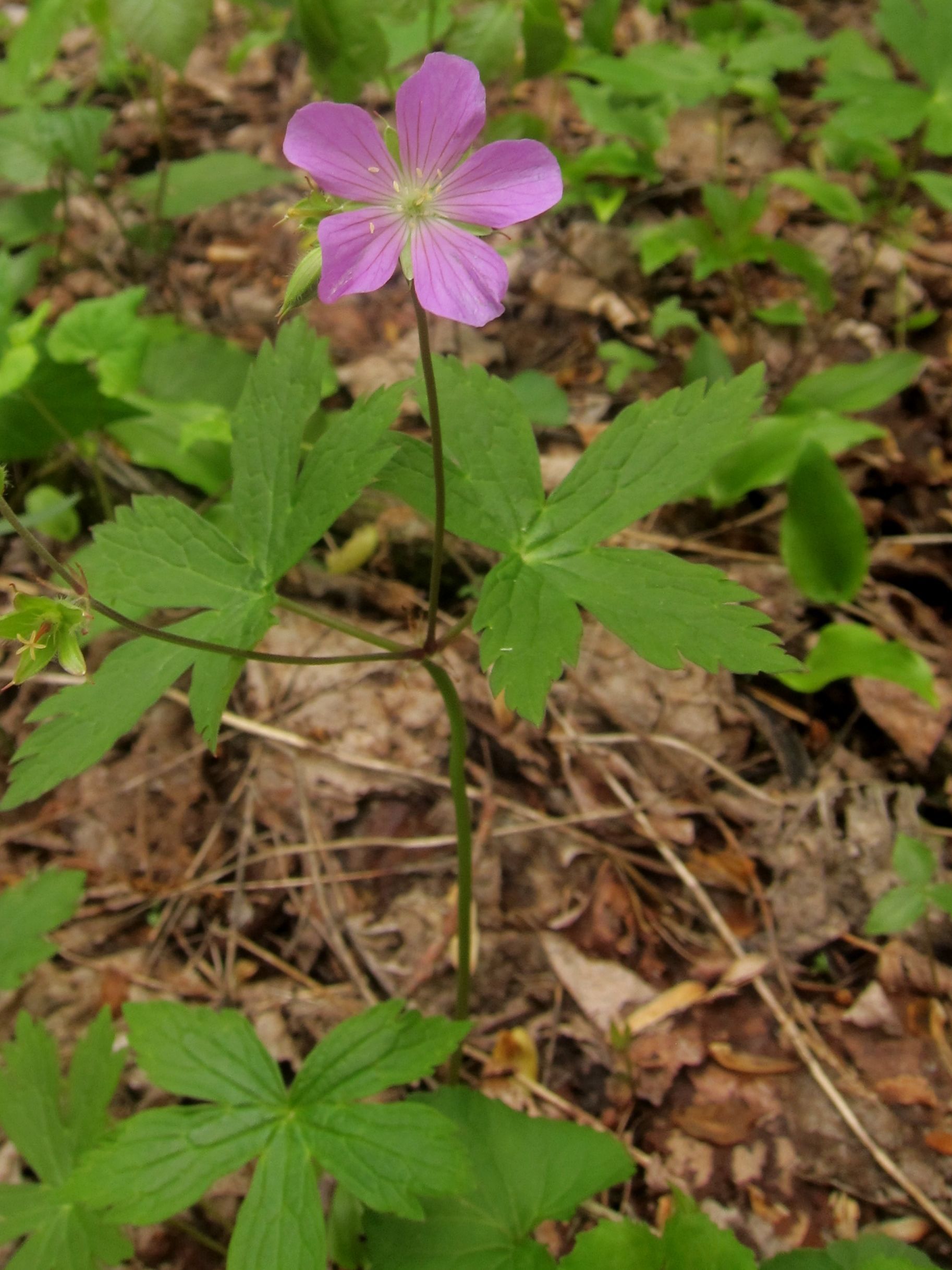
Wild Geranium (Geranium maculatum) rose-purple flowers are up to one and a half inches wide. and stand above the leaves. The leaves, up to four inches long and six inches wide, are deeply and irregularly cleft and the segments are again cleft or toothed at the tips.
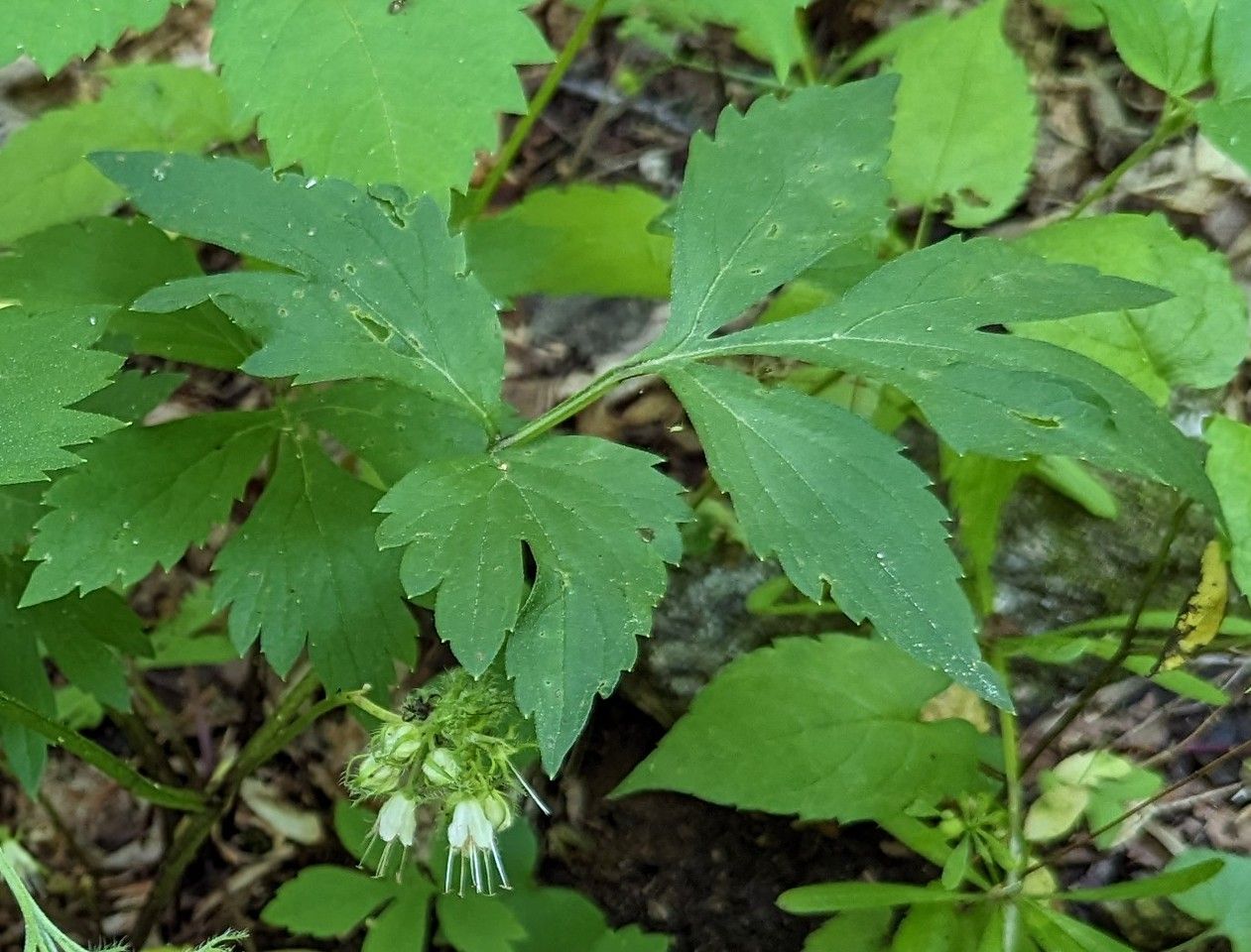
Virginia Waterleaf (Hydrophyllum virginianum) leaves are deeply divided into 5-7 deeply incised leaves. They are often mottled with white as though water-stained. The stems can be up to three feet long, but are weak and tend to sprawl. The flowers are so tightly bunched that they disguise that they are in a scorpioid raceme. They are white, sometimes tinged purple. The quarter-inch long petals don’t open wide and are joined together halfway. Long stamens protrude.
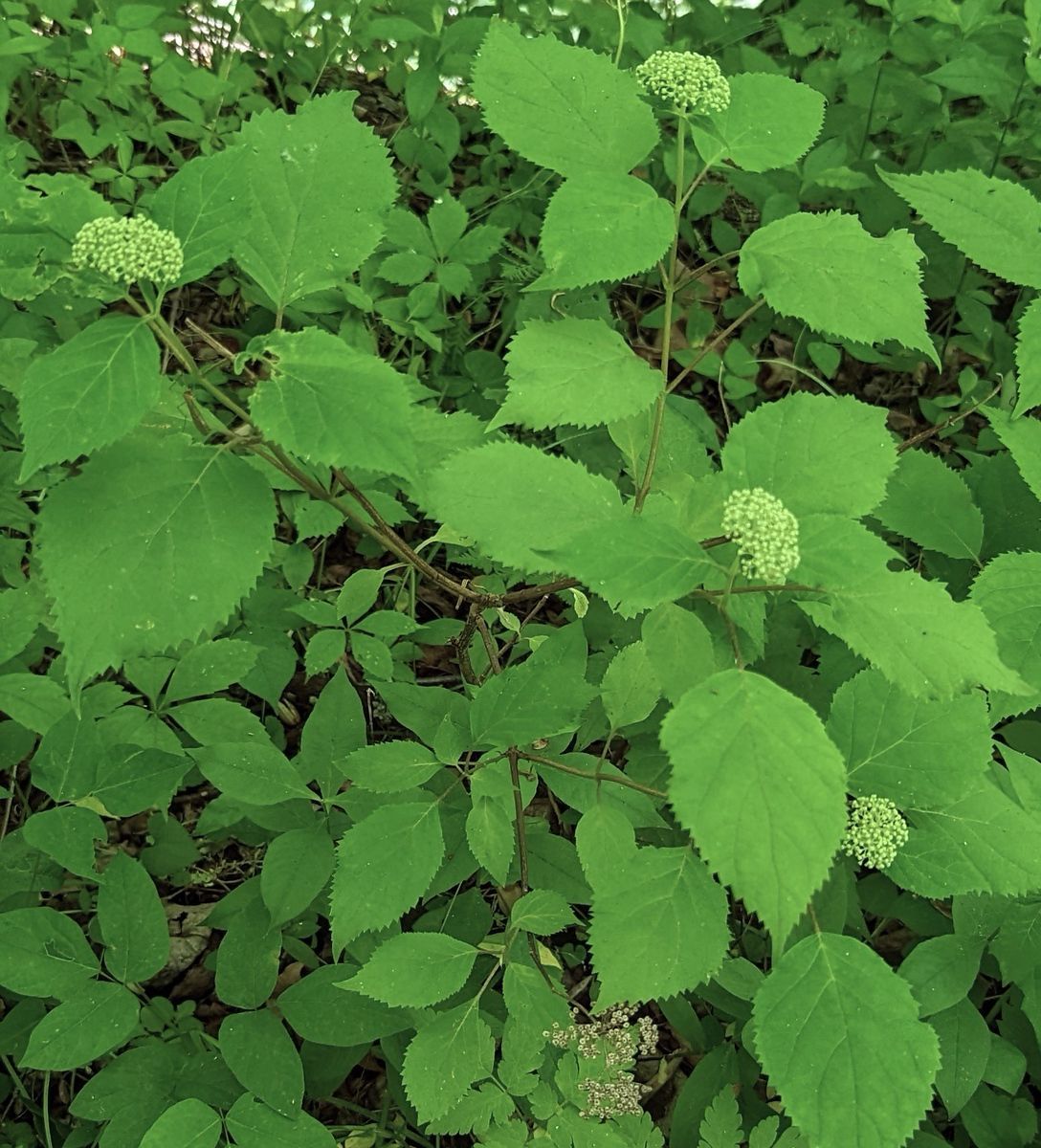
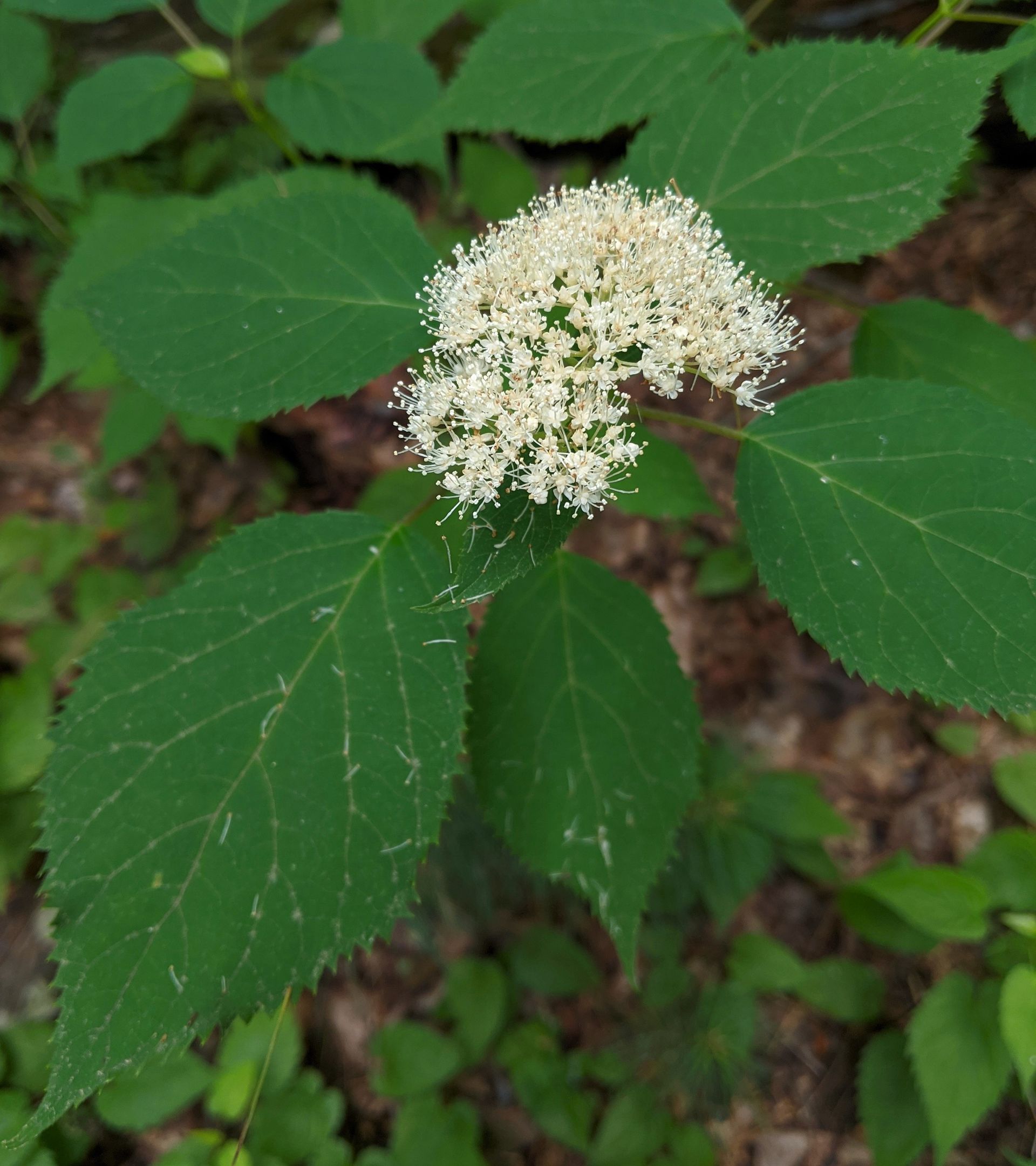
Wild Hydrangea (Hydrangea arborescens) is a shrub with large, pointed, opposite leaves. Its small white flowers grow in an umbel up to five inches wide. The umbel of brown seed capsules remains on the plant all winter.
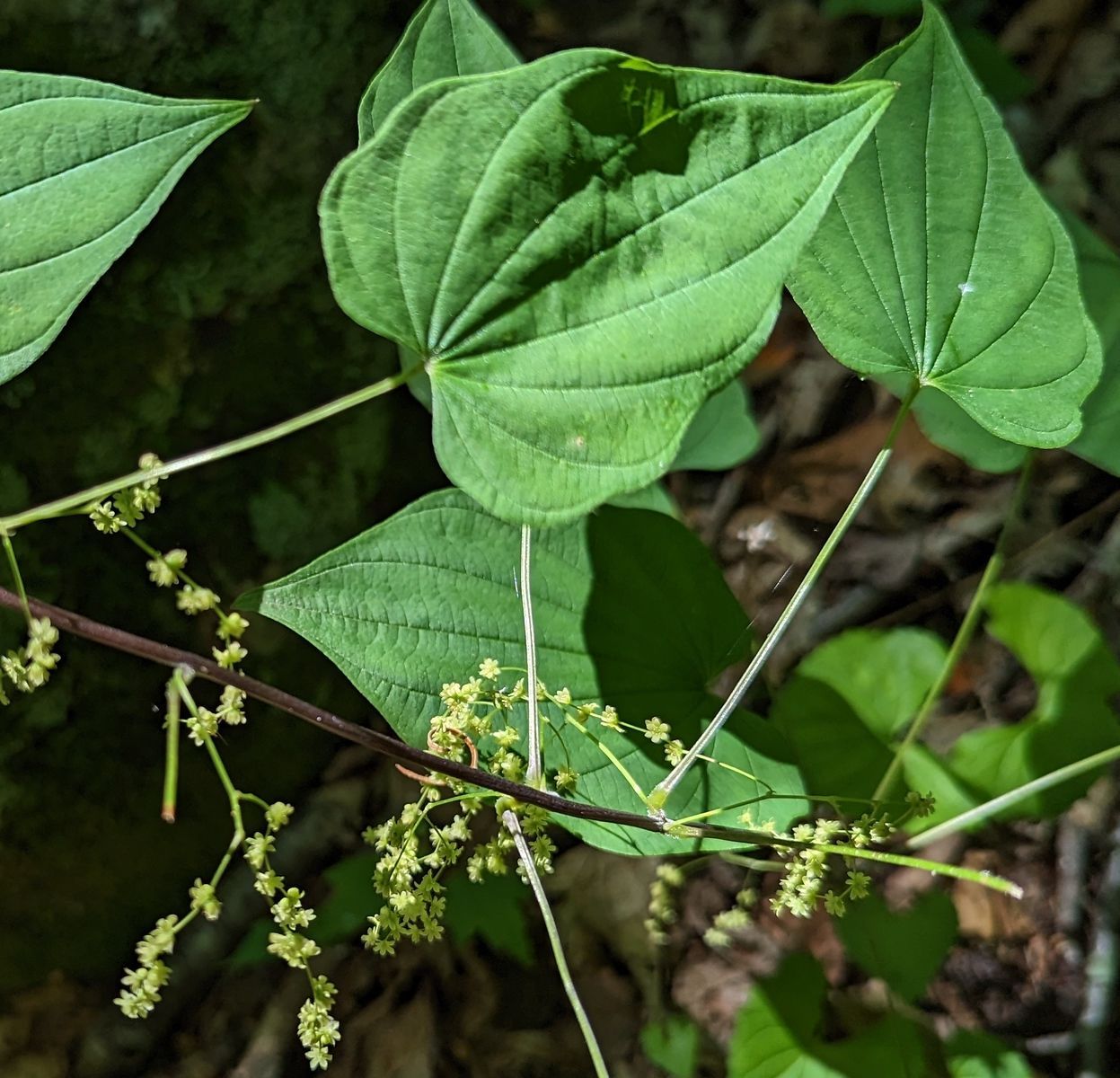
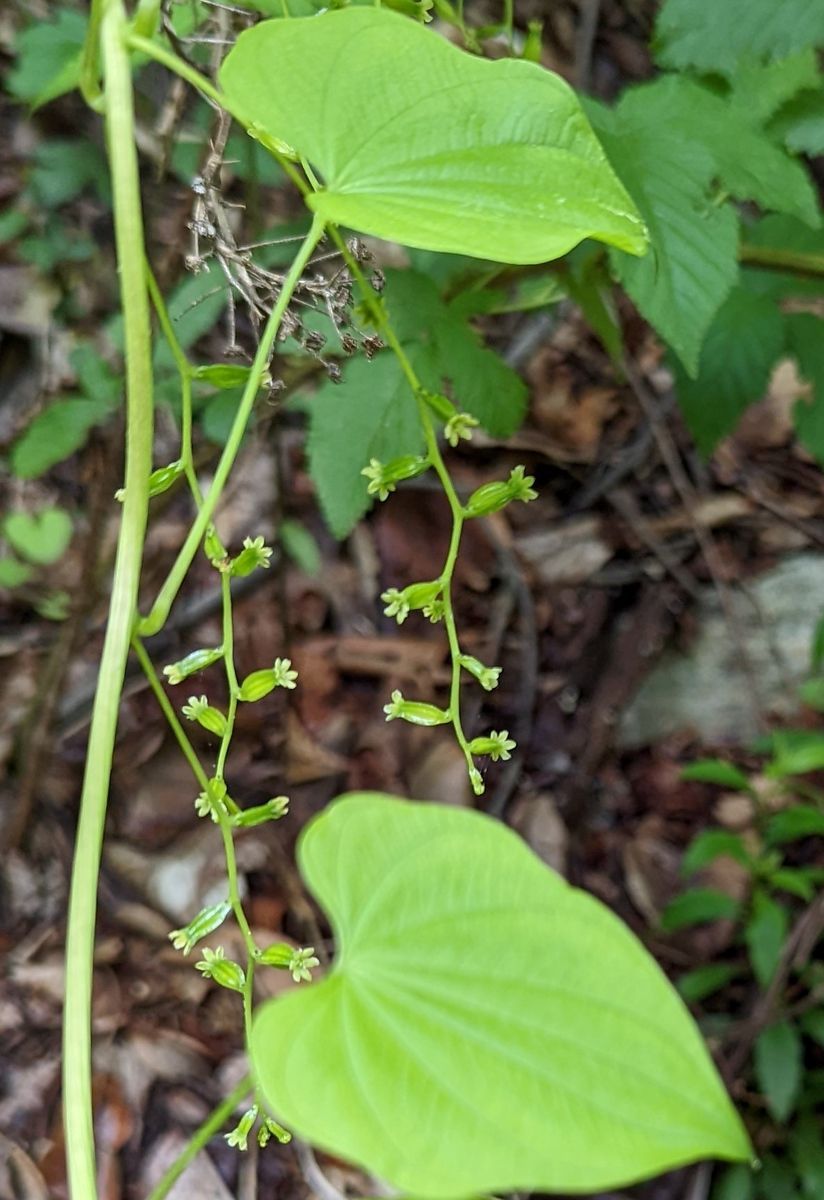
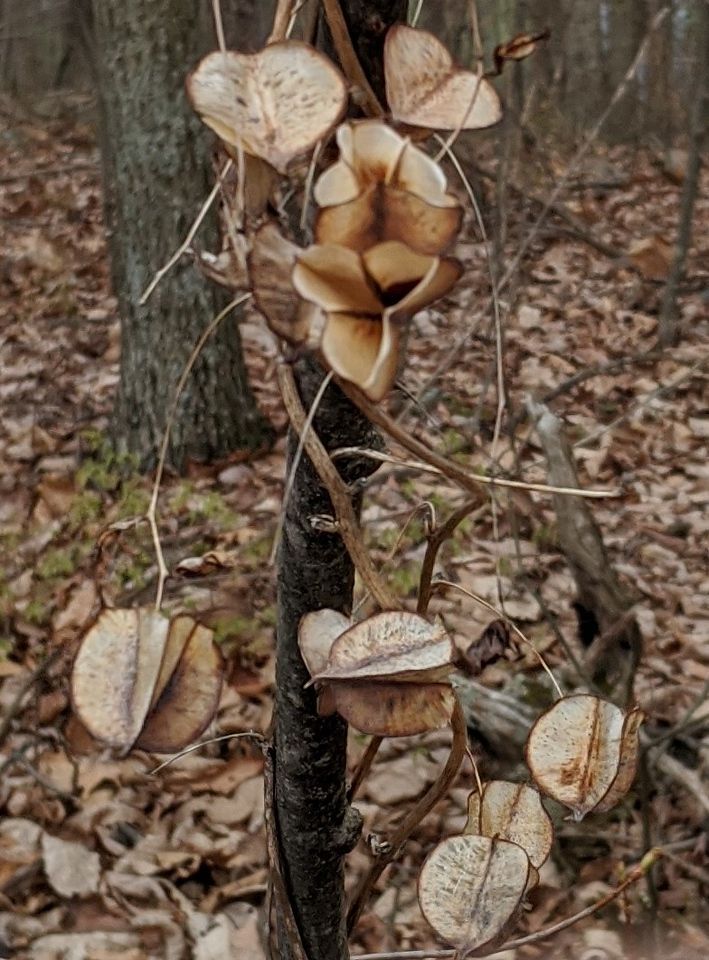
Wild Yam (Dioscorea villosa) is a vine up to five meters long, twining around other plants. It has shiny, six-inch, heart-shaped leaves that have prominent veins that circle from the stem to rejoin at the pointed tip. The leaves grow in whorls around the stem. In early spring, the first whorl of leaves is an eye-catching, shiny, light green. The plants are dioecious (male and female flowers grow on separate plants). The tiny, six-tepal flowers grow on long, branching strands. The female flowers are on top of quarter-inch long ovaries. Fruits are in three sections and hang on the dead vines through the winter.
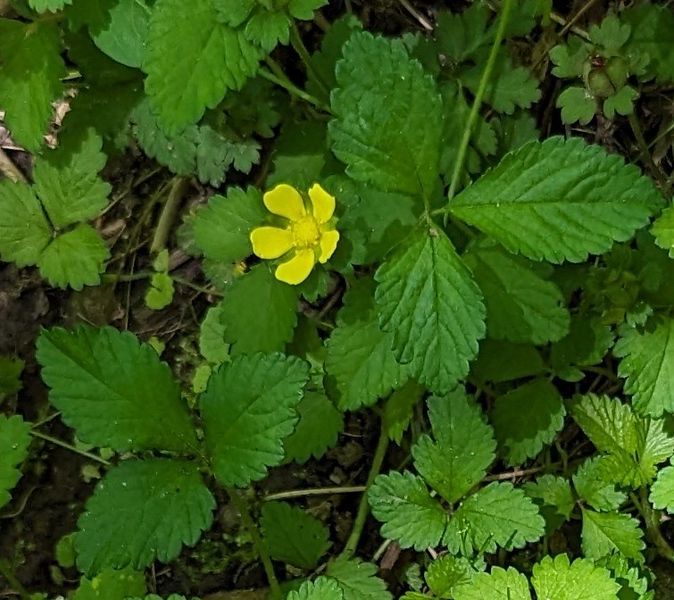
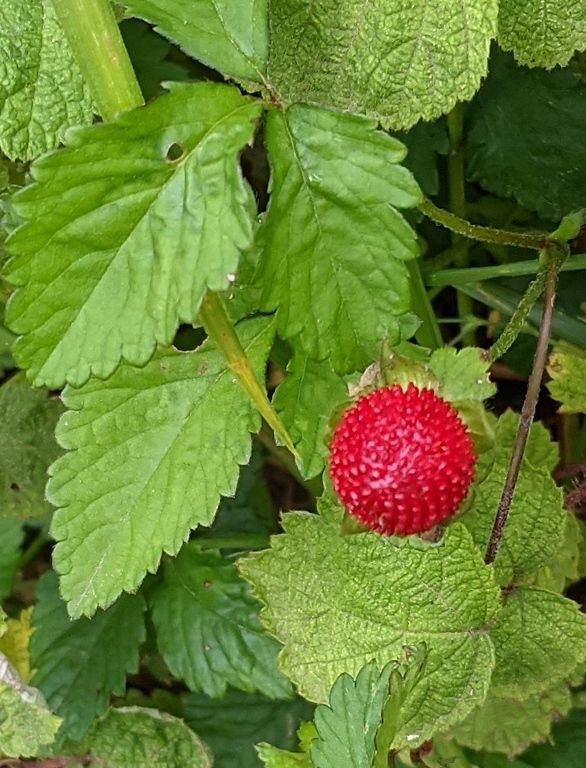
Indian Strawberry (Potentilla indica) sprawls across the ground. The leaves have three leaflets. The leaflet edges have rounded teeth. The flowers have five round, yellow petals, completely separated from each other. The flower is one-half to one inch in diameter. The fruit looks like a strawberry, but the seeds embedded on the outside of the fleshy berry are red while true strawberry seeds are light brown. Also, Indian Strawberries are tasteless.
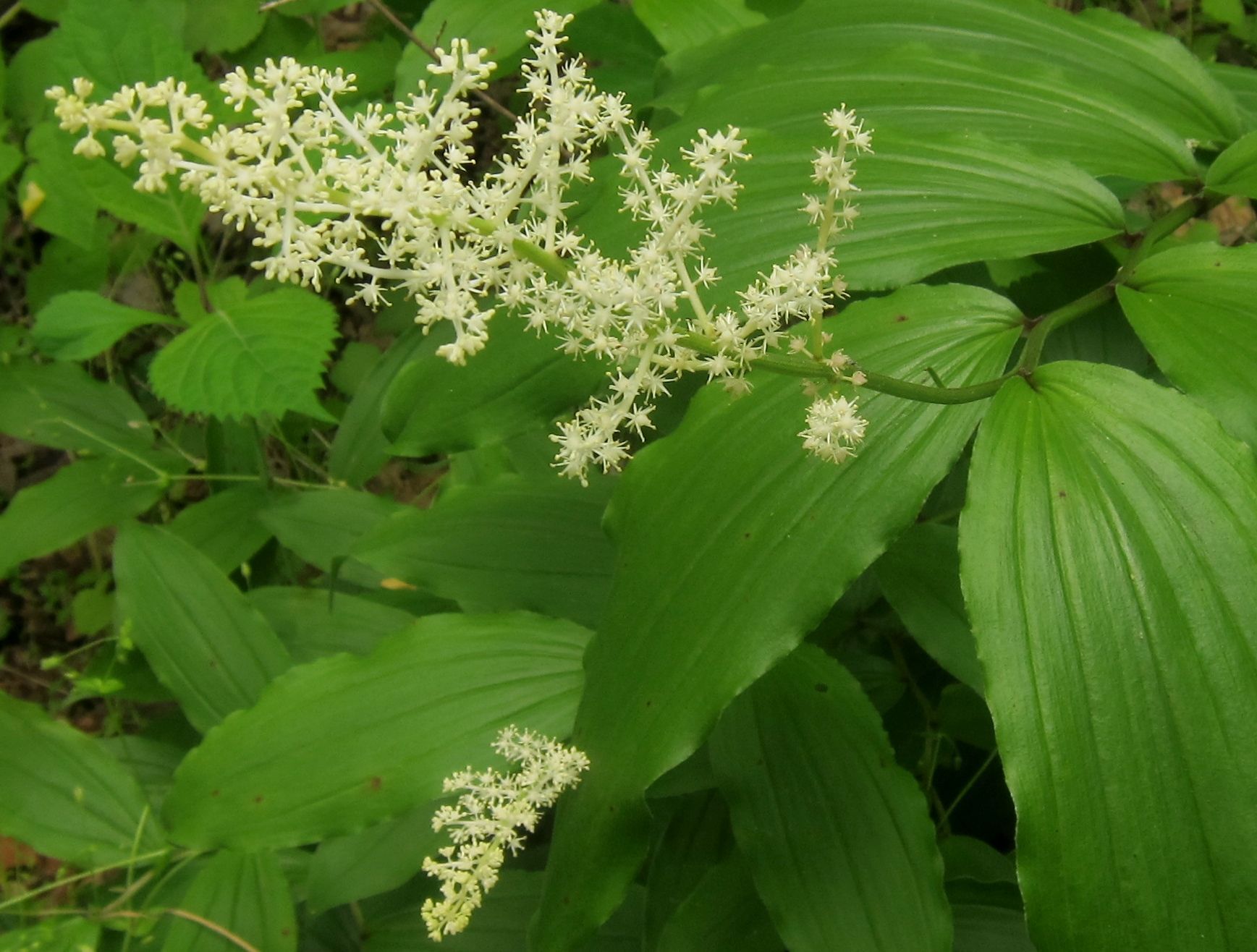
False Solomon’s Seal aka Solomon’s Plume (Maianthemum racemosum) plants have a single erect or arching stem with several ovate leaves alternating along the stem. The leaves have no stem and have distinct, parallel veins. Flower clusters grow at the end of the stem. The flower cluster is branched and pyramidal. The individual flowers have six tepals but are only about an eighth of an inch across. (When petals and sepals look alike, they are called tepals.)
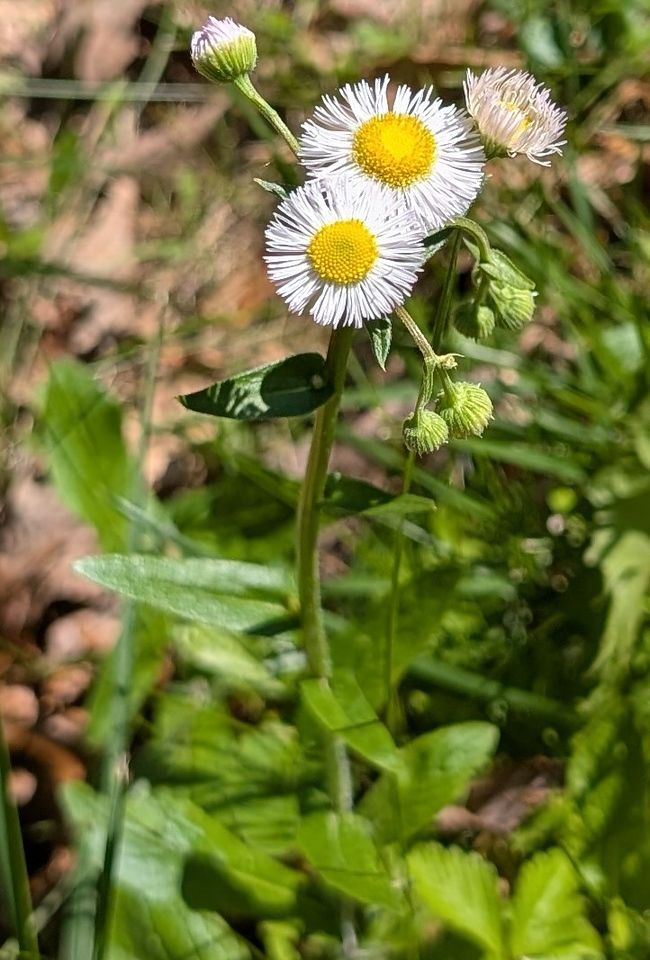
Common Fleabane (Erigeron. Philadelphicus) has daisy-like flowers. The central disk is yellow and the rays around the disk are white or tinged pink. It has 150-400 rays, each less than half a millimeter wide. The stem leaves widen from the pointed tip all the way to the stem and grasp the stem.
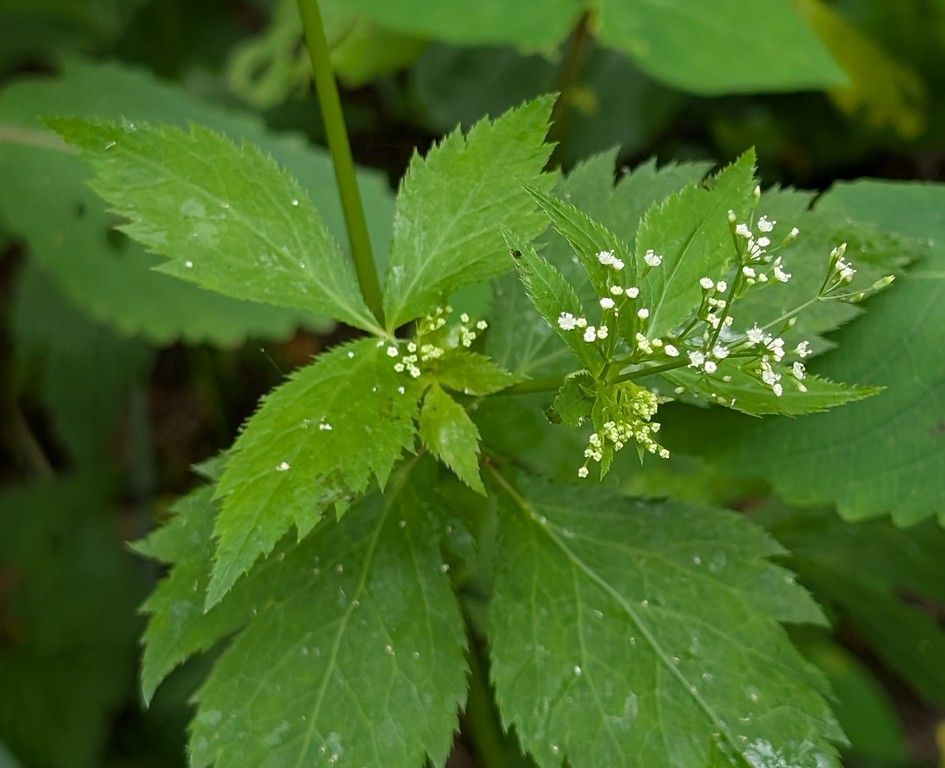
Honewort (Cryptotaenia canadensis) has tiny white flowers that grow in a sparse, wide-spread, irregular head. The leaves have three leaflets with varying teeth and lobe formations.
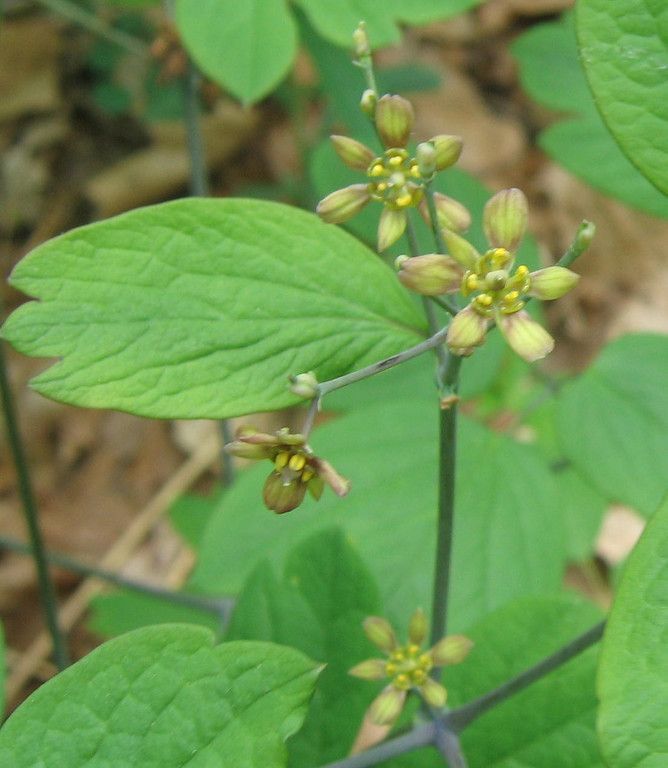
Blue Cohosh (Caulophyllum thalictroides) plants are one to two and a half feet tall. They have two leaves though they seem to have many because the first leaf is divided into three, and then again into three and sometimes again into three with two-to-three-inch leaflets on the final division. The leaflets have three to five lobes above the middle. Panicles of five or more flowers bloom at the top of the plant. The half-inch flowers are dominated by 6 sepals with tiny petals at the base of each sepal. The sepal colors are a mixture of yellow, purple and green. Inside the ring of petals are six yellow-topped stamens surrounding the stigma. The fruits stand up at the top of the plant. They start out green and turn blue.
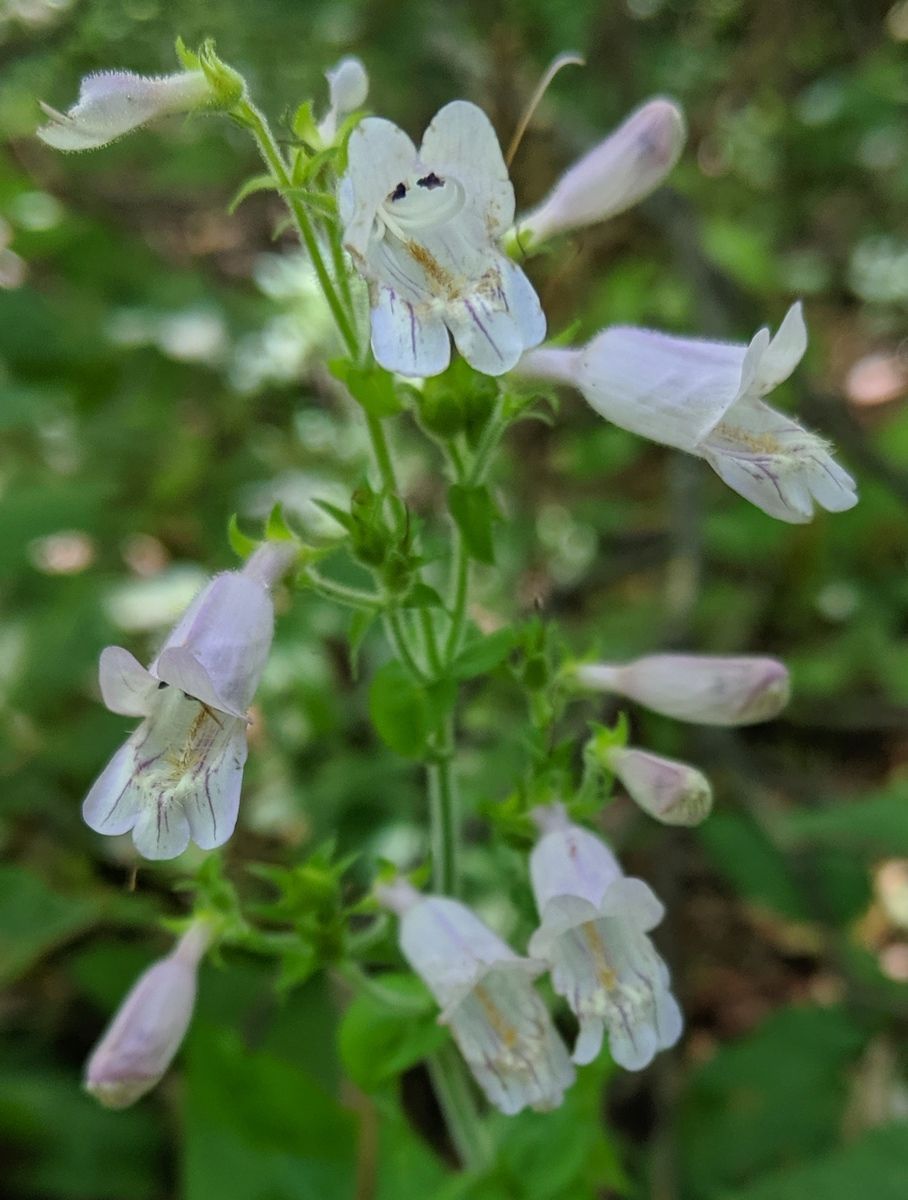
Gray Beardtongue (Penstemon canescens) has spikes of colorful, one-inch flowers atop the plants. The flowers are tubular. The tube is narrow at the stem end and then abruptly widens, ending in two-part upper lips and three-part lower lips. The flowers are pale purple outside and white with purple stripes inside. You can see four stamens under the upper lip. The fifth stamen is sterile and rests on the bottom of the tube, and is usually hairy yellow, which gives the name beardtongue. Short hairs make the stems look gray, which is what canescens means.
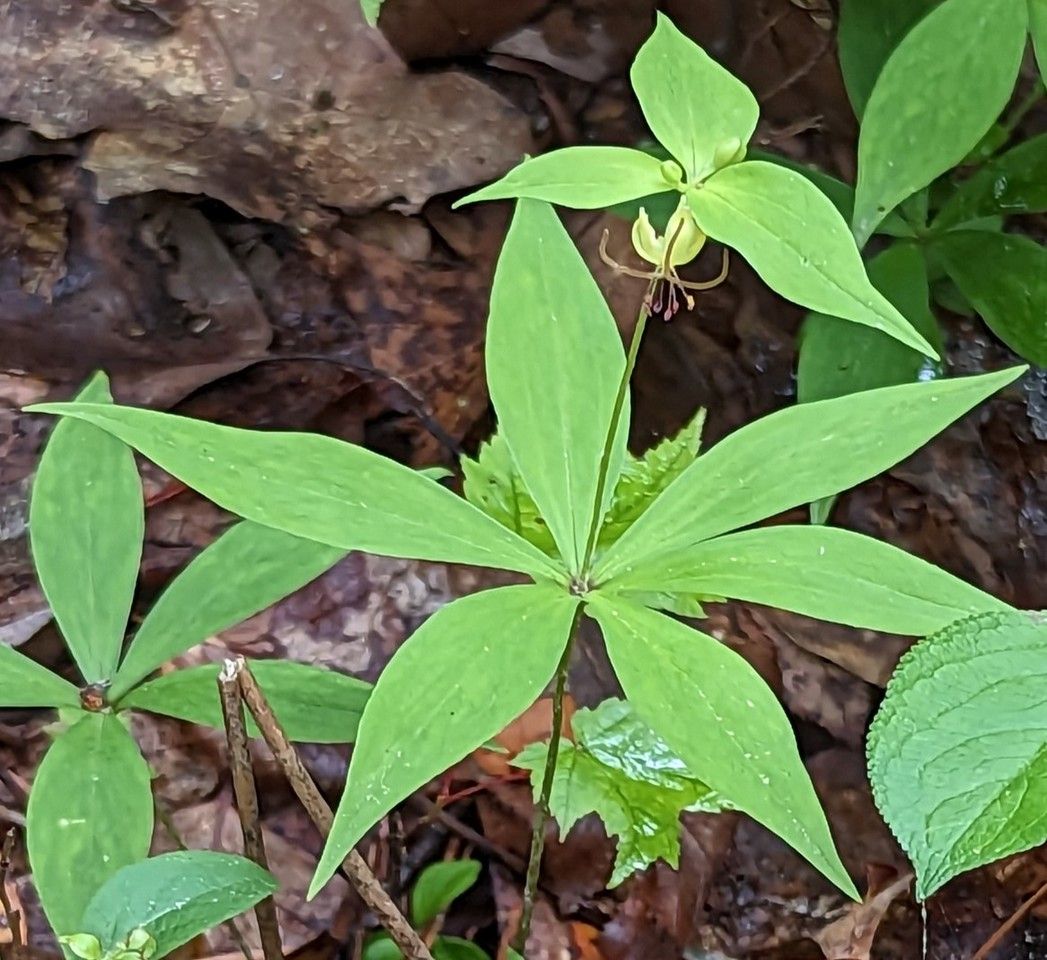
When young, Indian Cucumber-root (Medeola virginiana) plants have a stem topped by whorl of five to eleven four-to-five-inch egg-shaped leaves about a foot above the ground. When the plant has built up enough energy in its rootstock, it grows the stem another foot above the whorl of leaves and develops another whorl of two or three smaller leaves from which an umbel of three to ten flowers grows. The flowers hang downward beneath the top whorl of leaves. Each flower has six greenish yellow tepals about a quarter inch long and curving back, but they are dominated by three threadlike styles that are longer than the tepals and hover above them. After pollination, berries form and their stems straighten up so they are positioned on top of the plant.