
Practicing Mindfulness on the Trail
By Meg Drennan
Step by step, often through snow and frigid temperatures, a band of Buddhist monks recently completed their ‘Walk for Peace’ from Fort Worth, TX to Washington, D.C. On the final day of their 2,300 mile journey, they held ceremonies at the Lincoln Memorial and the National Cathedral, where the Venerable Bhikkhu Paññākāra spoke about mindfulness as the ‘key to peace.’
“All you need to do is just practice mindfulness to unlock that box where you have kept peace and happiness inside … Now it's your job. It's your duty, to find it, and unlock it. You're the only one who can do this,” he said. But how do we start?
First, by unpacking the concept of mindfulness. “Mindfulness is the basic human ability to be fully present, aware of where we are and what we’re doing, and not overly reactive or overwhelmed by what’s going on around us,” explains Barry Boyce, founding editor of Mindful Magazine.
The concept also refers to cultivating the ability or skills to be mindful, such as through meditation or mindful movement. If this appeals to you, then here are a few tips to get started when you hit the trail this spring.
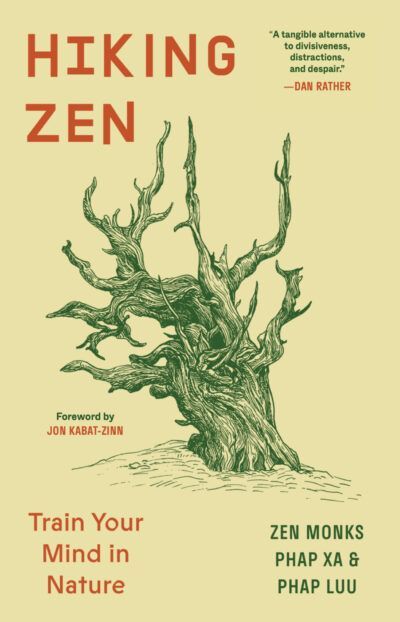
Tune into your breath: Pausing to pay close attention to your breathing will help orient your mind and thinking to the present moment and your current surroundings. In their book Hiking Zen: Train Your Mind in Nature Pháp Lưu and Phap Xa describe the ancient practice of walking meditation, which is part of daily life at Plum Village, the Buddhist monastery and mindfulness practice center founded by Zen Master Thich Nhat Hanh in France.
“As monks, we take mindful steps. We go slowly. We keep our mind 100% on breath and steps. We let go of past worries, future worries. We keep in the present. It brings healing. If our mind races, we can calmly bring it back.”
They recount leading seven-week backpacking retreats, starting from the Blue Cliff Monastery in the Catskills and wending their way south through the PATC region. Every moment on the trail, they believe, is an opportunity to practice mindfulness. “Stand on the earth, feel the ground under your feet. Put your hands on the belly, feel it rising and falling. Walk slowly to start. Take one breath with each step. Breathe in, step with your left foot. Breathe out, step with your right foot.”
As you progress, you can add steps as you inhale and exhale. Find a pace, rhythm that helps you to link your breath and steps together. Rather than counting, you might say a simple mantra. Think about what would motivate you or calm your mind. Thich Nhat Hanh suggested, “As we walk, we can say: Breathing in, I calm my body. Breathing out, I bring peace into my body.”
Let go of the destination: For many of us, walking is a means to an end - to do errands, to get to our cars. But, the Zen monks observe, “If we only focus on destination, then we miss wonders around us. Walk without somewhere to go.”
Give it a shot. Try not to have a fixed goal in mind when you set out. Rather, reconsider why you’re on the trail. Is it just to complete a five-mile hike or summit a particular mountain? Letting go of a fixed destination will allow you the freedom to experience walking in a different, more mindful way. You may still reach that physical goal, but the experience of getting there will be different. As Ralph Waldo Emerson counseled, “It’s not the destination, it’s the journey.”
Boost your senses: To fully engage with your surroundings, try activating all five senses using the simple 5-4-3-2-1 technique. It’s a fun way to engage young hikers as well. Here’s how it works. Stop your hike, look around, and answer these five questions out loud. What are: Five things you see? Four things you hear? Three things you smell? Two things you feel? One thing you taste?
Activating all your senses collectively and intentionally will ground you in the moment and heighten your awareness and appreciation of your immediate environment. It’s also an easy, quick way to stimulate your brain and create new memories.
Re-think your phone: Before hitting the trail, reflect on how the phone fits into your hike. Do you really need to bring it along? If so, then consider these options. Put the phone in airplane mode to minimize distractions and use a paper map to navigate.
Finally, Thich Nhat Hanh advises, “Don’t forget to practice smiling. Your half-smile will bring calm and delight to your steps and your breath and help sustain your attention.”