
What’s that Flower? Buzzard Rock to Veach Gap in Summer
Article and Photos by Richard Stromberg




This article shows you some of the flowers to look for in Summer on the Buzzard Rock to Veach Gap hike described in the February 2026 issue of the Potomac Appalachian.
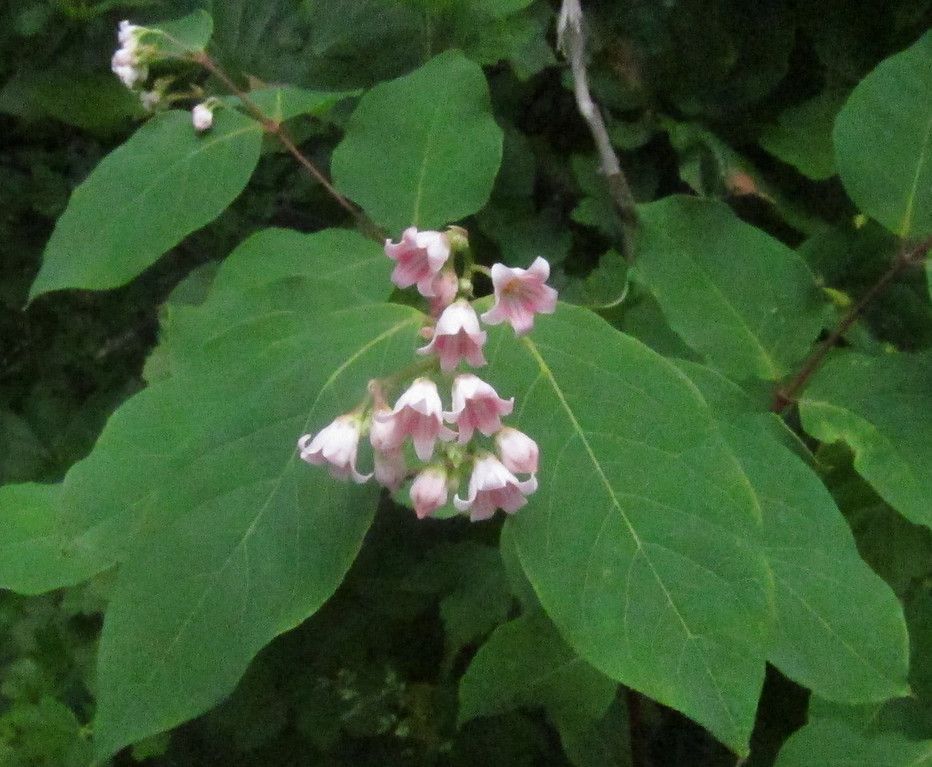
Spreading Dogbane (Apocynum androsaemifolium) is a bushy perennial with paired, oval leaves. The flowers are quarter-inch, bell-shaped with flaring lobes. They are white with pink stripes or splotches. It blooms in summer.
Whorled Loosestrife (Lysimachia quadrifolia) grows up to three feet tall with a series of whorled leaves spaced up the stem. The whorls usually contain four leaves. The leaves have no stem or a very short one. The solitary, star-shaped flowers grow on one-to-two-inch stems from the axils of the upper leaf whorls. The petals are yellow with red at the base.
Toothed White-topped Aster (Sericocarpus asteroides) has daisy-like flowers except the white rays are sparse, as few as four, and the central disks are white or pinkish rather than yellow. The flowers grow in flat-topped clusters. It. has egg-shaped, slightly toothed leaves.
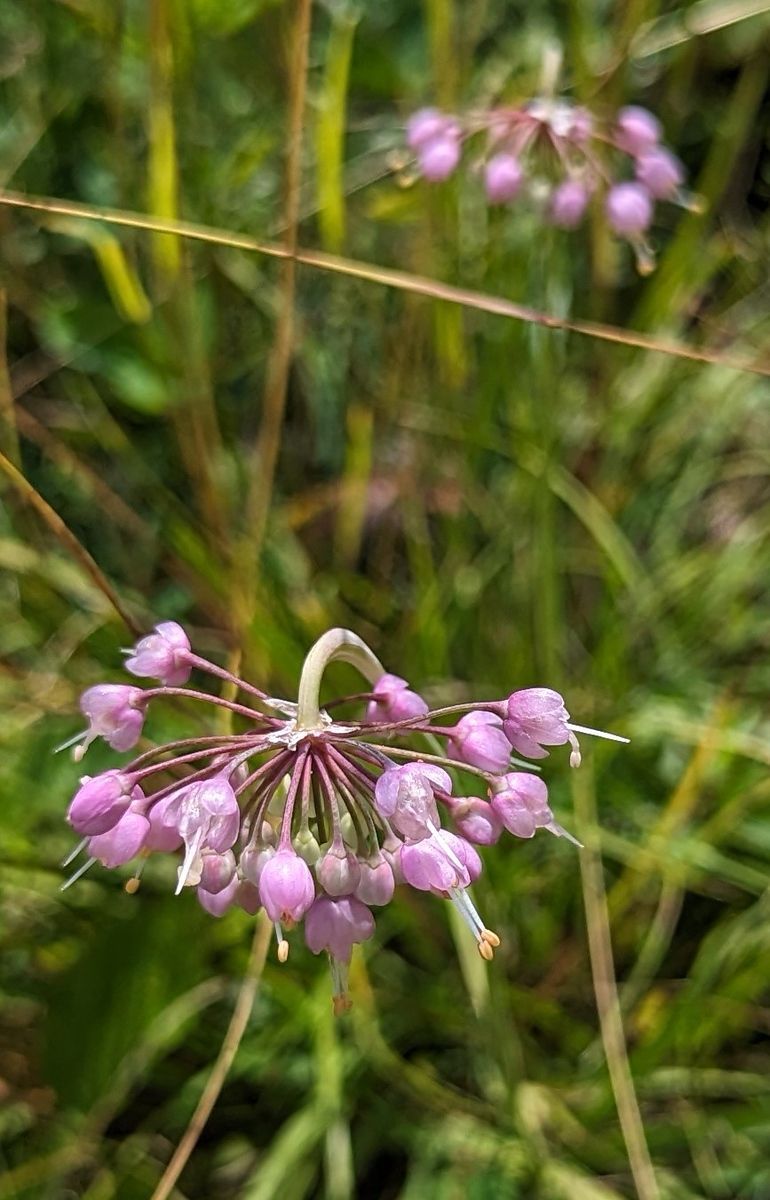
Nodding Wild Onion (Allium cernuum) has a nodding cluster of many pink/purplish, bell-shaped flowers on top of a slender stem. It may grow over two feet tall. The skinny leaves may be lost among other vegetation.
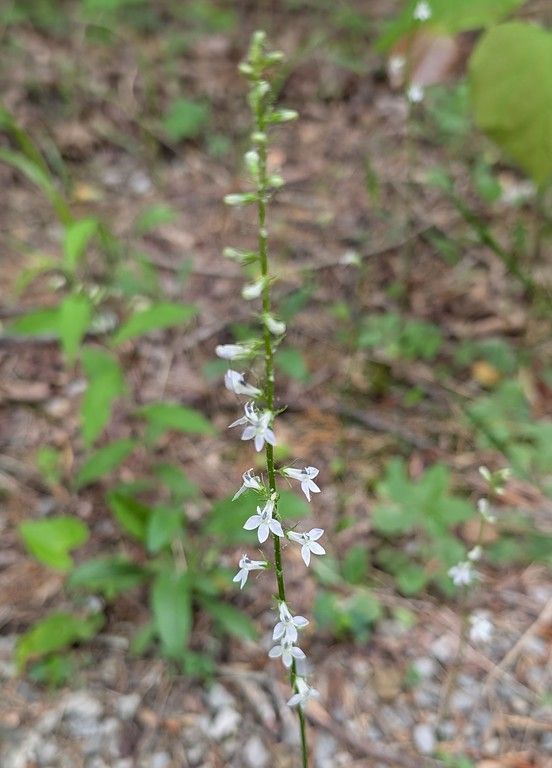
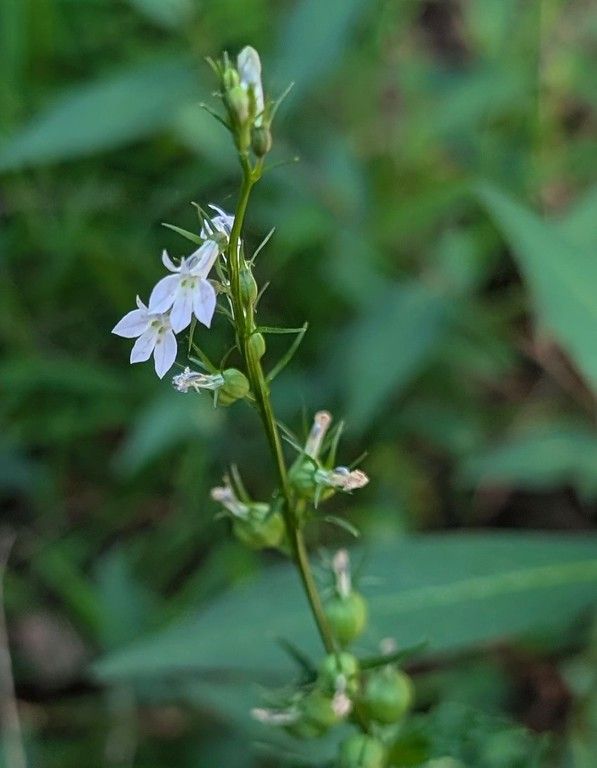
Lobelia flowers have an upper lip with two, erect lobes and a lower lip with three, spreading lobes. Two Lobelia species can be seen on this hike. The flowers of both are only about a quarter inch and are light blue to white. Pale-spike Lobelia (Lobelia spicata) has one or a few spikes of flowers. The structure behind the petals is only slightly inflated. It blooms from late May until August. Indian Tobacco (L. inflata) branches freely. The structure behind the petals is strongly inflated. It blooms from July until November.
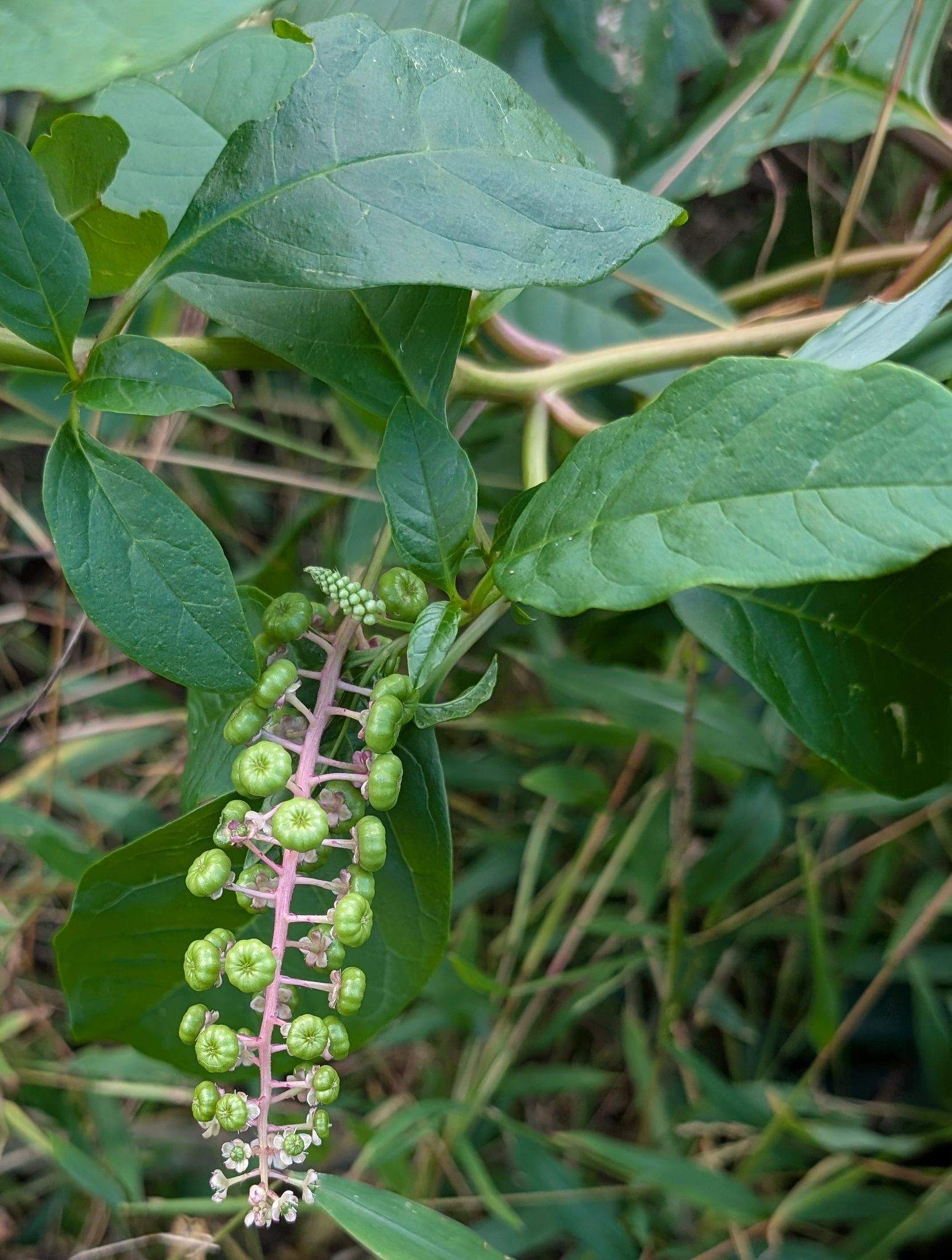
Pokeweed (Phytolacca americana) is a succulent, branching plant over three feet high with racemes of ¼ inch white flowers with five, petal-like sepals. The fruits are deep purple berries.
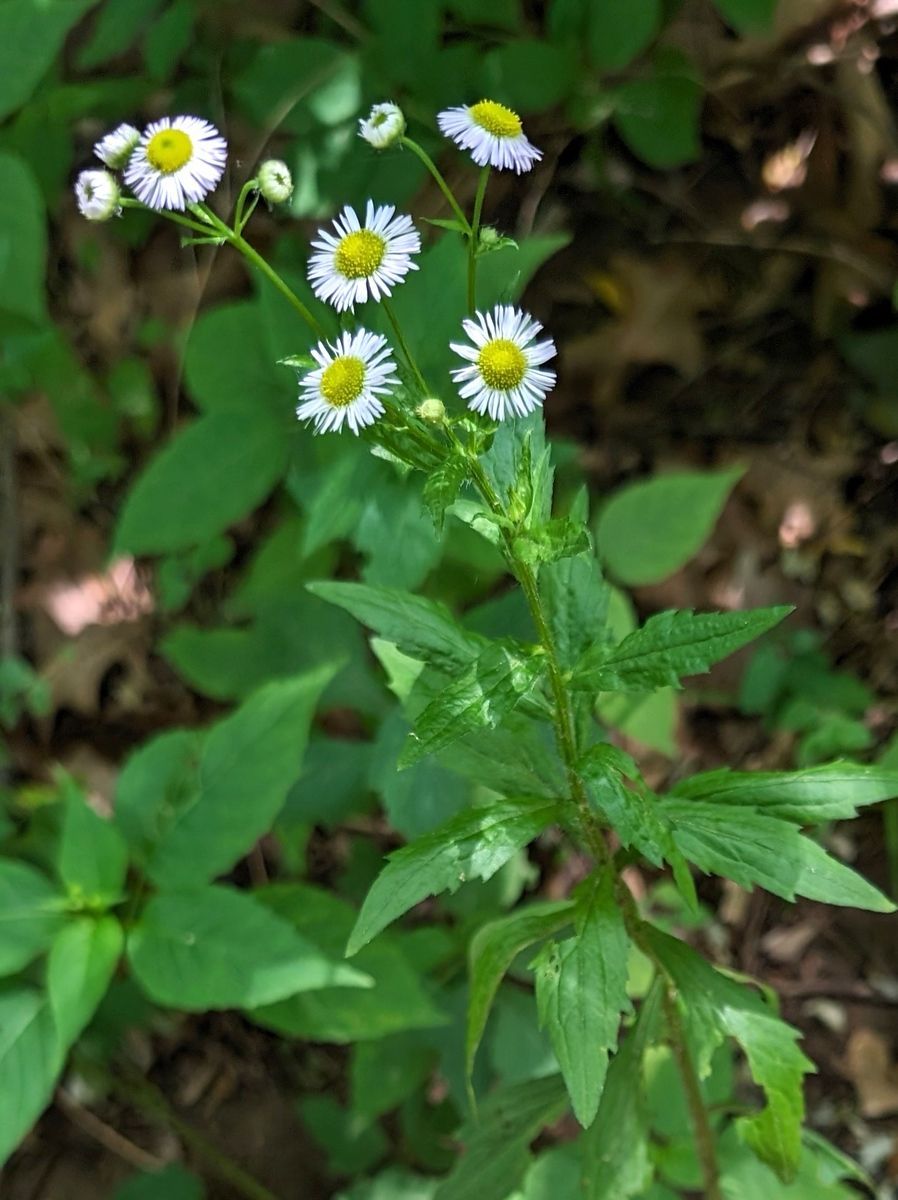
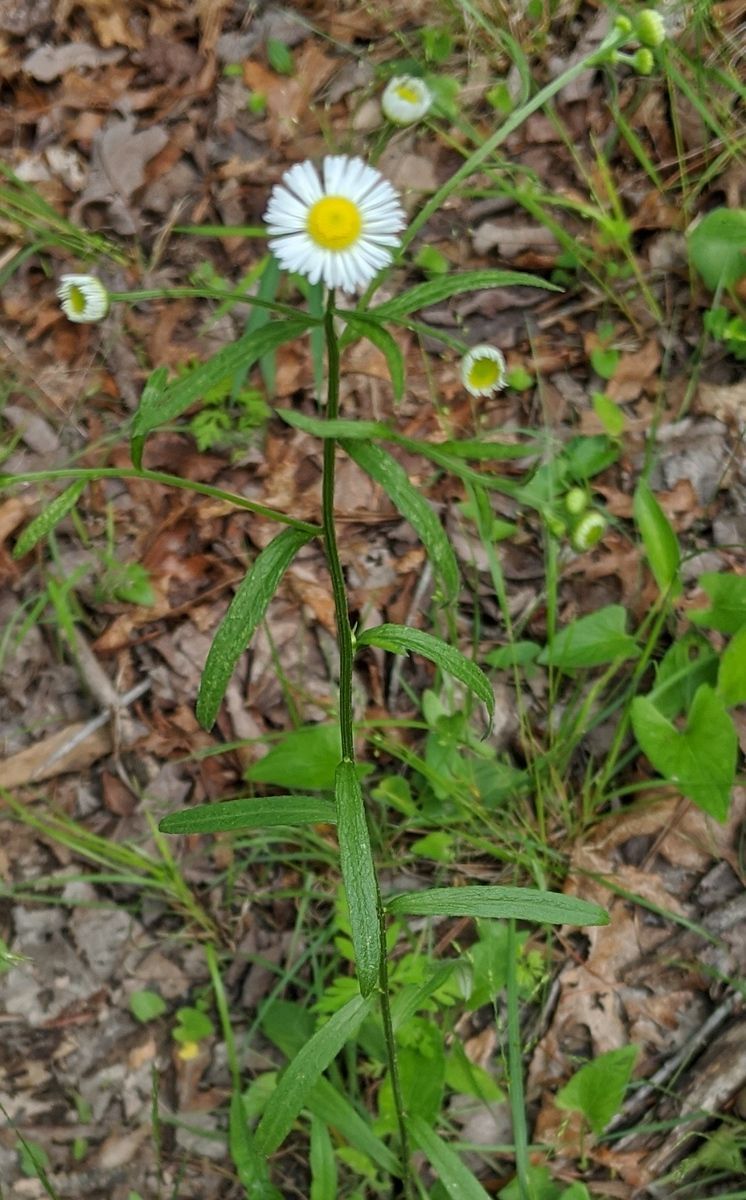
Fleabane (genus Erigeron) flowers look like daisies, but the rays are very thin, and there may be up to 400 of them. The central disk is yellow, and the rays are white or tinged pink. Annual Fleabane (Erigeron annuus) has many stem leaves, and they are toothed. Daisy Fleabane (Erigeron strigosus) stem leaves are sparse and have smooth edges.
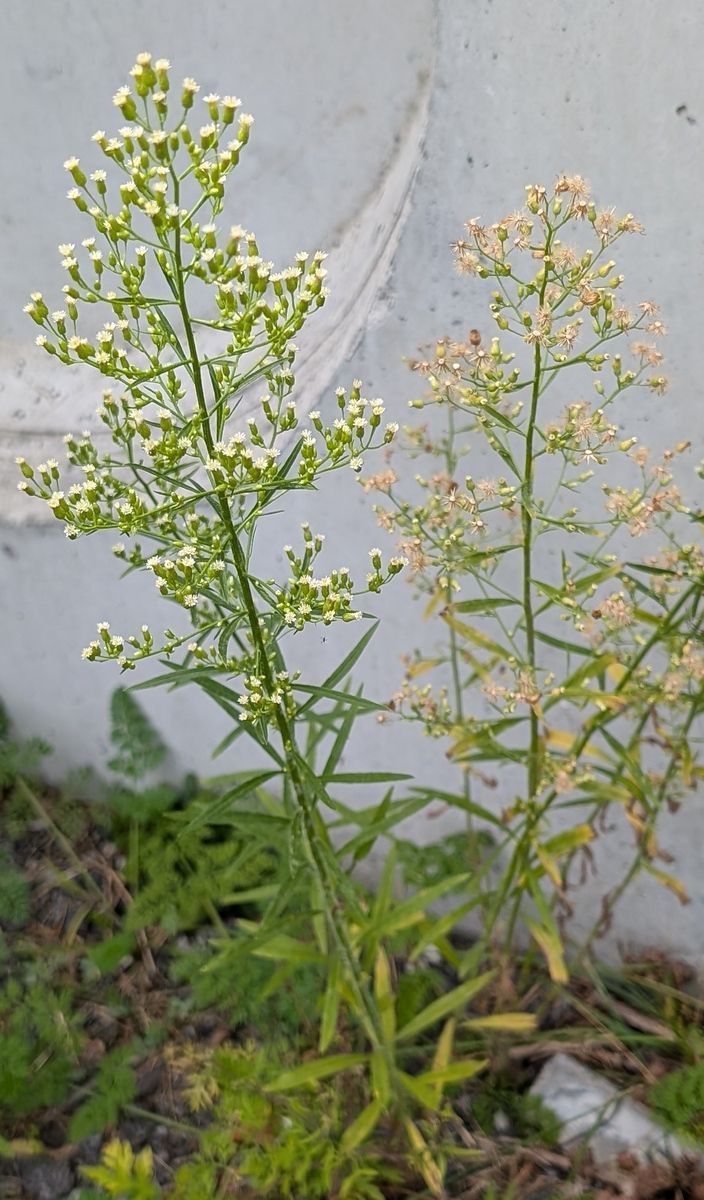
Horseweed (Erigeron canadensis) has many flower clusters at the top of the plant, each flower is a tube, less than five millimeters long. If you look closely, you will see the top of each flower is a tiny daisy with white rays 0.5 to 2 millimeters long. The seeds form small Dandelion-like fluff balls to blow in the wind.
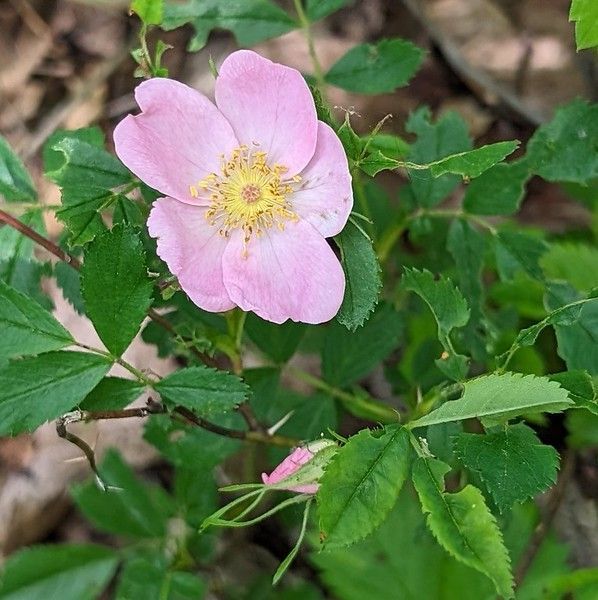
A Pasture Rose (Rosa carolina) flower has five large, round, pink petals, completely separated from each other. A narrow claw that attaches each petal to the center of the flower underneath the stamens and styles. Numerous stamens fill the center of the flower. Fruits are bright red balls that hang on through winter.
The Yellow Wild Indigo (Baptisia tinctoria) plant is a shrubby perennial up to three feet tall. It grabs your attention by sticking branches out into the trail with racemes of half-inch, bright yellow flowers. The flowers have the typical pea flower form with an upright banner petal, two fused petals forming a keel underneath, and two wing petals at the sides. The leaves consist of three leaflets and have no stems.
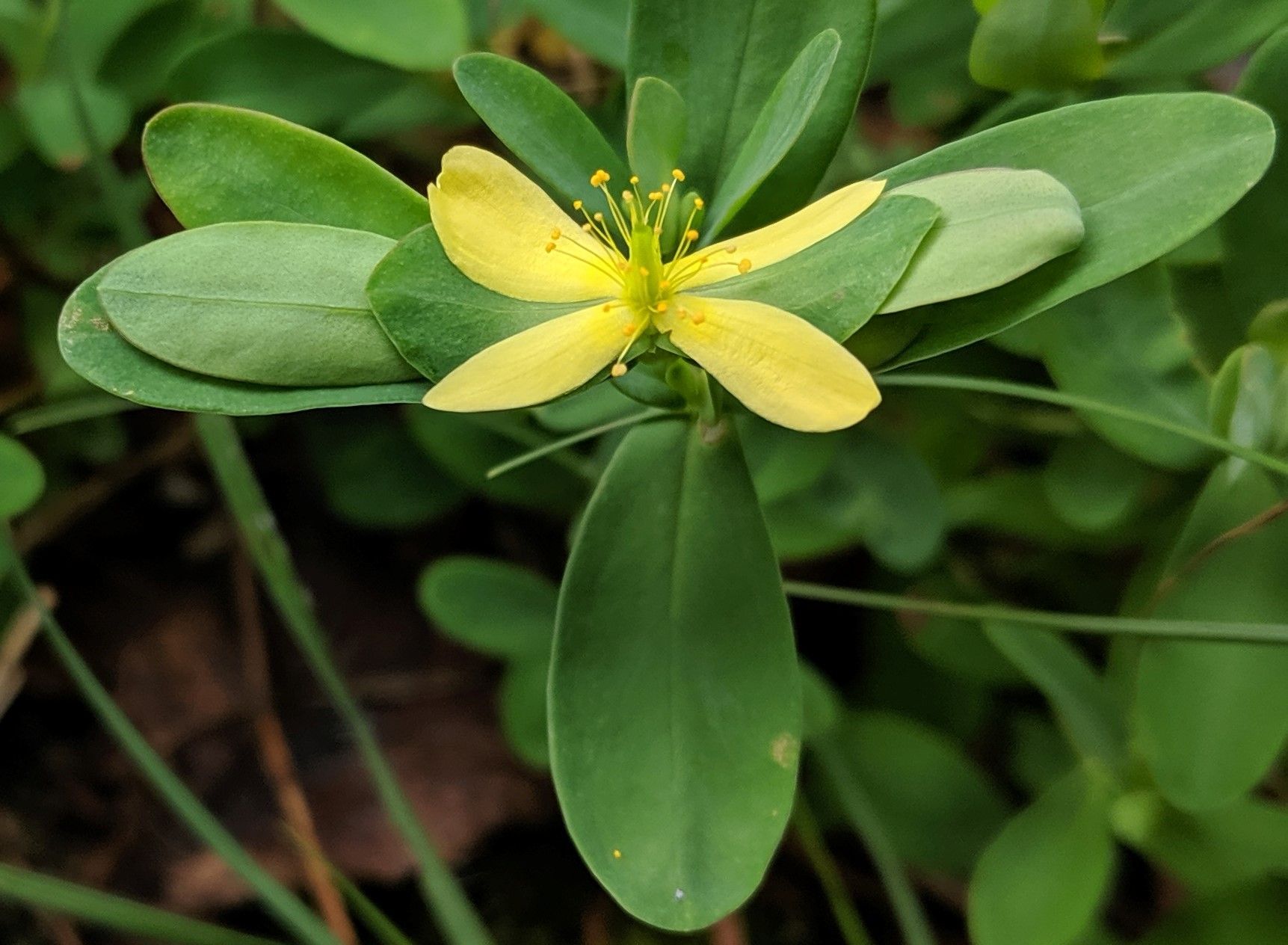
St. Andrew’s Cross (Hypericum hypericoides) is a low-lying plant. The flower stems are short, so the flowers seem to rest on the leaves. It is called St. Andrew’s Cross because the pairs of yellow petals are not at right angles to each other but angled like the cross of St. Andrew on the British flag.
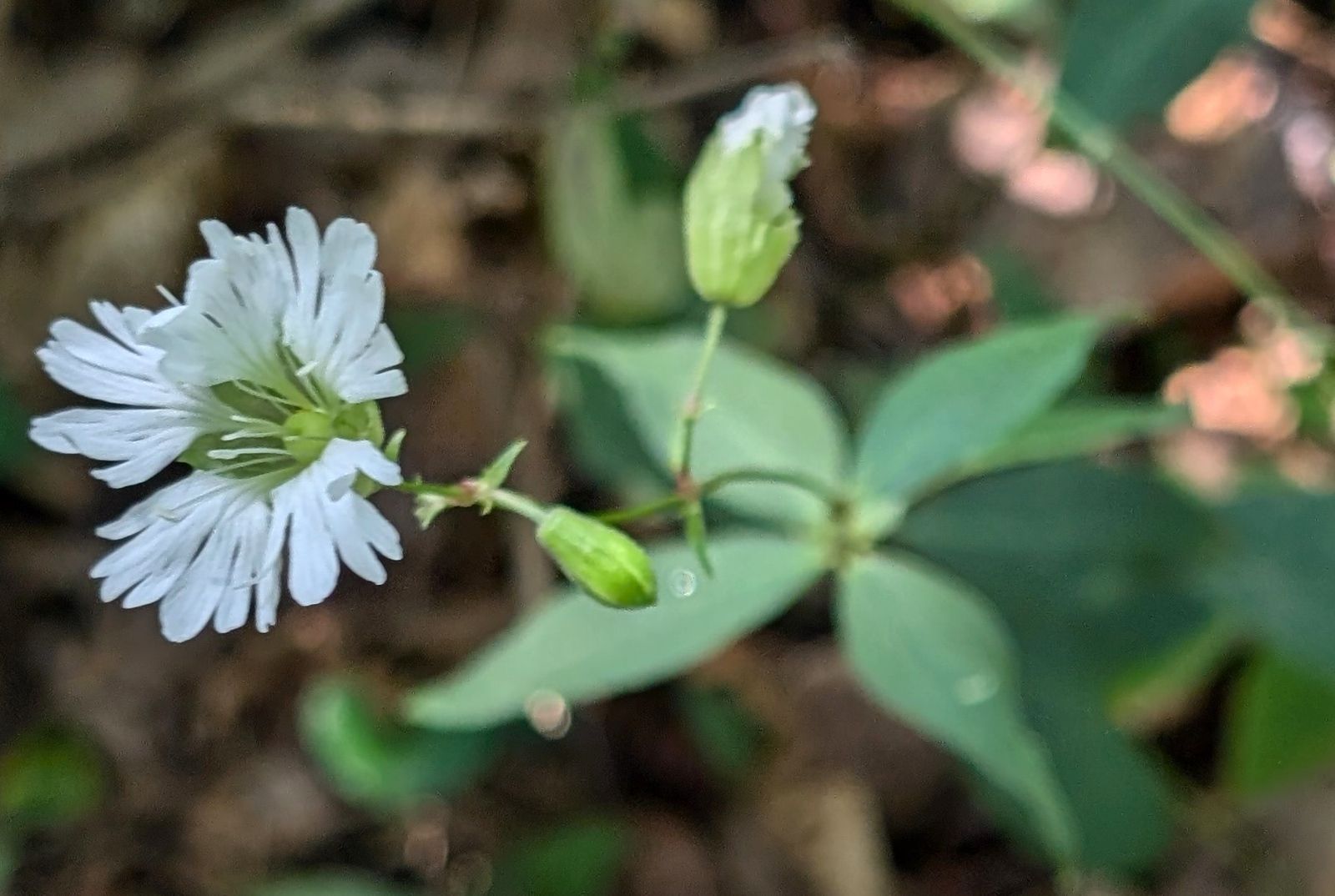
Starry campion (S. stellata) blooms in late summer. Its five petals are fringed (eight to 12 lobes). It is also called widow frills. Its leaves are in whorls of four except, possibly, for a top pair.
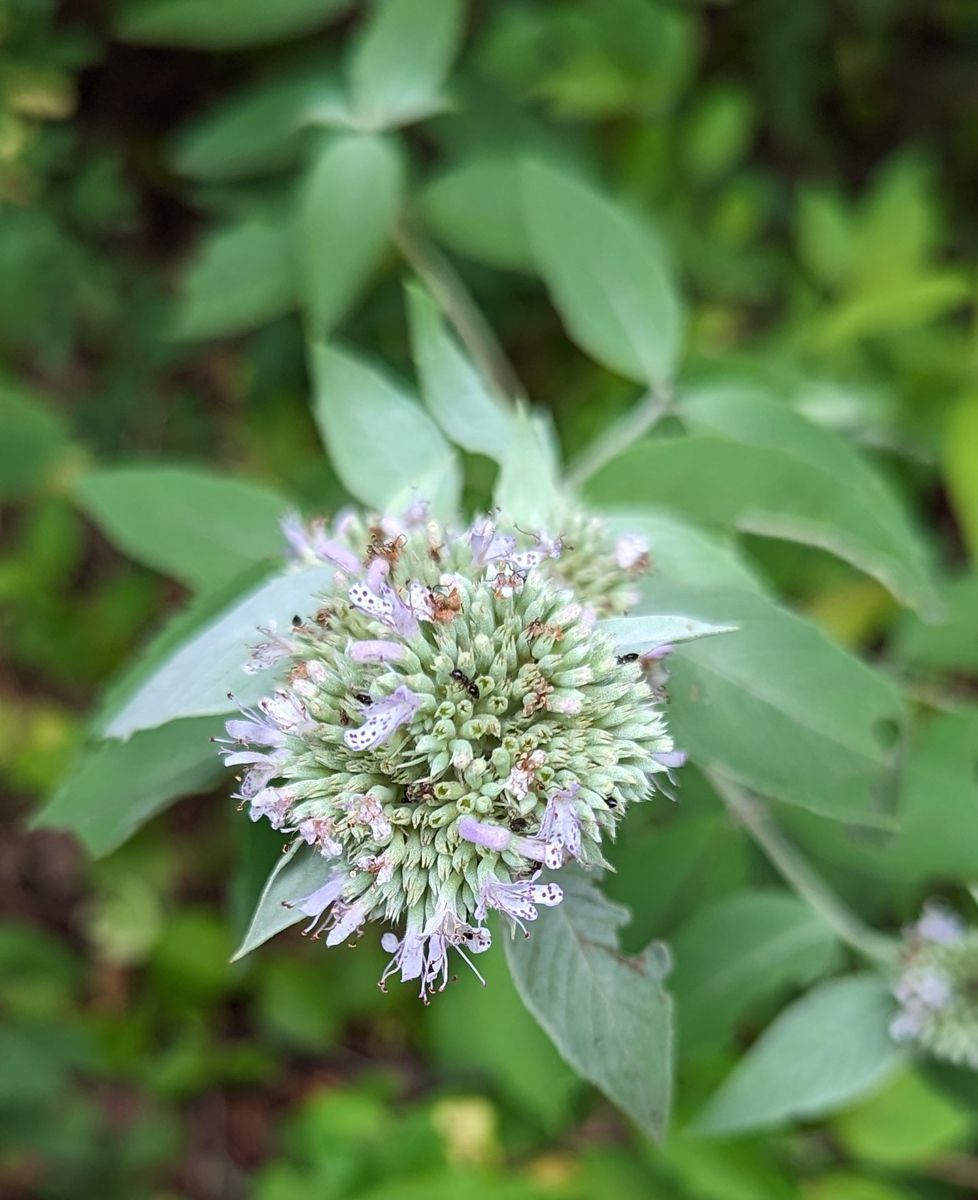
Hoary Mountain-mint (Pycnanthemum incanum) can grow to over six feet tall. Its light purple flowers sprout irregularly from a circle at the top of the plant and around the stem in the leave axils. The leaves are egg-shaped with the wide part towards the stem. The term “hoary” is applied because the leaves seem to be sprinkled with a white or grayish powder.
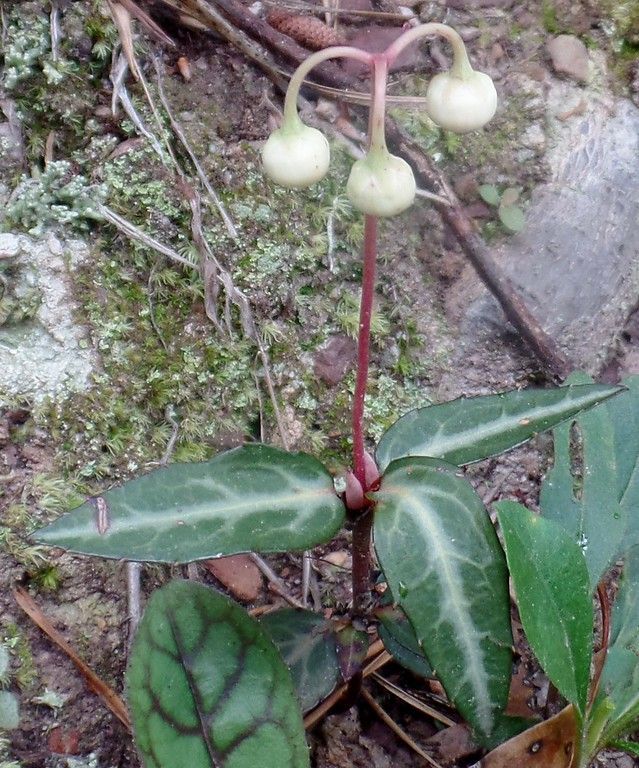
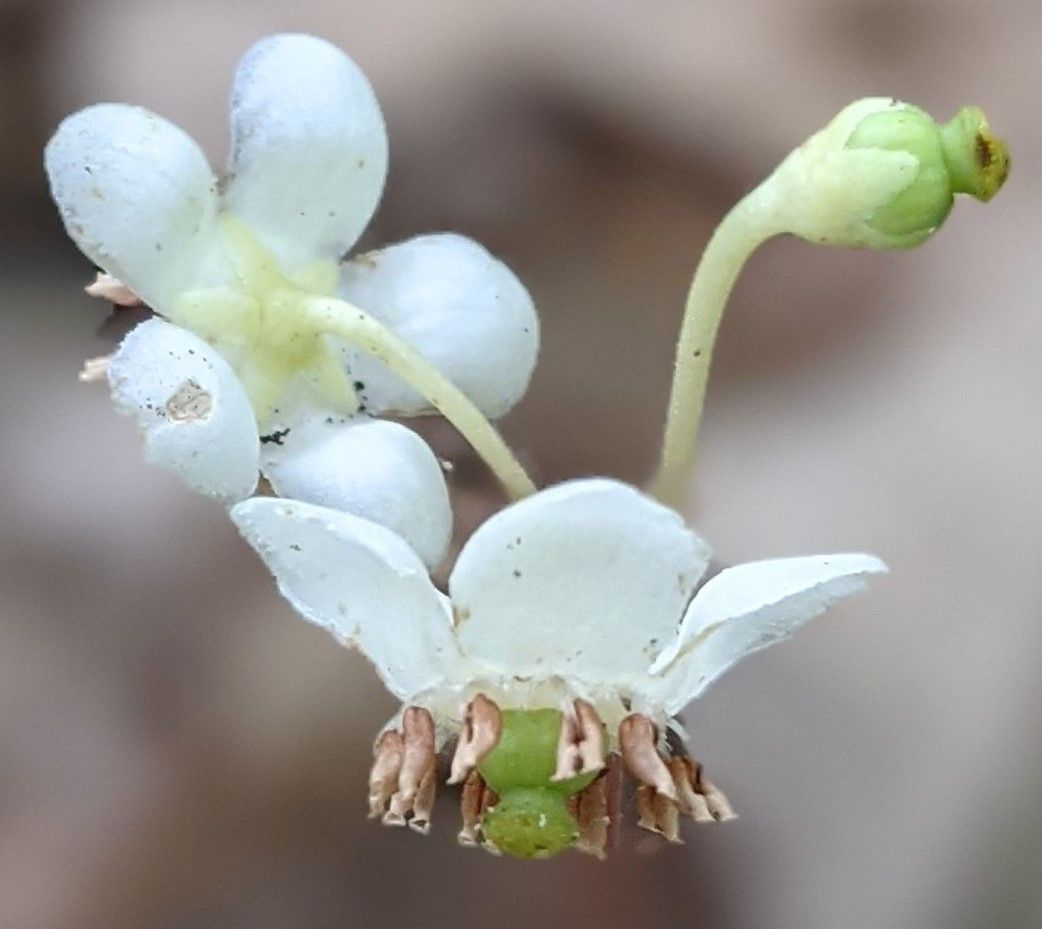
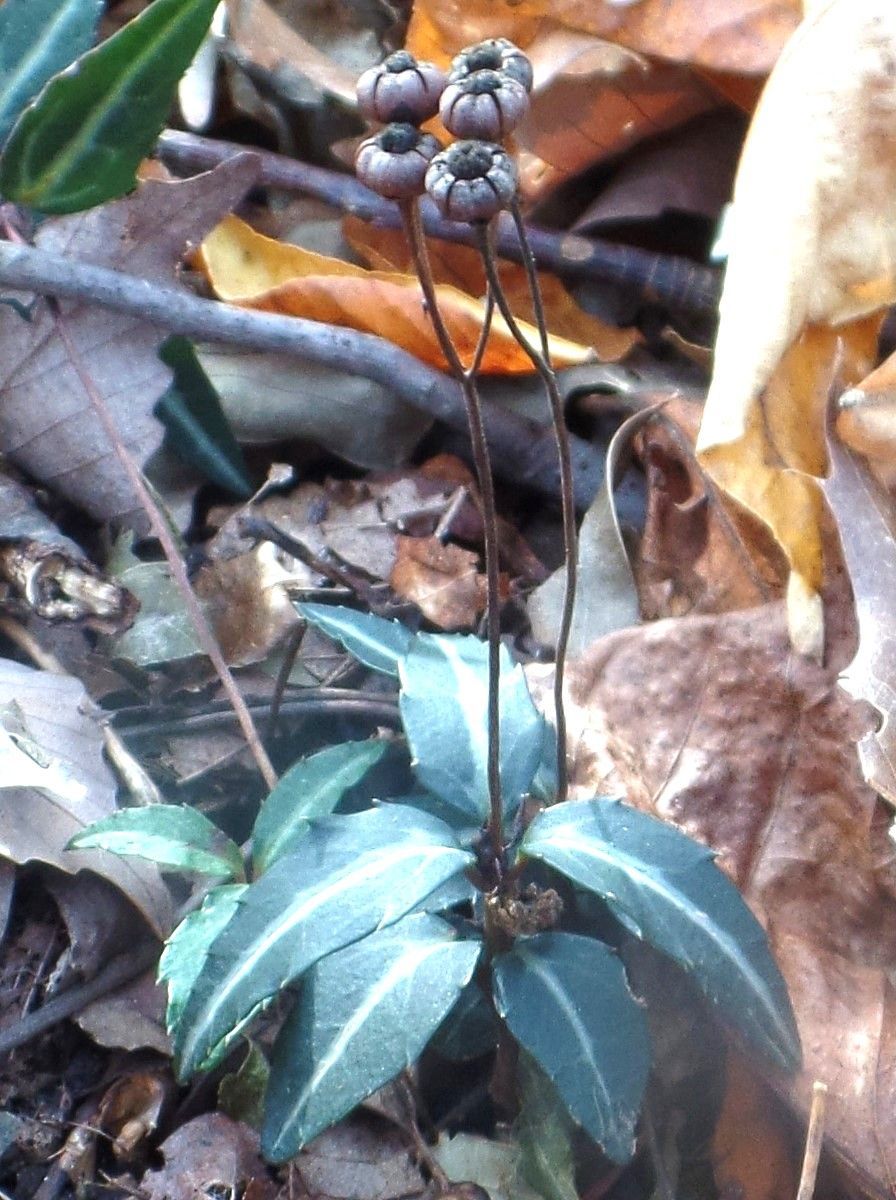
Striped Wintergreen (Chimaphila maculata) is only a few inches tall. The leaves are long and toothed with pale yellow along the veins. The flower stalk above the leaves has a few white flowers on top. The flowers hang down from their individual stalks and start out as round balls. Five petals open to about a half inch across and face downward. If you lift one up, you will see a large round stigma in the middle surrounded by ten, two-part stamens. Brown fruit develop and turn upward.
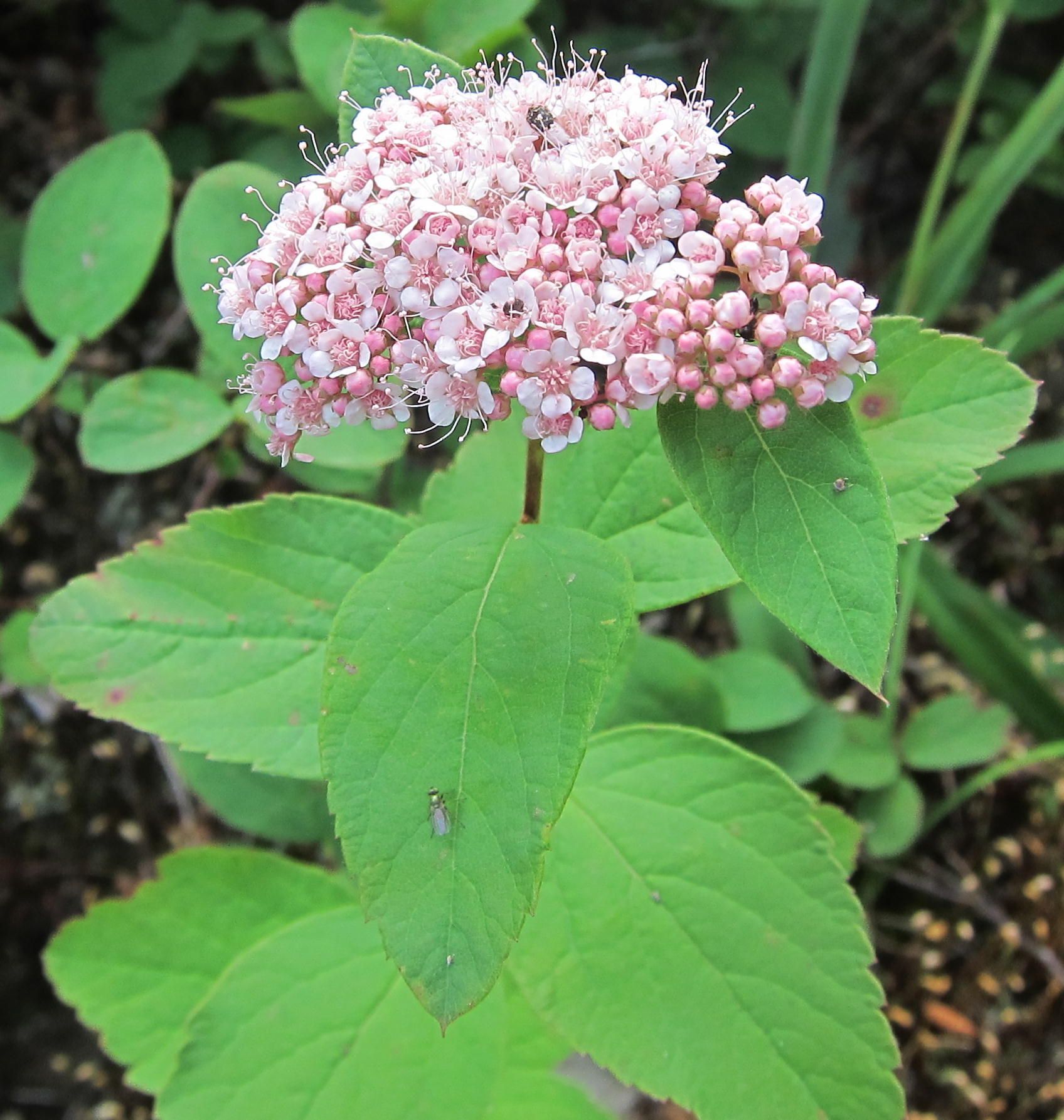
Dwarf Spiraea (Spiraea corymbosa) is a shrub up to one meter tall. Leaves are ovate with toothed edges. The white or pinkish, tightly packed, quarter-inch, five-petal flowers grow in a flat or slightly rounded form called a corymb.
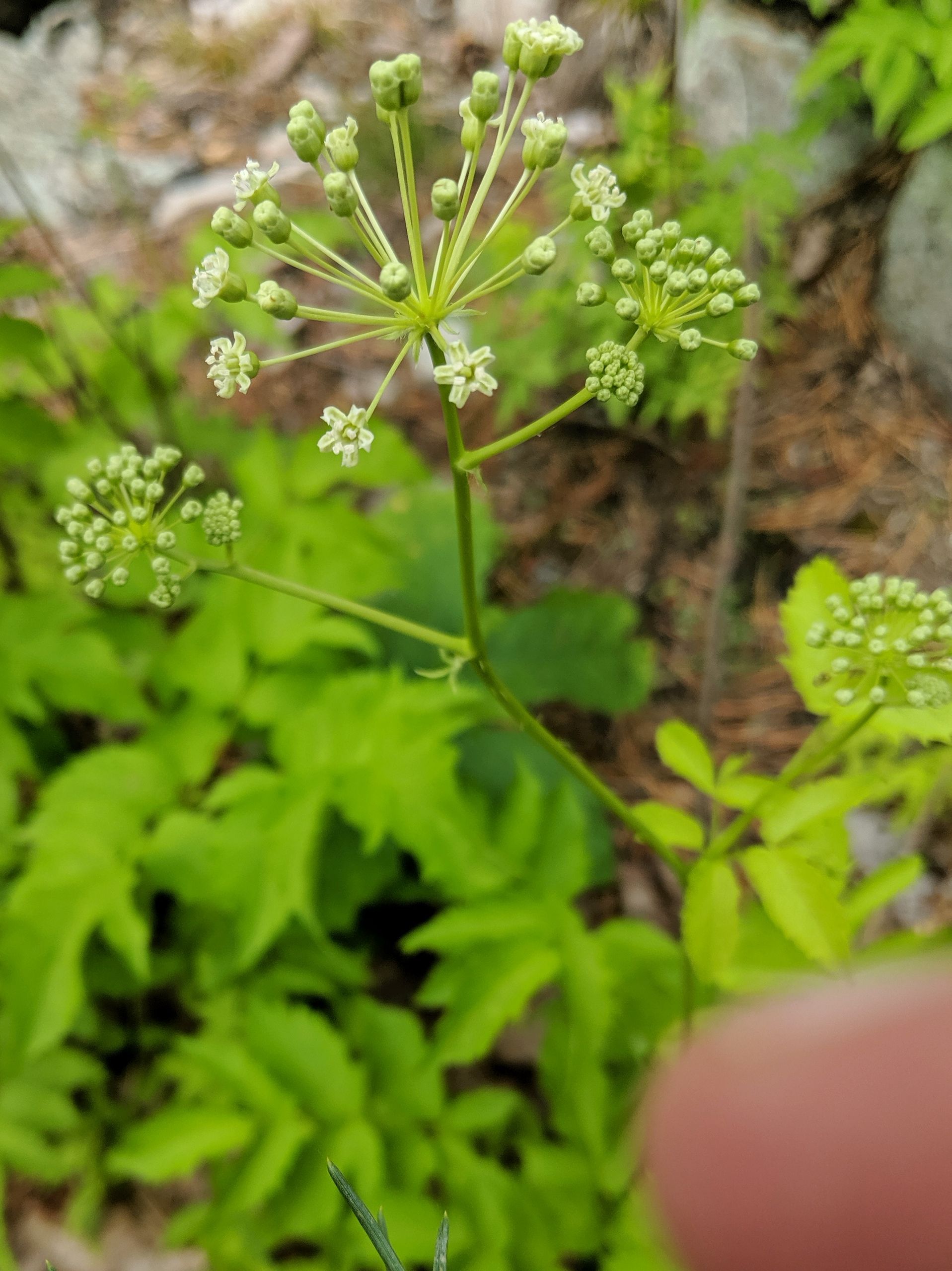
The upper stems of Bristly Sarsaparilla (Aralia hispida) can be smooth and only the lower stems, bristly. It is a northern plant categorized as rare in the PATC area. Its tiny white flowers are in a rounded umbel. It grows in rocky places like The Point Overlook that looks down on several bends of the South Fork of the Shenandoah.
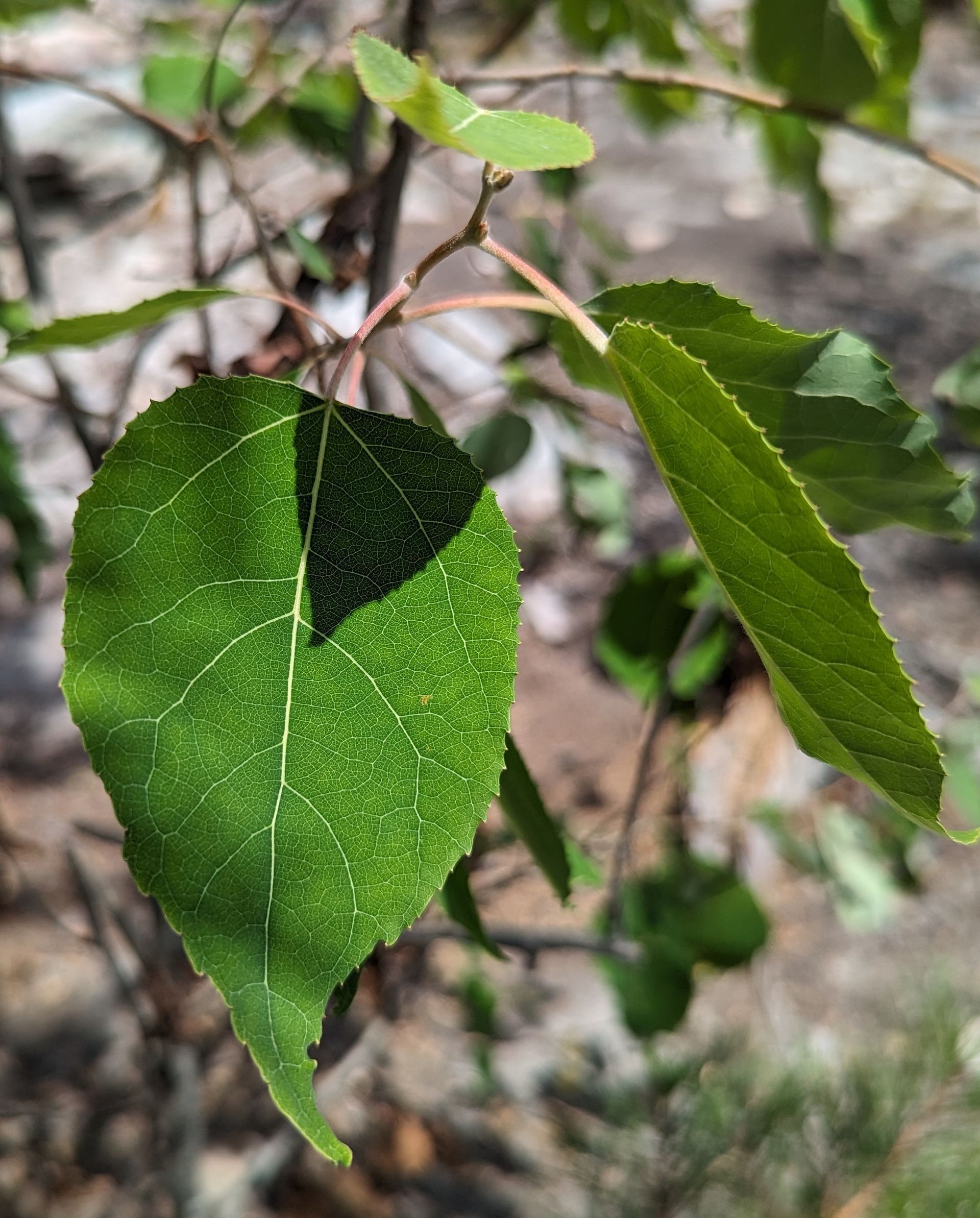
Also growing around the rocky Point Overlook are Quaking Aspen (Populus tremuloides) trees, another plant that is rare in our area. Its leaves are up to four inches long and three inches wide. They have fine, regularly spaced teeth on the edges, 15 to 70 per side.
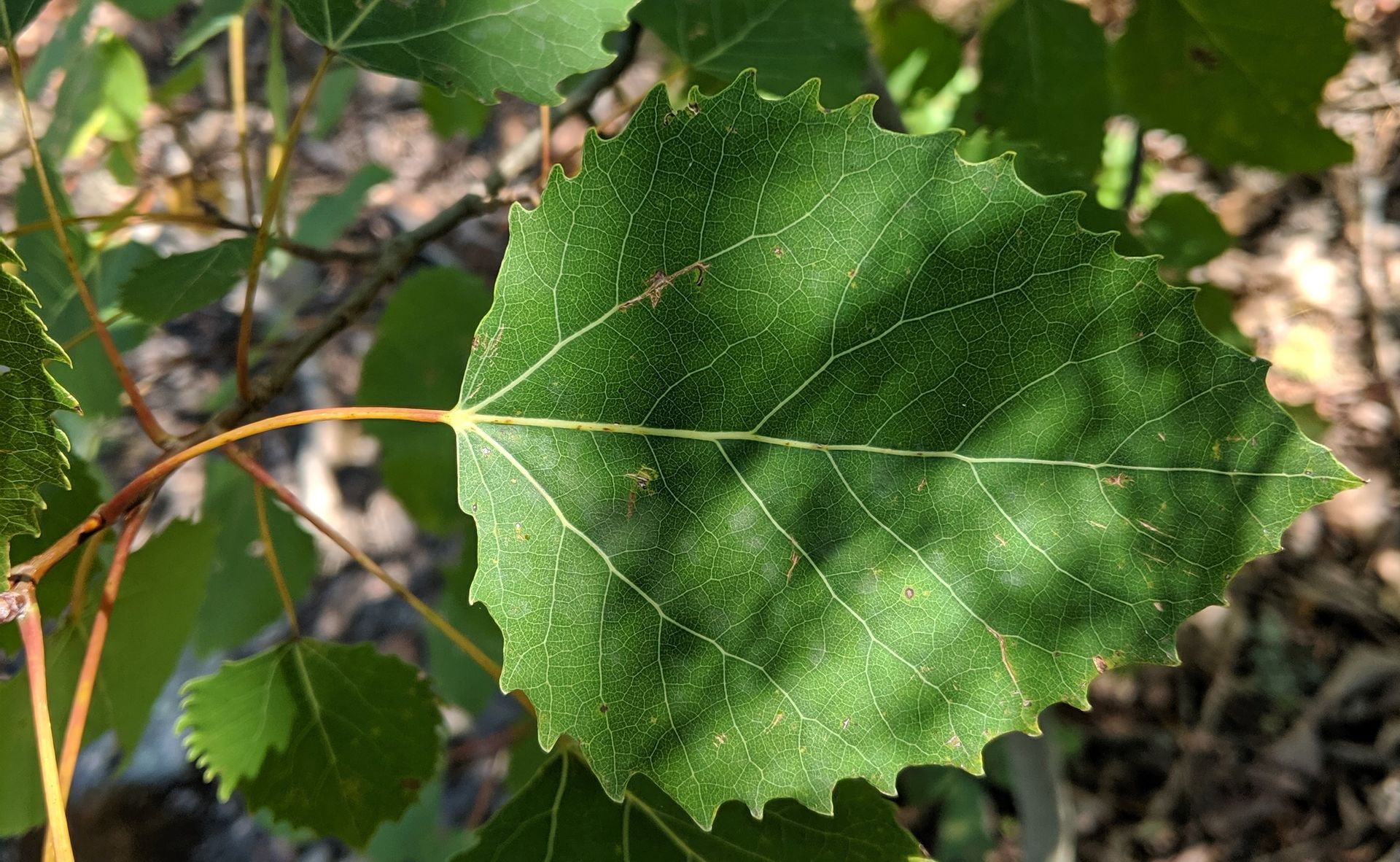
Bigtooth Aspen (P. grandidentata) also grows here. It is more common in our area than Quaking Aspen. Its leaves are up to six inches long and four inches wide. They have five to 15 unequal, triangular teeth per side.
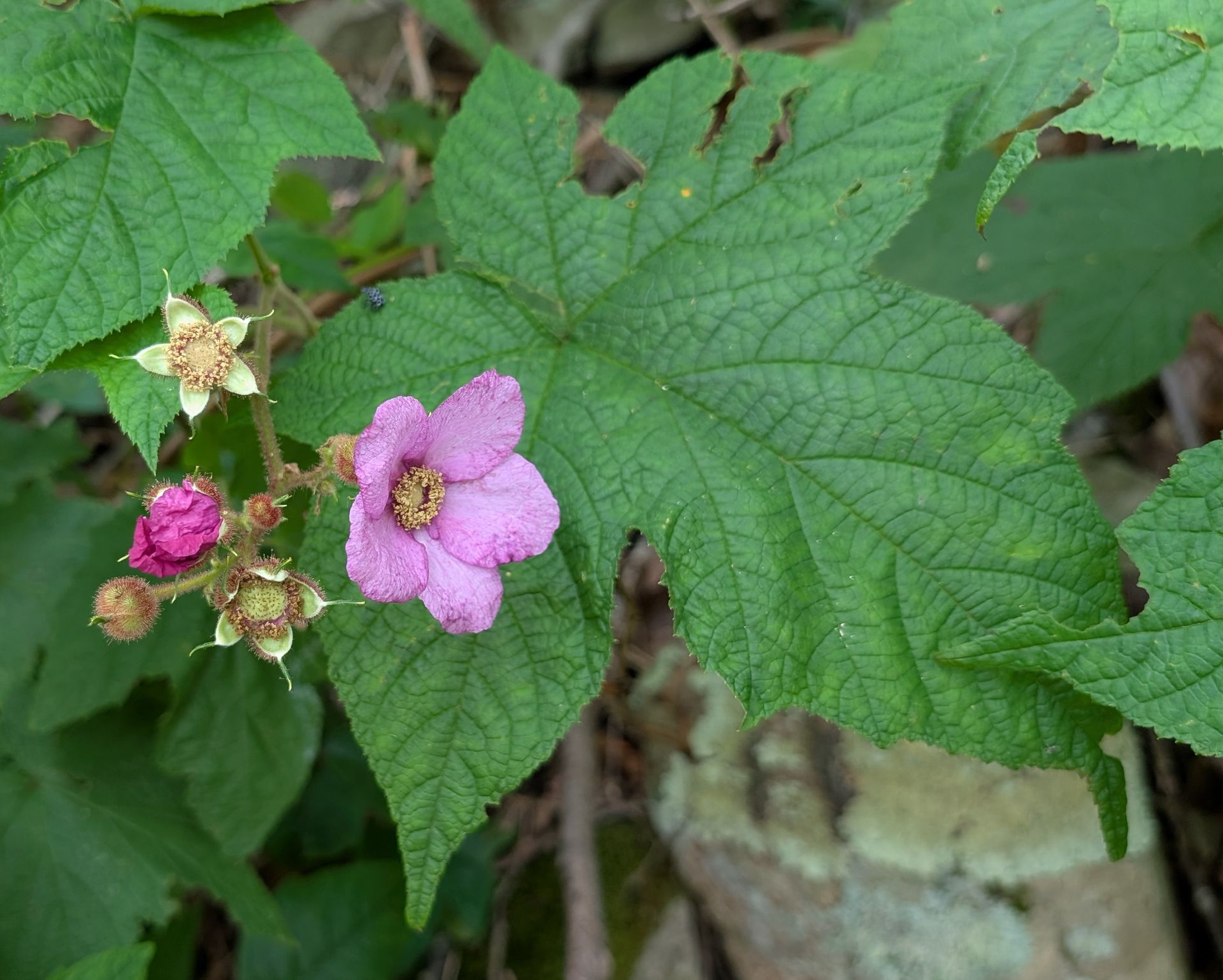
Purple-flowering Raspberry (Rubus odorata) has a simple leaf (not compound) looking like a maple leaf over a foot wide, and the flower is spectacular: rose-purple and over an inch in diameter, reminiscent of a rose. The ripe fruit is a red raspberry.
Downy Rattlesnake Plantain (Goodyera pubescens) is most noticeable for its evergreen, dark green leaves with a network of white veins at the base of the plant. The flower raceme is about a foot tall. The flowers look like little (¼”), white balls, densely packed on the stalk and never open very much.