
Keep Calm and Read On: The Last Ranger
By Wayne Limberg
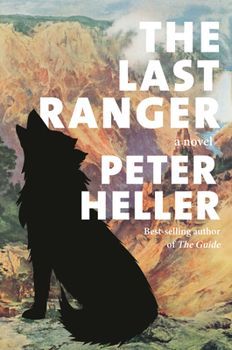
A shout out to David Cox for recommending this month's book selection, Peter Heller's "The Last Ranger." Heller is a bestselling author of eight novels, including "The Guide" and "The Painter," which was a finalist for the LA Times Book Prize and won the Reading the West Book Award. In addition, he has written for Outside magazine, National Geographic, and NPR. He is squarely in the Western school of American writers with the likes of Ivan Doig and even Wallace Stegner.
"The Last Ranger" has a lot in common with Callan Wink's "Beartooth," which was reviewed in the November 2025 issue of the PA. Both books are set in current day Yellowstone National Park and the hardscrabble communities bordering it. Both deal with poaching. Both are good reads, whose authors have a real talent for describing the natural world and whose protagonists are trying to come to terms with earlier life tragedies. Both authors are grads of the Iowa Writers Workshop.
"The Last Ranger," however, takes a decidedly different turn. Where Wink's protagonist is living more or less outside the law, Heller's is a law enforcement ranger named Ren who is doing his best to protect the park and its human and animal inhabitants. In the process, Heller provides a behind-the-scenes look at law enforcement in a big national park, complete with locals, tourists, moose, wolves, and bears and how they do or don't get along. A bonus comes in the way of the book's second main character, Hilly, who is Ren's neighbor in the cabin area reserved for park staff and a wildlife biologist researching Yellowstone's wolf population. In the course of the book, she schools Ren—and readers—in wolves and their behavior.
Heller’s publisher Alfred A. Knopf markets "The Last Ranger" as a mystery/thriller, but that may be a stretch. While there are some exciting moments, they do not drive the narrative. "The Last Ranger" is a page turner for other reasons. Nor is “The Last Ranger” a classic whodunnit. Rather, it is more of a why-dunnit. Early on, Ren confronts the book's main antagonist, Les, a suspected poacher. Ren is convinced that Les is harvesting pelts illegally and sets a leg trap near Hilly's wolf observation post that nearly kills her. After consulting with the local sheriff, who shares his suspicions, Ren realizes he cannot press charges because of lack of evidence. From that point on, tensions build as Ren seeks more evidence and Hilly makes it clear that she is prepared to do whatever it takes to protect her beloved wolves. The narrative shifts from plot to character development as Hilly's and Ren's relationship deepens and as Ren searches for why Les is breaking the law.
Along the way, Heller introduces additional—and familiar—characters, including a grizzled old park maintenance man and his sassy wife who runs the local bar, the sheriff who has seen it all, and a Native American and his daughter who remove animals killed in the park. At the same time, he introduces some subplots that may or may not be connected to the larger story. In one case, Ren discovers a rash of vandalism and at first suspects Les, but soon uncovers a group of well-heeled—and armed—locals who would love to see the park disappear. To that end they are recruiting gullible young white men to wreak havoc in the park. Trope? Stereotypes? Red herrings? Maybe, but they keep readers guessing and the narrative moving.
In interviews, Heller has explained his approach to writing. Since his earliest days, he has been fascinated with poetry, his main course of study in the Iowa Writers' Workshop. Along the way, he, like many others, learned that journalism and novel writing were more dependable sources of income. He continues, however, to be a poet at heart in that he has to have an opening line that sings before he can get down to writing a book. He does not start with an organized plot and character sketches. Rather, he lets the story and characters take him where they want to. Some might find this a bit quirky, yet his eight novels and loyal readership seem to testify that it works. In "The Last Ranger" this is best seen in the development of Les' character and backstory. He does not come across as your typical one-dimensional villain despite his rough exterior. Heller's use of language and images at times can be lyrical if not downright poetic whether he is describing a trout rising to a fly or the howls of lonely wolves. More than one reviewer has compared his writing to that of William Kent Kruger's in such books as "The Tender Land" and “Ordinary Grace.
Given his approach to his writing, it should come as no surprise that Heller does not necessarily tie up every storyline at the end of the book. Still, "The Last Ranger” literally ends with a satisfying bang—or two—leaving readers asking for more. The good news is that his twelfth book, "The Burn," came out last year to good reviews.
Do you have a good read? If so, send it along towplimberg@aol.com. Meanwhile, keep reading and stay safe. See you on the trail.