
Keep Calm and Read On: Take Two
By Wayne Limberg
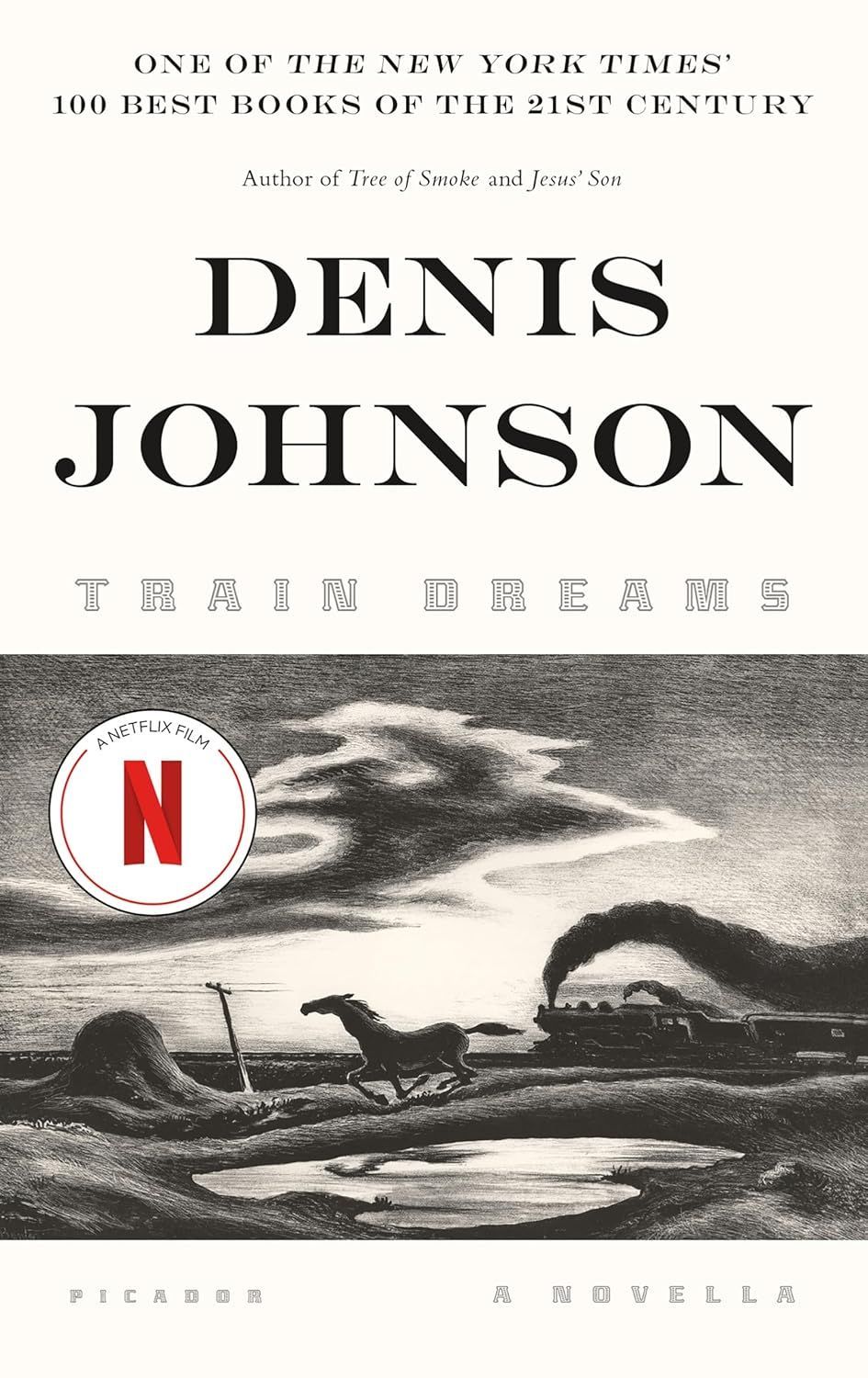
Netflix's film adaption of Denis Johnson's novella "Train Dreams" has garnered considerable critical acclaim and reignited the age-old movie vs book debate. Fortunately, we don't have to choose one over the other. The two versions complement each other. Paired, the two offer an excellent way to spend a cold winter weekend.
NPR rated “Train Dreams” as one of the top ten reads of 2010, and it is Denis Johnson's second book to find its way to the silver screen. The critics also hailed “Jesus' Son” in 1999, which was based on Johnson's collection of stories about lost souls struggling to find redemption in the netherworld of addiction and which has become a minor classic in 20th century American literature.
“Train Dreams” touches on another biblical source for inspiration, Job, as it chronicles of the life of Robert Grainger, a quiet, hard-working logger in northern Idaho. An orphan, he has vague memories of his mother but can't say exactly when he was born. He marries a local girl and builds a cabin in woods. They soon have a child whom he adores. He spends each spring and summer logging, returning home each fall with enough cash to last the winter. The narrator of the story in both the book and movie declares these years as Grainger's happiest. He is soon plunged into a world of grief and pain, the meaning of which Grainger struggles to grasp. Throughout, he fears that he is being punished for an earlier, original sin. Ultimately, “Train Dreams” becomes a story of coming to terms with the past and finding peace.
The director of the film, Clint Bentley, and his creative partner, Greg Kwedar, wrote the screenplay for “Train Dreams.” They previously earned Oscar nominations for the script of "Sing Sing." For the most part they followed the general arc of Johnson's original story. However, they took some liberties. Fortunately, none detract from the story line; some even add depth and texture. The movie's opening scene of a train coming out of a dark tunnel into the light of the forest visually captures the book's theme of struggle and redemption, and Grainger's inner struggles remain the central focus of the movie.
Bentley and Kwedar, however, give greater play to changes in the logging industry and natural environment and their impact on Grainger's life. In the book, Grainger changes jobs largely because of his age and declining physical condition; in the film, it is more a matter of industrial changes such as clear cutting and mechanization. The logging Grainger loved with its small, close-knit crews, and crosscut saws yields to the search for higher profits. Early in the film, the death of a logger sees the crew gathering around the campfire with a bottle of whisky to remember him. When three loggers are killed later in the movie, they are quickly buried; the only memorial is their boots nailed to surrounding trees as the men get back to work. In one of the most poignant scenes of the movie, Grainger tries but fails to start a new chainsaw and is sent back to his crosscut. In one of the film's bigger departures from the book, Bentley and Kwedar swap a tough widow Grainger is helping for a young USFS ranger on her way to a new job at a fire tower.
With one exception, the cast of the movie does not have any major stars. The exception is William H. Macy, who makes a cameo appearance as an old logger who spends most of this time avoiding work and telling stories. His turns of phrase are gems, and his character brings a touch of comic relief. The real star of the picture, however, is Joel Edgerton, an Australian actor whose previous films include "The Great Gatsby." As Grainger, he turns in a masterful performance, appearing in nearly every scene of the movie. His restraint and mastery of the unspoken word brings to mind the likes of Paul Newman or Gene Hackman. His casting as Grainger seems fated as he wanted to get the film rights to the book when it first came out. When “Train Dreams” debuted on Netflix, he immediately became an odds-on favorite for an Oscar nomination.
Another potential Oscar winner is cinematographer Adolpho Veloso. Veloso's filming of a wildfire is epic while the scenes of the land returning to normal visually underscores the book's and movie's underlying theme of redemption. Most of the movie was filmed outside in natural light, giving it a rich, haunting darkness and authenticity. The portrayal of life and work in the logging camps comes complete with widow makers, saws and axes, though some may question why Grainger abandons his double-bit Michigan axe for a pulaski or how in the aforementioned scene, he tried to start a chainsaw that in the late 1920s had yet to be invented. But these are rather small points that should not detract from what in the end is a great adaptation of a fine read.
A word of thanks to readers who have sent in recommendations for future reviews. If you have a good read, send it along towplimberg@aol.com. Meanwhile, keep reading—and watching. See you on the trail.