
President’s Log Book
By Jim Fetig
This month we’ll talk about a secret. It’s not every day that poop comes up in polite conversation. This is that time.
Ever wonder about what happens to the stuff you deposit in the privies? It’s got to go somewhere. It’s a dirty job, but somebody’s got to do it. Who ya gonna call? The Crapper Crew, that’s who.
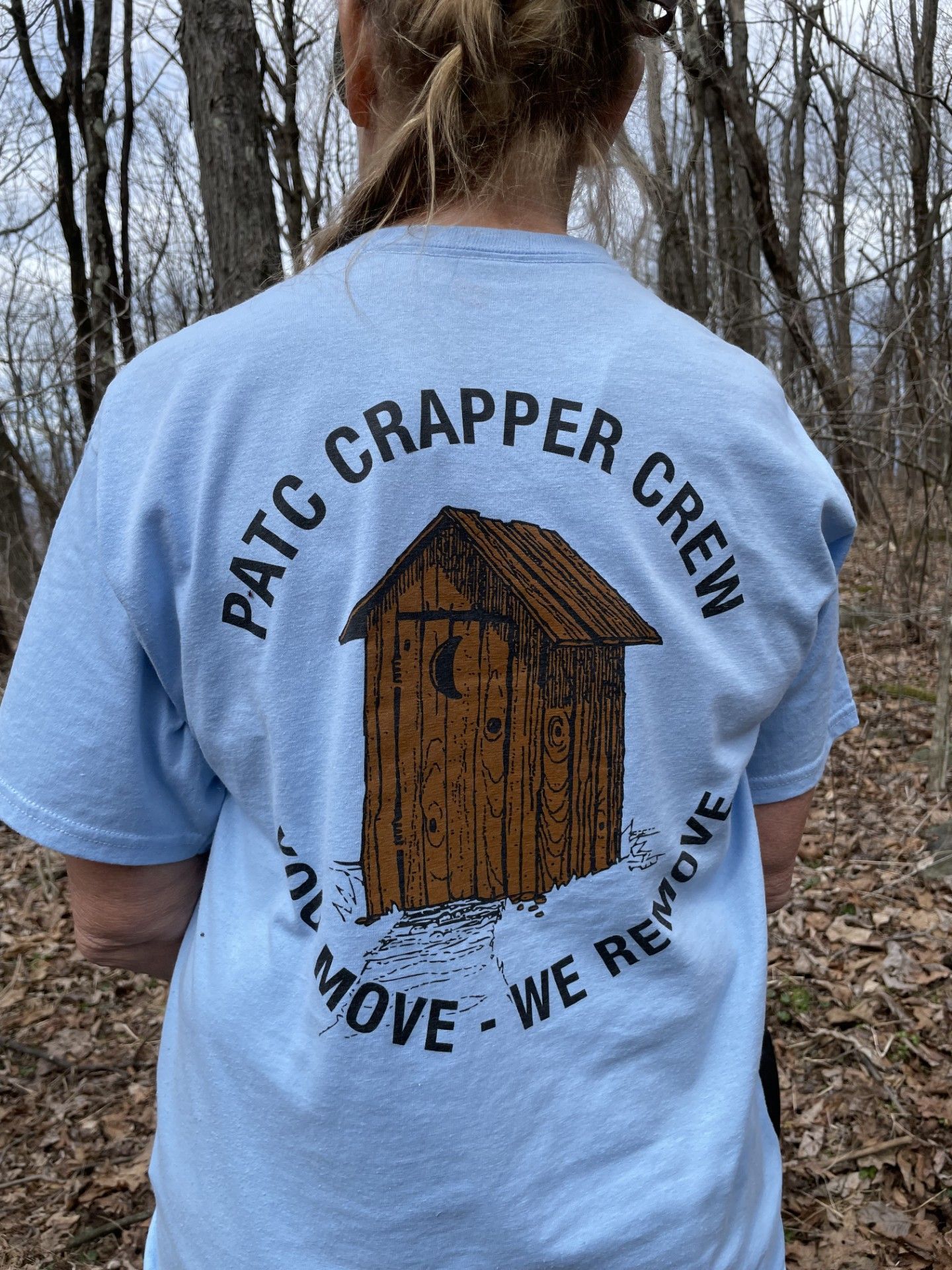
The Crapper Crew is a real deal. Led by John Hedrick, it was formed when moldering privies were introduced on the AT beginning in the 1980s. Their job is simple. Empty the compost bin when the live side is full. That status is reported by maintainers, hikers, and other volunteers. Sometimes you can spot the Crapper Crew members in their unique blue tee shirts.
PATC is responsible for the composting and vault privies found along the 1,200 miles of trail we maintain. In an average year, several of them will require service. When the bell rings, John sends an alert to a roster of 10 crew volunteers. Those available respond.
Who are the men and women lucky enough to be chosen for this elite assignment? All of them are active club volunteers in other roles. Most of them hold leadership jobs within the club including past presidents, district managers, trail maintainers, ridgerunner coordinators, and standing committee members. This, folks, is leadership by example.
As an enrichment opportunity, our ridgerunners are also invited to participate. Not one has ever turned down the voluntary assignment. It’s all part of learning what it takes to operate and maintain hiking trails. This is studying about the underside so to speak.
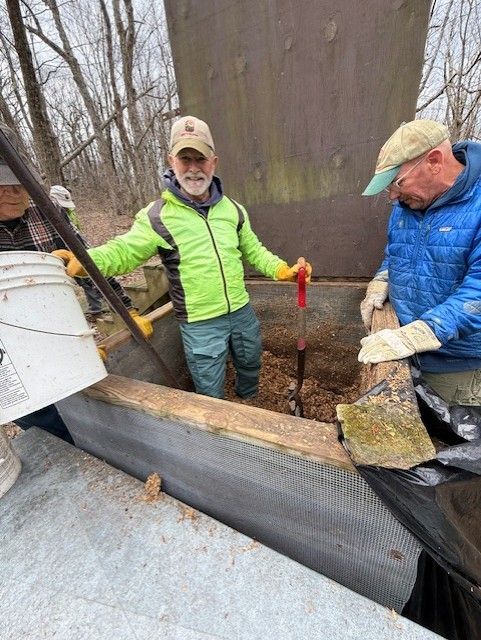
A typical outing for the Crapper Crew is fairly obvious. First comes the safety briefing; then comes the work. We have several different privy designs, so the steps differ slightly. The basic job is to empty the compost and spread it on the forest floor. This well-oiled machine has several different jobs.
First we have the “digger.” Their job is to loosen the compost and shovel it into a bucket. Before that happens, a “picker” picks out anything not supposed to be there.
The verboten treasure commonly includes empty food containers, non-compostable wipes, bottles, and sanitary products. Have any idea how many colors tampon applicators, known idiomatically as “beech whistles,” come in? Almost every trip we find underwear and once we even found a bright orange potty trowel. We have also found shelter mice freshly murdered by annoyed hikers.
The “picker” puts the nonconforming stuff into large trash bags. We generally fill two to four per outing. After that, the digger deposits the compost into a five-gallon plastic bucket. These buckets are then hoisted by “spreaders” who dump them in the woods. Repeat steps until the bin is empty.
Once the bin is empty, depending on the privy’s design, the house is rolled from the live side over to the empty bin. In newer ones, the throne is simply moved from one side to the other. Some wood chips are sprinkled on the live waste before it’s covered and left to compost.
Composting takes at least a year. Privies close to roads need annual service because picnic folks use them while others can go years before they’re full.
Everyone wants to know if it smells. The answer is no. Moreover, the compost is free of pathogens. Your deposit earns interest in the formation of good old-fashioned dirt.
Of course, the Crapper Crew is recruiting. You too can answer Nature’s call.