
PATC Heads to Trail Days
By Matt Waurio
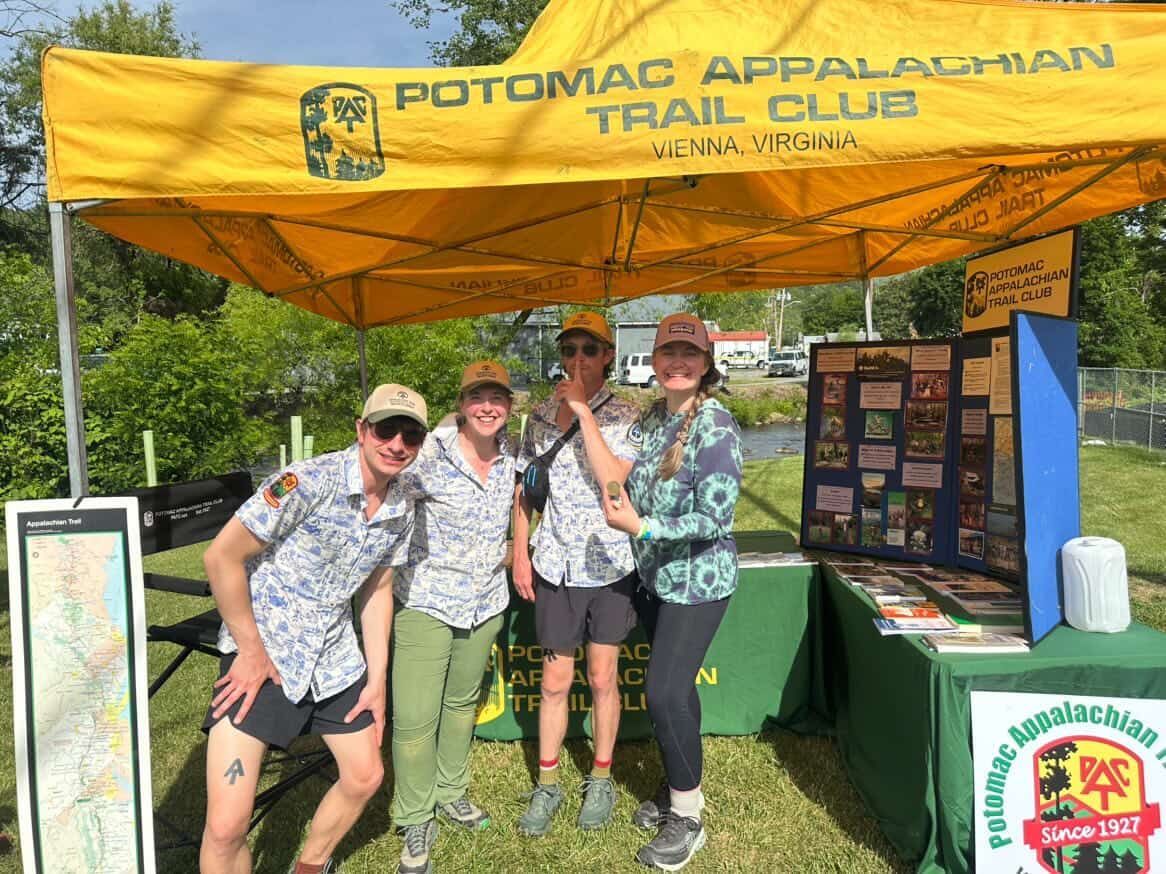
Part celebration, part reunion, and part outdoor expo, Appalachian Trail Days in Damascus, Va. has been one of the largest gatherings of the AT community since the 1980s. This year, PATC joined more than 5,000 attendees in Damascus from May 14-17 to share our work, connect with hikers, and learn from partners across the trail community.
With such a highly distilled audience of outdoor enthusiasts and conservation-minded individuals present, PATC’s involvement was excitedly welcomed. By the end of the weekend, our booth had generated an estimated 300 direct interactions with hikers, current thru-hikers, volunteers, community members, and representatives from other organizations. More importantly, we left with new ideas, stronger relationships, and a better understanding of how people see PATC from outside the organization.
Prominently representing PATC were our Ridgerunners Dillon, Josh, Karen, and Marissa. Two things became immediately clear: our Ridgerunners are great at their jobs and people love talking with them!
Throughout the weekend, hikers and locals alike stopped by to meet them, thank them for their hard work, and learn more about their efforts along the AT. Many former thru hikers had already encountered PATC Ridgerunners during their journeys, while others were curious about how the program worked and what it took to become one. Their presence helped put a face to PATC's stewardship efforts and opened the door for Ridgerunners to discuss the impact our volunteers and seasonal staff have on the trail experience.
Trail Days also gave us an opportunity to introduce PATC to thru hikers before they reach our region. It’s surprising how many people can walk on the AT for months without giving a thought to how it's maintained. Our booth allowed us to tell our story - to explain who we are, what we do, and why volunteer stewardship matters to the thru hikers’ goal of traversing the entire AT.
The success of this kind of outreach is difficult to measure, but its value is real. A positive interaction with PATC in Damascus translates into information sharing among hikers and around campfires. Thru hikers are then primed to recognize the work being done and, during their daily hiking, may develop more questions about what it takes to make and maintain a trail. This can mean a better knowledge base among the community along with more future volunteers, members, cabin renters, donors, or simply hikers who better understand and appreciate the work that goes into maintaining the trail.
Beyond the PATC booth, Trail Days provided valuable opportunities to connect with peer organizations. Representatives from organizations such as the Appalachian Trail Conservancy (ATC), the Appalachian Long Distance Hikers Association (ALDHA), the Green Mountain Club (GMC) of Vermont, the Appalachian Trail Museum, the Southern Appalachian Wilderness Stewards (SAWS), and several regional trail clubs spent time discussing both successes and challenges facing the broader trail community.
Topics ranged from land acquisition and conservation concerns to volunteer recruitment, trail maintenance models, sawyer training programs, and the growing pressures facing public lands. These conversations reinforced an important lesson: while each organization operates in its own region, many of the challenges we face are shared. Building relationships with partner organizations today creates opportunities for collaboration tomorrow.
In so many ways, attending Trail Days aligns directly with PATC's broader communications goals. Good communications are not simply about publishing articles, updating websites, or posting on social media. They’re about connecting people to people, people to the outdoors, helping individuals find meaningful ways to engage, and strengthening the communities that make stewardship possible.
One recurring theme from conversations at Trail Days was that some people wanted to volunteer with PATC but didn’t know how to get involved. Others struggled to find events that fit their schedules or were uncertain where to begin. Those conversations reinforced the importance of making our information easier to find, simplifying volunteer pathways, and ensuring that our website and event calendar serve as effective tools for engagement - leading to us unveil a new feature a bit earlier than planned: the option to link personal digital calendars to the PATC events calendar.
The weekend also highlighted areas where PATC can improve. Several of our outreach materials are overdue for updates. Some display boards have likely been serving the Club for well over a decade, some printed materials are dated, and we found that booth volunteers would benefit from a simple guide explaining PATC programs, leadership roles, and volunteer opportunities. We also recognized the need for a more streamlined process that helps interested individuals move from curiosity to active involvement.
Fortunately, these are good problems to have. They’re signs that people are interested.
Looking ahead, PATC plans to update outreach materials, develop better booth resources, improve volunteer information, and explore additional partnerships that emerged from Trail Days. We are also considering ways to make future participation even more effective, including bringing volunteers from a wider range of PATC activities to help tell the Club's story.
Most importantly, Trail Days served as a reminder of something PATC has known for nearly a century: trails are maintained by people, but they’re sustained by community. Whether through a conversation at a booth, a day of trail work, a night in a cabin, or a chance encounter on the AT, the relationships we build are what make stewardship possible.
By that measure, Trail Days 2026 was a success.