
What’s that Flower? Tuscarora Trail Dry Gap to Power Lines—Late Summer
Article and photos by Richard Stromberg
This article shows you some of the flowers to look for in July and August on the Tuscarora Trail north of Dry Gap. The trail is described in Section 16 of the PATC publication “The Tuscarora Trail a Guide to the South Half.” This is a popular trail section because of the spectacular view from Eagle Rock, one mile north of the Dry Gap parking.
All species below are native unless otherwise noted.
As you approach the Eagle Rock viewpoint, you will see evidence of the November 1, 2024, fire: blackened earth, logs, and bark at the bottom of trees.
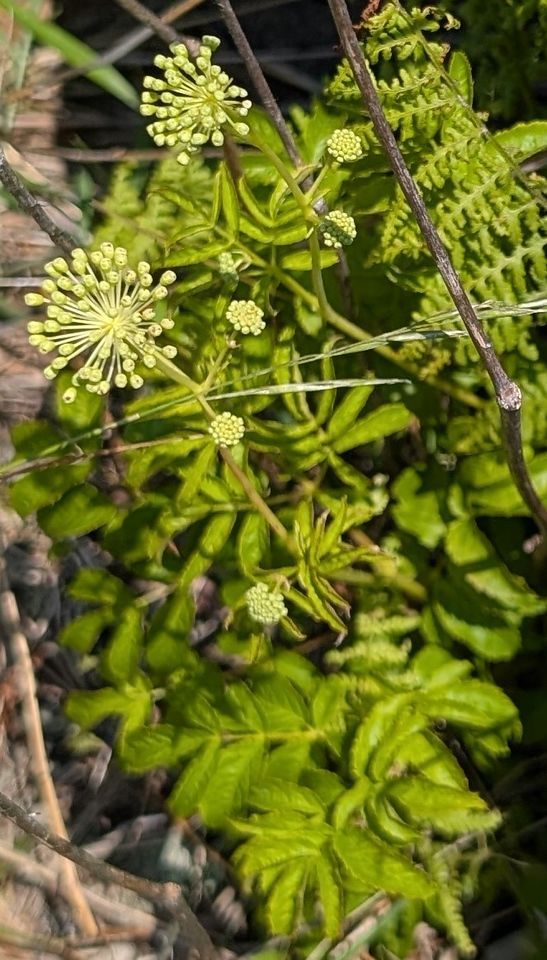
Bristly Sarsaparilla (Aralia hispida) is known for sprouting in burn areas, and you will see it here. The upper stems can be smooth and only the lower stems, bristly. It is a northern plant categorized as rare in the PATC area. Its tiny white flowers are in a rounded umbel. A large population existed under the power lines three and a half miles from the parking but has been dwindling without fire there.
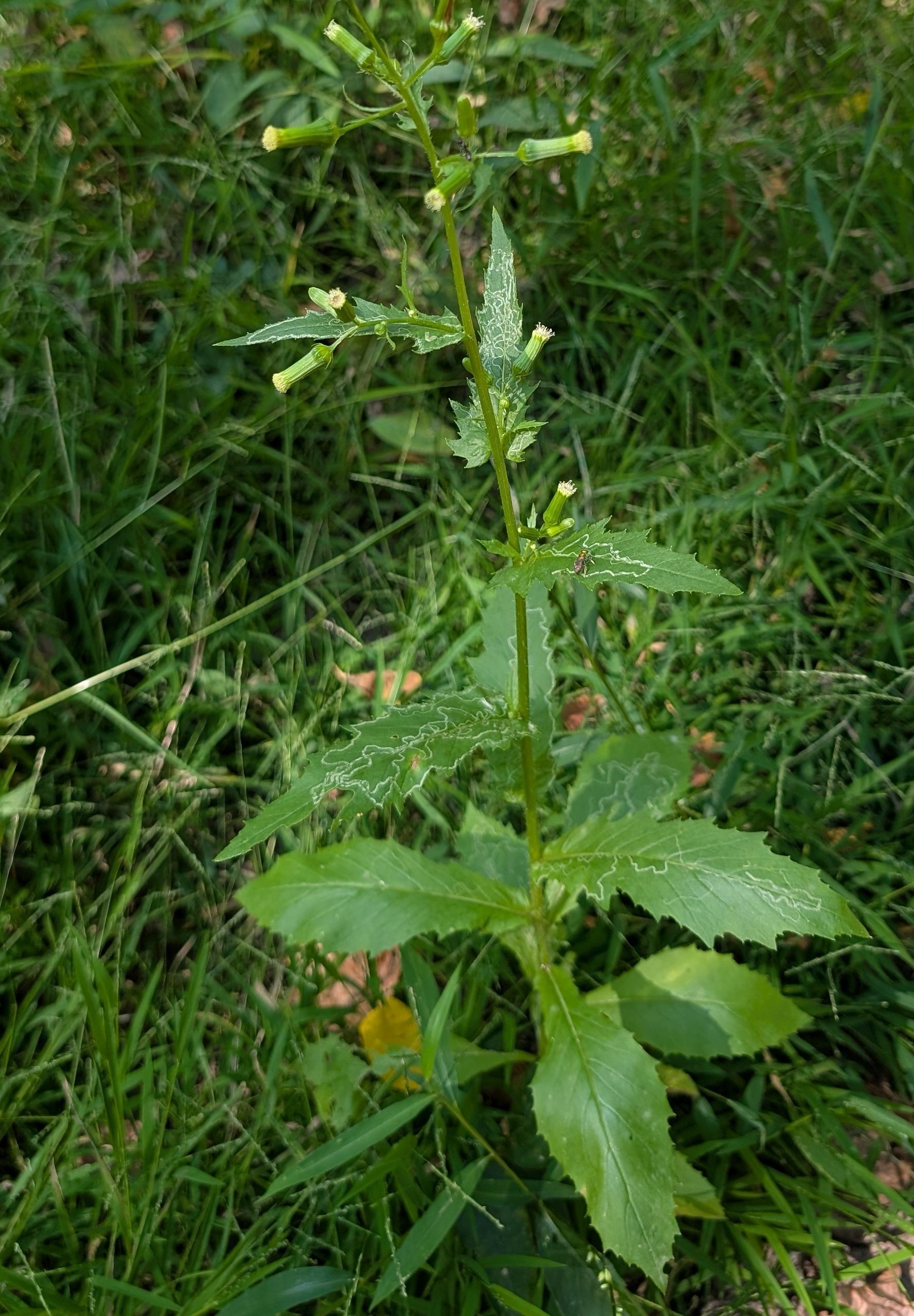
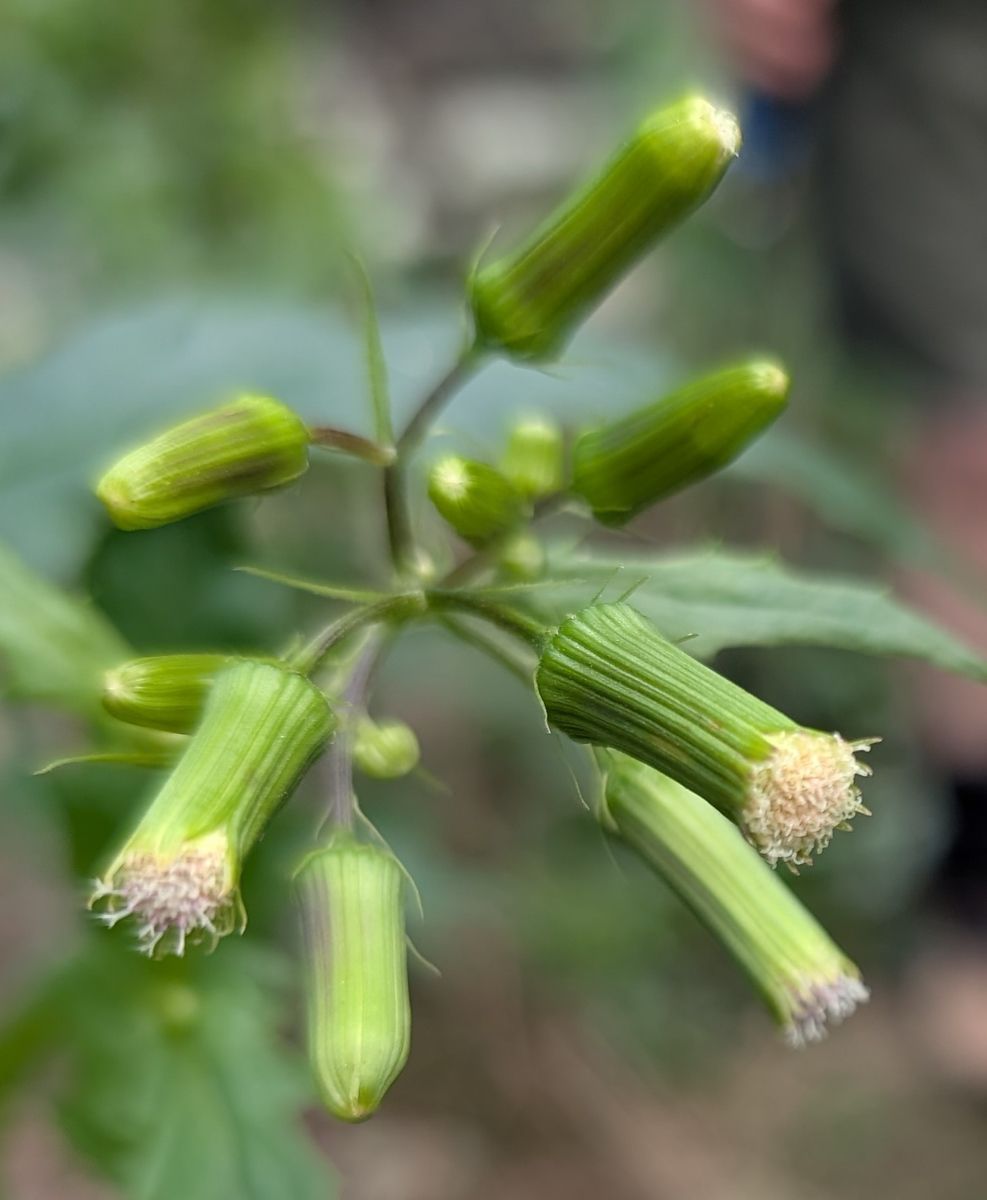
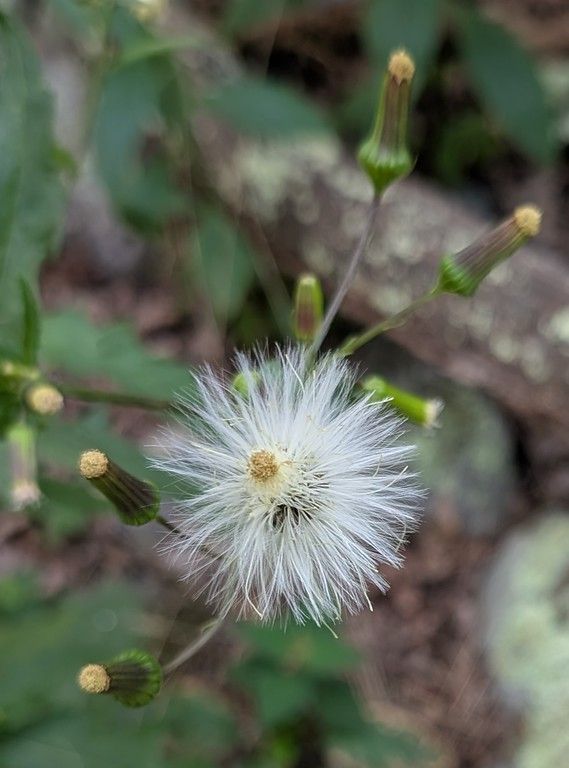
Pilewort (Erechtites hieracifolius) also likes burned areas, so is also called American Burnweed. It is a tall plant with a grooved stem. The flowers are green tubes, swollen at the bottom with a brush-like tip. When ripe, fluffy seeds appear.
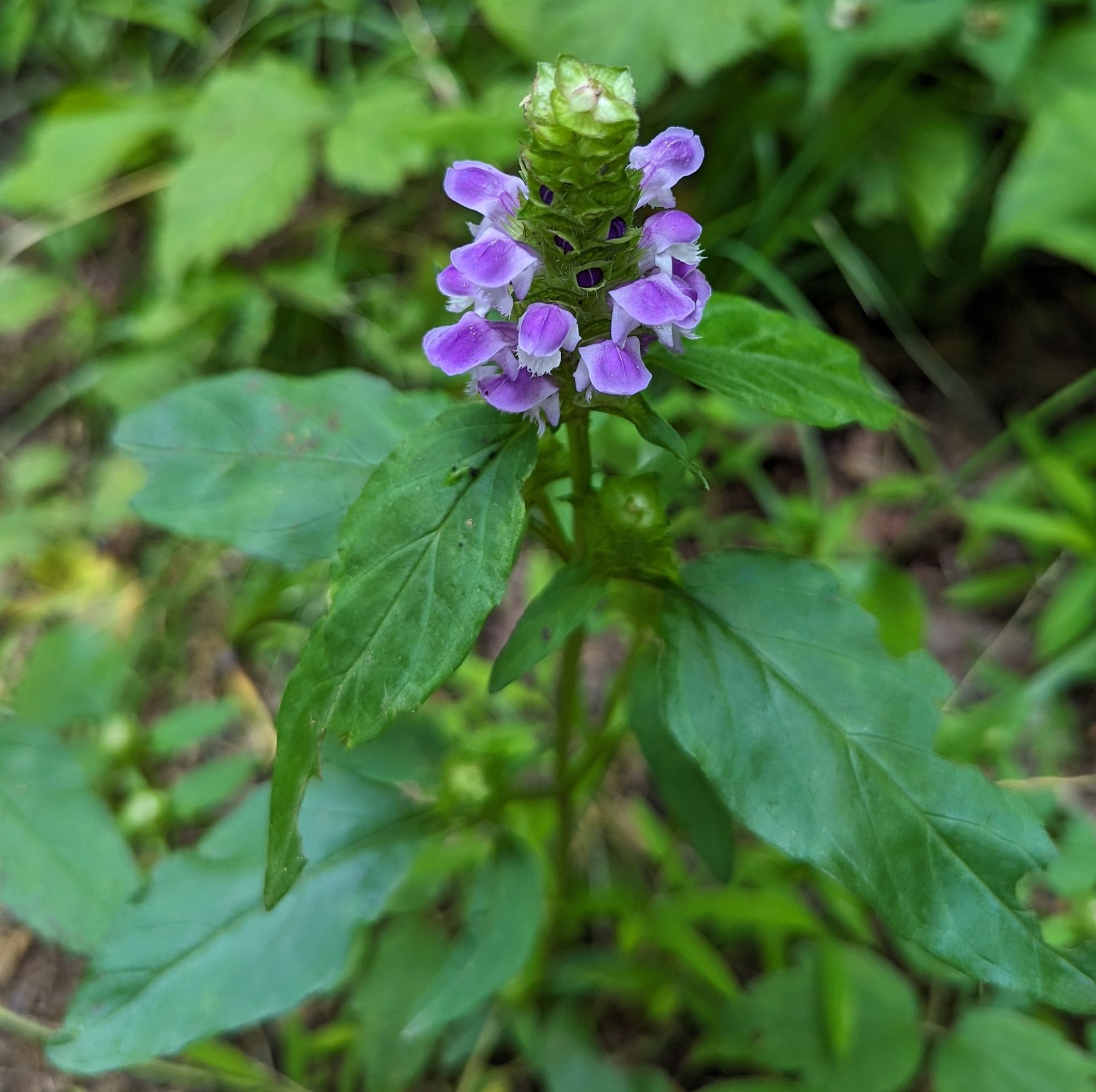
Heal-all (Prunella vulgaris) is also called Selfheal. The plants are usually under a foot tall. The flower spike is on top of the plant above paired leaves. Usually only a few flowers are open at a time. Each flower is dominated by the purple, upper hood. When all the flowers are gone, the inflorescence looks like a tiny corn cob. It is not native.
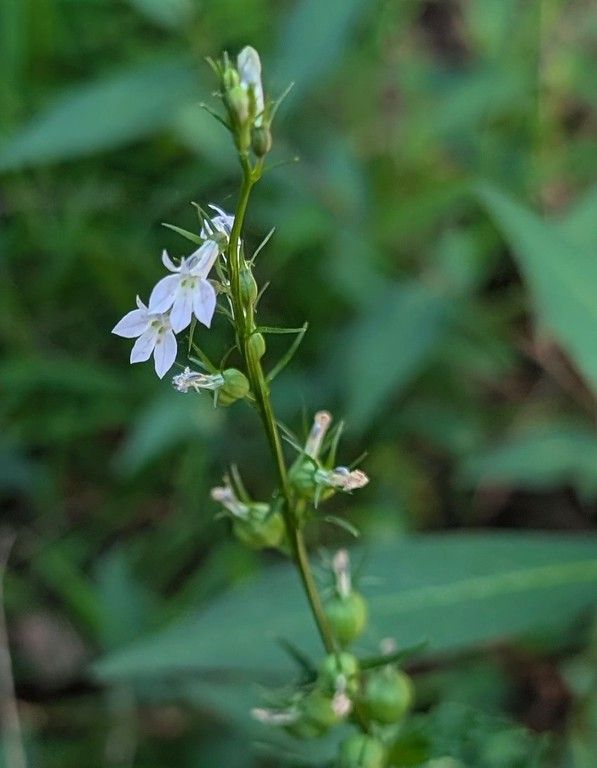
Indian Tobacco (Lobelia inflata) flowers are only about a quarter inch and are light blue to white. They have an upper lip with two, erect lobes and a lower lip with three, spreading lobes. They grow in long spikes. The structure behind the petals is strongly inflated.
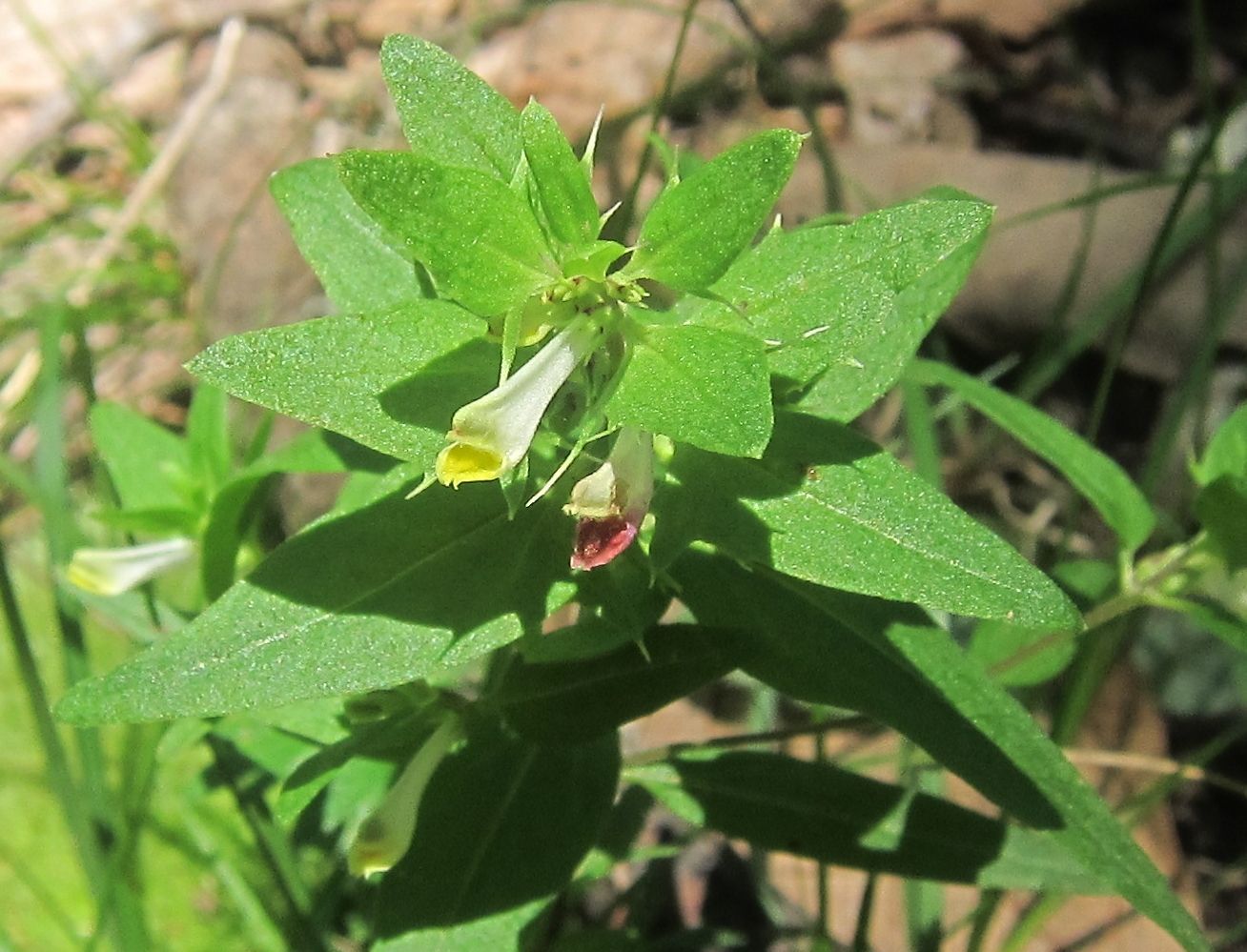
Cowwheat (Melampyrum lineare) plants are four-to-twelve inches tall. The half-inch, tubular, white flowers with a yellow tip grow in the axils and are often hidden by leaves.
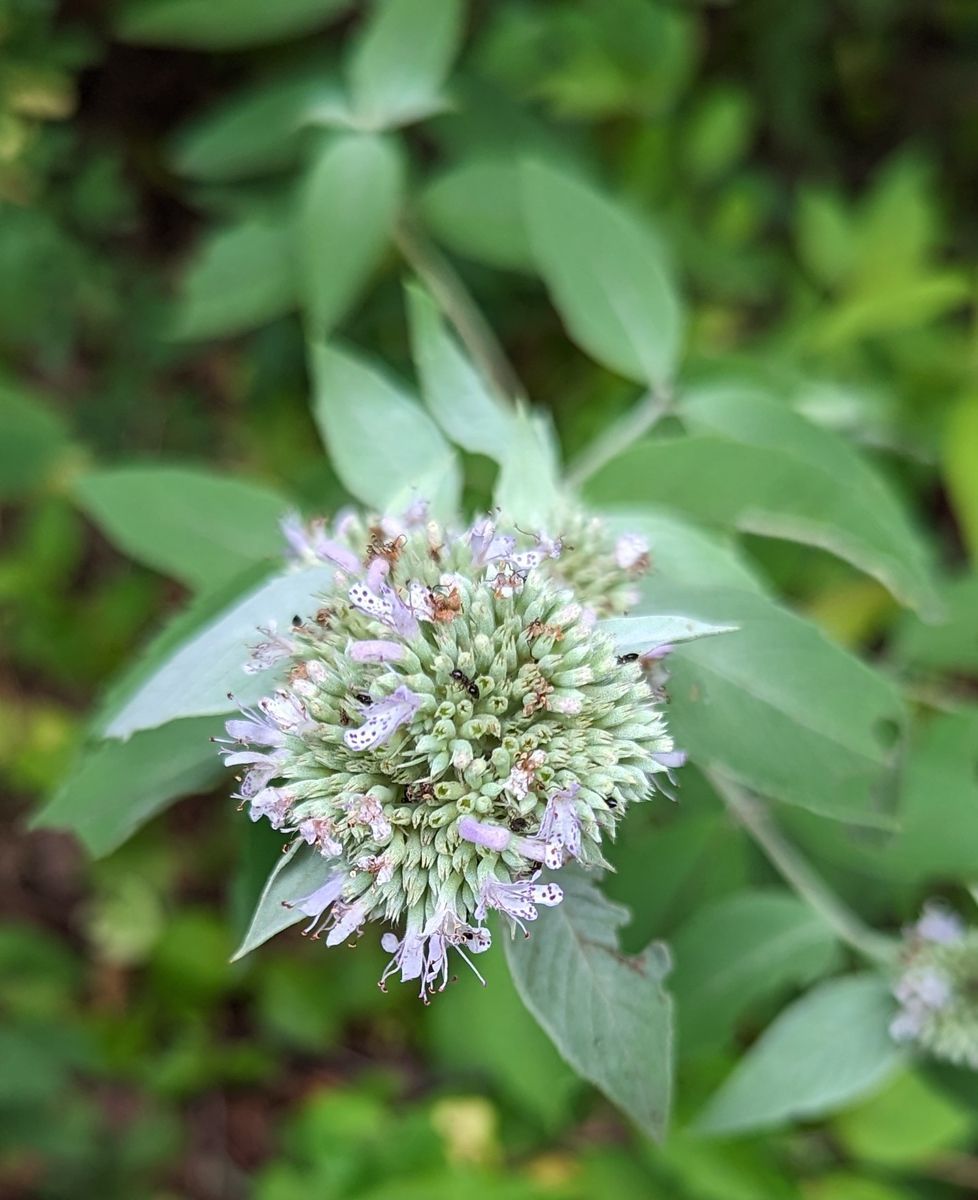
Hoary Mountain-mint (Pycnanthemum incanum) can grow to over six feet tall. Its light purple flowers sprout irregularly from a circle at the top of the plant and around the stem in the leave axils. The leaves are egg-shaped with the wide part towards the stem. The term “hoary” is applied because the leaves seem to be sprinkled with a white or grayish powder.
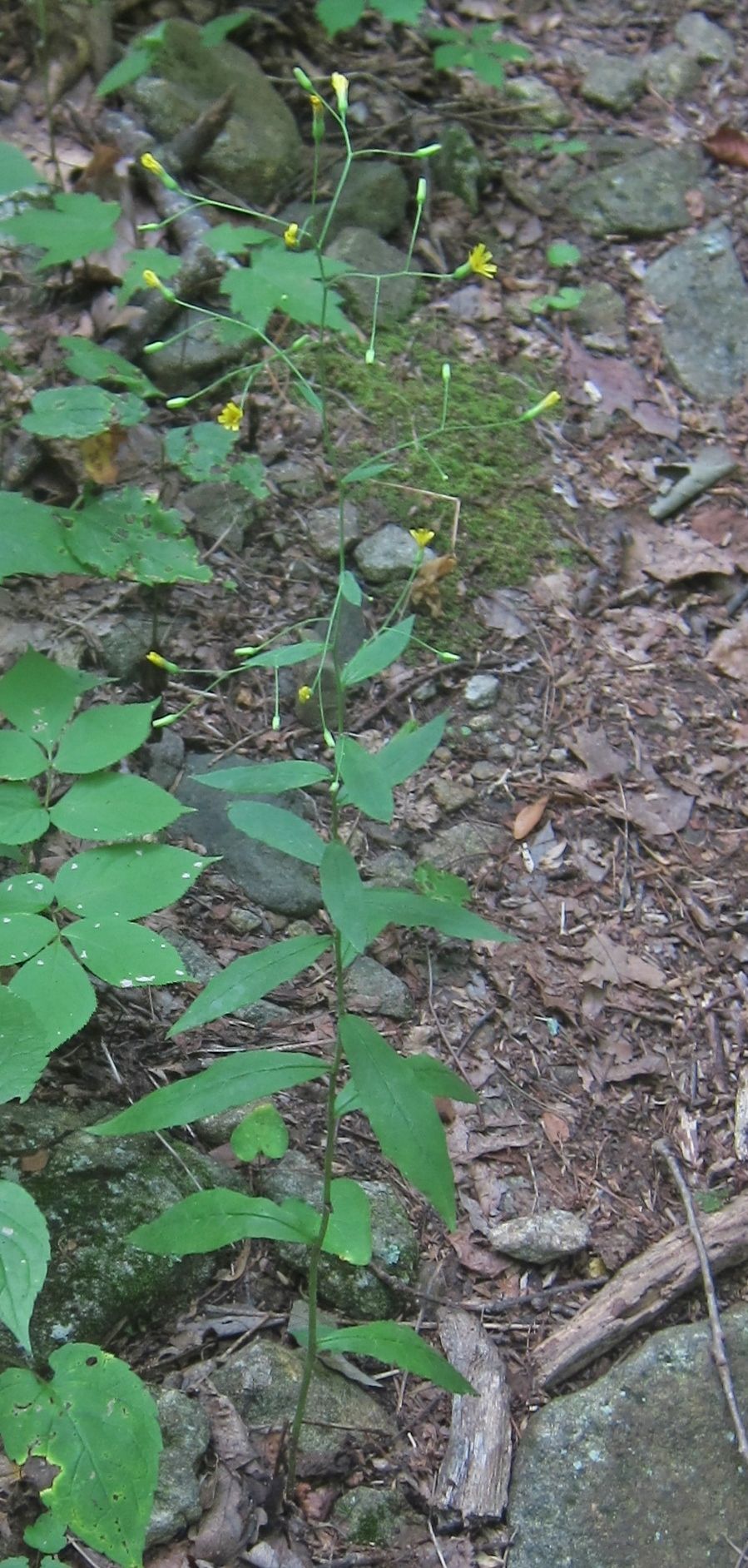
Panicled Hawkweed (Hieracium paniculatum) They have only ray florets like Dandelions, no central disks. It has spread out panicles--the thin-stemmed flowers seeming to float in air. (A panicle is a many-branched inflorescence.) Panicled Hawkweed leaves are entire, with no teeth.
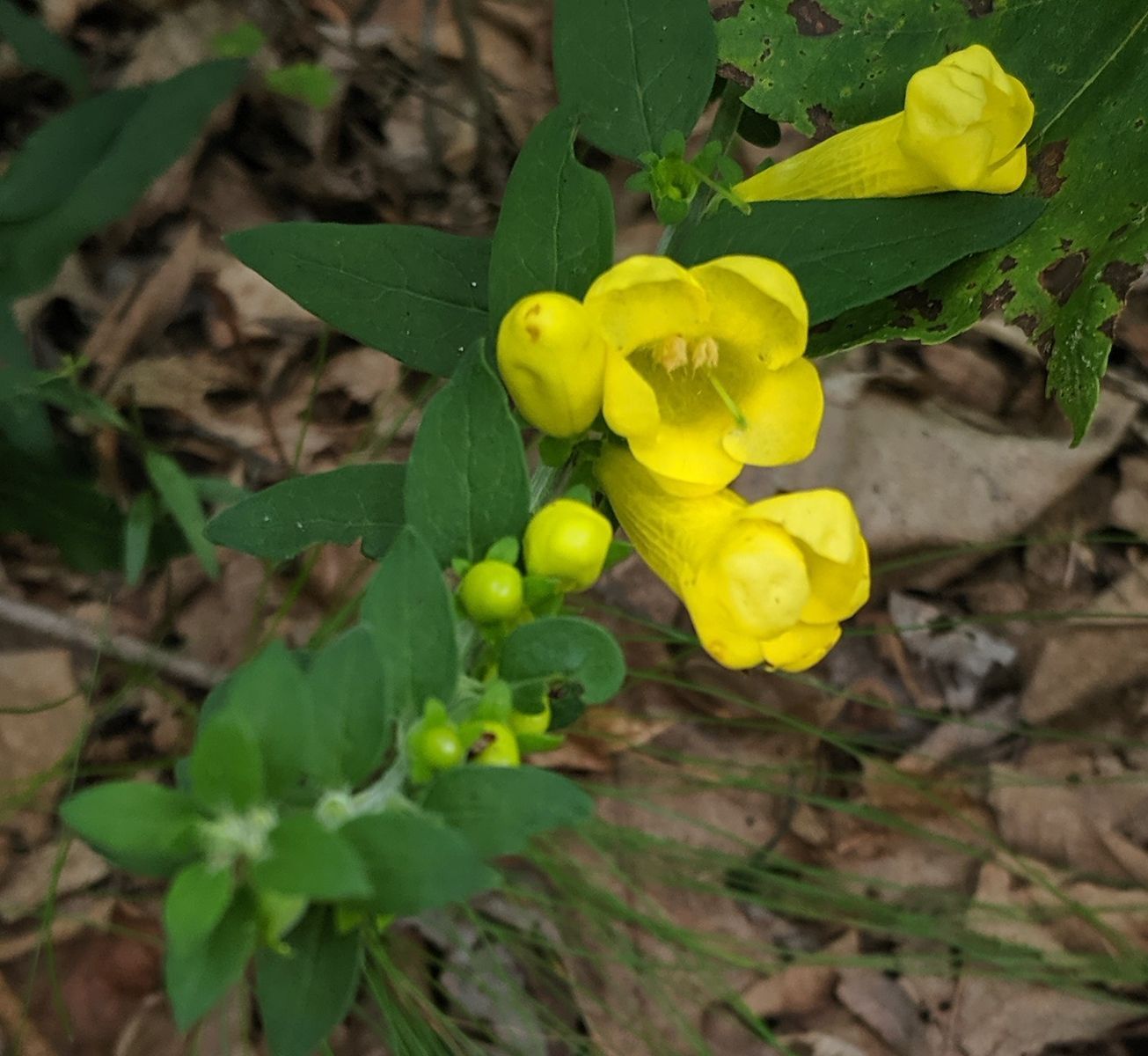
Entire-leaved False Foxglove (Aureolaria laevigata) flowers are eye-catching: leafy racemes of 1-2 inch yellow tubes with five, flaring lobes at the end. It has a smooth, green stem and most leaves are entire, though lower leaves may be toothed.
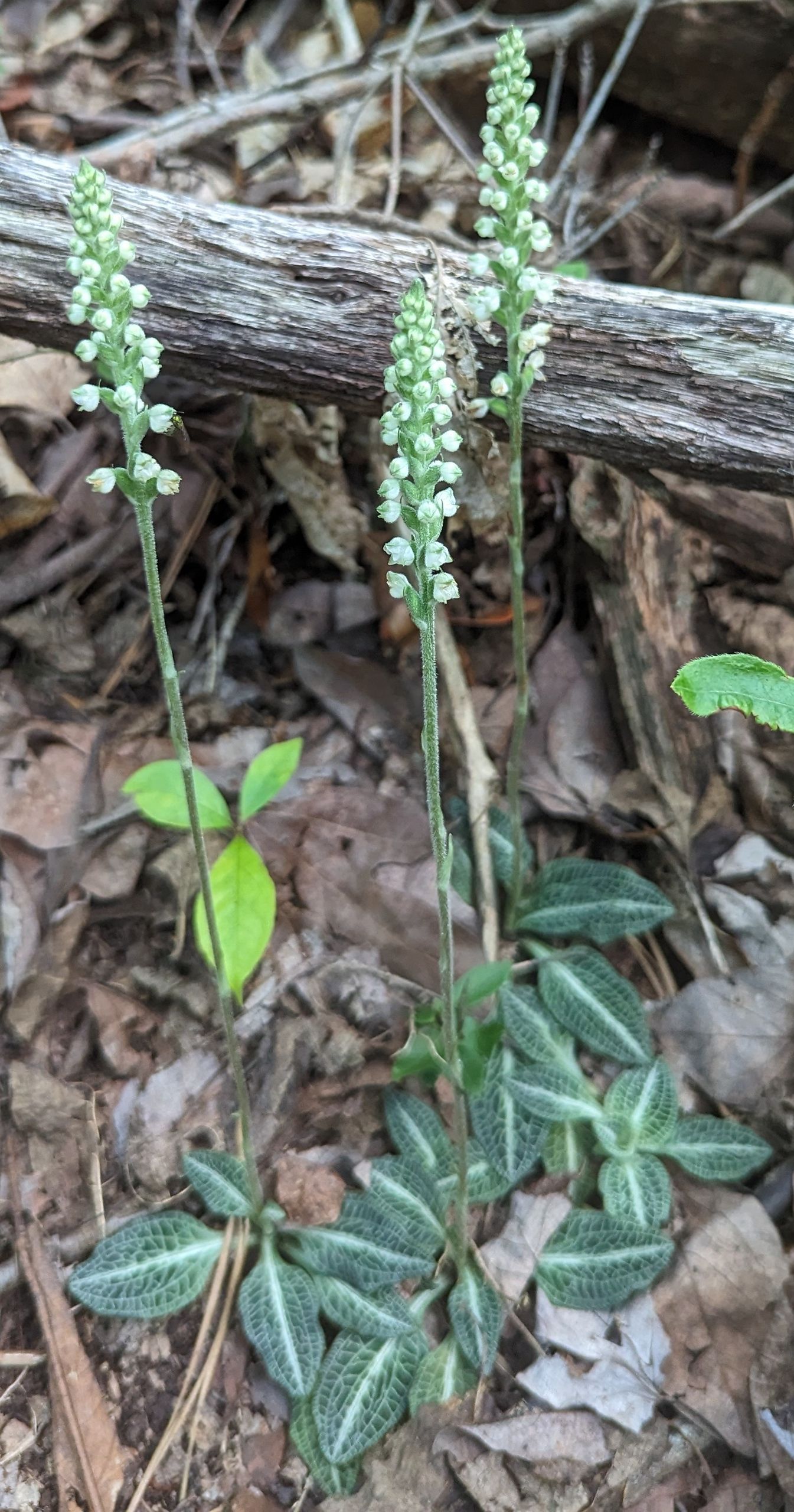
Downy Rattlesnake Plantain (Goodyera pubescens) is most noticeable for its evergreen, dark green leaves with a network of white veins at the base of the plant. It is an orchid. The flower raceme is about a foot tall. The flowers look like little (¼”), white balls, densely packed on the stalk and never open very much.
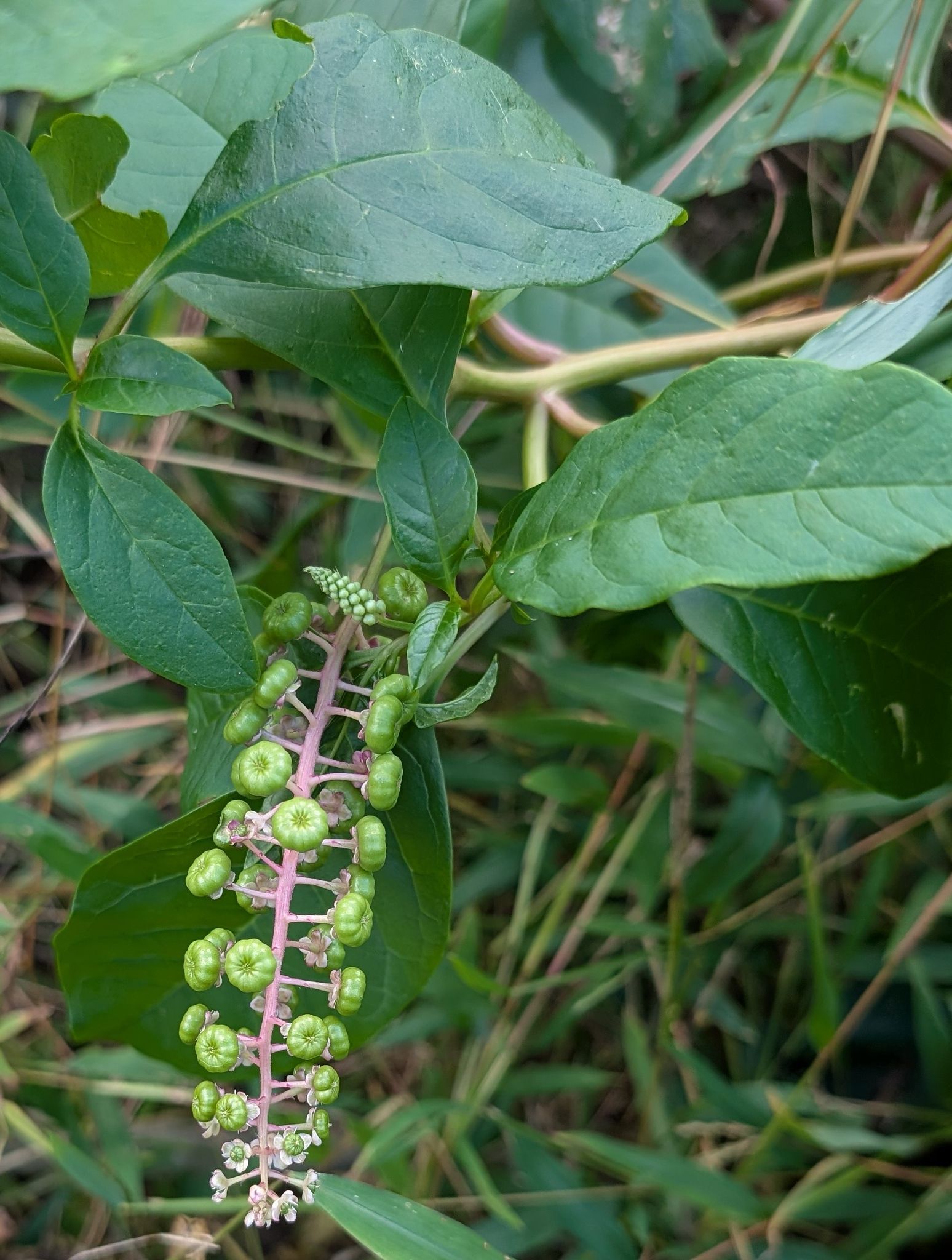
Pokeweed (Phytolacca americana) is a succulent, branching plant over three feet high with racemes of ¼ inch white flowers with five, petal-like sepals. The fruits are deep purple berries.
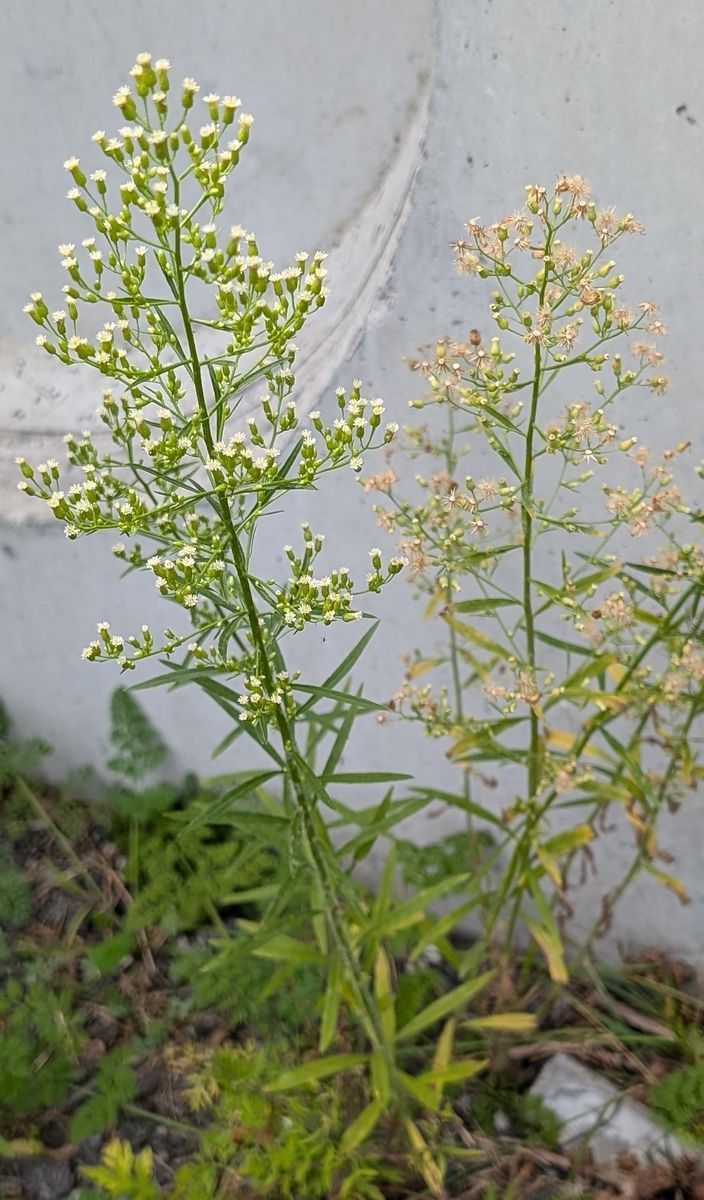
Horseweed (Erigeron canadensis) has many flower clusters at the top of the plant, each flower is a tube, less than five millimeters long. If you look closely, you will see the top of each flower is a tiny daisy with white rays 0.5 to 2 millimeters long. The seeds form small Dandelion-like fluff balls to blow in the wind.
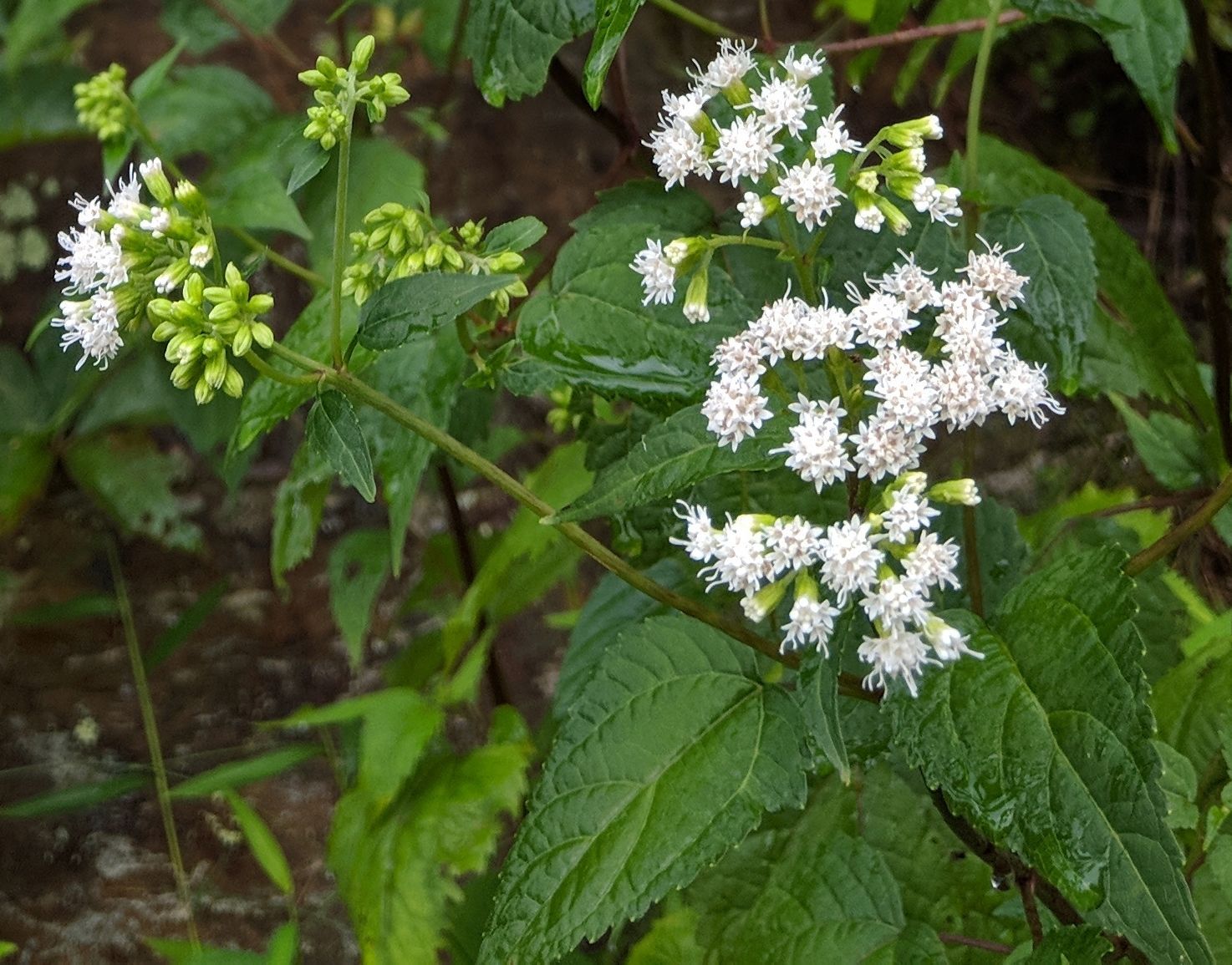
White Snakeroot (Ageratina altissima) can grow to five feet tall. It has branching clusters of up to 30 small flowers at the top. Individual quarter-inch flowers have five, pointed petals and protruding white stamens. Leaves are long-pointed, egg-shaped with ¾ inch stems.
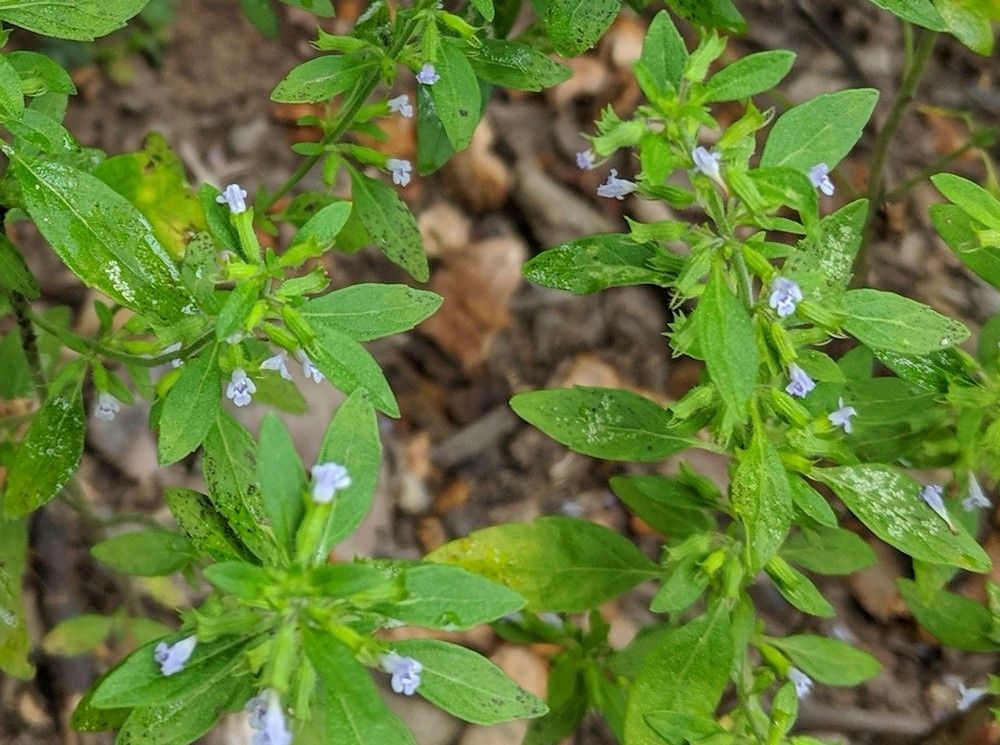
American Pennyroyal (Hedeoma pulegioides) plants are small, less than 18 inches. Before you have seen it, if you see it at all, you probably have smelled its strong minty smell because you brushed or stepped on it. Its paired leaves are narrow and less than one and a half inches long. Several flowers cluster tightly around the stem in the leaf axils. One-eighth inch, bluish-purple flowers extend from the similar-sized green sepal tube. If you get down on your knees to look at the tiny flowers, you will see that they have the typical, two-lipped formation of the mint family. The small upper lip curves slightly over the lower lip, and the bottom lip has three lobes, the middle one the largest.