
What's that Flower? Tuscarora Trail, Dry Gap to Power Lines—Autumn
By Richard Stromberg




This article shows you some of the flowers to look for in Autumn on the Tuscarora Trail north of Dry Gap. The trail is described in Section 16 of the PATC publication “The Tuscarora Trail: A Guide to the South Half.” This is a popular trail section because of the spectacular view from Eagle Rock, one mile north of the Dry Gap parking.
All species below are native unless otherwise noted.
Autumn is dominated by the Aster/Daisy family (Asteraceae), particularly Asters and Goldenrods.
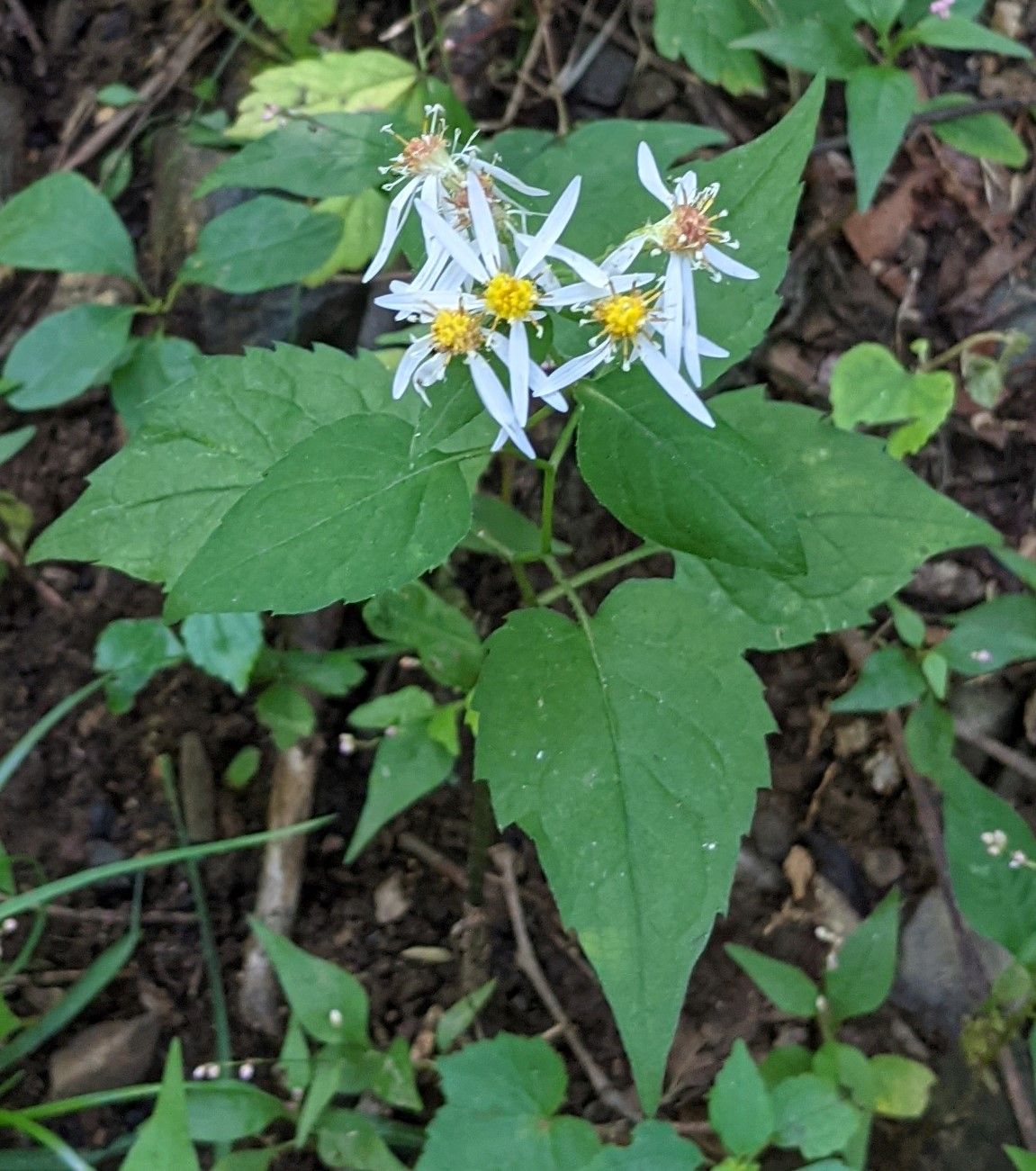
The only Aster I have seen on this stretch of trail is White Wood Aster (Eurybia divaricatus). It is topped by a flattish cluster of daisy-like flowers, with strap-like, white rays surrounding a center disk of small, yellow flowers. The lower leaves are elongated heart shaped with coarse teeth. Up the stem, the leaves are smaller and the heart-shaped indentation at the petiole may not be there.
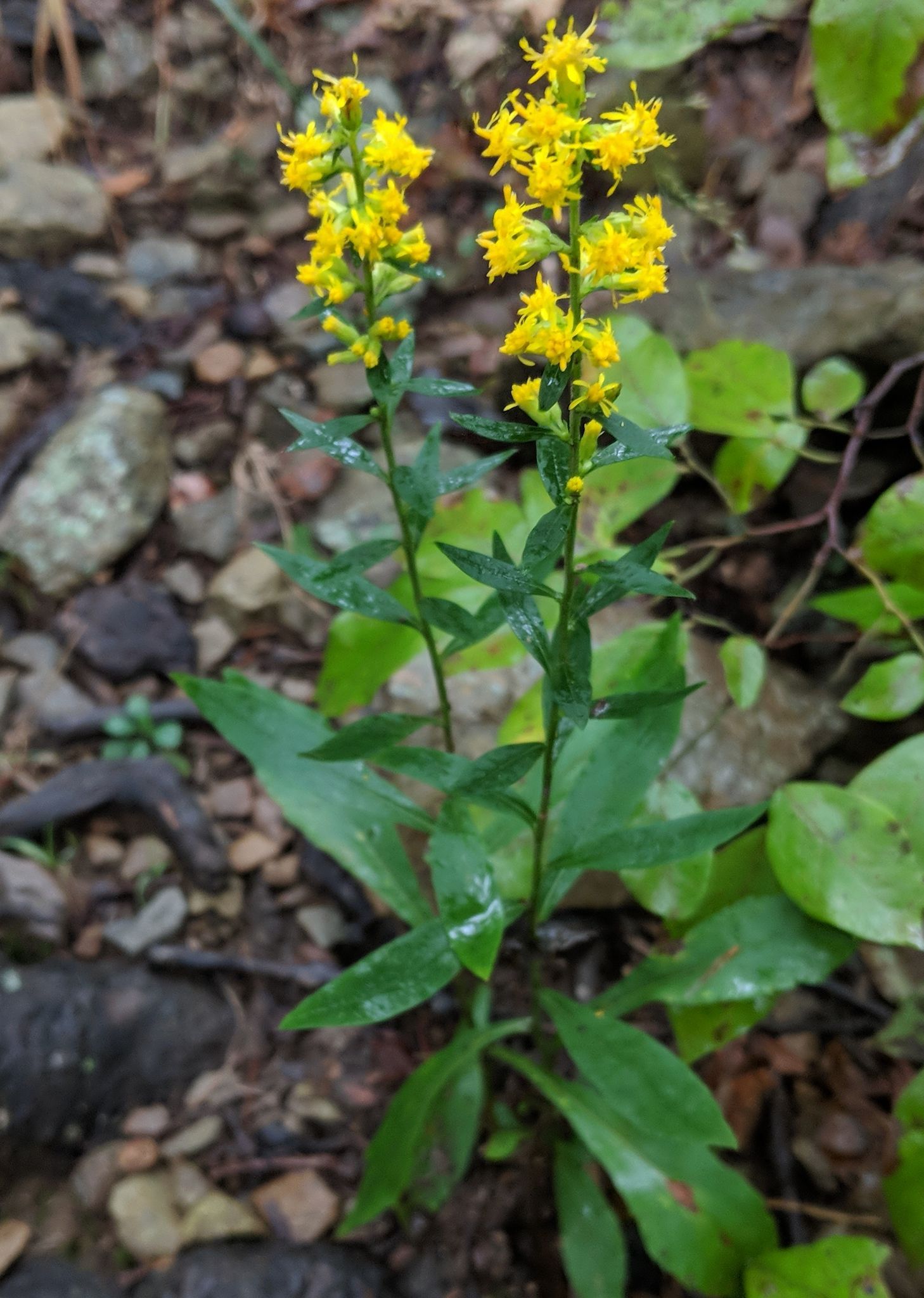
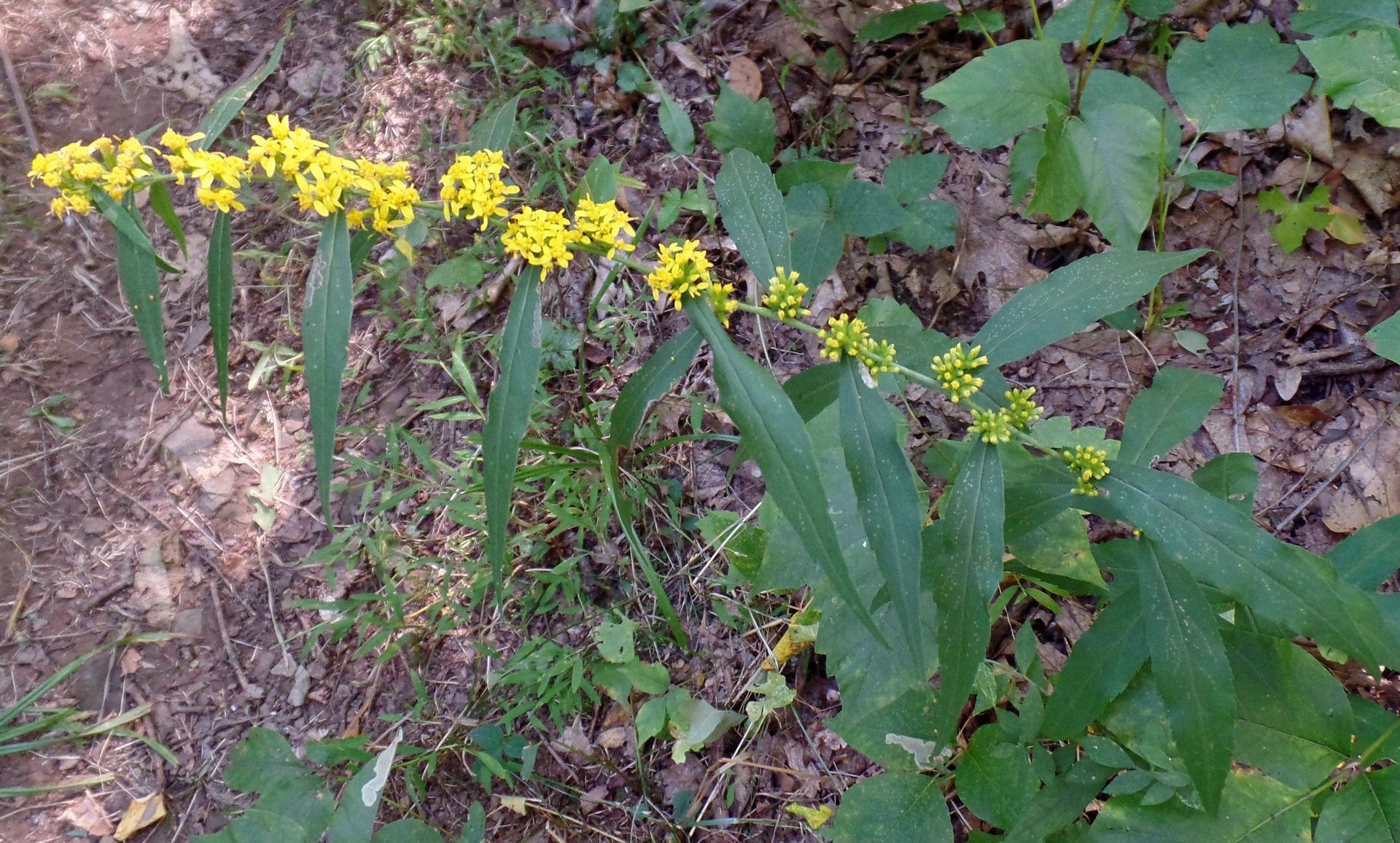
Goldenrods (Solidago) are known for their sprays of many small flowers. Erect Goldenrod (Solidago erecta) has straight clusters of flowers at the top of the plant with flowers all around the stem. Its leaves are sessile (attach directly to the stem without a supporting stalk). Wreath Goldenrod (S. caesia) has long, narrow leaves that separate the flower clusters growing from the axils. Instead of standing upright, it often leans over forming an arch.
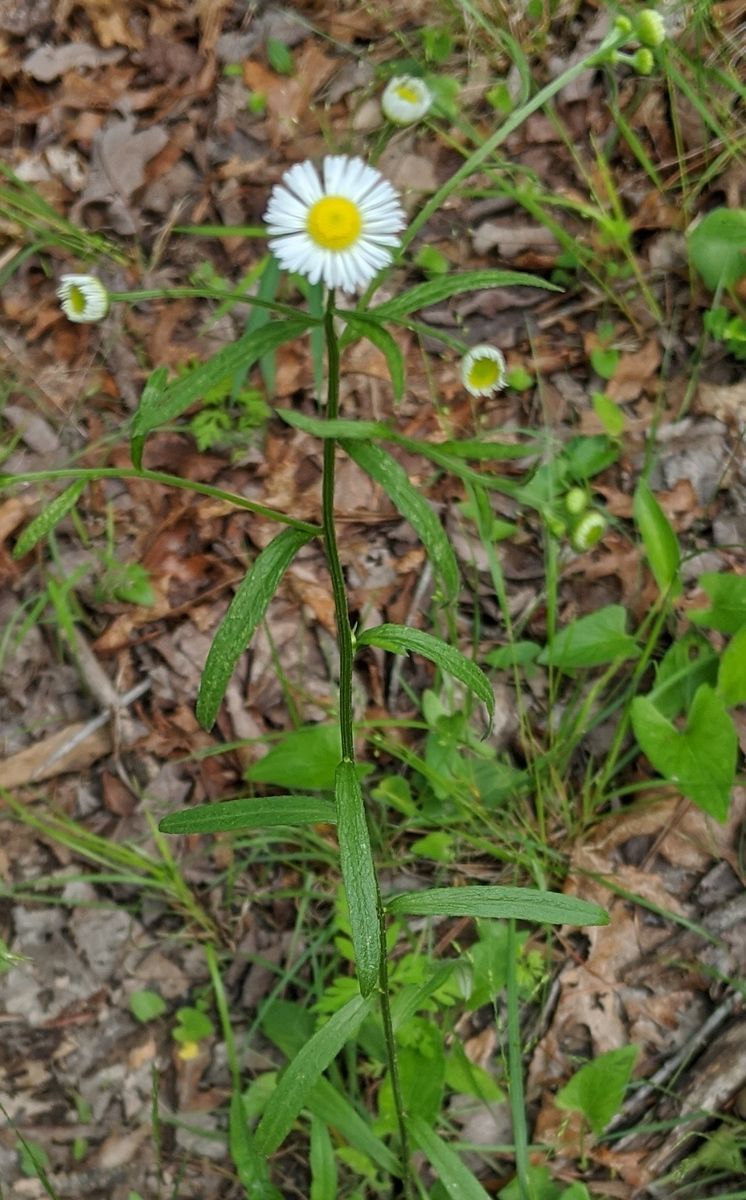
Daisy Fleabane (Erigeron strigosus) flowers look like daisies, but the rays are very thin, and there may be up to 400 of them. The central disk is yellow, and the rays are white or tinged pink. Its stem leaves are sparse and have smooth edges.
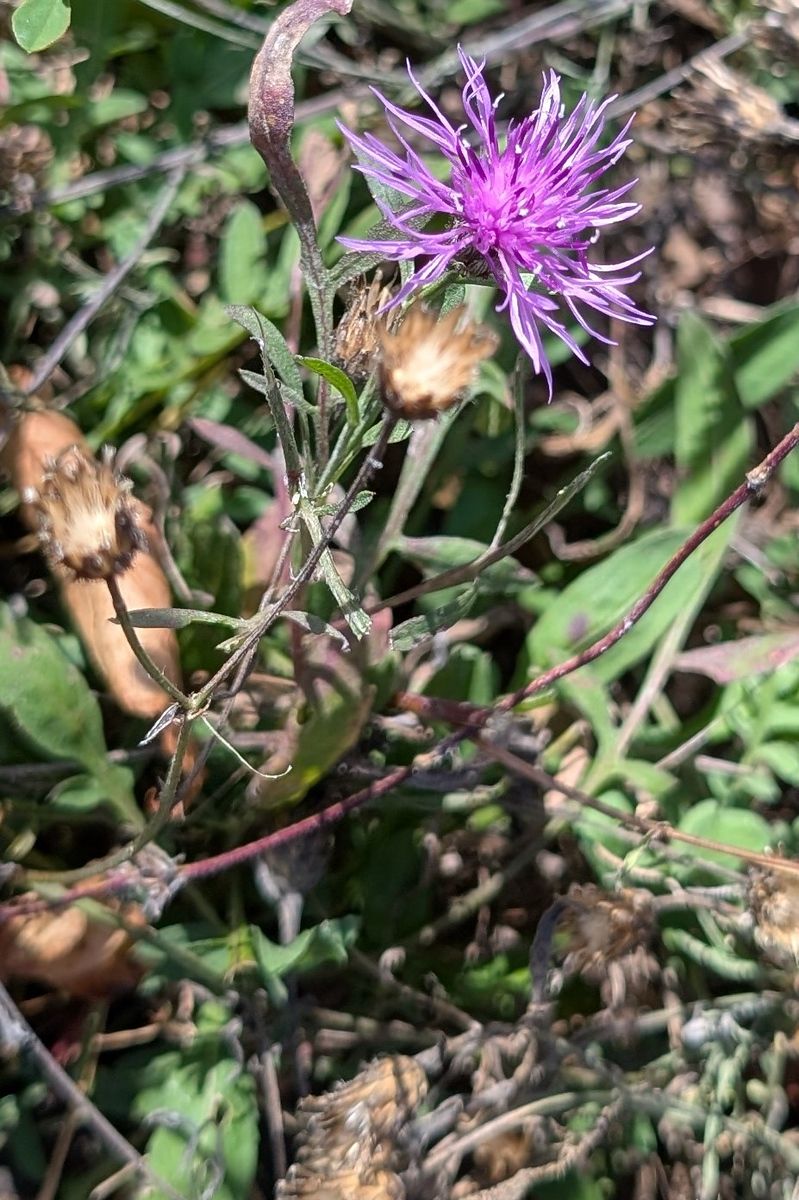
Spotted Knapweed (Centaurea stoebe) has shaggy disk flower heads that look similar to Thistles but the florets are flatter and spread more than Thistles. They do not have spines and are much shorter than thistles. Its leaves are divided into narrow, irregular segments. It is an invasive alien.
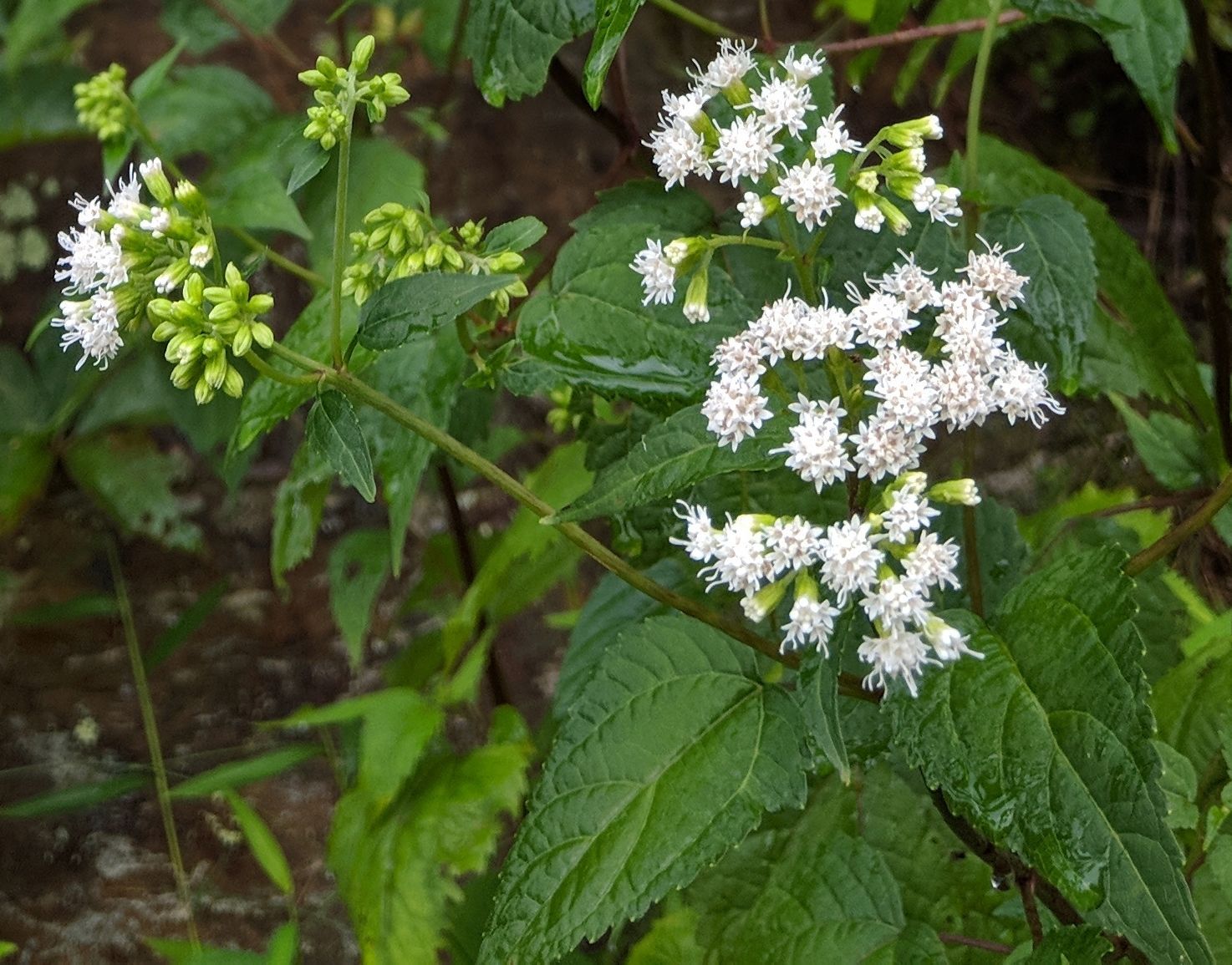
White Snakeroot (Ageratina altissima) can grow to five feet tall. It has branching clusters of up to 30 small flowers at the top. Individual quarter-inch flowers have five, pointed petals and protruding white stamens. Leaves are long-pointed, egg-shaped with ¾ inch stems.
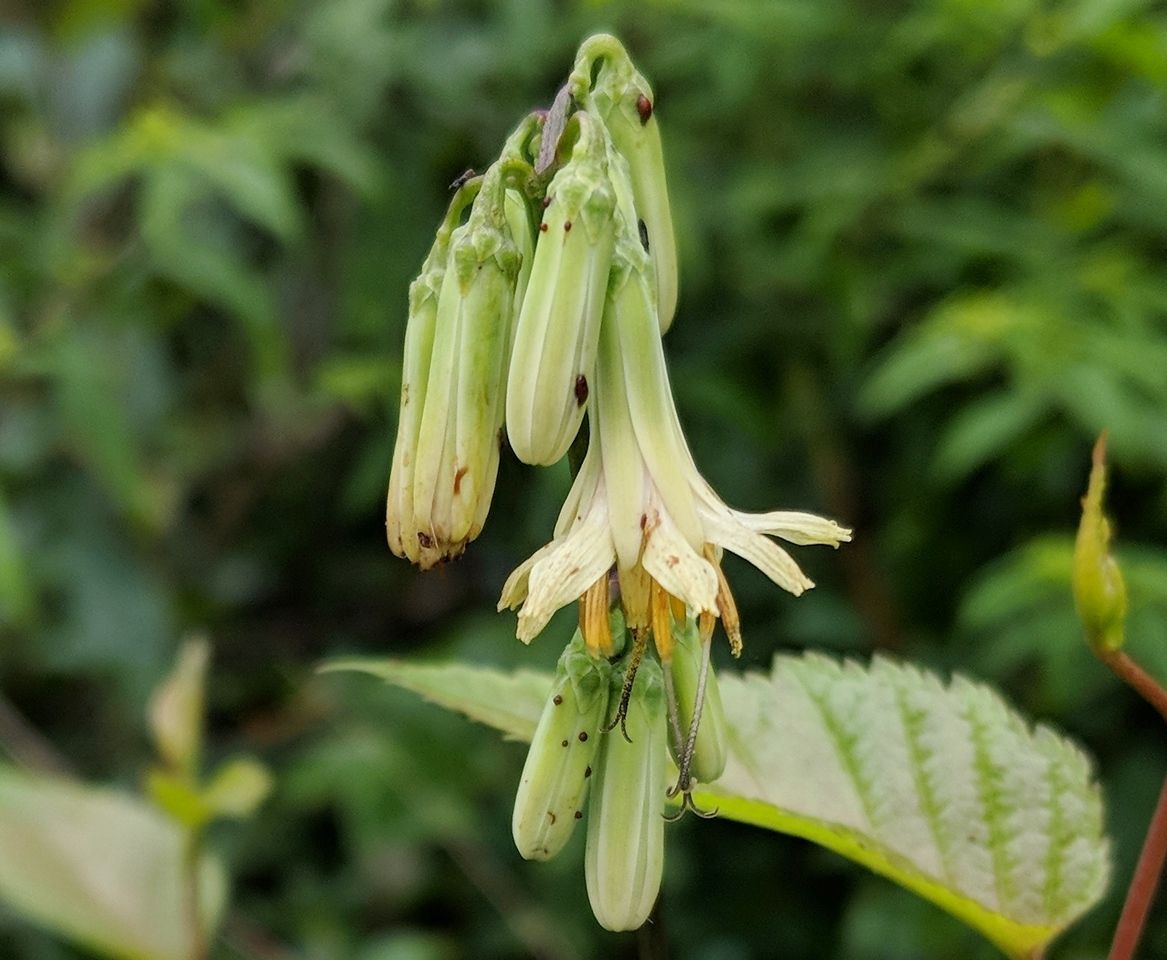
Three-leaved Rattlesnake Root (Nabalus trifoliolatus) is also known as Gall-of-the-earth. Clusters of flowers hang down like bells: tubes with petals flaring at the end and stamens protruding. Lower leaves are large and deeply divided into three lobes. Upper leaves are smaller and less cut.
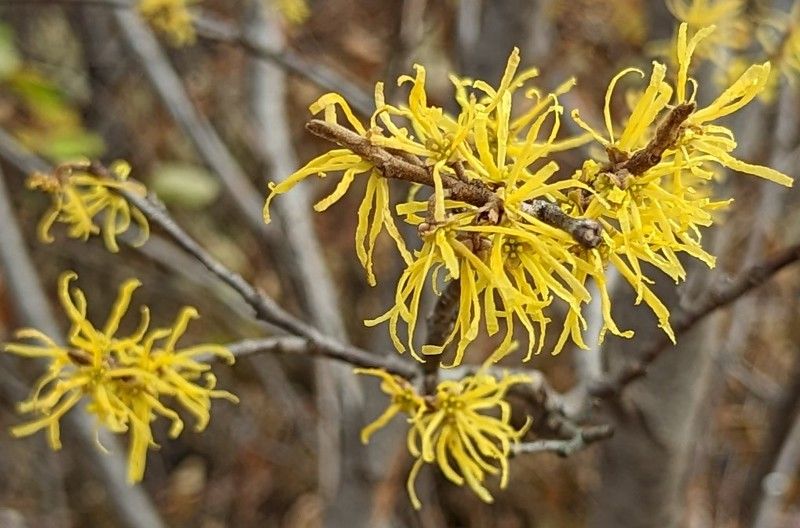
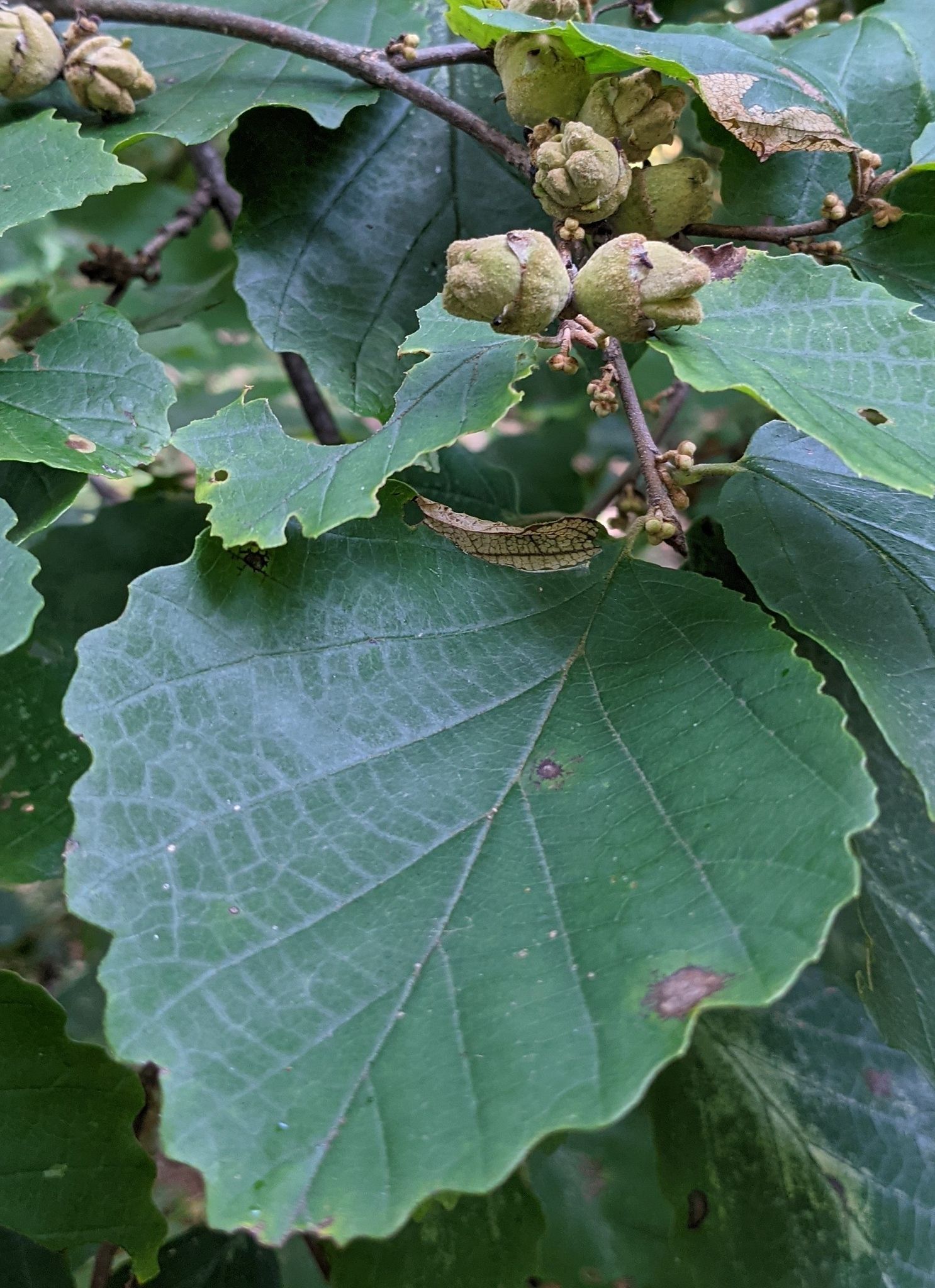
The last flower to bloom in our area is Witch Hazel (Hamamelis virginiana). It is not in the Aster family. Witch Hazel often grows as a thick, shrubby clump, though sometimes as a small tree. Witch Hazel’s oval leaves have wavy, rounded teeth. The flowers appear as the leaves turn yellow and fall, so the flowers stand out on leafless branches. The flowers have four long, thin, yellow petals and often grow in bunches, so you see yellow streamers in the wind. The fruit is a fuzzy, one-centimeter capsule with remnants of the four sepals remaining. It takes over a year to mature, so it remains on the bush with the new flowers.
Two species offer decorative leaves close to the ground:
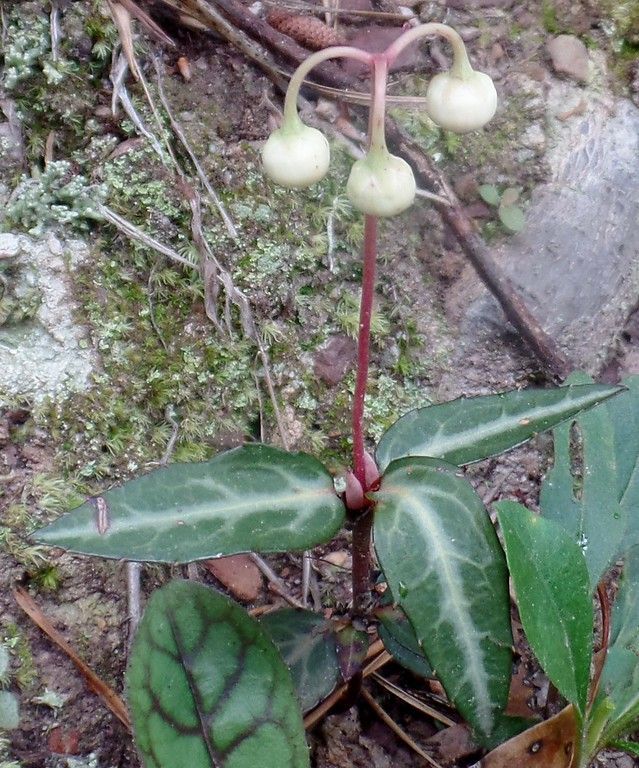
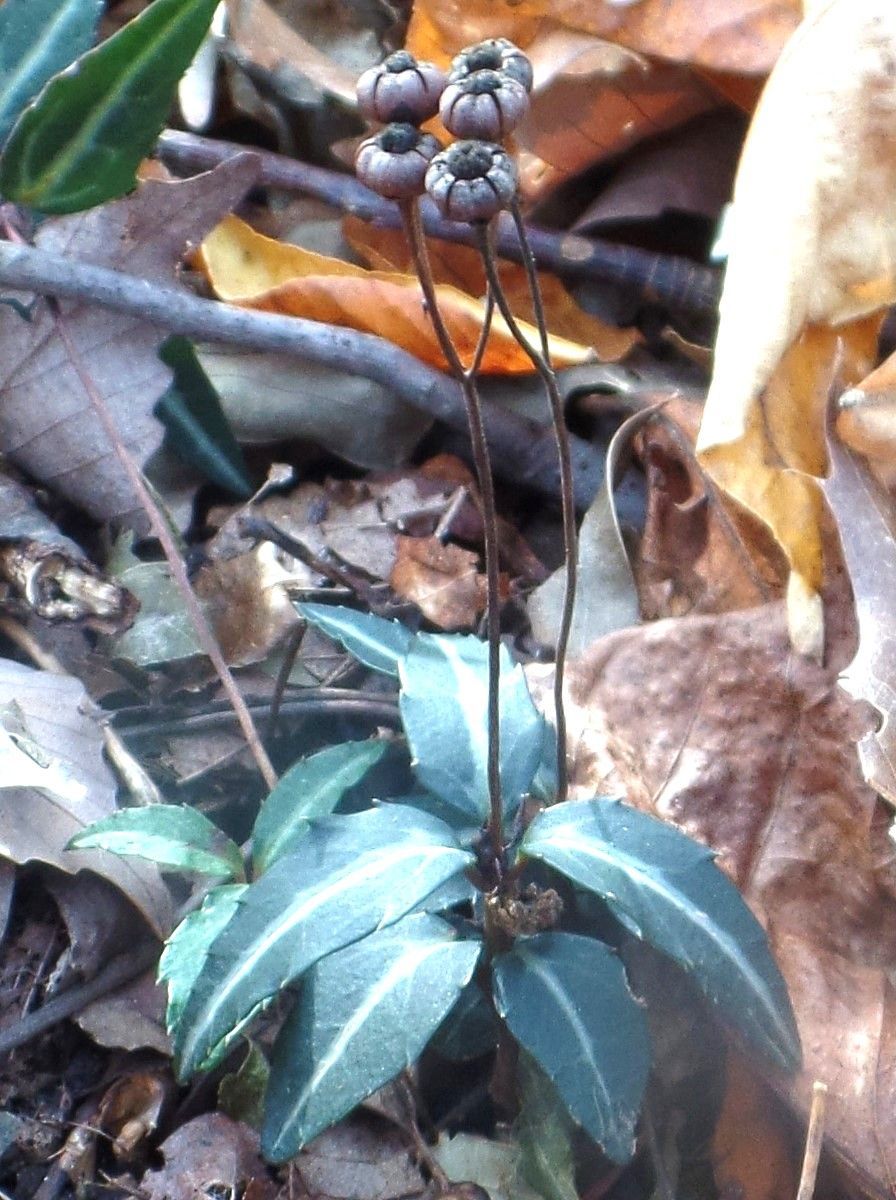
Striped Wintergreen (Chimaphila maculata) leaves are long and toothed with pale yellow along the veins. Fruit grows on top of straight stems above the leaves. They start out green and turn brown.
Downy Rattlesnake Plantain (Goodyera pubescens) is most noticeable for its evergreen, dark green leaves with a network of white veins at the base of the plant. It is an orchid. Fruits are little brown balls on stems above the leaves.