
What's That Flower—Bear Church Rock—Summer
By Richard Stromberg
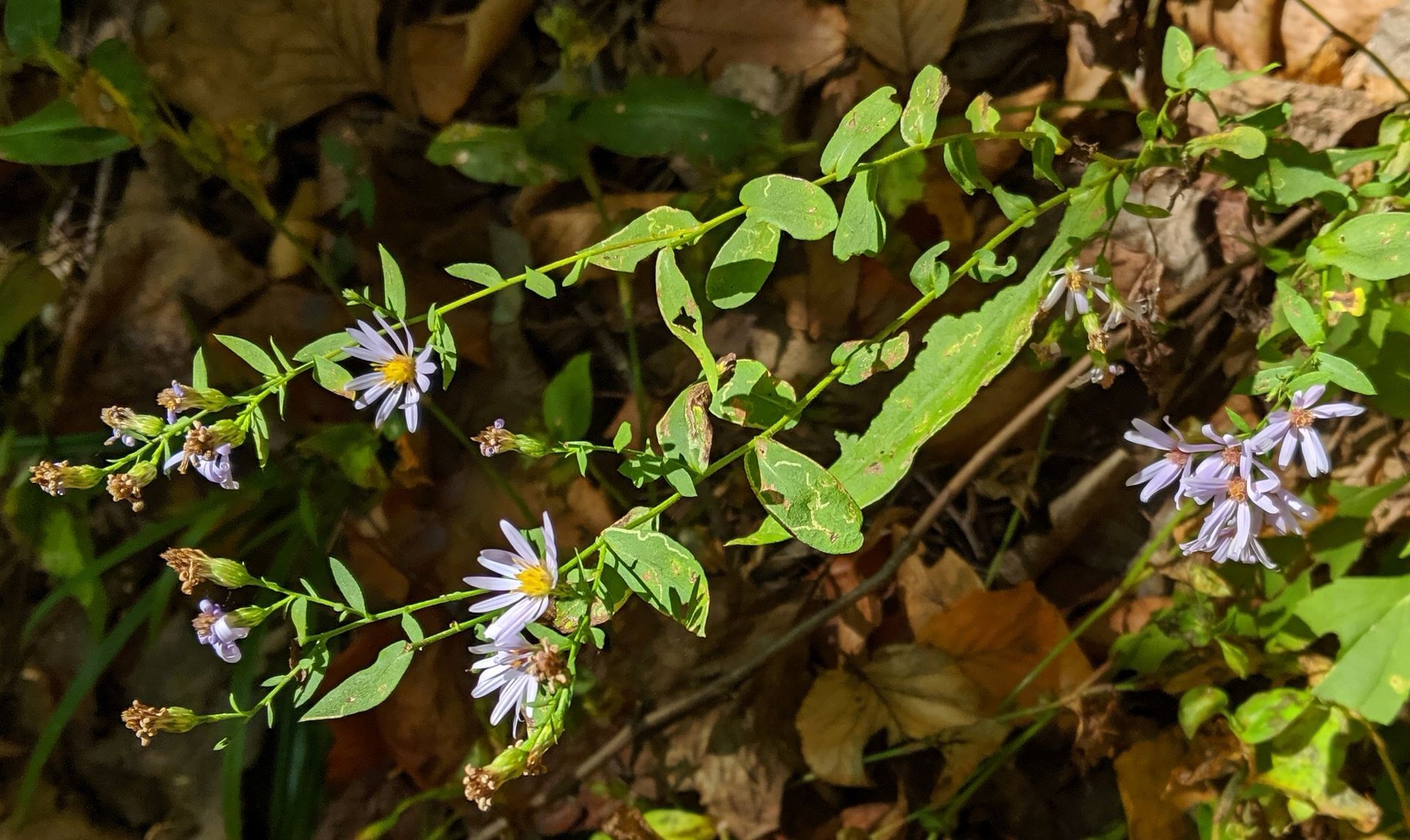
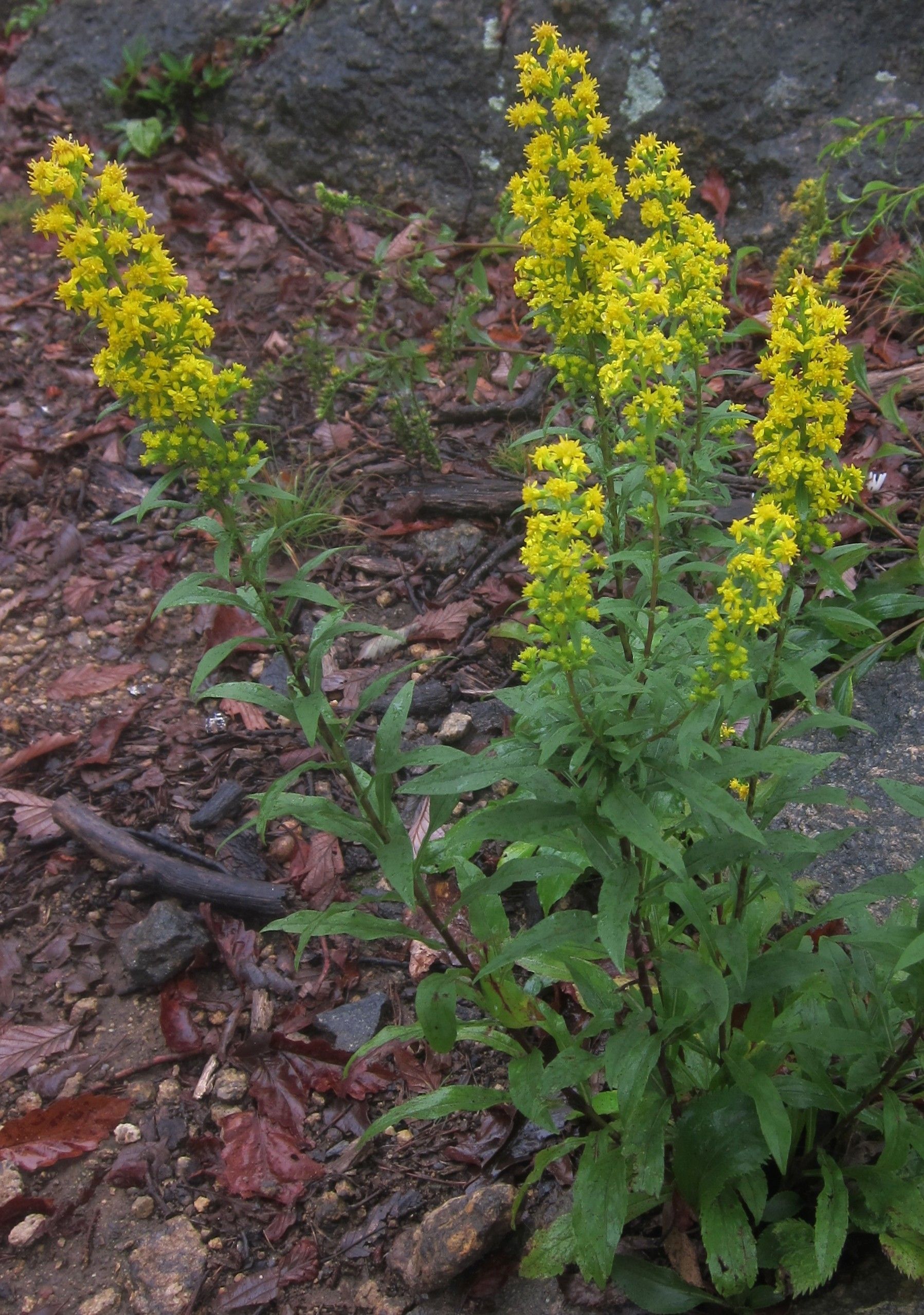
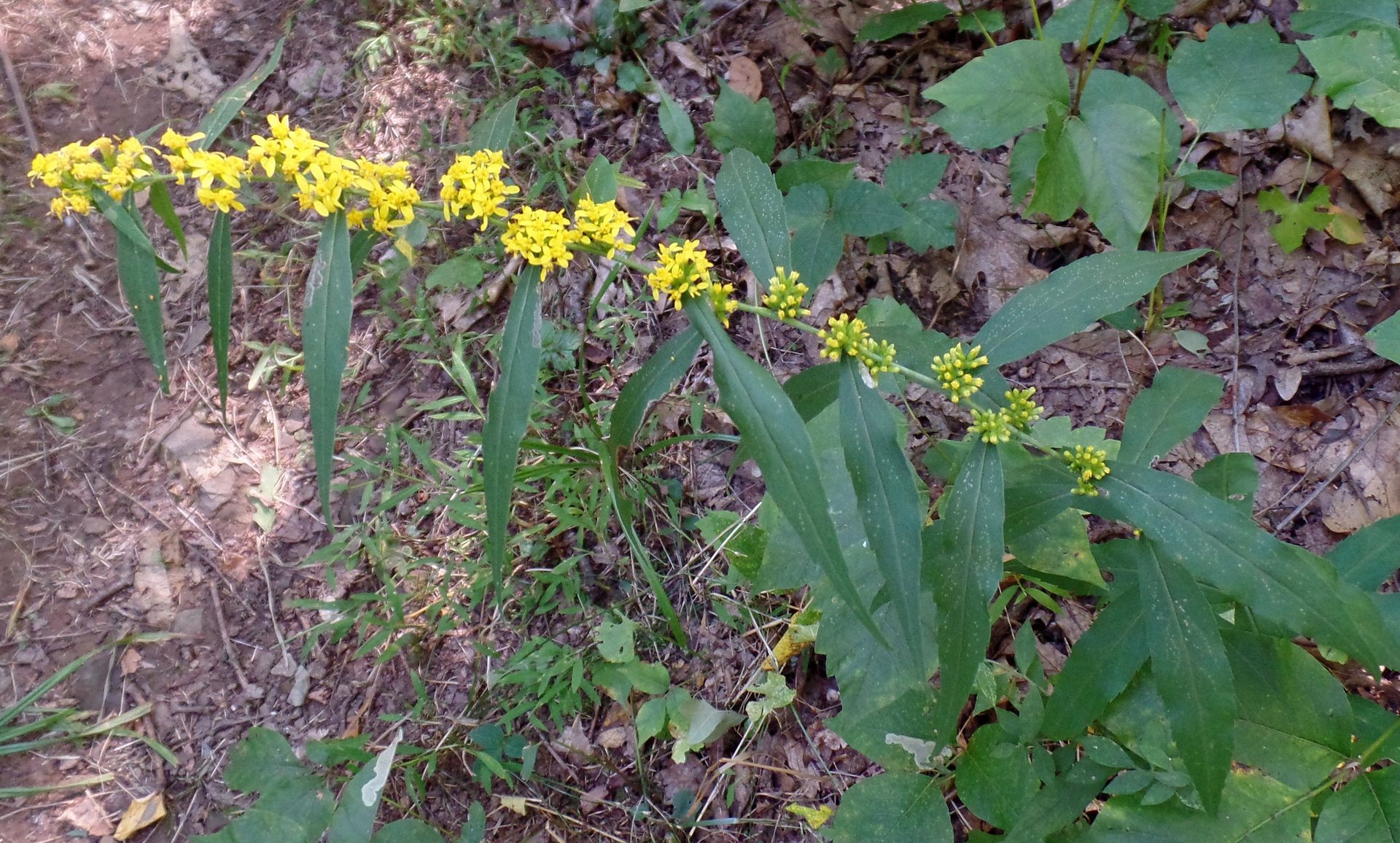
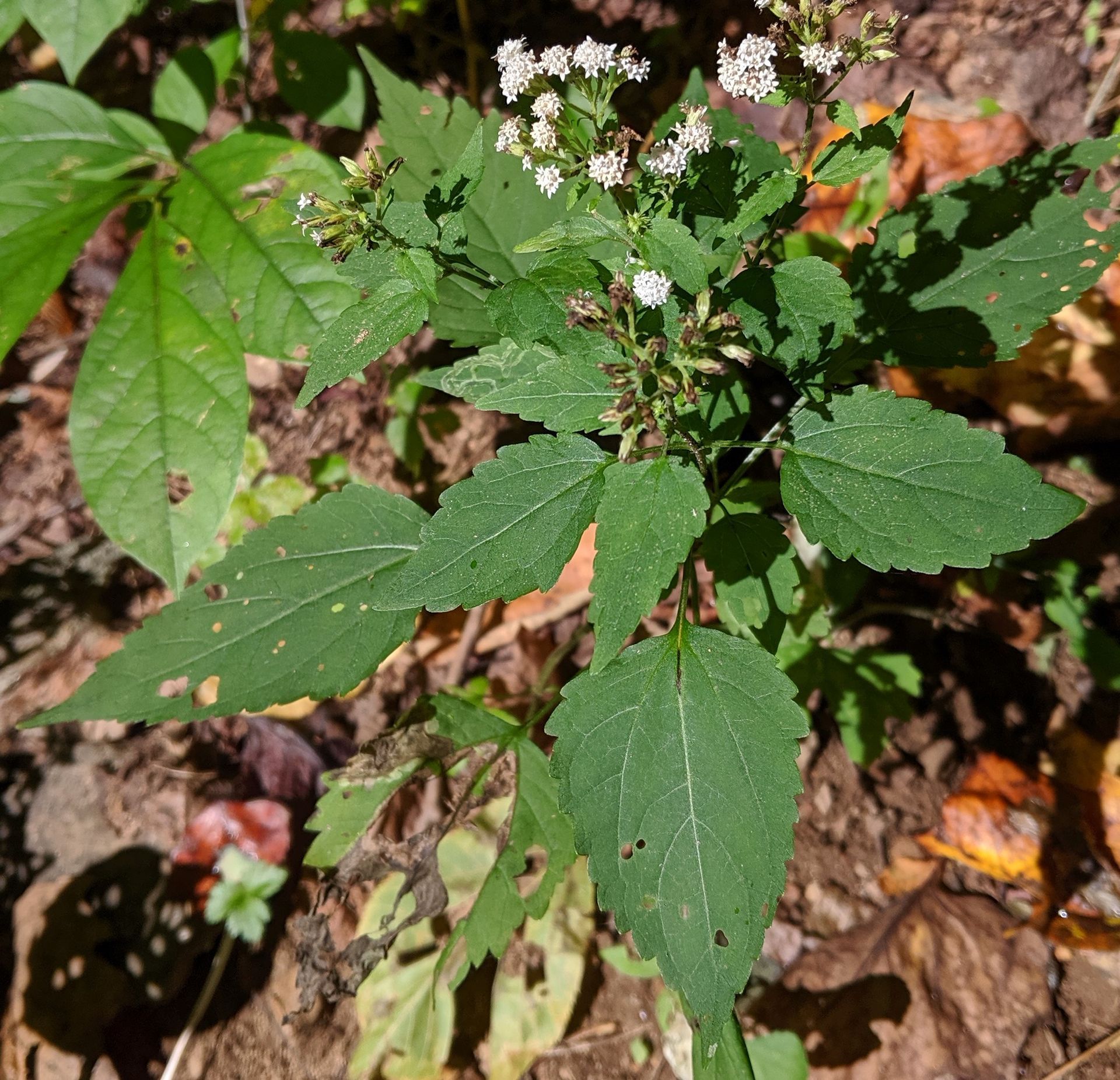
This article shows you some of the flowers to look for in autumn on the way to Bear Church Rock in the Central Section of SNP. Bear Church Rock offers a fantastic view of fall colors in the SNP mountains with no signs of human habitation. It is just off Jones Mountain Trail. It can be accessed by going down from Skyline Drive, but I am describing the flora you may see going up from the parking lot at the end of State Route 662 on Staunton River Trail (described on pages 269-72 of PATC’s “Appalachian Train Guide to Shenandoah National Park”).
All species below are native unless otherwise noted.
Autumn is dominated by the Aster family and most of the species in this article are members of that family.
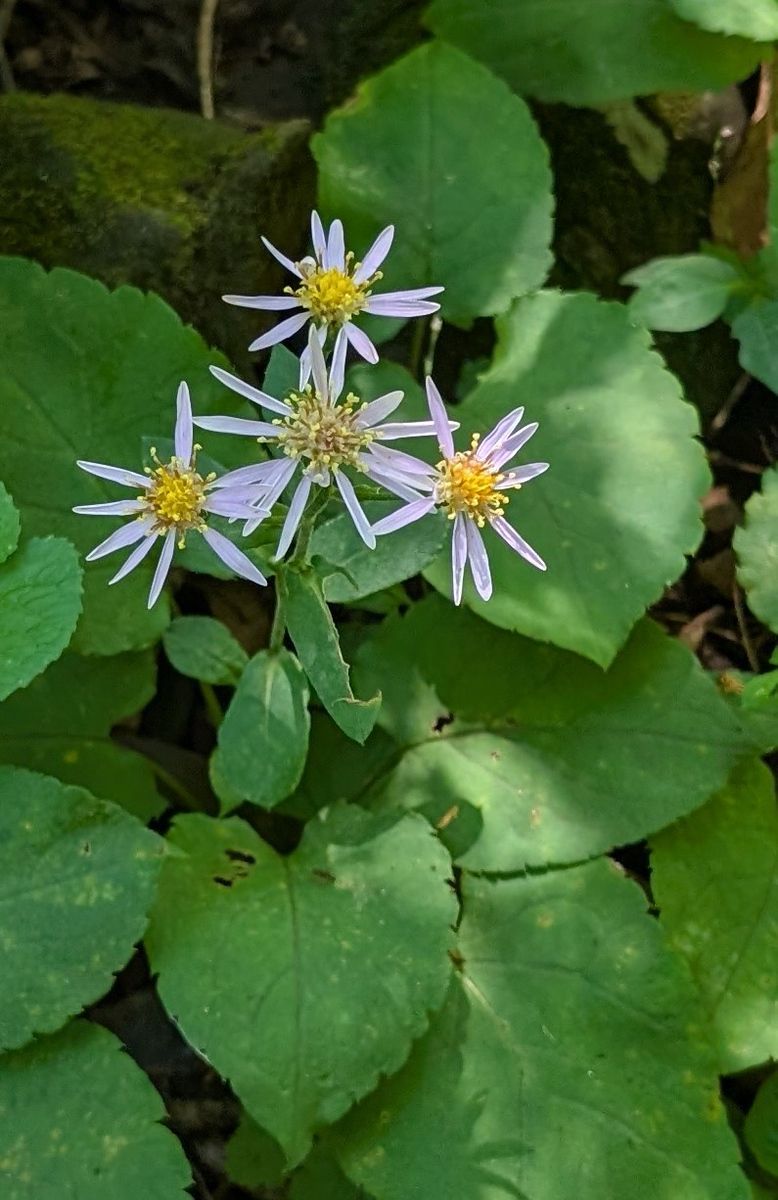
Large-leaved Aster (Eurybia macrophylla) has large, heart-shaped leaves at the bottom of the stem, up to eight inches wide. They reduce in size up the stem and lose the heart indentation. It has pale purple flowers.
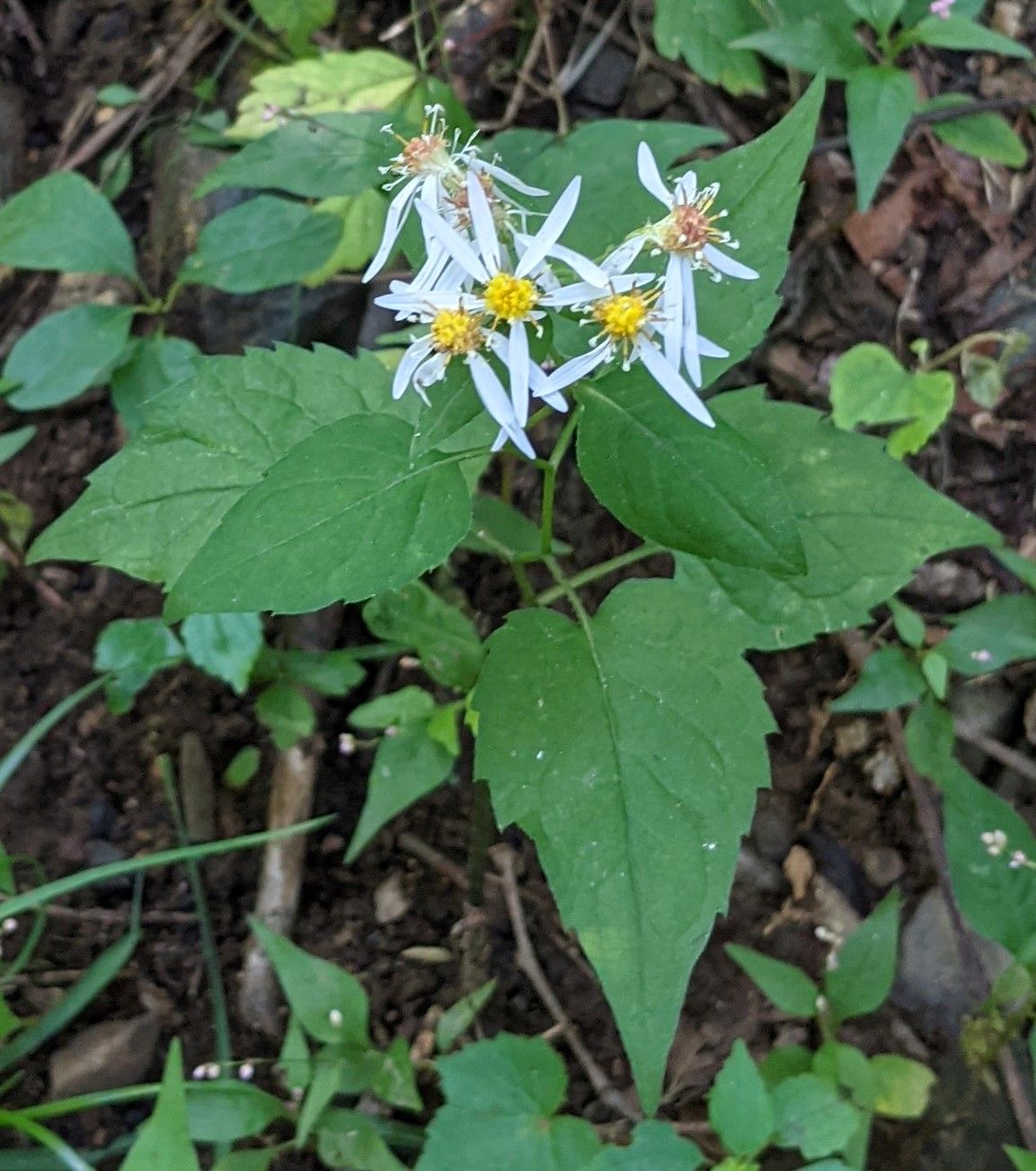
White Wood Aster (Eurybia. divaricatus) has a flattish cluster of white flowers on top if the plant. The lower leaves are elongated heart shaped with coarse teeth. Up the stem, the leaves are smaller and the heart-shaped indentation at the petiole may not be there.
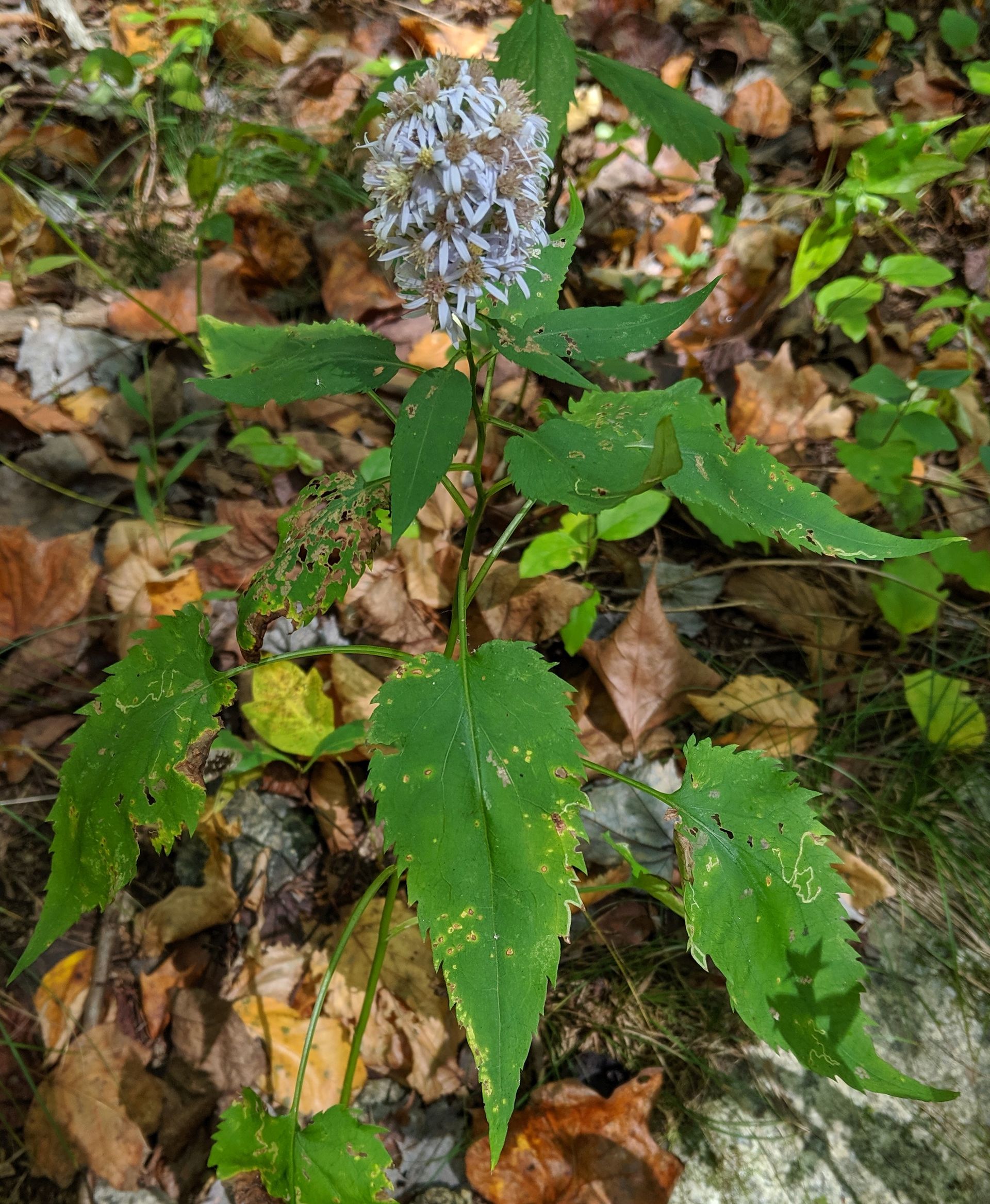
Blue Wood Aster (Symphyotrichum cordifolium) is also called Heart-leaved Aster (S. cordifolium) because of the shape of the leaves. The heart-shape is often elongated, and the indentation at the stalk may be flattened, especially upward on the stem. The leaves are less than three inches wide and are toothed. The ray florets are light violet. The leaves are like White Wood Aster, but flower color differentiates them.
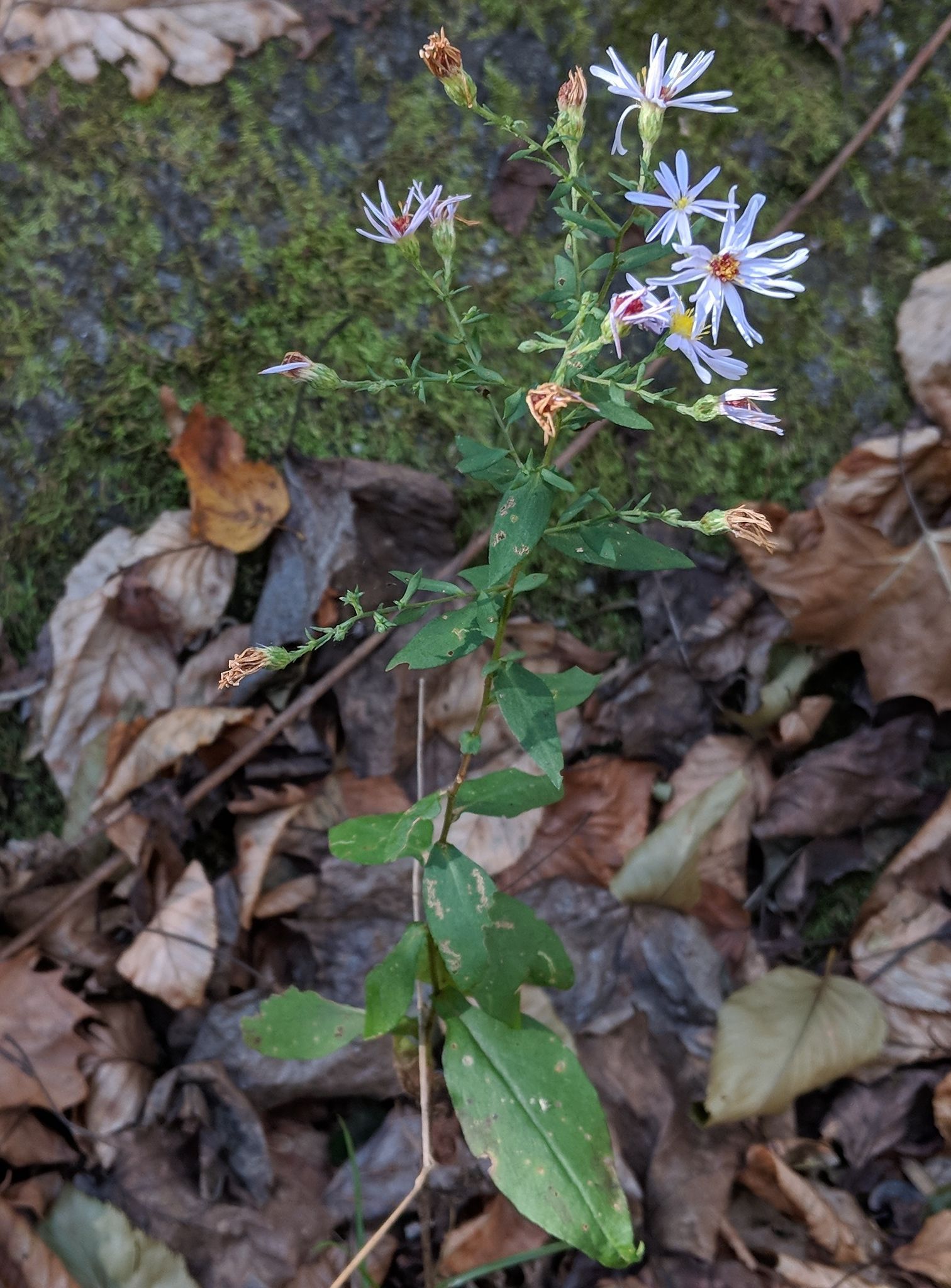
Wavy-leaved Aster (S. undulatum) leaves have wavy margins. From the widest point of the leaf, the two sides of the leaf pinch in and then widen towards the stem. They may narrow partway or all the way to the center rib of the leaf but then widen again to clasp the plant stem. The leaves have few or no teeth. It has light blue-violet rays.
Late Purple Aster (S. patens) has 10-30 violet rays on a one-inch-wide head. The stem is rough and slender and up to three feet tall. The leaves seem like long triangles or are pinched in slightly below the middle and go beyond the stem.
Goldenrods (Solidago) are known for their sprays of many small flowers. Erect Goldenrod (Solidago erecta) has straight clusters of flowers at the top of the plant with flowers all around the stem. Its leaves are sessile (attach directly to the stem without a supporting stalk). Wreath Goldenrod (S. caesia) has long, narrow leaves that separate the flower clusters growing from the axils. Instead of standing upright, it often leans over forming an arch.
White Snakeroot (Ageratina altissima) can grow to five feet tall. It has branching clusters of up to 30 small flowers at the top. Individual quarter-inch flowers have five, pointed petals and protruding white stamens. Leaves grow in pairs on the plant stem and are long-pointed, egg-shaped with ¾ inch stems.
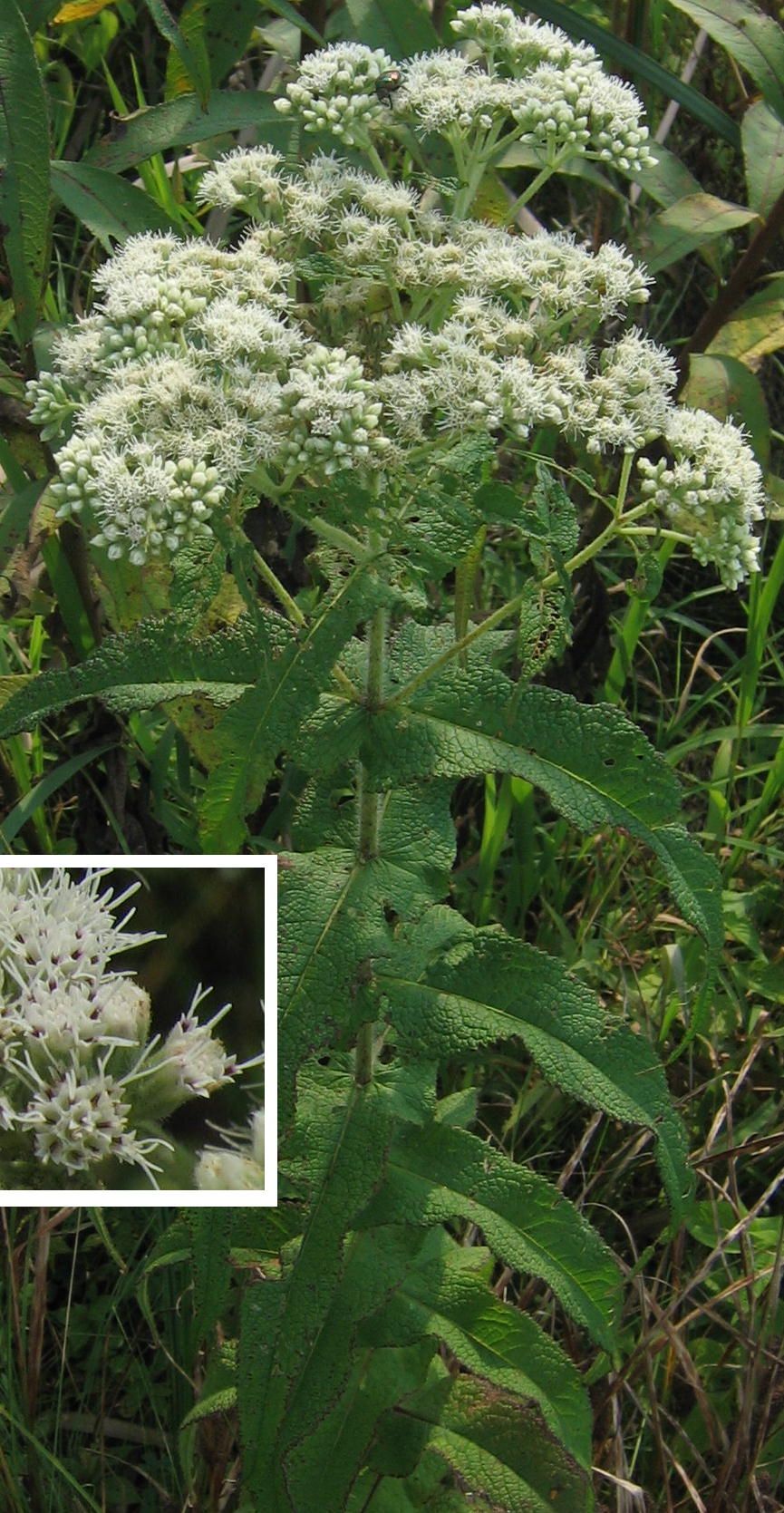
Boneset (Eupatorium perfoliatum) is like White Snakeroot except for the leaves. Boneset leaves are lance-shaped, much longer than wide and coming to a point. They have no stems. The pairs of leaves are joined at the base so that the plant’s stem seems to grow through the pair.
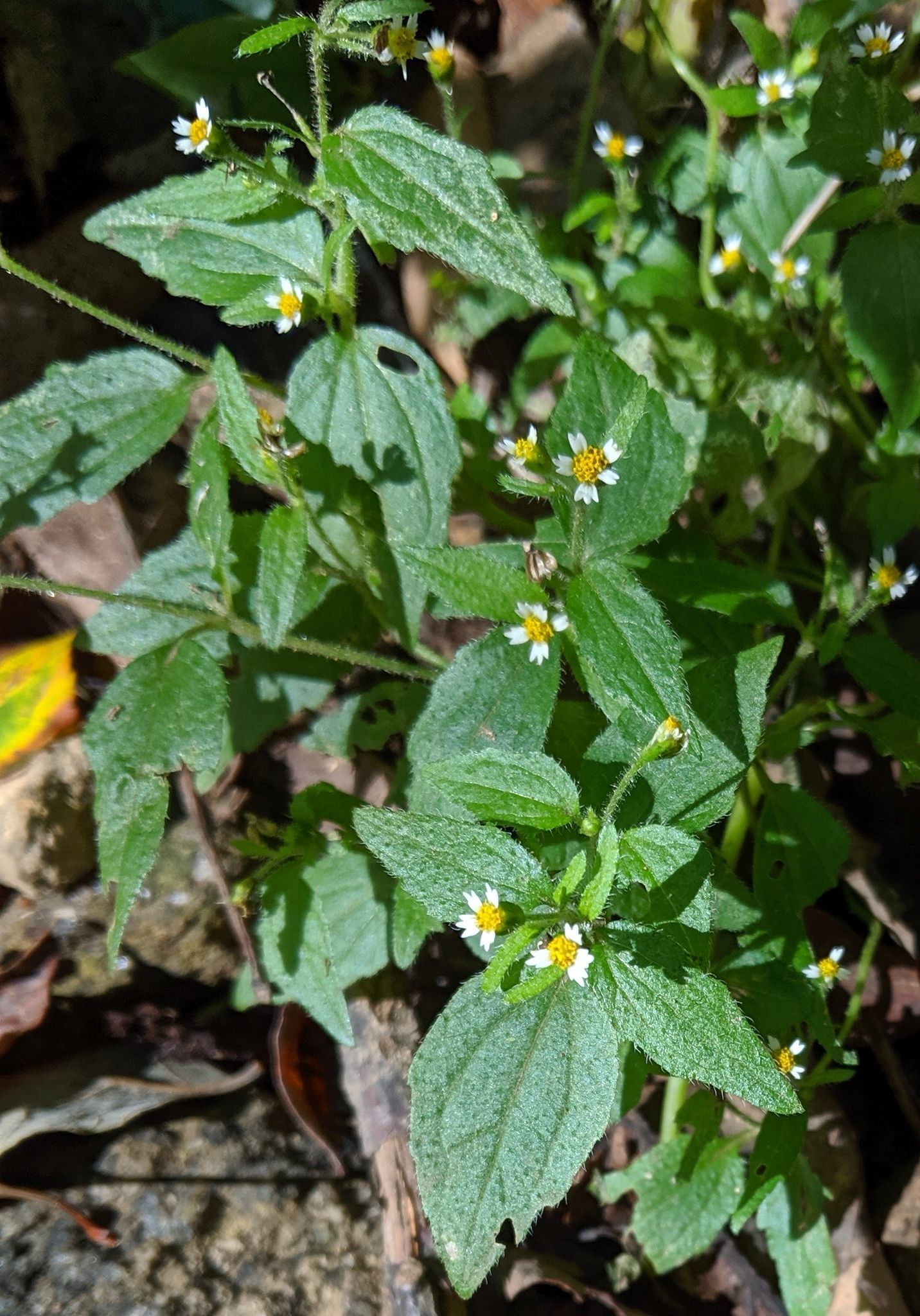
Shaggy Soldier (Galinsoga quadriradiata) is a tiny-flowered, white-petaled daisy. It has five stubby rays, though sometimes they are missing. The plant is only a few inches tall. The stems are hairy.
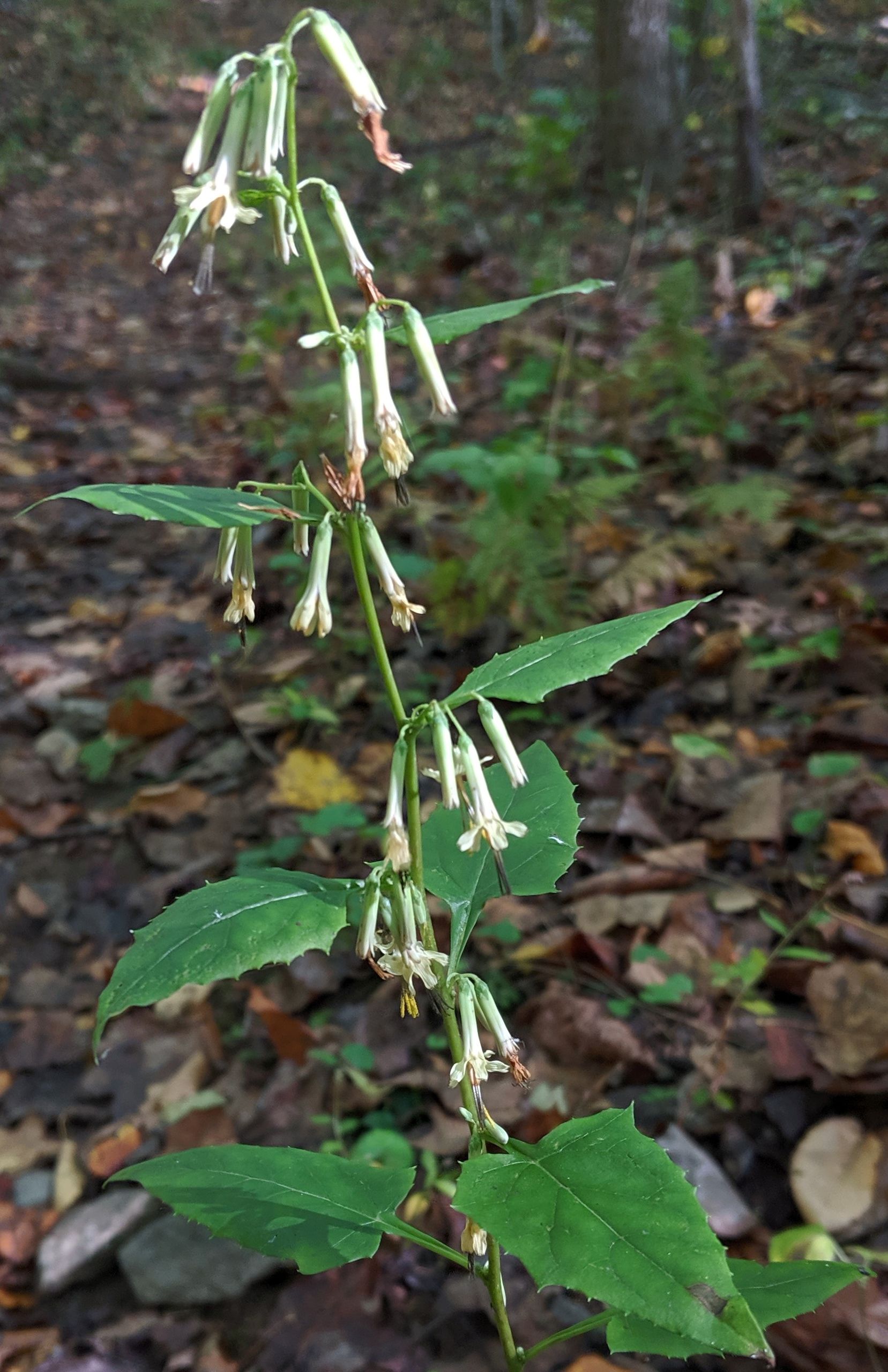
Tall Rattlesnake-root (Nabalus altissimus) can grow six feet tall. Clusters of flowers grow at the top. The flowers hang down like bells: white tubes with petals flaring at the end and stamens protruding. Leaves are alternate on the stem. The shape varies, with three to five lobes at the bottom and fewer up the stem, and they get smaller up the stem.
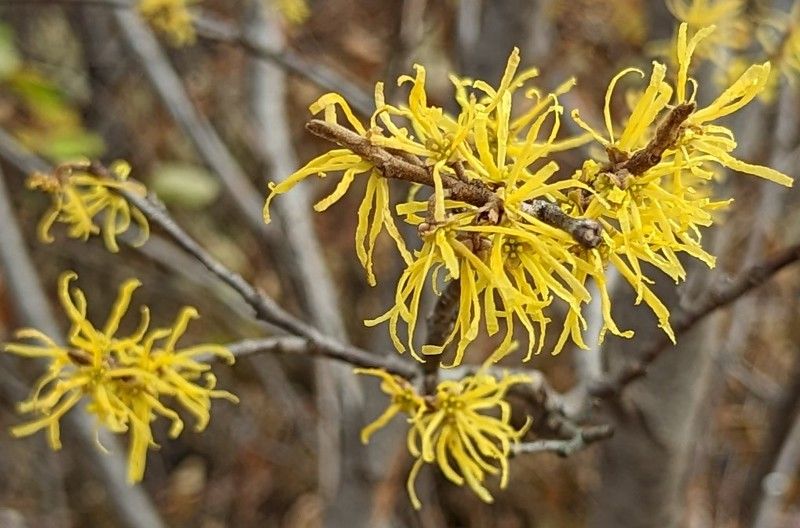
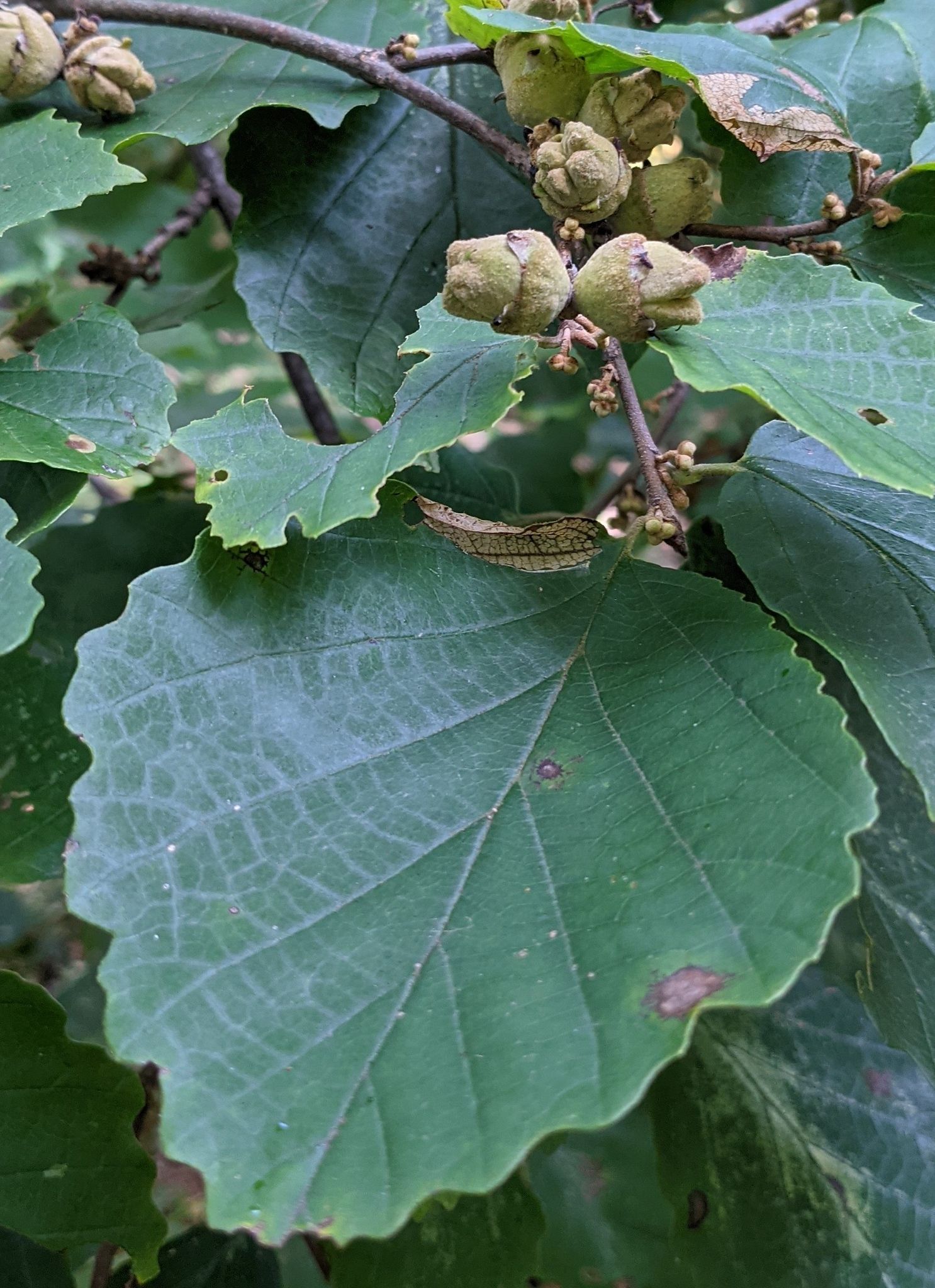
The last flower to bloom in our area is Witch Hazel (Hamamelis virginiana). It is not in the Aster family. Witch Hazel often grows as a thick, shrubby clump, though sometimes as a small tree. Witch Hazel’s oval leaves have wavy, rounded teeth. The flowers appear as the leaves turn yellow and fall, so the flowers stand out on leafless branches. The flowers have four long, thin, yellow petals and often grow in bunches, so you see yellow streamers in the wind. The fruit is a fuzzy, one-centimeter capsule with remnants of the four sepals remaining. It takes over a year to mature, so it remains on the bush with the new flowers.
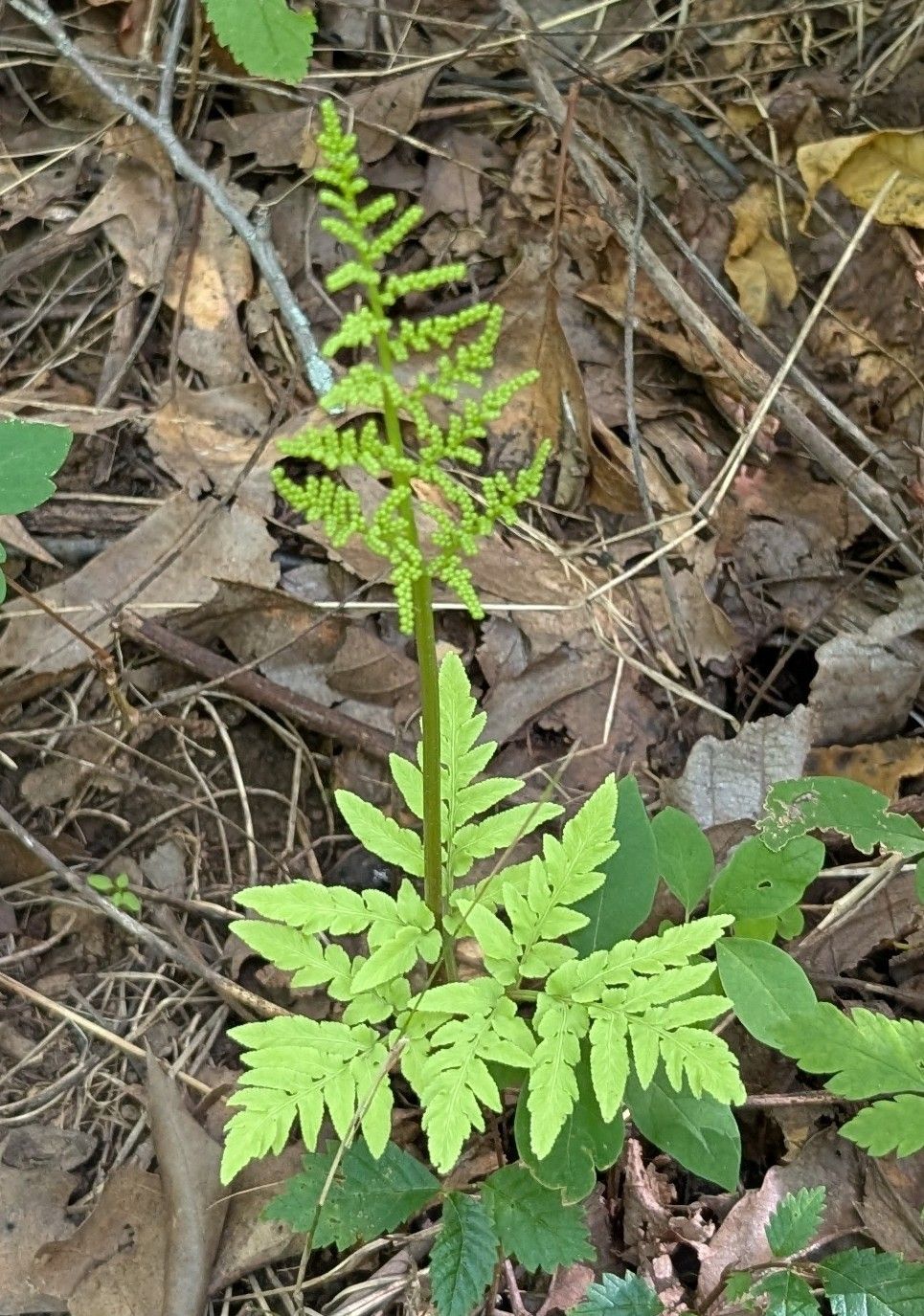
Cut-leaf Grape Fern (Sceptridium dissectum) sterile fronds flare out horizontally from the stem. They have a triangular shape and are finely divided. The spore-bearing fronds stand straight up above the sterile fronds. They are finely divided and look like miniature bunches of grapes.
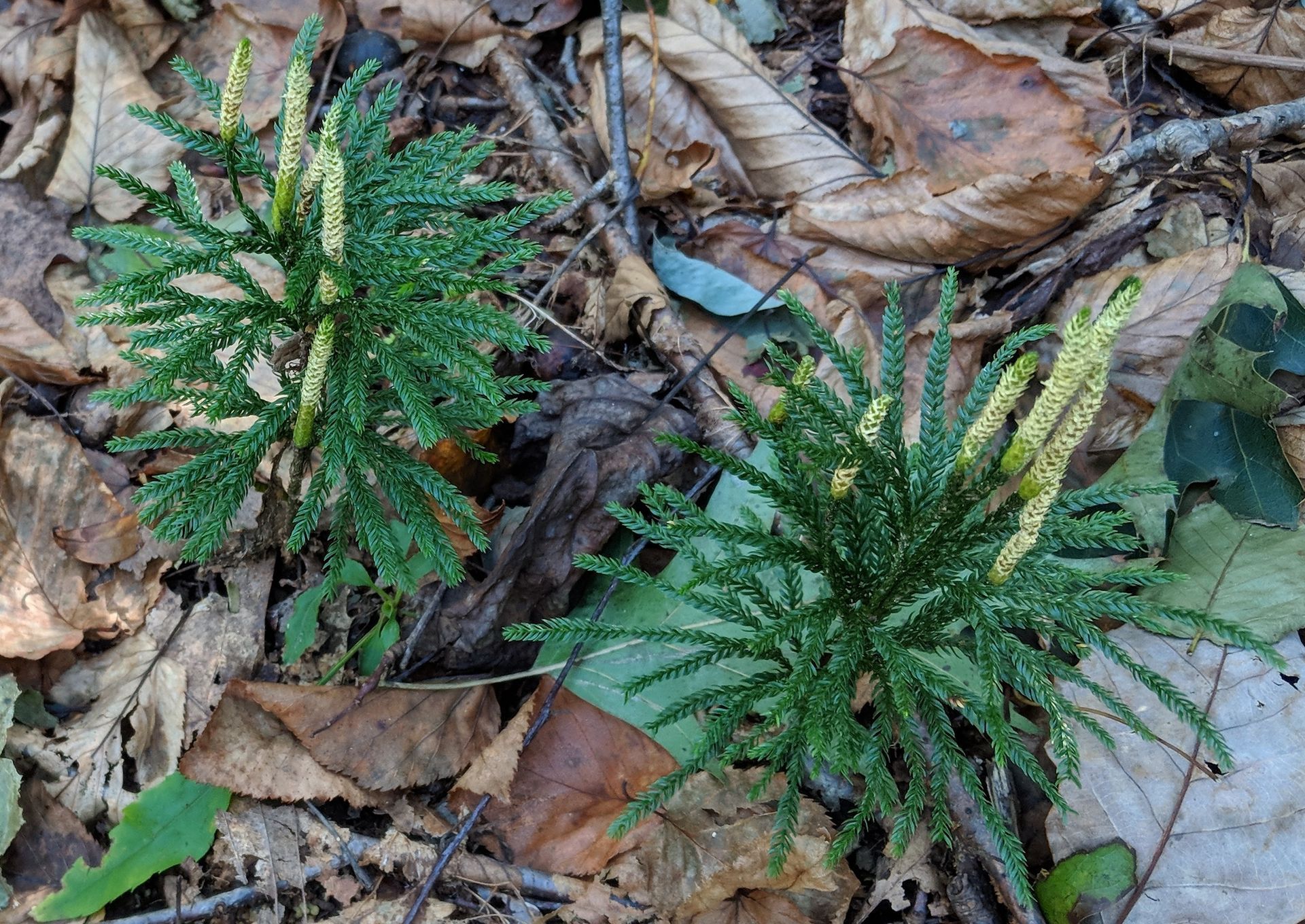
Common Running-cedar (Diphasiastrum digitatum) is a clubmoss—a non-flowering plant that reproduces via spores rather than seeds. It looks like a little Cedar tree. Dark green branches atop the shoots fan out horizontally. Club-like structures that produce the spores stick up above the leaves,