
Hiking with a Focus
Article and Photos by Lisa Peterson
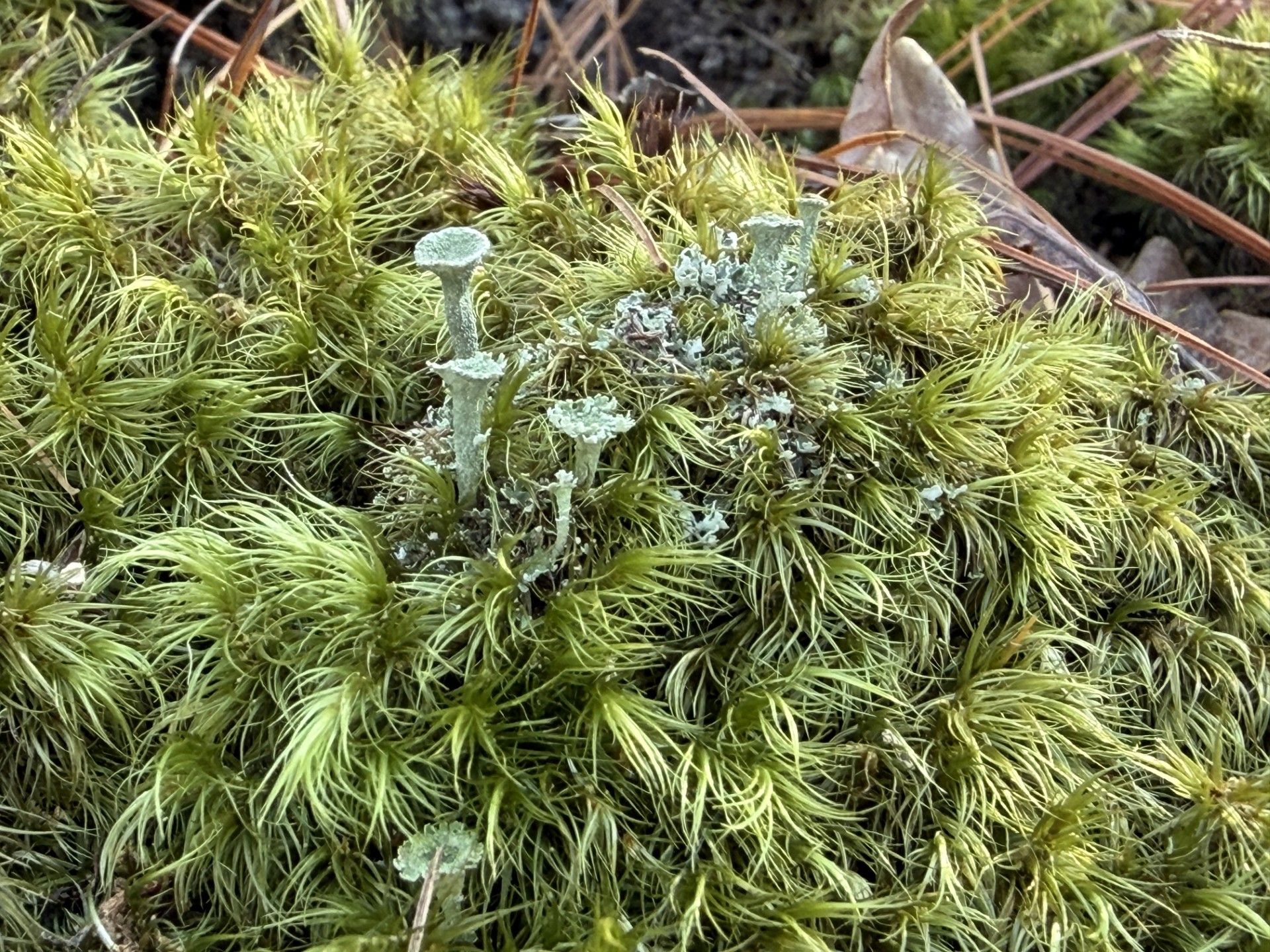
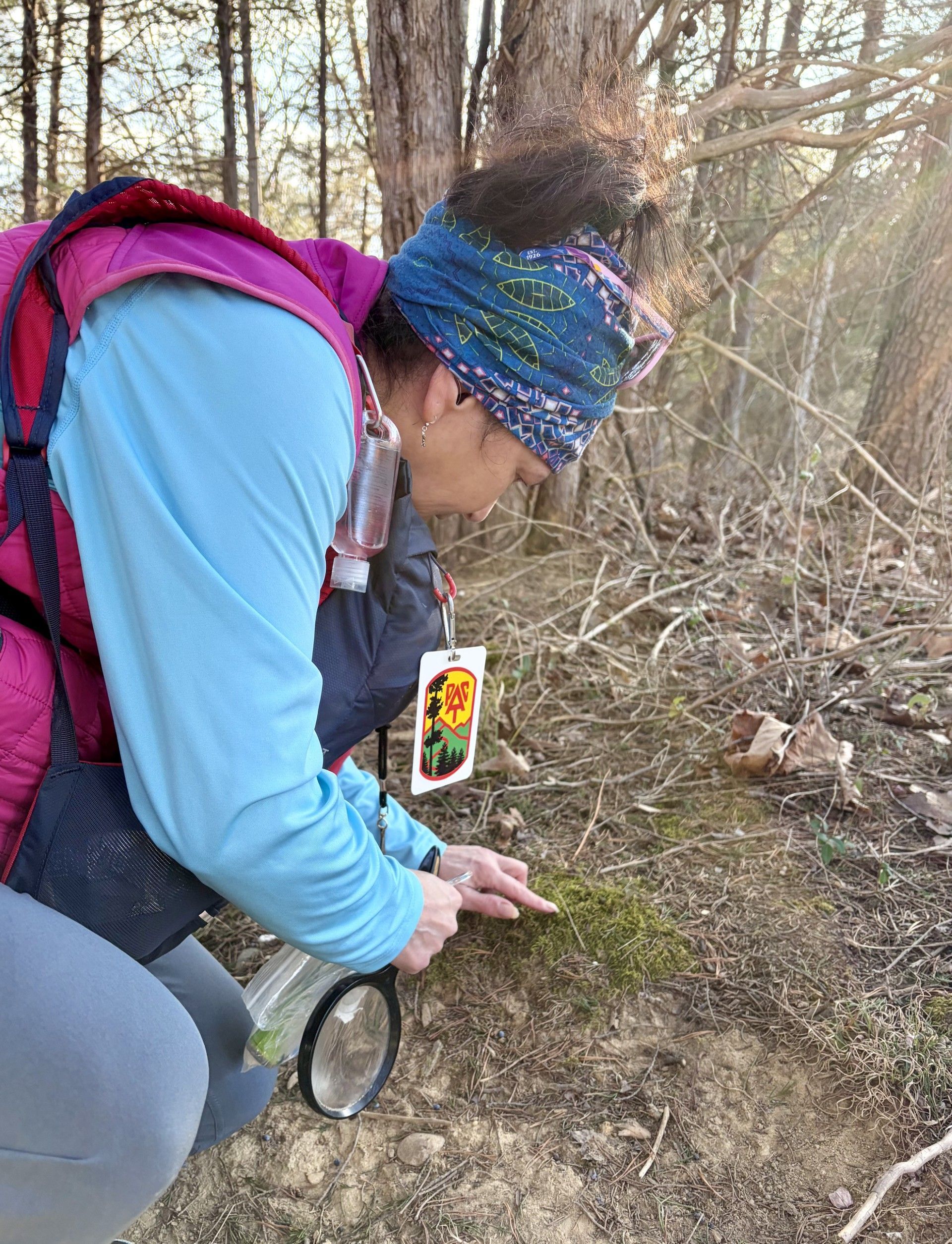
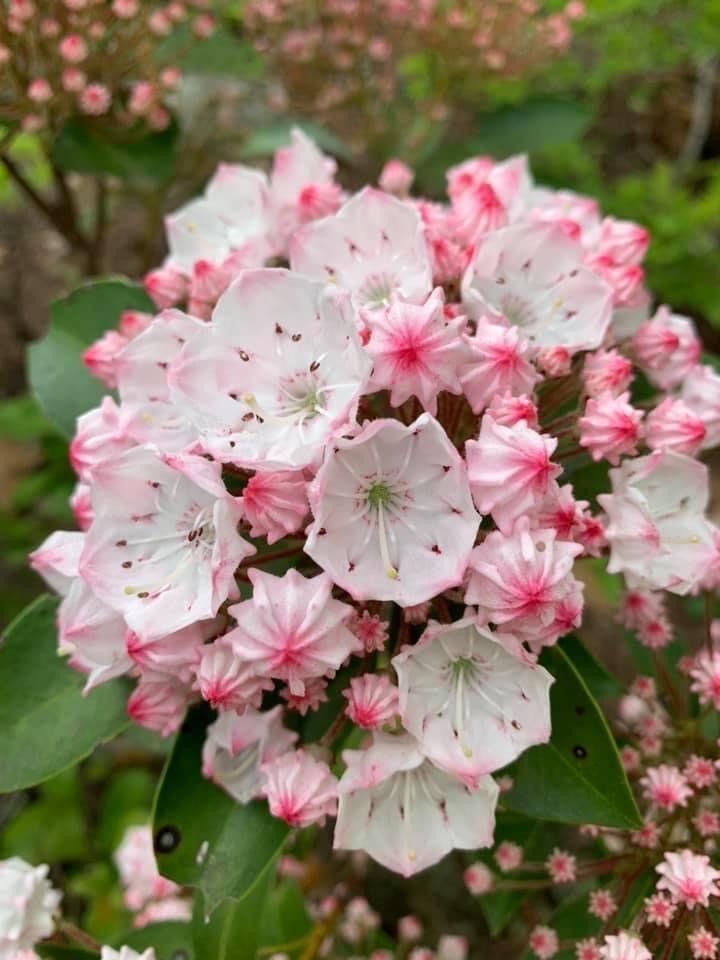
By hiking with a focus individuals become more conscious of their surroundings, experience physical and mental growth, and learn about and delight in the beauty of the natural world. A hiking focus could be sensory-based or target a specific goal or theme. The possibilities are many.
Engaging one or more of the senses with intention while immersed in a woodland setting, sometimes known as forest bathing, gives hikers a strong present-moment experience that reduces stress and increases relaxation, and brings about feelings of wellbeing. Setting and reaching a specific fitness goal, such as improving hiking pace or difficulty, boosts hiker confidence and fosters a real sense of accomplishment, in addition to building mental toughness and physical strength.
A series of hikes planned around a featured theme, such as, waterfalls or overlooks, old growth forest, streams and rivers, offers much enjoyment. Hikes to swimming holes are invigorating in the heat of summer. In late fall through early spring when leaves are off the trees, ridge hikes often inspire awe with 270-degree mountaintop views.
Ramblers express creativity through photography, or develop drawing, painting and writing skills through a nature journal, capturing observations of the outdoor world with increased skill, deeply absorbing the journey.
Explorers center hikes on learning and discovery. Hike leader Susan Collins has a goal to study moss this year. On a recent Shenandoah River State Park hike, her group made close observation of moss on the side of the trail before beginning to hike. Hikers used the Seek app to make identification. A few minutes of careful study piqued interest and attention, so that hikers noticed more moss and other interesting plants along the route than they might have otherwise.
Another hiker aims to learn at least two or three native wildflower species yearly, using the wildlife calendar published by SNP as an aspirational checklist. This slow and steady approach encourages lifelong learning, improves memory, and makes the process manageable and rewarding.
To this end, hike leader Lisa Peterson is offering a series of spring wildflower hikes. These are not expert-guided nature walks, but exciting hikes in known wildflower areas to enable observation and deepen appreciation of the glorious bloomers.
Join fellow wildflower enthusiasts on one of these upcoming hikes:
April - Trillium & Wildflowers 5.5 Miles, 1000 feet, Moderate Hike
Walk among the largest stand of Large-flowered Trillium (Trillium grandiflorum) in Virginia at G. Richard Thompson Wildlife Management Area north of Linden. These iconic woodland wildflowers are identified by three large petals, which are white or various shades of rose. A great many other wildflowers growing in this area promise to delight both expert and beginning naturalists.
May - SNP Sugarloaf Blooms 5 Miles, 1120, feet, Moderate Hike
This hike offers a great view and spring flowering bushes in the north district SNP. Floral highlights include Wild Azalea aka Pinxter Flower (Rhododendron periclymenoides), the incredibly fragrant Wild Azalea (R. prinophyllum) and, blooming a bit later, the pale pink to white flowers of Mountain Laurel (Kalmia latifolia).
For more information and to register for these wildflower focused hikes please visit the PATC Hikes & Events Meetup page. Registration will open a few weeks prior to each hike.
Resources mentioned in this article:
The Seek/iNaturalist app https://www.inaturalist.org/pages/seek_app uses image recognition technology to identify plants and animals using a smartphone camera. Free.
SNP Wildflower Calendar https://www.nps.gov/shen/learn/nature/upload/WildflowerCalendar_Web.pdf names the most frequently seen or asked about flowering plants in the park by the month in which they bloom, April through October.