
Cycles and Trends 1927-1977
Dorothy M. Mason with an Introduction by Matt Waurio
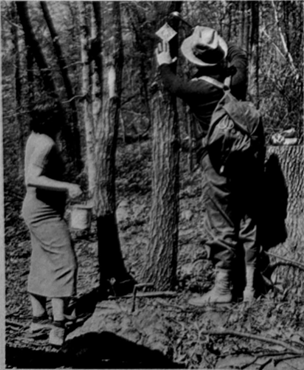

The article below was originally published in a 1977 Potomac Appalachian for PATC’s 50th anniversary. Written by Dorothy Mason, PATC’s first female president, it's a reflection on the Club’s “cycles and trends” over the first 50 years. Transferred from its original print format, Dorothy's historical snapshot captures our Club's identity as a volunteer organization built around passionate stewardship and community focused on creating access to the outdoors. As we approach the PATC centennial in 2027, Dorothy's perspective remains remarkably relevant. She describes some of the challenges faced by changing social pressures like WWII, attempts (and failures) to adapt to new technologies, and the alterations of the Appalachian environment. While the volunteers, tools, and circumstances may change, many of the Club’s central questions remain familiar: How do we grow without losing purpose? How do We welcome new generations outdoors? How do We sustain the trails, cabins, and lands entrusted to our care?
Looking back on PATC’s first 50 years helps provide perspective for the next hundred and reminds us that our greatest strength has always been the people willing to show up, work together, and share a love of the outdoors with others.
-Matt Waurio
Cycles and Trends: 1927-1977
Dorothy Martin Mason has served on committees, led trips, and held numerous offices in PATC-she was a member of council “for ages.” She was the Club’s first woman president, a milestone in Club history.
From the very beginning the PATC was a working club made up of volunteers dedicated to Benton MacKaye's concept of an Appalachian Trail—a trunkline from which one could explore the entire mountain range. For fifty years the Club has adhered to these guiding principles.
The Formative Years: 1928-1940
Basic activities established in the early years were all trail oriented. The early work trips were private affairs—two or three men got together and took off for the mountains for the weekend, which started Saturday noon in those days. At the end of six months the newly formed Club had cleared the Trail from Harpers Ferry to Linden. This was just in time for a joint Red Triangle Club-PATC hike.
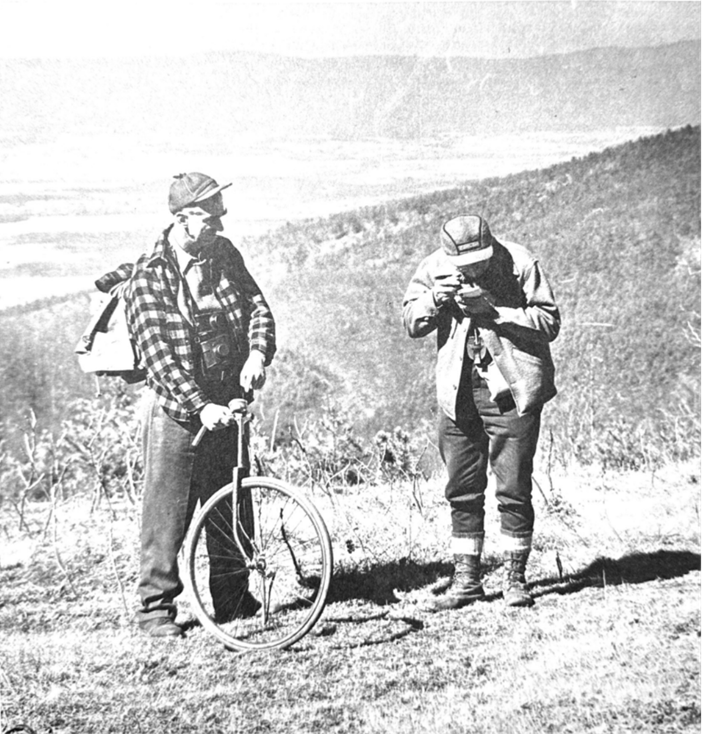
This excursion in April 1928 was not just a fun hike—it was a publicity gimmick to show lots of people the Trail and enlist their help. Also this gave the trailmakers a chance to measure the new Trail with the trusty bike wheel and take down pertinent data for the guidebook. (Before the guidebook was printed in 1931 the editor ran trail data in the monthly Bulletin, another way of encouraging members to use the AT.)
At that time the Club courted publicity. There were items in the Washington paper about trips, items in the newspapers of countries through which the Trail went, and articles in outdoor magazines. As time went on, Bulletin articles describing two- or three-day hikes along the Trail were reprinted under the titles “Along the Appalachian Trail in Maryland,” “Along the Appalachian Trail on Pennsylvania’s South Mountain,” etc.
In the fall of 1928 Club worktrips were run once a month. On other weekends there were the usual small trips, open to anyone interested. The secretary, always someone with an office since the Club had no headquarters served as a clearing house. Almost in desperation the Club finally allowed women to participate in trail clearing trips—but only Class B types.
Club worktrips died when the overseer system of trail maintenance became well established. This was an unforeseen development which caused much moaning. Trailmakers were sure it would set back construction of the Trail.
Though the main trail was cut, the job was by no means over. Benton MacKaye’s trail called for side trails and the workers needed cabins from which to carry on this project. The first one, built near Pinnacles in 1930, was named for Roy L. Sexton who donated the money. (Sexton Cabin was moved to its present site when the Skyline Drive was built.) [see History-of-sexton-shelter for an update on Sexton Shelter nee Cabin]
After Sexton Cabin was built, a master plan for cabin location was drawn up. Meadow Spring and Range View followed in short order. The latter was financed entirely by the Club through evening programs and special trips.
The development of side trails paralleled cabin construction. In April 1930 seventy PATCers invaded the Hazel Country to try out the 30 miles of trail opened during the winter. It was on this trip that someone got too close to a still. The mountaineers set a fire, and the PATC retreated hastily but in an orderly fashion.
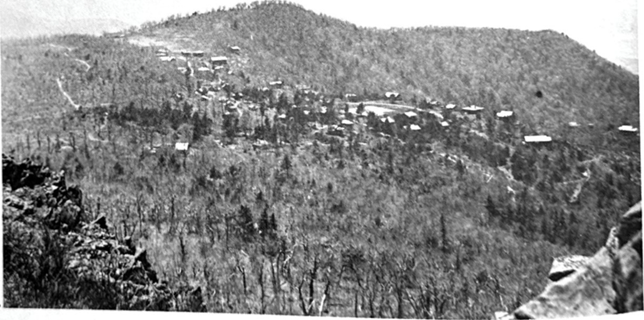
Many excursions were scouting trips. There was such a trip to Fort Valley in 1929. Myron Glaser in February 1930 led the first club trip onto Old Rag assisted by a local man who served as guide. Most popular of these scouting trips was a weekend at Skyland, then a mountain resort owned by George Pollock. Because of road conditions everyone had to go to Luray by way of Winchester. From Luray options were many: carriage all the way to the top of the mountain; bus to the foot of the mountain and transfer to horseback or shanksmare. The weekend was such a success that "the Skyland Frolic" was repeated for all the years Pollock owned the place.
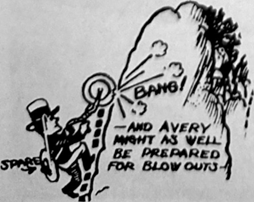
Another type of excursion initiated in 1930 was summer camp. Its announced reason was "other clubs do it," and that was probably referring to the Appalachian Mountain Club. This trip to Apple Orchard Mountain in the Jefferson National Forest was also to explore the Peaks of otter and other highlights for a Trail route. Myron Avery, President of PATC during these years, pushed the measuring wheel 70 miles from Waynesboro to Apple Orchard Mountain to join the camp recording data all the way. He did it in three days and lost 15 pounds. Thus he lived up to his famous words, "This is truly a working club; the only property we own are trail tools.”
The Appalachian Trail Conference (ATC) leaders did not expect the PATC to build the Trail all the way to Mt. Oglethorpe, then the proposed southern terminus, but there were few clubs south of Washington except those which PATC helped establish. For instance, the Lions Club of Lynchburg asked Myron to give an illustrated talk on the AT. Enough interest was aroused to form a club. They called on the PATC to help lay out a section of Trail, and enthusiastic trailmakers couldn't say “no”. For years the PATC had joint trail clearing and fun weekends with many clubs so started.
PATC had a very special relationship with the ATC from the very beginning. Myron knew the chairman, Judge Perkins of Hartford, well. The PATC hosted many annual Conference meetings in Washington. In 1931 when the PATC summer camp was combined with the Conference meeting in the Smokies, Myron was elected chairman. For nine years he was ATC Chairman and PATC President. During those years it was natural for PATC to extend itself.
Club activities were expanding in other directions. The Trail was cut in Maryland and Pennsylvania to the Susquehanna River. Rent-free cabins were turned over to PATC in the latter state. The Trail was marked with metal markers which the $1 dues of the Club did not cover. Affluent members footed the bill. The present system of trail blazing was started, using a scraper to lessen the damage to trees from the old-time axe marks.
The monthly mimeographed Bulletin was made a printed quarterly, with pages of reservation slips which one mailed to trip leaders. When plans had not been completely firmed up, cards were mailed to the membership notifying them of details.
Three new committees were formed: Bulletin editor, Cabins Construction and Maintenance (reservations were not in effect until 1937 at which time they were made through the assistant secretary), and Excursions. Great changes took place in excursions. There were once-a-month trips for enjoyment. In 1934 there was a four-day historical bus trip with no hiking. At that time there was much emphasis on the local history of the Trail area and the Bulletin contained a section Historic Ramblings. A Trail history was established. There were mystery trips, again because other clubs did it. There were moonlight hikes. Weather permitting there were snowshoe trips and after 1936 ski trips in conjunction with the newly formed Ski Club of Washington, D.C., which drew heavily on PATC for members and for its organization plan. (It was not until the 1950s that the PATC gave up scheduling winter sports trips.) Nature walks to study trees and geology were added to wildflower walks which had started in conjunction with the Wildflower Preservation Society. Camera trips were an annual event as was the photographic contest started in 1929. A trip to Maine replaced summer camp.
One other activity completes this picture of the formative years—shelters, then called leantos. Most of these on public lands, state and Federal, were constructed by the Civilian Conservation Corps. Thus in the present confrontation with the Shenandoah National Park, it can be said "the park giveth and the park taketh away." Addendum: They also built some cabins managed by the Club.
As the formative years drew to a close, the entire Appalachian Trail became a reality. But joy was short-lived. The 1938 hurricane roared across New England followed by land slides. The Trail was mess. To the south the Park Service put in the Blue Ridge Parkway, following the magnificent route of the AT. Undaunted, Myron Avery and others scouted and worked out a relocation. But war clouds loomed on the horizon and time ran out before it was done.
In those years of "Adventures in Arcady" my most thrilling experiences were the Trail Club's two Overnight Moonlight Hikes on the Appalachian Trail in the Blue Ridge, From the night trail we looked down on beautiful valleys under the light of full moons. At midnight we enjoyed a midnight campfire party, midnight supper, and one to two hours of complete rest.
Very early in the morning we went on into the early morning light, before sunrise, being greeted by hundreds of pale green luna moths. We climbed to the summits of high peaks to watch glorious sunrises flood miles of beautiful valleys. The conclusions of glorious experience came with breakfast parties in charming settlements and the homebound bus ride, leaving it all behind but precious lifelong memories.
-Waldburg Hewitt
War Years: 1940-1945
World War Il brought changes to the PATC, many of them long lasting. Myron Avery and Frank Schairer stepped down under pressure of their jobs. Some working members were transferred or went into the Service. An able new generation stepped in.
Gas rationing modified Club activities. The moonlight hike became a three-hour affair in Rock Creek Park after a picnic dinner. Once-a-month excursions used public transportation. The Club was allowed gas for one trail maintenance trip a month. Transportation was by a drive-it-yourself truck.
Trailworkers found sitting on the unpadded floors in toboggan fashion without so much as a tarp for covering against the elements a hilarious experience. The list of those wanting to participate was so long that early signers got on the first trip and subsequent ones were filled from the list in order of signup.
During the early 40's when the Supervisor of Trails approached a landowner about a relocation, he found that the man needed help in harvesting his apples. The Club got the relocation, and the man got help as did other orchard owners over whose land the Trail went.
Camaraderie: 1946-1959
The camaraderie established by the wartime truck held over in the PATC for about 15 years. When the war ended the Club took off with a vengeance restoring trails, resuming excursions, and settling into normalcy.
The Club bought its own headquarters on Sunderland Place in 1946, partially financed through loans from the members. When the Club was first formed, the office of the Secretary, H.C. Anderson, had been the only central mailing address. Chairmen and officers worked from their homes. Later the office of the American Civic and Planning Commission was the mailing address, thanks to the generosity of Harlean James, a Trail Club member who headed that organization. Just before the war the Club had rented its own office on H Street—one large room—followed by an office on 17th Street.
A mimeographed monthly publication was inaugurated. Forecast, as it was called, replaced the postcards in notifying members of trips and other club activities. Its entire preparation and mailing was handled at headquarters. For years the banging of the addressograph machine was a familiar sound about the third week of each month as were the accompanying expletives of the operator when mechanical difficulties set in. The Bulletin continued as a quarterly.
Mountaineering or rock climbing had become a Club activity in the late 1930's. By 1950 the participants gained committee status with representation on Council. (Only after the constitution and by-laws revision in 1964 were there sections.)
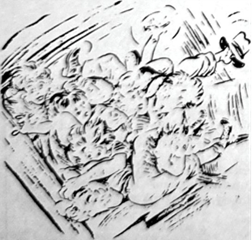
Wartime truck transportation had been such a success, some members formed a corporation, financed a truck and rented it to the Club at cost. It was covered. Benches were installed along the sides and hikers squeezed in—nine or ten to the side, three across the front near the cab, two in front with the driver, the rest in the aisle. It was truly cozy. the twice-a-month work trips were Club trips. They were fun.
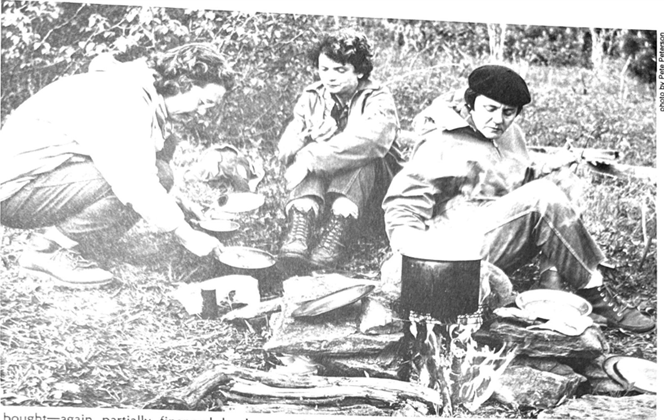
Excursions now included nine-day camping trips—shades of summer camp—by truck to Hatteras, to Prince Edward Island, to Vermont, to New Hampshire, to Southwest Virginia. Sometimes there were two a year. Always there was a camping trip to AT conferences for meetings and hiking. Most popular of the short trips was the TTT (Truck Trail Traverse) series. These covered the entire Trail for which the PATC was responsible, working from south to north. When the series ended in 1948, there was a drop in excursion interest.
Revival came in 1952 with a series of hikes to cover the C&O Canal. It took five years and during that time—1954 to be exact—justice William Douglas led his famous hike protesting the construction of a parkway along its route. Many PATC members, including the President, joined him.
The year before that hike, PATC had established a committee to study the U.S. Department of the Interior proposal. The report to Council in February 1953 resulted in two lines of action. First, the Club President wrote to public officials and members of the Maryland legislature to the effect that the PATC was reserving judgment regarding the road from Hancock to Cumberland but urged immediate steps be taken to develop recreational facilities suitable for hikers, cyclists, nature students, canoeists, and others at a number of places throughout the length of the canal. Second, a meeting of the general membership was called to hear a representative of National Capital Parks explain the roadway proposal. Members of other organizations opposing the parkway attended and were most unhappy that PATC did not pass a resolution right then backing their position.
After the Douglas hike, the Council voted to have the President represent PATC on the Douglas committee, thereby backing him. This touched off some loud protests from members who felt the Club was getting involved in politics and from some who were not sure the road was all that bad.
An outgrowth of the Club's C&O Canal Study Committee was the establishment in 1953 of the Conservation Committee. Its purpose was to study conservation of resources, reforestation, flood control and use of public lands, especially in areas of direct concern to the PATC. It was a reportorial committee, not an activist force.
In 1952 the Club observed its silver anniversary, and Benton MacKaye in an interview published in the Bulletin said:
"Human contact with the outdoors, call it recreation or education or conservation or what you will, is, I believe, ripe for a new approach. Take your Appalachian playground from Maine to Georgia. Here is a chance to do for wilderness history what you actually did do for wilderness geography, namely fit the parts together in one big whole. There were separate trails north and separate trails south as well as in between; each had its separate geography; and you fitted them all together in one geography— that of the Appalachian Trail. In every section on this trail in every valley leading from its crest, there are hundreds of separate objects of interest to be seen or found; there are birds overhead, worms underfoot, trees and waterfalls between; each has its separate history, its special role to play. As with the separate trails, so with the separate roles, you can fit them all together in one big history— the drama to the Appalachian Wilderness. In this way you dramatize the unseen drama.
You should ask me what is the use of such an approach? My first answer would be that it would compound the fun of tramping the Trail. That alone would be sufficient answer. But I'll add a hardboiled answer. Not until there is broader cultural interest in nature and its processes shall we stir true economic interest in the conservation of nature's resources. This is something that must be tackled from both ends. It is not enough to have skilled experts in Washington, however great their know-how. There must also be know-what on the part of the folks themselves dwelling throughout the land…. For economic reasons, then, as well as cultural, we need widespread literacy in terms of the open book.”
PATC members read and half heeded. There were nature walks and there were lots of nature articles in the Bulletin. But there were so many other activities! The Hermitage Cabin had been built, Corbin was coming. Maps were being improved. Side trails were being reopened. The Trail was once again complete—Maine to Georgia. All was well.
Well, almost! At Ashby Gap someone shot a cow belonging to the landowner where a PATC shelter was located. He closed the shelter and the Trail. The Club took to the road and built a shelter elsewhere. A few houses were appearing near the Trail on Rt. 601. Wilson Shelter was an attractive nuisance luring beer parties from Charles Town. The Conservation Committee tried to stimulate the membership with an article about Federal ownership of the Trail, purchase of the Trail route by the PATC, and easements. They followed up with a study of land use. Membership interest but no burning drive resulted.
Club worktrips waned in the late '50s just as they had in the mid-'30s. War neglect had been caught up. There was not enough work for large groups and the distances were too short for a good hike. Overseers resumed private trips.
Excursions took up the slack again with innovations: Saturday hikes which got people back to town by mid-afternoon; Sunday afternoon rambles; trips for the teenagers, mostly sons and daughters of members; family trips for those with young children; bushwhacking weekends. The aim: total participation and camaraderie for all.
Financially, PATC was doing well. Notes on the Sunderland Place headquarters were paid off. The Conference paid $15 a month rent for use of the basement room. The Club ousted its other tenants and took over the two upstairs floors. There was a place for programs and that committee chairman took advantage of this, scheduling them once a week for a while. Prior to that programs had been spasmodic, two to six a year besides an annual dinner and picnic.
In this period of camaraderie picnics became more organized with a committee providing food rather than individual brown bagging. Games were planned for the youngsters and swimming for all. Annual dinners frequently drew on Club members' talents for programs: speakers, musical solos and satirical skits.
Organizationally, there were changes: cabins and shelters maintenance were separated, a Publications Chairman was appointed to oversee guidebooks, Bulletins, Circuit Hikes (then new), and other publications.
Council debated loud and long about advertising trips, eventually deciding not to. The question of hiring office help was also thrashed out in several meetings. Though finally approved, it didn't take place. A member listed her home phone as the daytime number for the Club and made plans to have someone on hand for deliveries or relayed urgent messages to chairmen.
Growing Up: 1960-1967
In the early 60's camaraderie gave way to practicality, It all started when the Park Service began nudging the Club about insurance to replace cabins in case of fire. The cost was prohibitive so Council voted to raise cabins fees and set aside 25 percent for replacement of old cabins and construction of new ones. At the same time an initiation fee was voted. Publication prices were raised. Instead of selling publications at slightly over cost, a policy started in the depression years, there was a substantial mark-up to take care of the continually rising replacement costs. Lastly the Club sold the truck which it had bought from the corporation when it disbanded. Though handy for transporting camping duffle and materials for shelter and cabin work, it did not pay for itself. Furthermore its size limited the number of participants on trips at a time when membership was growing.
During the next few years, the PATC acquired real estate. In 1963 Kathryn Fulkerson deeded her place in Harpers Ferry, High Acre, to the Club. In 1965 the Keysers of Linden gave PATC Mosby Shelter and a 10-foot right-of-way for the miles of Trail across their land, The present headquarters building was bought—again partially financed by loans and outright gifts from the members. This purchase culminated five years of looking and rejecting; looking, bidding, and being rejected. Then in 1966 the Club inherited Jewell P. Lindmer, Paula Strain, and Glass' cabin on the Massanutten, known to members as Glass House.
Two events highlighted 1964. One was "Operation Paint Blaze." Seventy-five to eighty able-bodied PATCers participated as the Shenandoah National Park permitted blazing for the first time. By mid-afternoon the job was done— all 100 miles! The second event was an exhibit to end all exhibits held at the Smithsonian in mid-summer. The public viewed 10 booths depicting all facets of Club activities. There were slide lectures three times a day, narrated by Club members. There were four evening programs featuring the Secretary of the Interior, the Secretary of Agriculture, the Chairman of the Appalachian Trail Conference, and a demonstration of light-weight equipment. The Club had never before put on anything of this magnitude and variety.
Also during these "growing up years" PATC members worked with ATC officers to get Federal protection for the Appalachian Trail. (This was seven years after the Conservation Committee article had suggested Federal ownership of the AT.)
Meanwhile, the Club came out in opposition to the Bryson City (N.C.)-Townsend (Tenn.) Road through the Smokies. It also campaigned for a wilderness area in the Shenandoah National Park. And finally, after years of discussion the Big Blue Trail [now the Tuscarora] was launched and PATC took over that portion south of the Potomac.
As 1967 drew to a close, PATC celebrated its fortieth birthday with a program in the Natural History Museum auditorium. A skit depicting Benton MacKaye's dream and how it actually worked out was followed by a talk by Frank Schairer, last surviving charter member. In it he said:
"One of the things we should concentrate on in the Trail Club—which we haven't done enough of—is the concept of providing focal points such as our shelters from which you can go in all directions. You can spend a week or more," He gave Sexton Cabin as an example and said his only regret was that there was only one shelter there—"there should be five or six."
"We've got to think bigger," continued Frank. "Many think 'Don't do anything now that we have the Appalachian Trail; we have plenty to do just to keep the Trail open.' That's a bunch of nonsense. That isn't Benton MacKaye's dream. The AT is a trunkline to radiate hundreds of miles more than the main Trail itself."
Expanding Horizons: 1968-1977
Securing the Trail route has been the predominating activity of the PATC for the past nine years. The long awaited protective legislation came in 1968 with the passage of the National Scenic Trails Bill. It should have been a time for Dan Hoch and Myron Avery to rest easy in their graves. The former had introduced the first bill to protect the Trail in the 1940s, and Myron in his valedictory read to the ATC in 1952 advocated Federal protection. It should have been a time for PATC to relax and breathe easy.
Such was not the case. Local clubs all up and down the Trail had to mark the route for aerial photography. That was simple compared to the waiting that followed. States had to pass enabling legislation to obtain easements. Landowners fought such action, particularly in Northern Virginia, even some who had allowed the Trail on their property. Finally, a Trail route was published in the Federal Register. Landowner opposition grew. The Federal government dragged its heels. The Appalachian National Scenic Trail Advisory Committee was allowed to die, and only through the efforts of PATC was it revived.
Faced with delays the PATC took steps on its own. Ownership of land along the Trail was recorded. The Trail was located onto lands where easements were given. The Club campaigned for a land acquisition fund to buy land on which to route the Trail. First the membership, then outside groups were tapped. Young people joined in sponsoring walk-a-thons. A shift in administrations, a new climate in Congress, the future looks good. Today the aim is to secure the wilderness aspect by protecting the Trail from intrusions, sight and sound, buying 100 feet or more on either side.
The protection of the Trail brought more use of shelters and cabins as well as of the Trail. PATC has expanded its cabin chain to meet increased demand. Those cabins on Federal lands, however, are in jeopardy as more individuals complain of discrimination and as other groups seek similar privileges.
To alleviate overuse of the AT, the Club has expanded its horizons for hiking trails on both sides of the Blue Ridge. Construction of the Big Blue continues. Trails have been scouted and constructed in the Massanuten and Bull Run Mountains. Plans are underway to develop trails around Sugarloaf in Maryland, in Shenandoah National Park, in Rock Creek park, in Virginia west of the Shenandoah Valley.
In The Plains, Va., the Club laid out trails which will be used for interpretive education and scientific study. More and more people out of the Metropolitan Area living near the Trail are becoming active in PATC traiI and shelters work.
To counteract the complaints of landowners the PATC in 1973 hired a patrolman to see how many and what types of people were using the Trail and shelters in Northern Virginia and to educate people on the proper use of both. In subsequent years, more patrolmen were hired per season. Another educational move of the time—annual trips for Congressional committees involved in the AT.
During this period excursions went through the usual cycle. In 1968 participation was up. Five years later interest had dropped to the point the chairman recommended discontinuation of excursions altogether.
Meanwhile, two committees were established in 1972, both to have an effect on the preservation of the AT. One was the Long Range Planning Committee whose task was to analyze what PATC would be like in 1985 and recommend steps to meet the changes. The other was the Conduct Committee, which was to set up do’s and don’ts of trail and land use and to consider Club input into policies of land managing agencies affecting recreation.
Recommendations of the Conduct Committee to limit the number of people in hiking groups to 20 and to take pleasure trips off the overused AT were adopted by the Excursions Committee. Thus the Club trips today are largely nature walks, Saturday afternoon hikes, and midweek hikes near town or backpacking weekends and extended trips to far-away places.
Expansion also meant new activities. Compass reading and cross country practice led into a full-fledged Search and Rescue Committee. A ski touring section has been formed. Once-a-month brown bag lunches with coffee and dessert provided have drawn consistently good numbers. The most recent addition to the programs is the arts and crafts show in the fall.
In expanding its horizons the Club broadened its conservation policy, permitting officers to speak on matters affecting the Trail and the D.C. area. PATC has become more involved in environmental issues—opposing a power line crossing the Trail in Virginia where an existing right-of-way could be used; supporting the Eastern Wilderness Bill; continually prodding in regard to the Shenandoah National Park Wilderness; urging members to help fight a power plant in the St. Anthony's Wilderness in Pennsylvania; sponsoring a conservation trip; actively participating in the West Virginia Highlands Conservancy.
Administratively, PATC developments showed signs of maturity. Help was hired to take care of time-consuming routine matters and affairs which could not be done by the evening volunteer staff or committee chairmen on offwork hours. More paid help has been recommended by the Long Range Planning Committee. The Club successfully solicited free trail clearing and cabins construction materials. At the end of 1976 there was $21,724.59 in the treasury, a fortune compared to the $8.26 balance of 1929. Lastly, the Club and the ATC cut the physical tie when the latter moved to Harpers Ferry, leaving the fourth floor of headquarters free for the Library and a small meeting room.
After 40 years the PATC Bulletin was discontinued as was the not-so-old Forecast. Replacing them is Potomac Appalachian. As a larger monthly publication it carries items of interest about the Trail, conservation, and other matters of concern to the Club as well as a calendar of events to come. One important addition has been "Letters to the Editor," providing a long-needed exchange of ideas among members. A new circuit hike route is printed each month giving ideas for trips off the AT just as 40 years ago articles on the Trail encouraged people to use it. The annual or semi-annual PA Magazine has replaced the quarterly Bulletin.
As in the early days, most PATC activities are still Trail oriented. Work trips are the fun Club trips, excursions are at low ebb. The old problems still exist: unauthorized use of cabins, vandalism, non-hiking use of trails. In earlier days horseback riders annoyed the membership; today it is off-road vehicles.
But the Club has not come full circle: rather it is making a widening spiral, embracing more territory and expanding its outlook. There will be fluctuations, additions and deletions, but when 2027 rolls around the PATC will still be a working club dedicated to making the Appalachians a greenway, not just for recreation but for re-creation—which is what Benton MacKaye had in mind.
PROPHECY
“The Appalachian Trail is, so far as possible, a wilderness footpath, and hence requires a primeval environment. We are accused of selfishness in seeking to preserve as inviolate as possible the primeval condition of the more or less narrow strip of mountainous country through which our trail passes. If it were made more accessible by automobile roads, scaling its heights and permeating its depths, hundreds of thousands more could enjoy the scenic beauties of this region which we would have restricted to a limited few. The answer is that the numbers who can enjoy a primeval environment are necessarily limited. The great mass of people probably have not the capacity to enjoy a primeval environment. If hordes are thrown into a primeval environment it soon disappears. It is possible to reach a saturation point, Therefore, our trail should not be made too accessible…”
– H.C. Anderson, 1932